This article is part of EdNC’s fall 2025 “mini-blitz” to visit community colleges with presidents who began their tenure in the last two years. You can read all of our coverage of community colleges here and all of our coverage of community college presidents here.
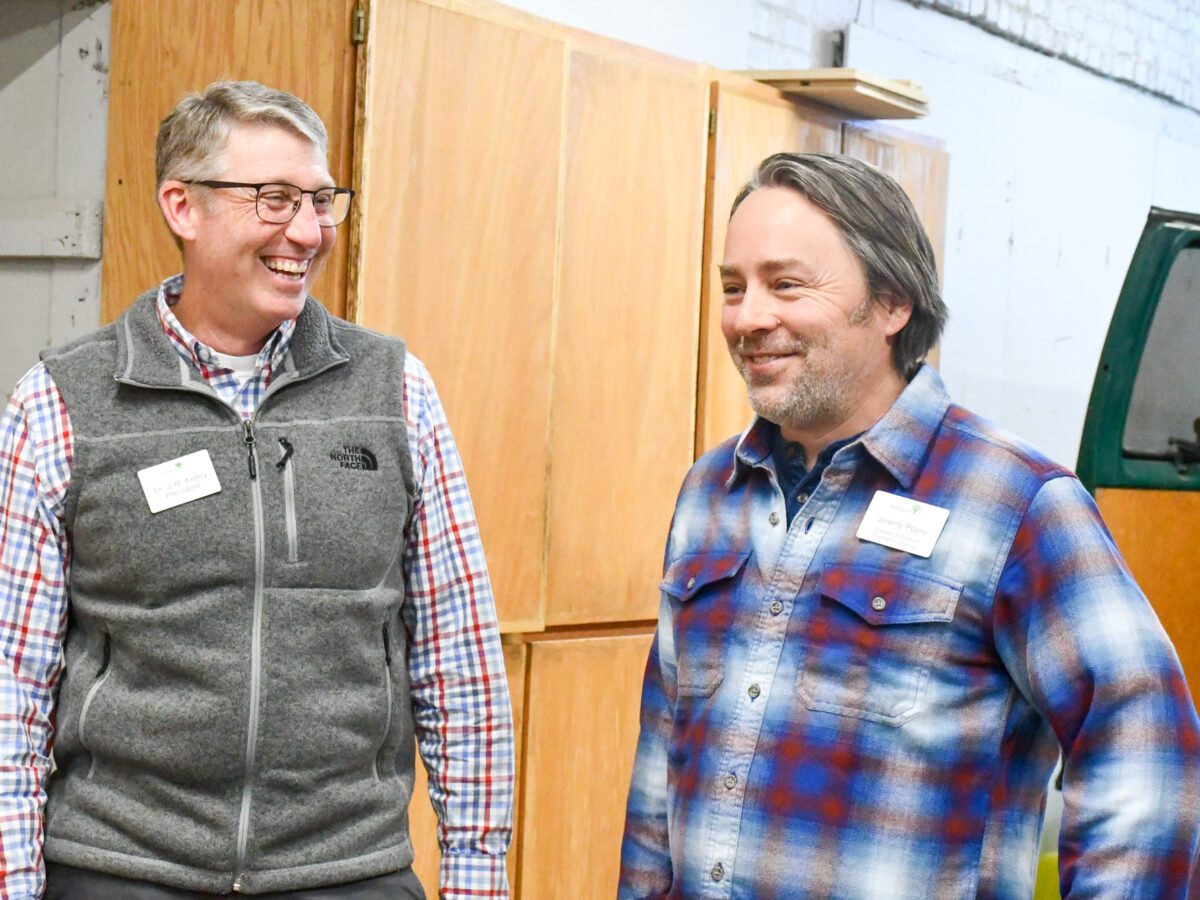
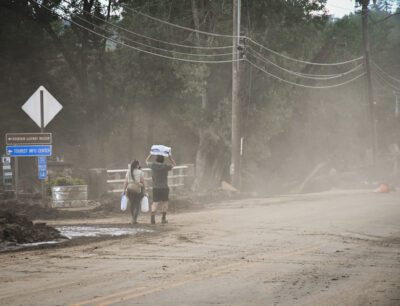
Dr. J.W. Kelley had been president of McDowell Technical Community College for just two months when Hurricane Helene hit. New to the town and the role, Kelley quickly found himself leading the institution through one of the worst storms in western North Carolina’s history.
While nothing could have fully prepared the rural college for the months of recovery that followed, Kelley said that the college operated as a lifeline for the community as a result of mindsets centered on trust and servant leadership.
Now, one year later, Kelley reflected on his presidency and the role he sees the college playing in the years ahead.
 Sign up for Awake58, our newsletter on all things community college.
Rural living and second chances
Kelley spent his early years moving across some of the country’s most rural places, spanning Kentucky, Missouri, West Virginia, and Mississippi.
This rural upbringing is why he says McDowell County feels so much like home.
Kelley comes from a long line of educators and preachers. His father was a preacher, and his great-grandfather, Kelley’s namesake, founded the Kentucky Christian University. His mother was also a first-generation educator. Raised on the notion that serving people is just what you do, Kelley’s core belief is that education and service go hand-in-hand.
Despite this background, Kelley didn’t start out in education. He dropped out of college his first year and soon after enlisted in the Army, a decision he describes as a second chance at opportunity.
In the Army, Kelley served as a parachute rigger and eventually became a squad leader. Though he never saw combat, he performed guard duty and led convoy protection, delivering supplies to the frontlines.
There were moments during Kelley’s service that he questioned his preparedness to lead and care for his troop. In the end, he did lead, and he credits his time in the Army for teaching him how to build teams around trust.
This foundation encompasses much of his leadership philosophy now: “Take a deep breath, make a decision. And if it’s a bad decision, then you’ll adjust,” he said.
After his military service, Kelley earned his master’s degree in counseling and spent several years as a counselor in various family crisis centers.
Counseling is heavy work, he said. Seeking change, Kelley transitioned to education as a career counselor at Fayetteville Technical Community College.
Kelley held various roles at Fayetteville Tech before serving for six years as vice president at Randolph Community College. Most recently, he was the associate vice president of student services at the North Carolina Community College System Office for eight years before joining McDowell Tech.
Meeting the needs of McDowell County
Health sciences and public safety
McDowell County, located within the southern Appalachian Mountains region, is home to just under 45,000 North Carolinians. Like much of the state, the county faces a pressing need for skilled health care professionals.
McDowell Tech has consistently worked to align its programs with local and regional workforce needs. However, physical space limitations have created challenges for programs like health sciences and public safety. Despite being some of the most popular programs on campus, the college has had to cap enrollment due limited classroom and lab space.

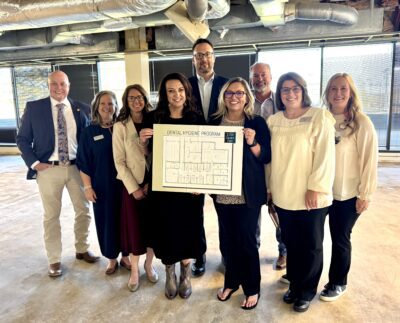
In 2027, the college will break ground on a new health sciences and public safety building. The college secured $25.25 million in nonrecurring funds for the project in the 2023-25 state budget. The new building will allow the college to expand space for training nurses, paramedics, firefighters, law enforcement, and additional essential workers.
“This will help us strengthen our partnerships and become more of a training hub for our local health care workforce,” said Dr. Valerie Dobson, vice president of academics and student services and chief academic officer.
The college initially planned for an 85,000-square-foot building, but has since had to reduce the size, in part due to rising construction costs.
Outdoor economy
Parts of McDowell County are surrounded by nearly 75,000 acres of protected woodlands within the Pisgah National Forest. A 2023 survey highlighted the impact of outdoor recreation across western North Carolina, showing that the industry generates $4.9 billion in economic output, 48,000 full-time jobs, and $197.5 billion in county-level tax revenues.
In 2022, McDowell Tech started a trail school, featuring year-round, intensive workshops led by professional trail builders. It’s the only trail school offered by a community college in the state and draws students from across the east coast.
To capitalize on one of the fastest-growing industries in western North Carolina and support local workforce needs, McDowell Tech founded the outdoor economy training program in 2025.
The program is a new approach to the outdoor economy, overlapping many of the college’s current programs. It includes tracks like customer service industry and recreational leadership. The college is currently developing outdoor economy pathways for high school students through the state’s dual enrollment program, Career and College Promise.
Additionally, the program will directly respond to the needs of land management and outdoor recreation partners. By working with the U.S. Forest Service, students will have the opportunity to earn chainsaw operation credentials, receive ATV driver training, and gain experience that leads to careers maintaining public lands.
As Kelley puts it, the outdoor economy is more than just hiking and biking — it includes everything from trail construction and forestry to guiding and outfitting to hospitality and food service.
“McDowell Tech is making sure that McDowell County residents not only enjoy the outdoors but also build sustainable careers and businesses around it,” Kelley said in a recent newsletter.
According to a report by the McDowell Tourism Development Authority and Destination by Design, planned trails are expected to generate an estimated $2.5 million annually in tourism and economic development for the region.
Building a culture of care and belonging
Students at community colleges are never just students. They often arrive on campus as parents, caregivers, and employees, some with a history of educational challenges behind them. Acutely aware of the challenges that can come with being a student, McDowell Tech is committed to creating a culture of care where everyone belongs — no matter what.
College leaders said fostering a sense of belonging doesn’t happen overnight. Belonging starts with leadership and involves hiring people that demonstrate a servant-leader mentality.
Even if an employee’s role is not directly tied to student support, a service mindset is important for creating and maintaining a culture of care. Leaders said it requires them to be proactive, equipping all employees with the tools to confidently recognize student needs and connect them with the appropriate resources or person on campus.
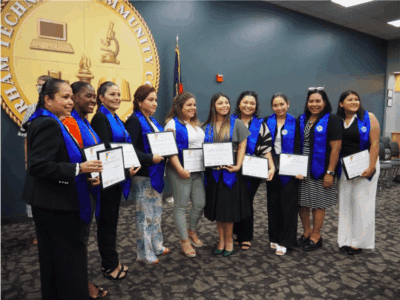
Thomas Smith, a recent graduate of McDowell Tech, was diagnosed with autism at an early age. He spoke very little and struggled with anxiety, often uncertain about what his future would hold.
While at McDowell Tech, Smith began finding champions who helped him grow and encouraged him to continue pursuing his dreams.
His champions included Hannah Golding, the college’s financial aid director, who sat with him and helped him work through forms line by line. Golding helped him apply for scholarships at the college, and later, at Western Carolina University. His advisor, Karen Buchanan, mapped out his courses with him, and several instructors opened his eyes to new ideas and areas of interest.
Smith’s story is one of many at McDowell Tech that illustrates how the college’s commitment to making sure that everyone on campus feels seen and understood.
A high degree of intentionality is required for colleges to offer the kind of personal engagement that recognizes the whole person and their needs, and several grants and initiatives have helped sustain these efforts.
The Rural Postsecondary and Economic Development (RPED) grant has allowed the college to train success coaches and program advisors in the InsideTrack coaching model. This model assists coaches in looking at eight domains of students’ lives and helping them advance in their academic endeavors. Its focus includes strong onboarding, support coaching, timely communication regarding early alerts for attendance and grades, a collaborative approach with community partners, and increasing resource visibility.
The grant has also helped the college increase access to resources with TimelyCare, a 24/7 virtual extension of campus providing health and well-being services. Students can use TimelyCare for crisis support, mental health counseling, virtual medical visits, and more.
Services like Single Stop, a national nonprofit organization that connects individuals and families to federal, state, and local benefits and services, have also been vital in helping students overcome nonacademic barriers such as food insecurity, health care, child care, and transportation.
Beginning in fall 2026, McDowell Tech will join other colleges across the state in implementing Boost, a new college-to-career program designed to increase completion rates and move students into high-wage, high-demand jobs.
The program, which launched in 2025 at eight community colleges, provides students with a variety of wraparound supports. These include frequent interactions with a dedicated Boost adviser, cohort activities with other Boost students, up to $600 per academic year for textbook costs, and a $100 monthly stipend for successfully meeting with their adviser.
Read more from McDowell Tech
5 leadership lessons from J.W.
Operating a college requires a tremendous amount of leadership. Here are a few lessons from McDowell Tech’s leadership team that were shared during EdNC’s visit:
- “If you can build teams and you can build trust, then you’ve got something,” Kelley said. Trust is key. Without it, teams cannot move to the next level.
- Leaders must be willing to have candid, hard conversations and still share lunch together afterward.
- Quoting Bladen Community College President Dr. Amanda Lee, Kelley said: “Let ‘yes’ be your default,” noting that even when it requires extra work and sacrifice, the payoff is usually worth it.
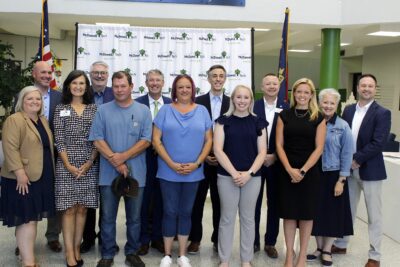
- Partnerships matter, particularly during times of crisis. However, leaders should never wait until the storm hits to build the relationships. Dobson illustrated this point when describing the early days after Hurricane Helene. The college and school district worked hand-in-hand, using a warehouse on the college’s campus to establish a large-scale distribution site and provide resources for community members.
- Referencing the standard emergency guidance, “put on your own oxygen mask first.” Kelley said leaders who are not caring for themselves cannot properly serve and lead others. He added, “know your anchors,” particularly in times of crisis. For his own well-being, Kelley talked about how his wife, faith, and daily runs are foundational supports.
Looking ahead
McDowell County, and the rest of western North Carolina, has experienced a lot over the last year, testing many people’s resilience. But, at the end of the day, hope still abounds for the region and the college.
There is hope in being a place where students can attend college, earn a degree, and give back to their community. There is hope in small wins — like increased enrollment and college completion rates — highlighting the college’s commitment to serving students with care. And there is hope in reaching students who deserve a second chance.
“Everybody needs a second chance,” Kelley said. “You don’t have to walk alone.”
Recommended reading