
A 10-year plan for North Carolina’s youngest children: ‘Invest Early, Build Together’

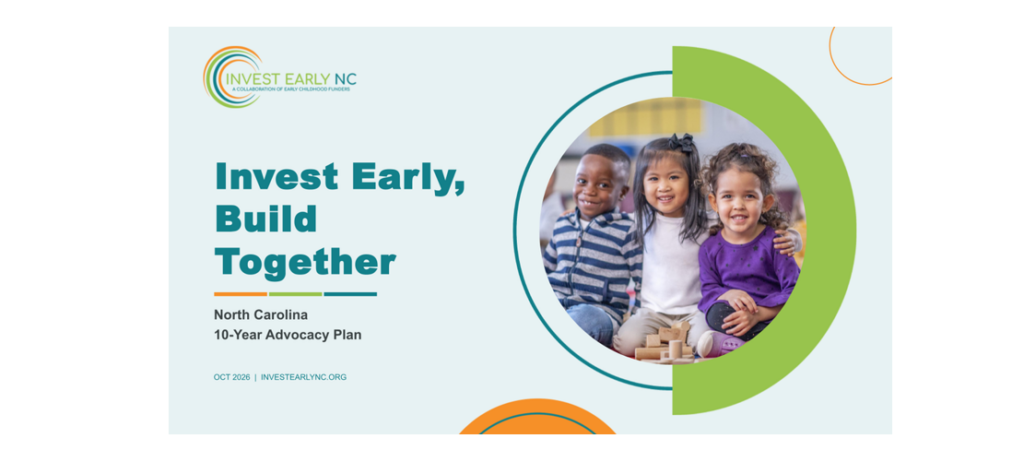
This week, Invest Early NC is sharing the first public overview of Invest Early, Build Together: A 10-Year Plan for North Carolina’s Youngest Children, along with a new public home, a website at InvestEarlyNC.org.
Since 2024, Invest Early NC has been listening to families, providers, advocates, public agencies, researchers, funders, and community leaders, according to a toolkit for advocates. Those conversations have helped shape the shared vision, focus areas, policy priorities, and action strategies now being announced.
While this is a first look at the plan’s flexible roadmap, Invest Early NC says there is more to come.
As the plan moves “from shared direction to coordinated action,” implementation — including roles, partnerships, and collective infrastructure as well as the sequencing and coordination — will continue to evolve based on priorities, opportunities, input from stakeholders, and evidence.
 Sign up for Early Bird, our newsletter on all things early childhood.
Who is Invest Early NC?
Invest Early NC, North Carolina’s early childhood funders collaborative, “brings North Carolina funders together to align investment, relationships, and advocacy around shared priorities for young children and families,” according to the website.
The Invest Early NC collaborative is co-chaired by Dr. Ereka Williams, vice president of education for Dogwood Health Trust, and Meka Sales, director of special initiatives at The Duke Endowment. Russ Altenburg, program director of education for The Leon Levine Foundation, and Ricky Hurtado, program officer for the Z. Smith Reynolds Foundation co-chair the advocacy committee, which makes recommendations to a steering committee.
Currently, 19 funders are part of the collaborative. Amber Payne has been the project director since 2019.
Invest Early, Build Together
According to the toolkit, Invest Early, Build Together is “a 10-year advocacy plan focused on helping more North Carolina children arrive at kindergarten healthy, nurtured, learning, and ready to keep growing.”
The plan includes three focus areas that each shape children’s earliest years: family economic stability, healthy caregiver-child relationships, and early learning.
Policy priorities will drive kindergarten readiness
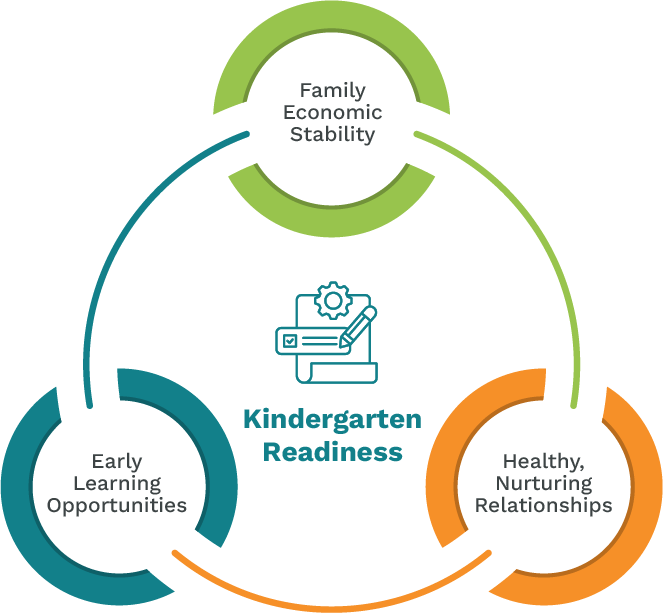
“Kindergarten readiness begins at birth,” says the website, “and is shaped by far more than what happens in a classroom.”
“Readiness doesn’t emerge from any single program or service — it emerges from a system of supports spanning early learning, family economic stability, and the strength of caregiver-child relationships,” says the site.
The following policy priorities in the three focus areas will drive kindergarten readiness:
Family Economic Stability | The plan focuses on refundable tax credits, paid family and medical leave, and simpler access to benefits.
Healthy, Nurturing Relationships | The plan focuses on early relational health, home visiting and other relational supports, maternal mental health, and the workforce that supports families.
Early Learning Opportunities | The plan focuses on educator compensation and career pathways, child care financing, and stronger support for home-based and family, friend, and neighbor care.
The plan’s strategies are designed to build and sustain momentum
The first action strategy is to build the conditions for change by:
- Advancing narrative change and building narrative power
- Deploying strategic communications to build public will
- Including local leadership and community knowledge
The second action strategy is to strengthen the field by:
- Strengthening statewide advocacy infrastructure
- Building and promoting coordination across the state
The third action strategy is to secure and sustain policy change by:
- Anchoring in flagship policy change
- Developing a financing strategy maximizing public dollars
Why now and why 10 years?
The Prenatal-to-3 Policy Impact Center’s policy calculator ranks North Carolina last — 51 out of 51 — in a state ranking of family resources in 2026 that includes the District of Columbia.
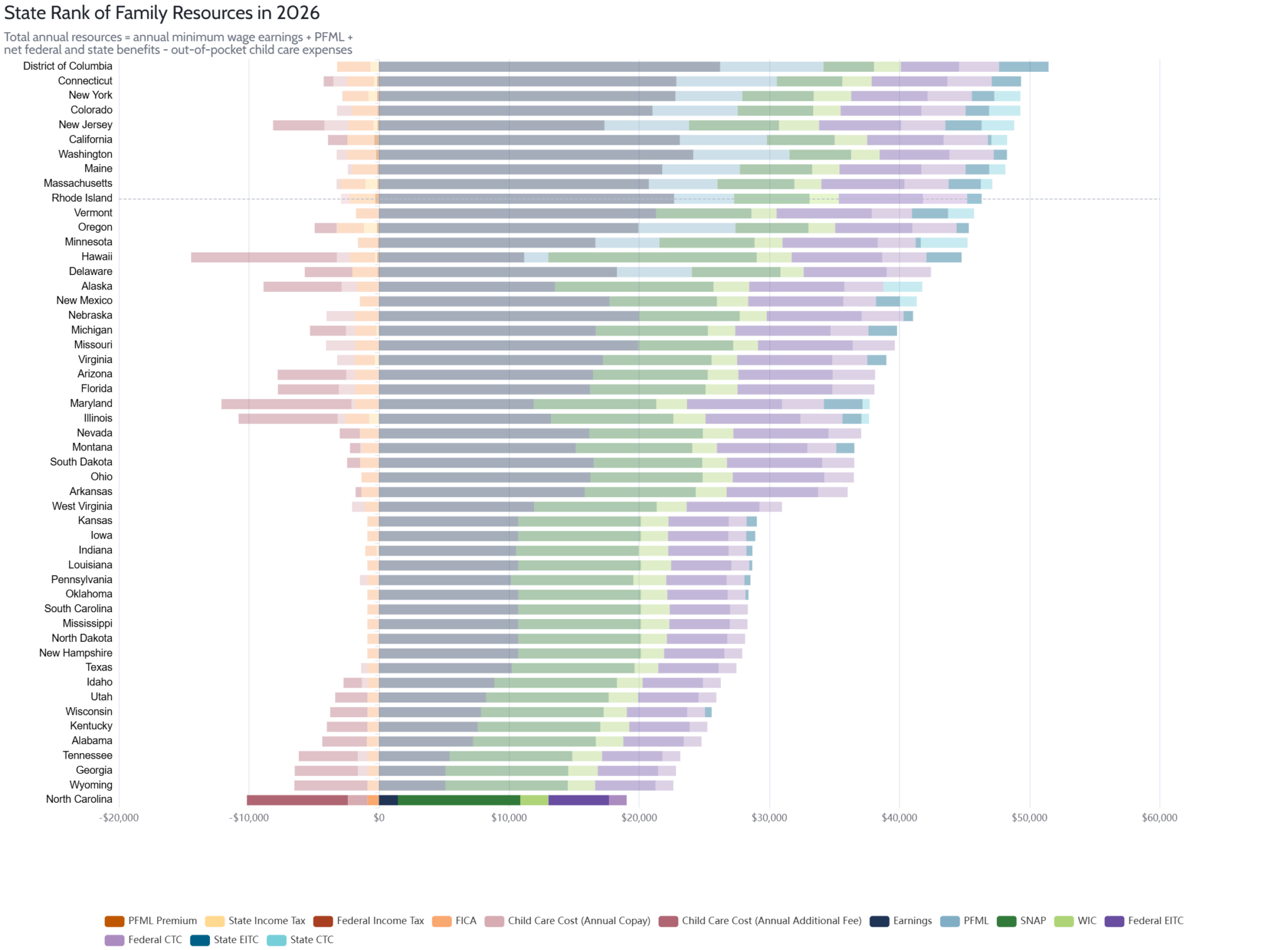
According to the Impact Center, “the level of resources a working family has varies substantially. In 2026, variation in resources across states ranged from more than $51,000 per year in the District of Columbia to just over $19,000 in North Carolina — a striking difference driven by state decisions. These resources play a critical role in the financial support parents have to care for their children, and ultimately in the trajectory of child health and wellbeing from the youngest years to adulthood.”
According to data released earlier this year by Child Trends, just 61.6% of five year olds in North Carolina are healthy and ready to learn.
Given the data, why a 10-year plan? Invest Early NC says, “The policy and systems changes behind better outcomes for young children take time. A 10-year view gives the work room to stay focused while adapting as priorities, evidence, partners, and political conditions change.”
How you can get involved
“Progress will take all of us,” says the collaborative.
Here are some ways you can get involved:
- Your voice matters. Complete this survey to inform the advocacy plan.
- Your leadership matters. Spread the word about Invest Early, Build Together by sharing the new website and 10-year plan via social media, newsletters, or by talking about it with others.
- Your commitment matters. Sign up for this Invest Early NC email to stay connected.
Want to learn more? The next Invest Early NC partner convening is on Oct. 23, 2026, from 9 a.m. to 3 p.m. at the McKimmon Conference and Training Center in Raleigh.
Jenna Barnes, director of youth mental health at the Blue Cross and Blue Shield of North Carolina Foundation, posted, “This work builds from what already exists across North Carolina and continues to learn from the people closest to it. There is more to build, and more voices to bring in. We invite you to be a part of the conversation.”
Editor’s note: The Blue Cross NC Foundation, Z. Smith Reynolds Foundation, Dogwood Health Trust, and The Duke Endowment support the work of EdNC. You can see all of our funders here.