
Harvard conference spotlights nation’s broadening school choice landscape, new federal tax credit
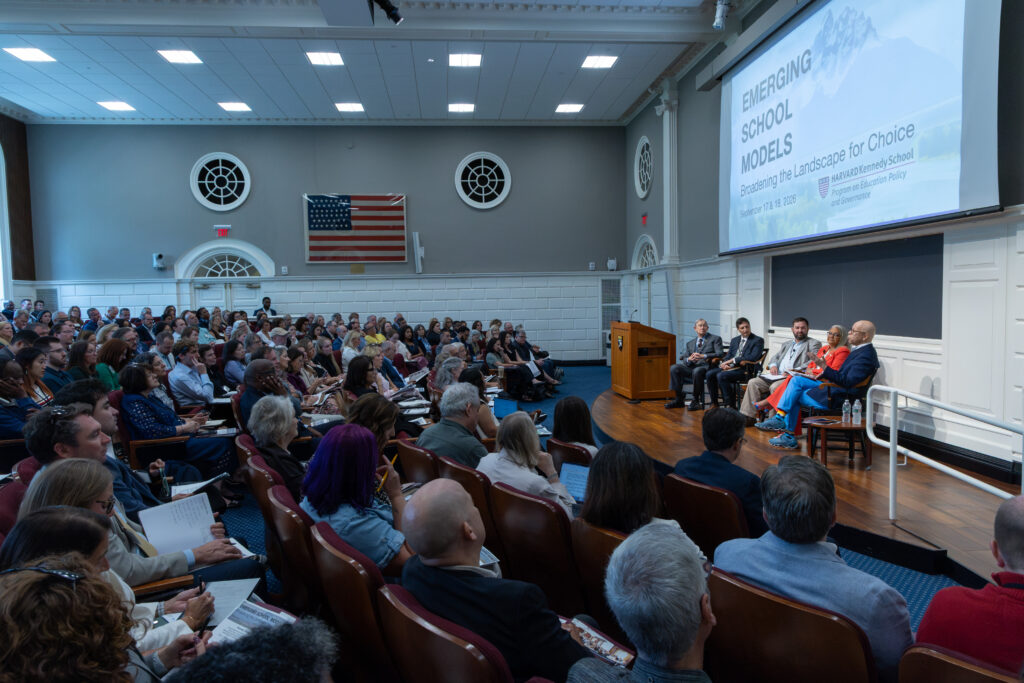
“American education is undergoing a profound change,” said Paul Peterson, director of Harvard University’s Program on Education Policy and Governance (PEPG), in remarks launching PEPG’s Emerging School Models conference earlier this month. The “fifth and largest” iteration of a popular series that began in 2022, according to conference leaders, this year’s gathering drew researchers, policymakers, and education practitioners from across the country to discuss broadening the landscape for choice.
The nation’s schools, Peterson said, are grappling with the falling fertility rate, declining student performance, district enrollment losses, and artificial intelligence. Meanwhile, a federal tax credit program, called the “Education Freedom Tax Credit,” is expected to open “opportunities for choice for up to several million families,” he said.
The tax credit, which takes effect Jan. 1, will allow U.S. taxpayers to receive a dollar-for-dollar federal tax credit of up to $1,700 for donations to scholarship-granting organizations, which then distribute scholarships to students for tuition, tutoring, or other services.
 Sign up for our monthly roundup of news and updates about North Carolina’s charter schools.
Thirty states, including North Carolina, have officially opted in to the credit, according to the latest tally.
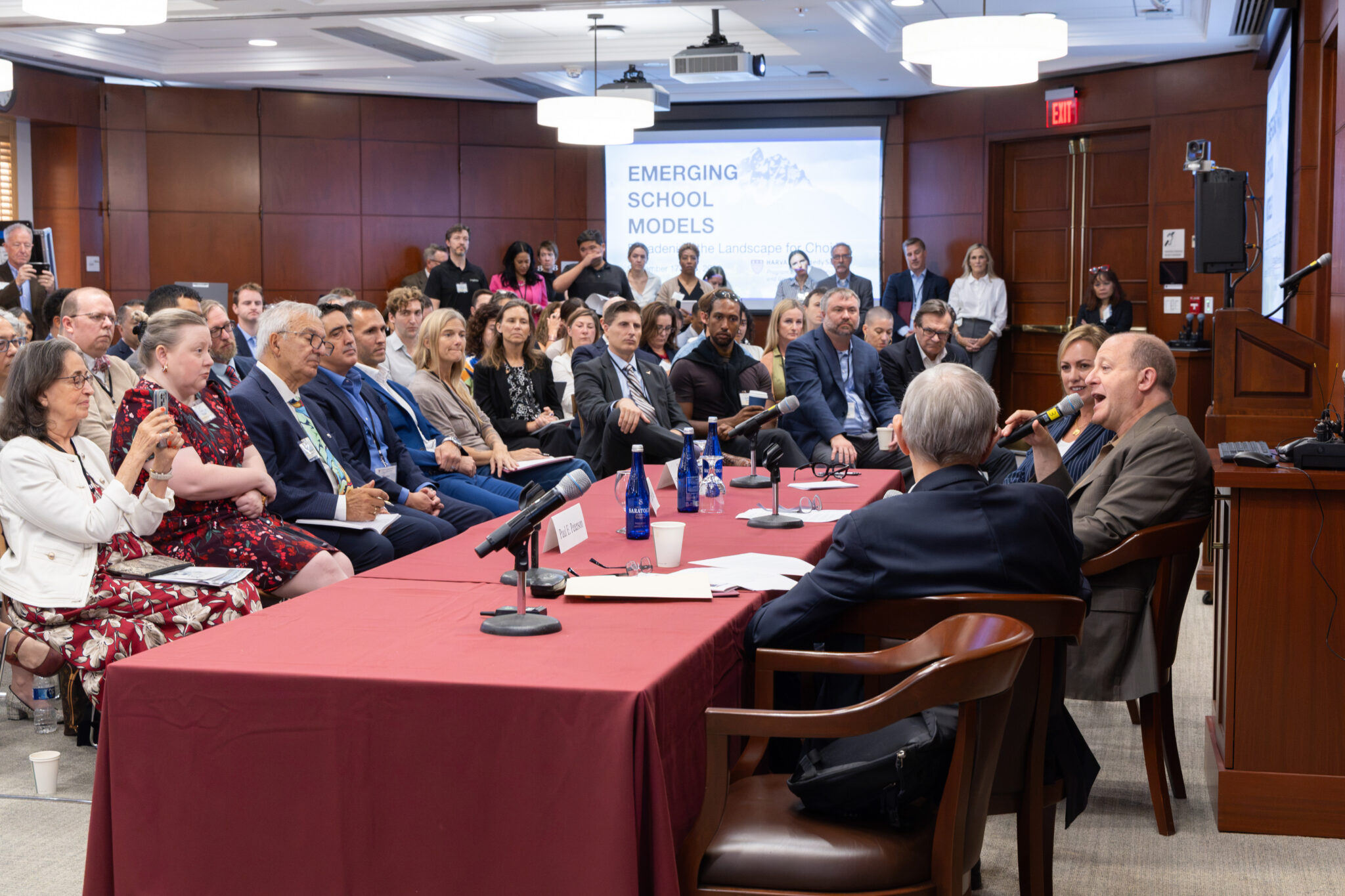
This year’s conference star, the tax credit headlined an opening panel and figured prominently in keynote conversations with Kirsten Baesler, assistant secretary for elementary and secondary education at the U.S. Department of Education, and Colorado Gov. Jared Polis.
Baesler underscored a persistent theme: States will shape the future of the tax credit.
“We have to be very clear that this is not a federal program,” she said. “This is a federal tax credit. And there is a great opportunity for states to really define what that federal tax credit will mean in reality.”
The first Democratic governor to opt his state in to the tax credit, Polis said its impact could be extensive.
The federal government spends about $110 billion annually on K-12 education, he noted. “If everybody donated $1,700, who has that much in taxes and gets it back, you’d be talking $250 billion,” he said. While that probably won’t happen, $30-$60 billion could flow in through the credit, he said. (According to an analysis cited by the federal government, North Carolina could receive over $700 million in donations reimbursed by federal dollars, assuming 30% of qualifying taxpayers took advantage of the tax credit.)
In conversations with other governors, Polis said he has emphasized this fundamental reality regarding the credit’s reach: “The taxpayers of your state can get this tax credit anyway, right? … The question is, do you want them to be able to donate to nonprofits working with kids in your state — or in other states?”
Other conference sessions addressed enabling school districts to thrive in high-choice environments, evaluating what makes a school good, centering school choice in urban development, expanding opportunities for students with disabilities, rethinking rural school choice, and more. Read below for highlights from the sessions.
More on the federal school choice tax credit
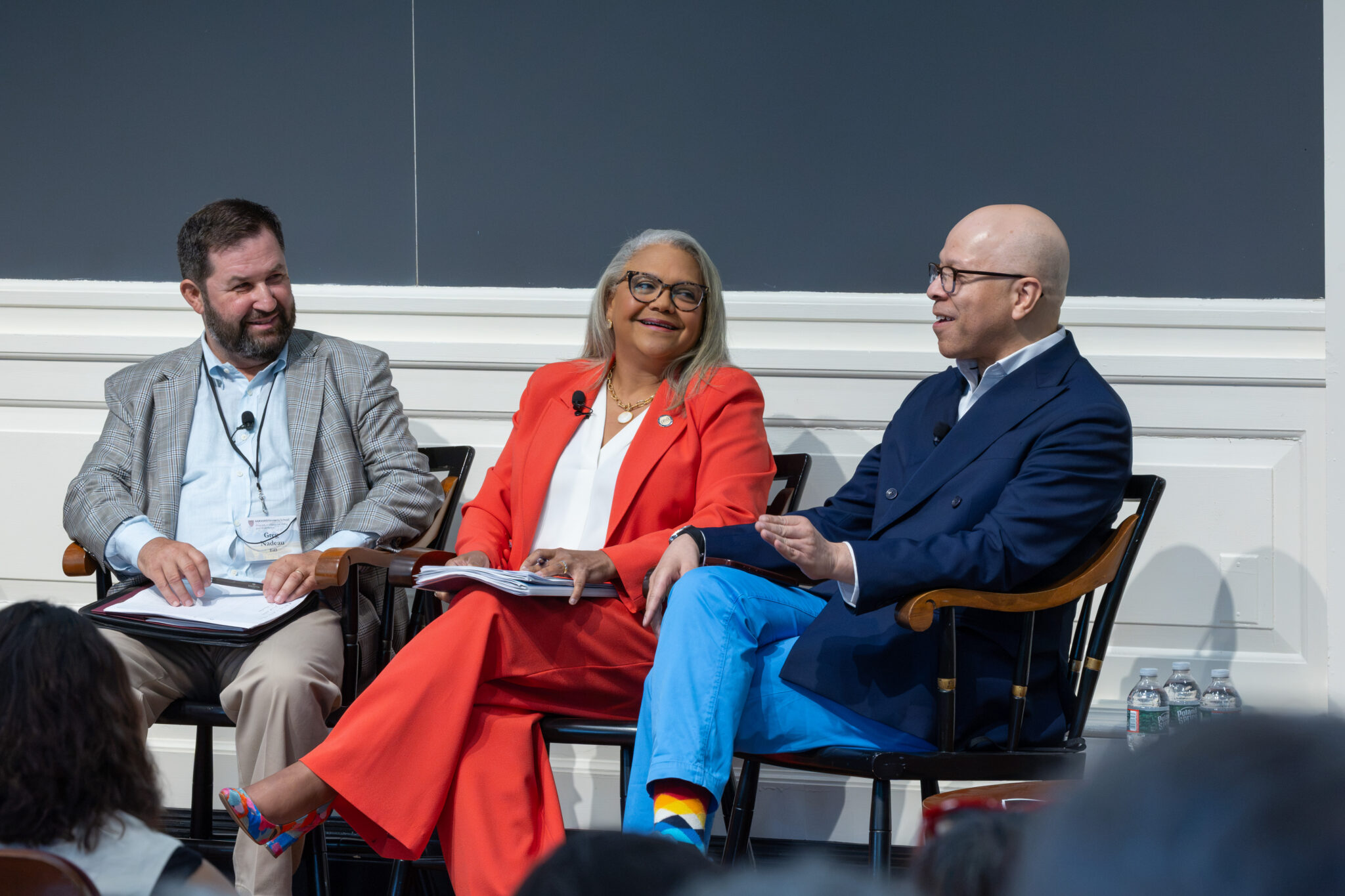
Panelists expressed divergent views around the tax credit and its implementation, even as they acknowledged much remains unknown.
“This is tax policy,” said Derrell Bradford, president of 50CAN.
“We view it as a voucher because tax policy is spending policy,” said Kim Anderson, executive director of the National Education Association. “For us to see $50 billion directed toward private schools as opposed to already under-resourced public schools is an anathema to what our members believe should happen.”
The nation is clearly charting new territory, according to Greg Nadeau, the convener of the Ed3 Forum.
“I believe that the United States is about to begin an unprecedented experiment in new models in support of learning,” he said.
A recent analysis from the American Federation for Children forecasts that 51.7 million children could qualify for a scholarship under the tax credit.
Panelists also discussed the cultural and policy context for the credit, noting broader shifts in perspectives and education funding.
“People’s attitudes about residentially assigned schooling have changed,” Bradford said, citing a recent Gallup poll. According to the poll, just 32% of Americans are satisfied with K-12 education.
This is “a new low,” according to Gallup pollsters.
As families rethink approaches and school models, the major lever of change is actually in how education is funded, Bradford said.
“There is a revolution in school finance that people are mistakenly thinking is a revolution in school choice,” he said. “The way to pay has changed.”
Keynote speakers also shared guidance around the tax credit and expressed the need for meaningful data on impact.
“The advice that we are giving to states … is, ‘Make it clear and simple for those that want to donate. Don’t make it complicated,’” Baesler said. “And make it clear and simple for those families that want to access it.’”
Polis expressed confidence the credit would improve achievement in Colorado at the aggregate level. The challenge, he said, will be in figuring out exactly what works.
“We would love to be able to show the efficacy and lack of efficacy of different donations,” he said — to optimize investments and provide greater transparency.
The U.S. Treasury Department published preview guidelines for the tax credit in June. Final regulations are expected soon.
Amid expanded options, how can districts thrive?
Another conference panel addressed pathways for district innovation amid a high-choice landscape.
Lower birth rates, immigration laws, economic factors, and taxpayer-funded vouchers have contributed to declining enrollment in Orange County Schools, said Maria Vazquez, the district superintendent. Last year, the Florida district closed seven schools.
Vazquez had stark words for other district leaders. “In this era of school choice, if we do not innovate, we will extinguish public schools,” she said.
She shared several ways her district has sought to innovate.
“We started to look at private-public partnership,” Vazquez said. The Orange Center STEAM Academy is the result of a partnership with the Neighborhood Schools Initiative and Lift Orlando.
In August, the district launched its first softball-baseball microschool. “The idea was that we would take a school that was underenrolled that had space and operate a microschool within it,” she said.
Currently, the microschool has just 24 students enrolled, with Vazquez noting district leaders had insufficient time for marketing. Still, she viewed the venture as an opportunity to reach new families that may “continue on the pathway in our traditional schools,” she said.
Next year, the district plans to open seven microschools, Vazquez noted.
Orange County Schools also partners with Step Up for Students, a Florida scholarship-granting organization, to offer nonpublic students access to district options like band or Advanced Placement (AP) classes, Vazquez said.
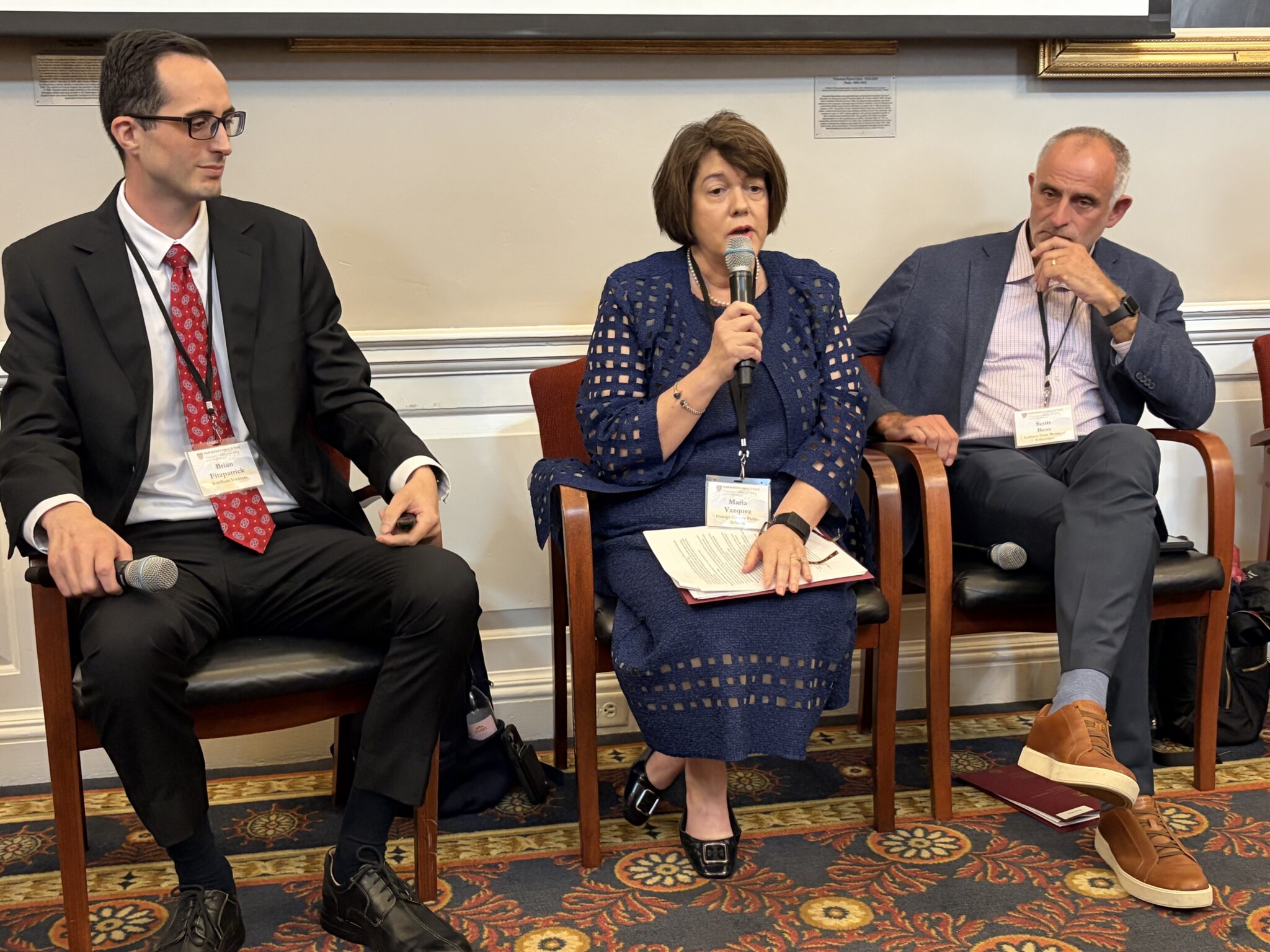
Scott Bess, an education entrepreneur and member of the Indiana State Board of Education, also outlined innovations in his state, another high-choice environment.
He helped a superintendent incubate a charter microschool within the district that proved to be “incredibly successful,” he said. The district launched five more sites this year, with “literally hundreds” of sites planned for expansion, he added.
State policies can create district flexibility, according to Bess. Indiana’s innovation statute “lets the local district enter into a partnership with the independent charter school and… they get to count those students as theirs and the results as theirs,” he said.
Brian Fitzpatrick, national research manager at the Fordham Institute, shared enrollment data, noting trends have been driven largely by migration, and by birth rates “to a lesser extent.”
According to his research, school choice programs are not linked closely with states’ declines in district enrollment.
“States that have seen the largest increase in their private school choice programs have also seen the most relatively strong enrollment numbers for their traditional public schools,” he said.
Related reads

What does ‘good’ look like in education?
Another panel grappled with questions around school quality, as educational models expand. Panel moderator Raphael Gang, director of K-12 education at Stand Together Trust, proposed dual metaphors of a “track or road” in his presentation.
The old system is a railroad. Everyone boards at the same place, travels at the same speed, and arrives at the same predetermined stop. Performance means being on time.
The new system is a street grid. Everyone starts somewhere different; everyone decides on their own destination and can get there in whatever way works for them. Performance means you got where you were going.
Ashley Berner, director of the Johns Hopkins Institute for Education Policy, expressed concern about pegging school quality to one of two models.
“I don’t like the binary,” she said.
Berner provided framing context for evaluations of school quality — and who makes those determinations. She invoked Alexis de Tocqueville’s vision of a healthy democratic society with three components: the state, the individual or family, and voluntary associations.
“My sense is that this binary pulls hard on either the state, only the state, or … the family, only the family,” she said.
A historian who has studied other countries’ approaches, Berner said the U.S. made two wrong turns in education: defunding non-state schools and focusing on skills over knowledge.
“Our cultural norm was only the district school equals public education. So, one thing we’ve gotten right is we’re shifting that conversation,” she said. “We’re returning to what most countries take for granted, which is schools should be different from one another because kids have different needs.”
“Instead of democratizing the liberal arts and making sure that every kid had access to rich content knowledge in the major subjects, we focused on skills,” she added. “We said the process is more important than the knowledge.”
Amar Kumar, the CEO of microschool network KaiPod Learning, positioned competition as a primary driver of school quality in high-choice states like Arizona or Florida.
Such markets offer families agency and abundant choices, he said.
“You have to be at the top of your game every single day,” he added.
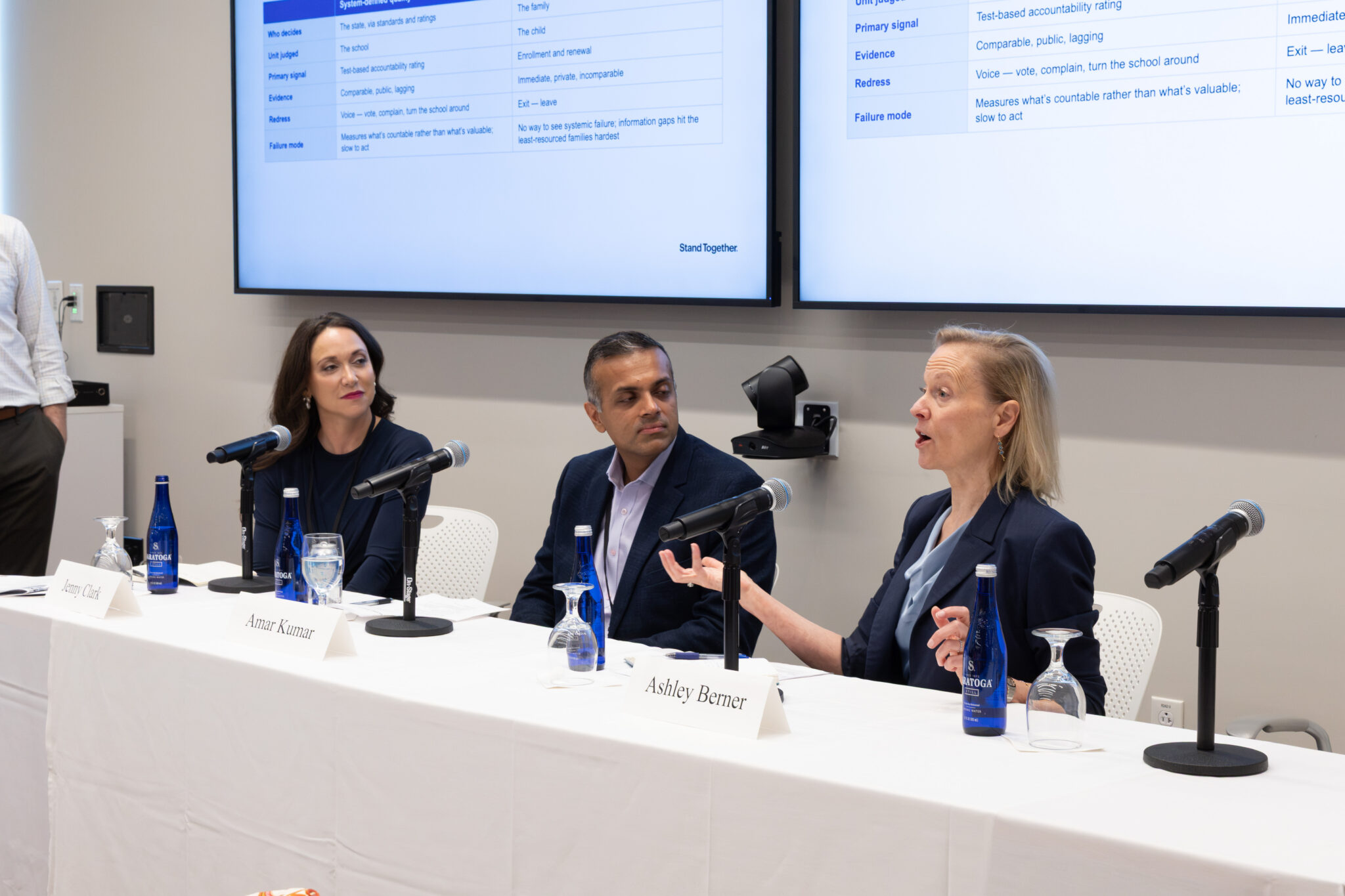
Asked to distill what makes a school good, panelists offered a range of responses.
“A good school is one that has a clear, distinctive mission and values that are explicit,” Berner said. “It can attract an organic community — and a good school has a knowledge-rich curriculum that all kids have to master, K-8.”
“A good school is one that unleashes the greatness within each child,” Kumar said.
A good school is “one that the parent chooses,” said Jenny Clark, the executive director of Love Your School, a nonprofit that helps parents understand schooling options.
Panelists were divided about the value of state data collection across public and private sectors.
“It’s really important that we have state-level integrated data systems” that allow parents and policymakers to follow a child over time, Berner said.
“I don’t want any of those types of data systems,” Clark said, opposing tracking for students in choice programs. “If you’re in the traditional system, I get why you might want that,” she added.
School choice and urban development
Other panelists, including Bartley Danielsen, an associate professor of finance at NC State University and former member of the state’s Charter Schools Review Board, addressed the role of school choice in urban development. Panelists discussed research on choice in urban settings, along with an array of new campus models.
Danielsen, who studies how school choice programs impact real estate, cited his research in Vermont assessing schools and property values. In Vermont, 93 districts exist without a public school, he said. Parents use a voucher to purchase education services for their child.
“Having no school at all actually led to higher property values than having a below average school,” he said.
Kristen Forbriger, vice president of external engagement at City Fund, shared research linking expanded public school options to system-wide achievement gains.
An all-charter district, New Orleans has recovered quickly from the pandemic, she said. Now, Louisiana is a top-ranked state in reading and math.
“New Orleans is a big part of that rise,” she said.
New schools, according to David Kirby, founder of Acton Academy, can also become “a special form of anchor tenant,” driving families to a neighborhood and serving as a “partner for real estate development.”
Families pick a city for a job, he noted, but they pick a neighborhood for a school.
Now, new models are challenging old campus norms. “There’s a great variety of sizes and scales in urban forms of schools,” Kirby said.
Acton Academy launched in an historic rowhouse in Washington, D.C., Kirby noted. Other campus models he cited include courtyard schools, townhouse schools, shopfront schools — even forest schools. Cedarsong Nature School near Seattle, for example, operates with no campus.
Expanding opportunities for students with disabilities
Policymakers and a microschool founder also discussed ways to expand opportunity for students with disabilities.
One in seven U.S. students has a disability, said Glenna Wright-Gallo, vice president of policy at Everway, a technology tool.
Yet these students are not given meaningful consideration when policies are designed, panelists agreed.
As an example, Wright-Gallo cited new technology policies. Lawmakers are separating distractive technology from assistive technology in legislation, she said, but this creates barriers for other students — and stigma for students who use technology for a disability.
Programs should instead design for equity at the outset, she said. “Once we build the program, the barriers start getting built in as well, and we almost never go back and fully remove them.”
Michelle Mead, co-founder of 5 Rock Learning, emphasized the importance of a personalized and flexible learning model. Her K-8 microschool attracts neurodivergent students, she said.
“Our small class sizes and our individualized approach and our multiage classrooms really lend themselves to being supportive of those needs,” she added.
Kyle Wingfield, president and CEO of the Georgia Public Policy Foundation, provided a state spotlight, outlining data on Georgia’s four forms of school choice, including a special needs scholarship. That scholarship began as a voucher but now allows uses beyond tuition.
More than 360 private schools now participate in Georgia’s special needs scholarship, educating over 6,600 students, 93% of whom have an IEP (Individualized Education Program), he said.
Numerous challenges remain, often at the conceptual level, panelists said.
“The biggest barriers,” according to Wright-Gallo, “are people not thinking about the wide range of student needs.”
Access is a key barrier, Wingfield noted, including the availability of choices as well as family awareness of choices.
“A lot of that, I think, comes down in the policymaking arena to culture and mindset,” he added. “Do you have a culture and mindset of, ‘Let us find the very best way to serve each student regardless of what that setting is, who runs it, how it’s classified?’”
Rethinking school size and rural school choice
Panelists also discussed new research on district size and ways to expand rural school choice.
Many rural schools and districts are also small, said Peterson, who shared findings from his new study on district size and achievement.
Conventional wisdom is that big is better, and that small districts should be consolidated into larger ones, he said. However, his research does not support this view.
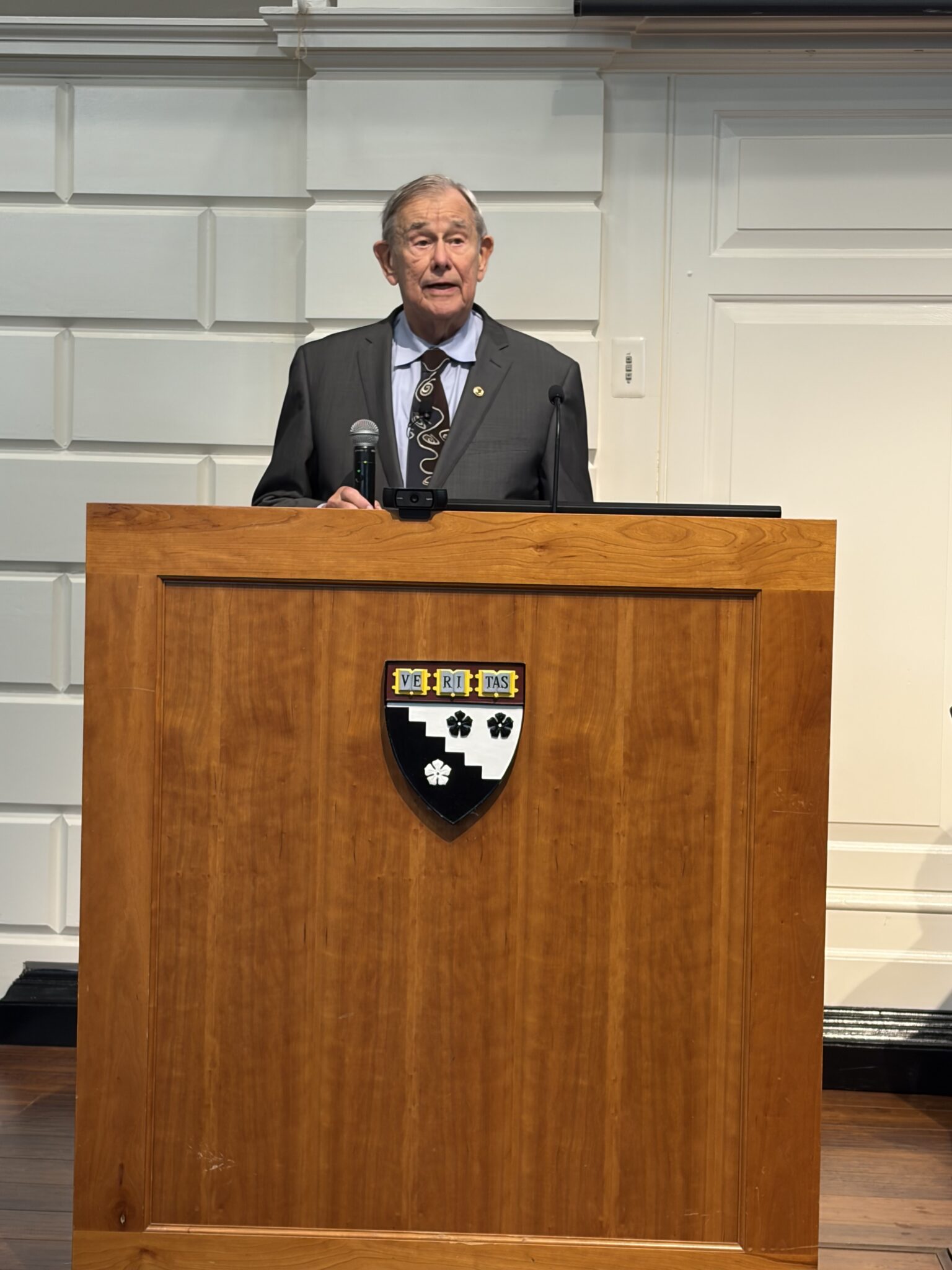
Using National Assessment of Educational Progress (NAEP) data from 2003 to 2022, he evaluated whether students learn more when districts hire more people, per pupil.
In small districts, students did learn more with an increased density of instructional staff (teachers and teachers’ aides). The opposite was true for large districts.
“You see adverse benefits. The more people, the less learning,” Peterson said.
In both small and large districts, however, scores went up as the district hired more administrators.
The bottom line, according to Peterson, is that small districts were more effective.
“I think it’s because the school boards that run the school districts and the superintendent that’s in charge actually know what’s going on,” he said.
Brent Haken, the director of Oklahoma’s Department of Career & Technology Education, outlined the growing popularity of the state’s technical schools, which are built as an extension of the high school.
“We’re taking all of the small school districts in Oklahoma and then giving them the opportunities that large schools would typically have,” he said.
“They are school choice at the fundamental level, where high school students in a sending school area can come to get different training,” he added.
Demand has increased 40% since the pandemic, Haken noted. “It is overwhelming how fast we’re having to grow to keep up with demand.”
Genevieve Hinnant, founder of the Tennessee microschool Arbor Learning Lab, said she launched the lab for her own children and others due to the lack of local models reflecting her desire for an inclusive, diverse, and secular option.
She started the microschool on a farm with 13 students, no heat, and no air conditioning, she said. “Families came every single day.”
“A lot of families are tired of the options that they have now, particularly in rural districts where there’s just one choice,” Hinnant said.
To learn about additional panels, visit the Emerging School Models conference website.