
State Health Plan board votes to return to Blue Cross NC as administrator, enacts new preferred provider structure

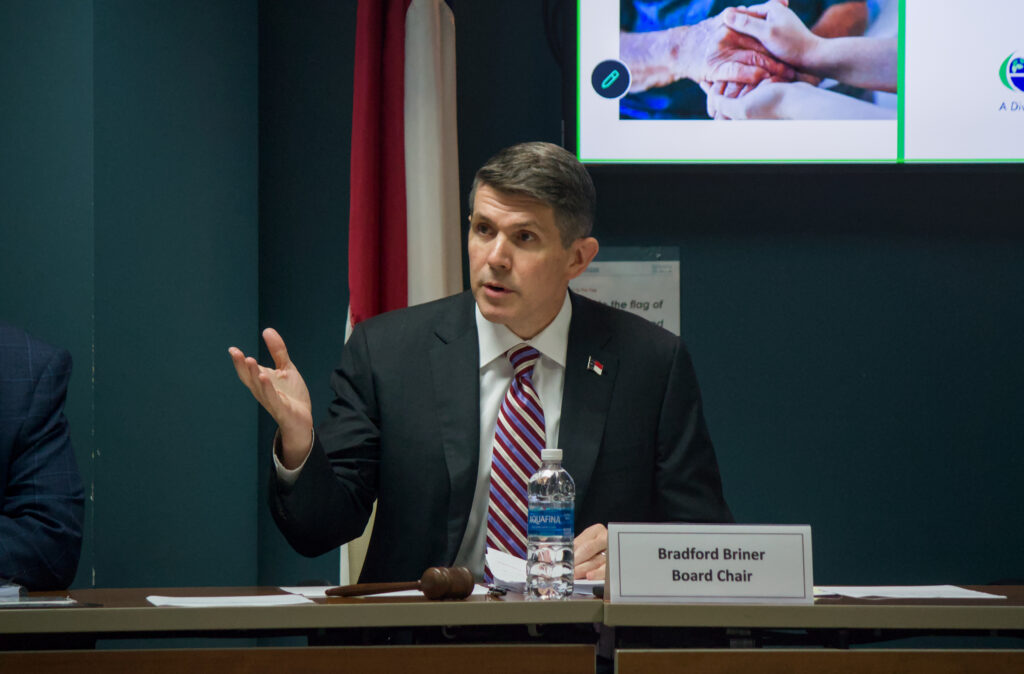
The State Health Plan Board of Trustees approved on Friday Blue Cross and Blue Shield of North Carolina (Blue Cross NC) to replace Aetna as its third-party administrator (TPA) starting in 2028, and approved contracts to usher in a new tiered-provider structure starting in 2027 which officials say could save members thousands of dollars per year.
The board also voted to increase premiums for members, effective January 2027. Referring to the premiums increase, State Treasurer Brad Briner, chair of the board, noted the potential for members to save thousands by choosing to use “preferred” providers under the new tiered-provider structure.
The TPA contract with Blue Cross NC comes after the State Health Plan requested bids from insurers earlier this year. Blue Cross NC and Aetna both submitted proposals.
Blue Cross NC was unanimously approved to become the plan’s administrator, starting on Jan. 1, 2028. The contract will run through Dec. 31, 2031, with two optional one-year renewal periods. According to a press release from the treasurer’s office, Blue Cross NC’s bid gives the plan the opportunity to save up to $1 billion over the life of the contract “through deeper discounts and value-based payment opportunities on top of our Preferred Provider Strategy.”
Currently, Aetna is the TPA for the State Health Plan, which provides health insurance for nearly 750,000 teachers, state employees, retirees, and their dependents. Aetna began a three-year contract in 2025, replacing Blue Cross NC which had administered the plan for over 40 years — a contract signed under Briner’s predecessor, former Treasurer Dale Folwell.
The switch to Aetna has received criticism from state legislators and the public; during the public comment period at Friday’s meeting, a family voiced troubles with repeated denials and appeals for care recommended by their doctors under Aetna.
Briner said returning to Blue Cross NC, rather than continuing to work with Aetna, came after a robust examination of both proposals.
“The decision was very, very clear,” Briner said.
The State Health Plan’s current Pharmacy Benefit Management (PBM) contract, with CVS Caremark, also runs through the end of 2027. Blue Cross NC will be the replacement for that contract as well, with that contract also lasting until Dec. 31, 2031.
In addition to the votes regarding Blue Cross NC, the board also voted to approve the plan’s new tiered-provider structure, a “market-driven” approach, will go into effect in January 2027 and will incentivize members to shop for care.
According to information provided by the State Health Plan, members — especially those that consume more medical services — could see thousands of dollars in savings by choosing to use plan-designated “preferred providers.”
The press release from the treasurer’s office says that members will receive “communication and education” about the 2027 changes before open enrollment, which is scheduled for Oct. 12-30, 2026. “Updated provider directories, online tools and dedicated support resources will help members understand their options and make informed health care decisions,” the press release says.
 Sign up for the EdWeekly, a Friday roundup of the most important education news of the week.
UNC Health and Novant Health chosen as preferred providers
On Friday, the State Health Plan Board of Trustees voted to approve contracts designating UNC Health and Novant Health as the preferred providers members will be encouraged to use. (Iredell Health System is also a preferred provider that was previously approved.) The board then voted to empower plan staff to enter into similar contracts in the future without a board vote.
Members already receiving services through those systems will see their out-of-pocket maximums, deductibles, and other benefit costs go down next year. Members using other providers can switch to receive those discounts.
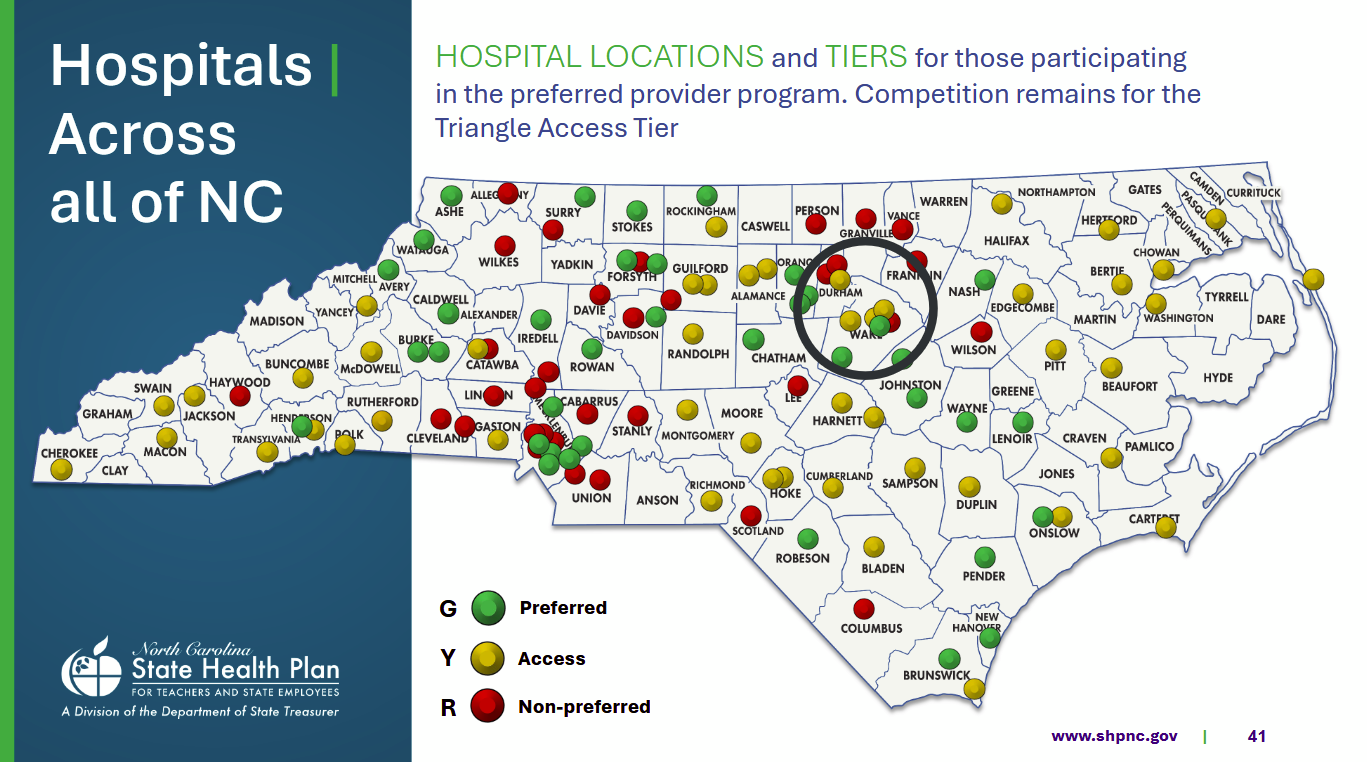
On the flip side, the board designated Atrium Health, Granville Health, and some Duke LifePoint Healthcare facilities as “non-preferred” providers. Members that receive services from those non-preferred providers will be penalized with higher costs, except in emergency situations and in cases of ongoing care — for example, pregnant members or members being treated for cancer as of January 2027.
Providers not in the preferred or non-preferred tiers (and that are not out-of-network) will be designated as “access” providers. Members using access providers will pay roughly the same next year as they did this year for the same services. State Health Plan staff are still negotiating with WakeMed and Duke Health to determine which of the two will be in the access tier, and which will be a non-preferred provider.
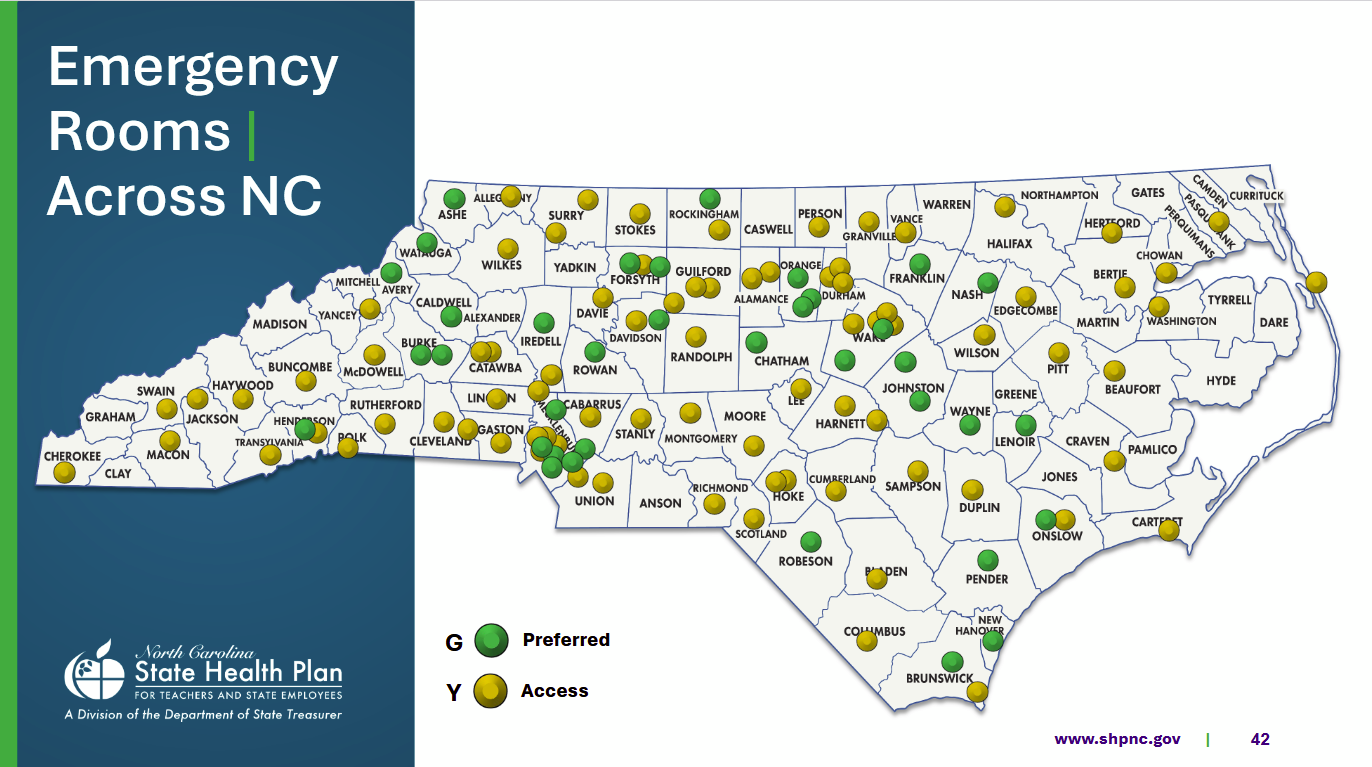
In many places, especially rural parts of the state like the northeast and southwest, access providers will be the only nearby option. Thomas Friedman, executive administrator of the plan, said the State Health Plan will not punish anyone for living in a place without competition between providers — that no one should be forced to use a non-preferred provider.
The preferred provider structure will mainly come into play in and around urban areas. Friedman said about 80% of the State Health Plan’s spending on services for members happens in just 20 counties.
Preferred provider contracts approved by the board on Friday will last between three and five years. Friedman said it is important not to switch which providers are preferred every year, as it would be “confusing and disingenuous” to members.
Below, see the maps provided by the State Health Plan showing the distribution of preferred, access, and non-preferred providers throughout the state.
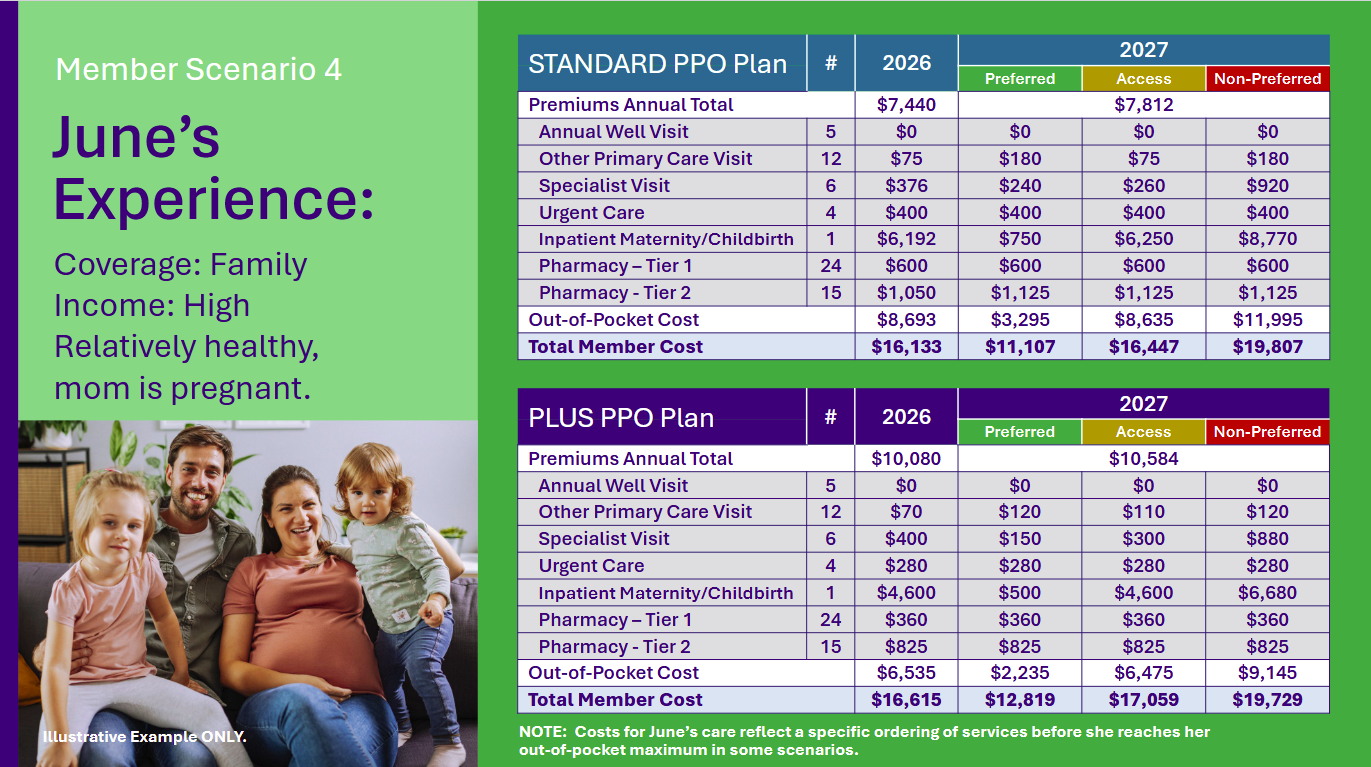
Theoretical scenarios discussed by the board show that, in metropolitan areas, families and members in need of more medical care — those with chronic conditions, or who need outpatient surgery — who use preferred providers are poised to save thousands next year.
One scenario shows an individual and a spouse with medium-to-high income and chronic conditions, who anticipate hospitalizations, paying $13,033 in total medical costs by using preferred providers versus what would otherwise be $20,260.
Another scenario shows a healthy family with a pregnant mother saving over $5,000 in a year.
The State Health Plan has outreach visits scheduled, including stops at school districts and educator conferences, to help spread the word about the new structure. In the meantime, see EdNC’s previous reporting on the details of the tiered-provider structure and what members need to know in the article below.
Officials say costs for some members could return to 2012 levels
Below, see a chart detailing the costs for members, based on provider tier, starting in January 2027.
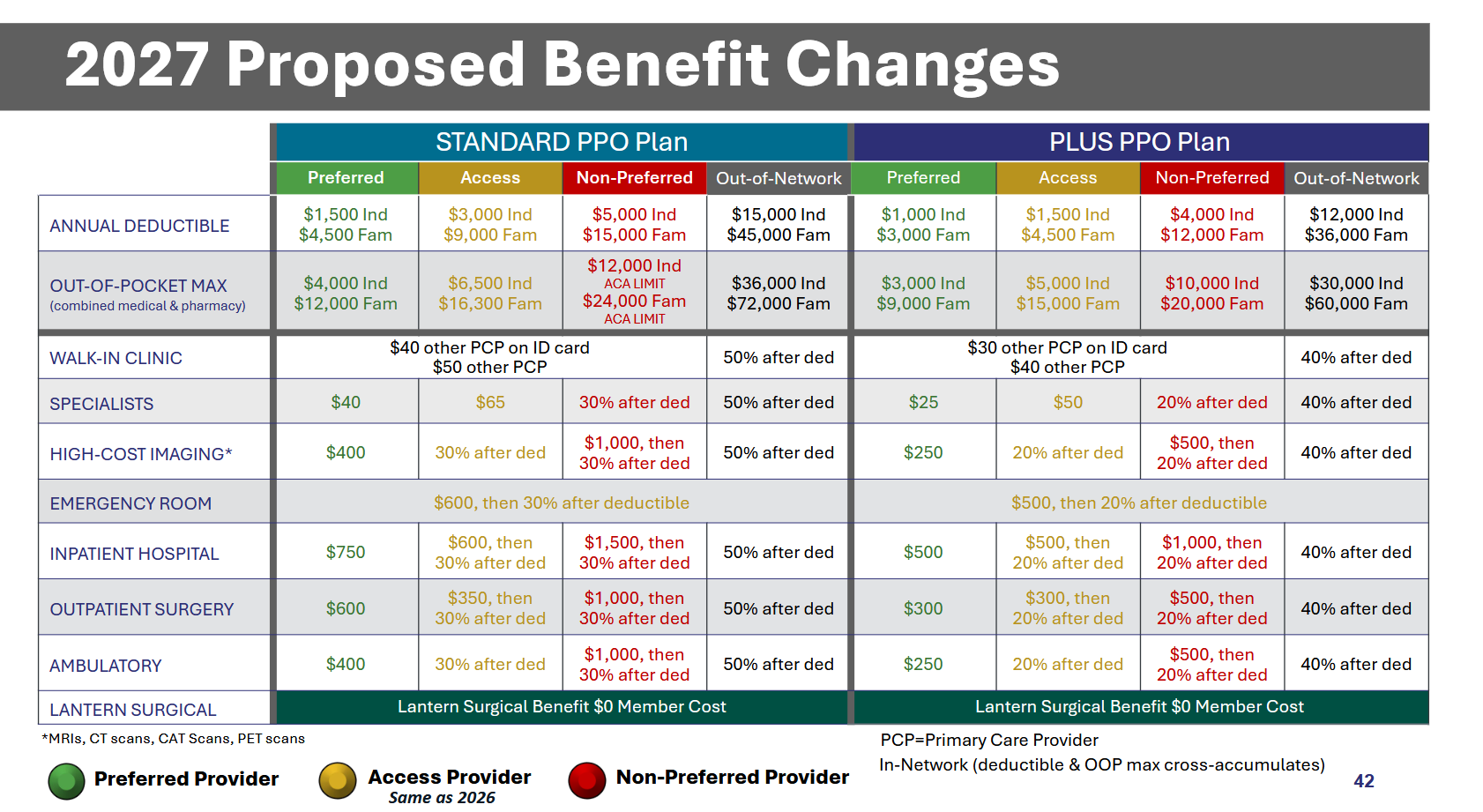
State Health Plan officials also provided a chart, included below, detailing benefit costs in 2012.
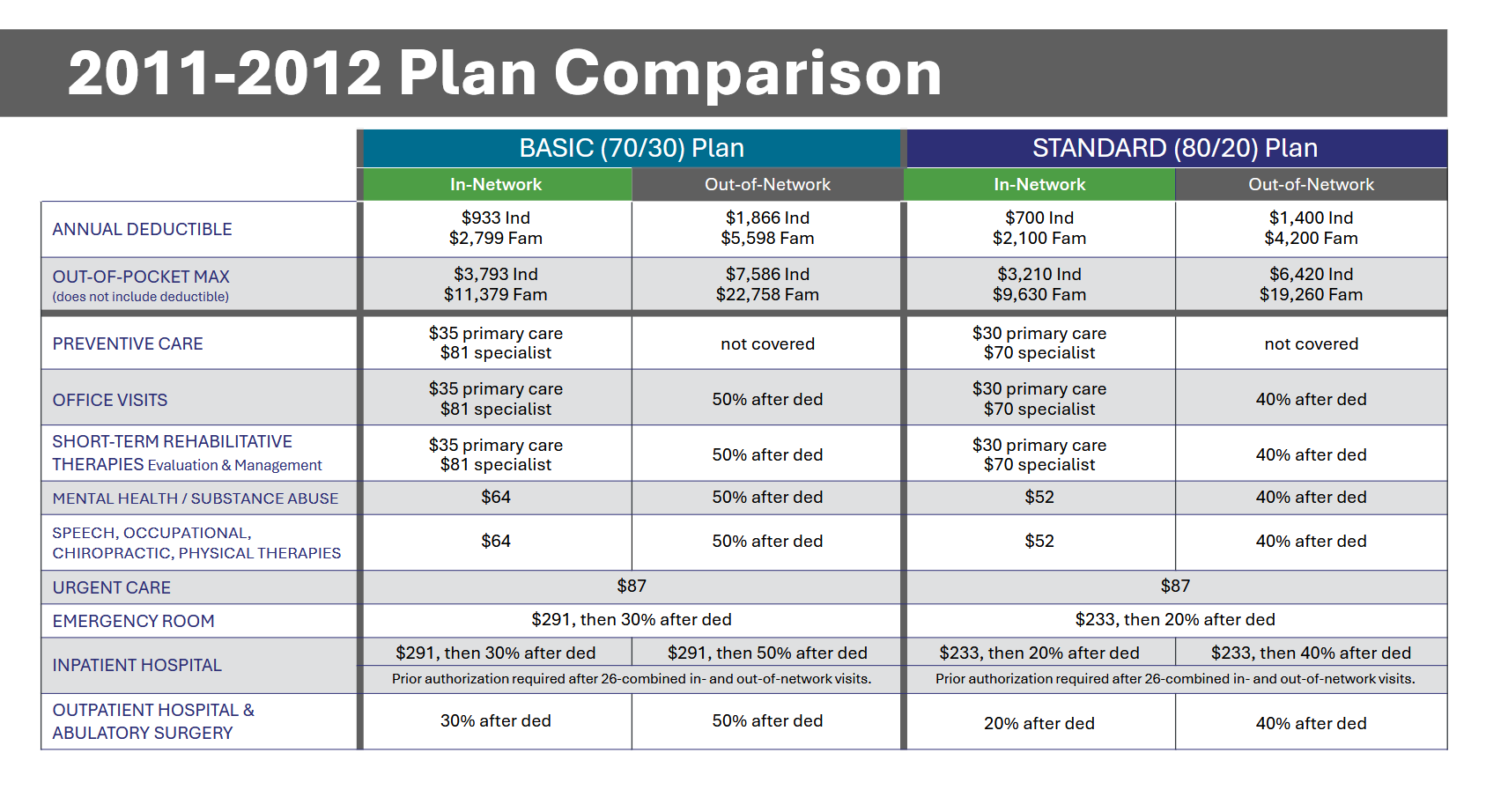
The charts show that 2027 benefits, under the tiered-provider structure, have the potential to approach the cost levels members saw 15 years ago — 15 years during which inflation has increased the Consumer Price Index by 40% and medical costs have soared.
For example, an individual member’s 2012 out-of-pocket maximum under the basic plan was $3,793. That member, under the analogous standard plan in 2027, would have an out-of-pocket max of just $4,000 if they use preferred providers for all of their care. That’s almost 40% less than the 2026 out-of-pocket maximum, which is $6,500, equivalent to next year’s access tier out-of-pocket max.
Ahead of the votes at the board meeting, Briner highlighted the scale of those potential savings against next year’s increase in premiums.
“(Members) will pay 2012 out-of-pocket prices for their health care,” Briner said. “Our members know that those thousands of dollars are more important than the $2-4 premium increase we’re going to be talking about later.”

More on premium increases
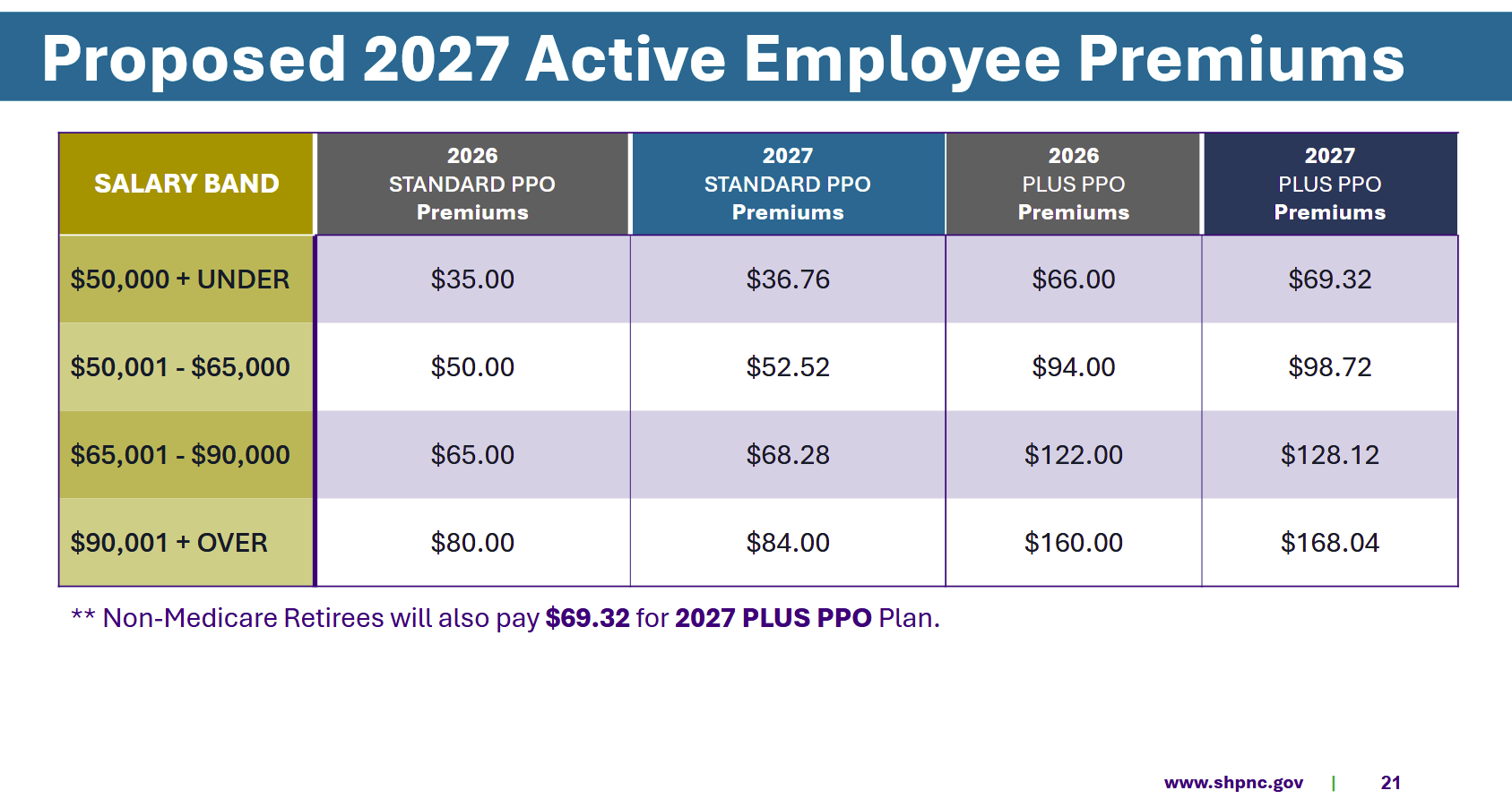
The board also voted to increase State Health Plan premiums next year, keeping the salary bands in place that give different premium rates to state employees with different salaries.
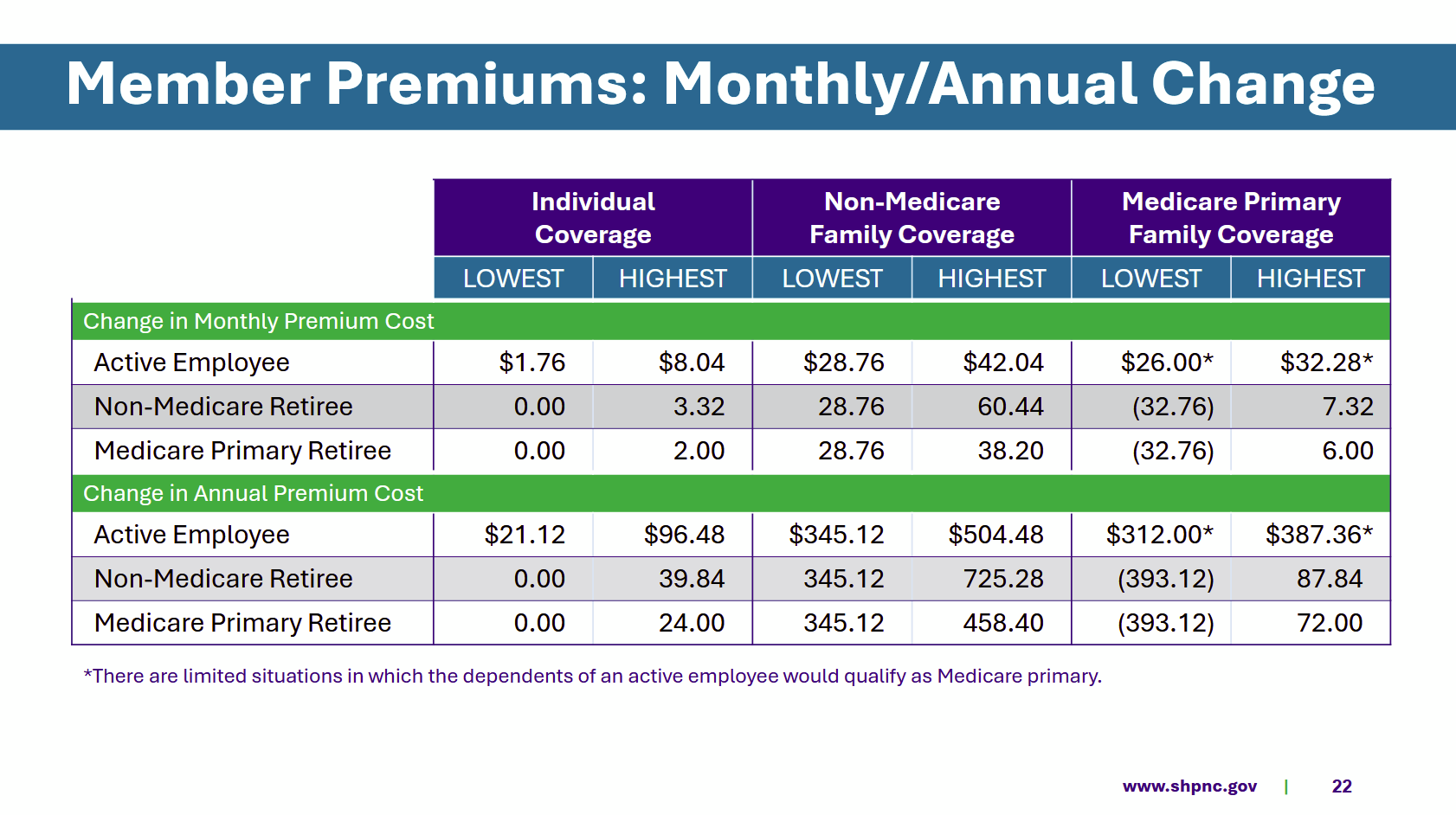
An individual member will see monthly increases between $1.76 and $8.04 depending on their chosen plan and income level. That would be an annual increase of between $21.12 and $96.48.
Earlier this week, Gov. Josh Stein signed a state budget which included a 5% increase in the employer contribution to the State Health Plan for state employees, along with raises for most state employees, an average 8% raise for teachers, and much higher raises for some law enforcement. That investment from the General Assembly, State Health Plan officials said, has kept premium increases lower than they would otherwise be.
“If legislators had not made this additional investment, totaling nearly $4 billion, it could have meant increased premiums by as much as $38 per member per month,” Briner previously said.
But, still, “costs are rising faster than revenues,” Friedman said at the Friday meeting, necessitating a premium increase.
Briner reiterated what he has said at past meetings — that the plan is targeting keeping premiums a consistent percentage of state employee compensation. He said it isn’t possible to keep premiums a flat dollar amount year to year, but by increasing premiums in accordance with salary increases, the percentage members spend on premiums should stay the same. That will likely mean premium increases every year going forward.
Friedman noted the “full cost” of medical care for members includes both premiums and out-of-pocket costs, and that the plan’s goal is to minimize out-of-pocket costs for members using preferred providers.
“We all have one bank account. We’ve got to think about the total cost a member pays,” Friedman said.
Kimberly Jones, the 2023 Burroughs Welcome Fund North Carolina Teacher of the Year and a member of the State Health Plan Board of Trustees, said she was pleased with the shift to the preferred provider structure because it gives members the opportunity to save despite the premium increases.
“Your raise actually feels like a raise and not just something that’s being siphoned from,” Jones said.
Friedman said the State Health Plan’s goal is to eventually be thinking more about members’ health than the burden of cost.
“I hope we’re successful, and that (in the future) we are making tweaks to things and moving focus from cost and revenue management to health improvement,” Friedman said. “That is where ultimate success lies.”
You can view Friday’s meeting materials on the State Health Plan’s website.
What you need to know about Blue Cross NC
by Mebane Rash
Blue Cross NC is a not-for-profit health plan in North Carolina that operates with a mission of improving the health and well-being of its customers and communities.
In 2023 bipartisan legislation authorized Blue Cross NC to reorganize as a subsidiary of CuraCor Solutions, which is a not-for-profit holding company.
The governing board of CuraCor Solutions is composed solely of members of the governing board of Blue Cross NC. Dr. Tunde Sotunde, MD, has served as president and CEO since 2020.
According to a press release, “this structure allows the organization to more quickly partner and invest in new health programs and technologies that benefit members and drive better, more affordable care for North Carolinians.”
Blue Cross NC has operated in North Carolina since 1933.
The Blue Cross Blue Shield of North Carolina Foundation just celebrated its 25th anniversary. Colleen Briggs is the president of the foundation.
The foundation has invested more than $269 million in North Carolina through grants, collaborations, and special initiatives, according to the website.
“North Carolina is in our name, and it is at the center of all we do,” says the site.
Between 2021-23, the leaders of Blue Cross NC visited all 100 counties across North Carolina on the Extra Miles Tour. “The health of our state,” says the site, “depends on the health of our communities.”
Briggs writes, “What we heard helped shape our focus and deepen our commitment to the health care challenges that most directly affect people’s lives and the long‑term health of North Carolina. These insights have shaped our new direction as we look to support the mental health and well‑being of the state’s youth, strengthen the connection between health and food, and improve access to care in rural and underserved areas.”
Editor’s note: Blue Cross and Blue Shield of North Carolina supports the work of EdNC.