Market share declines for homeschools, increases for private schools, holds steady for public schools overall

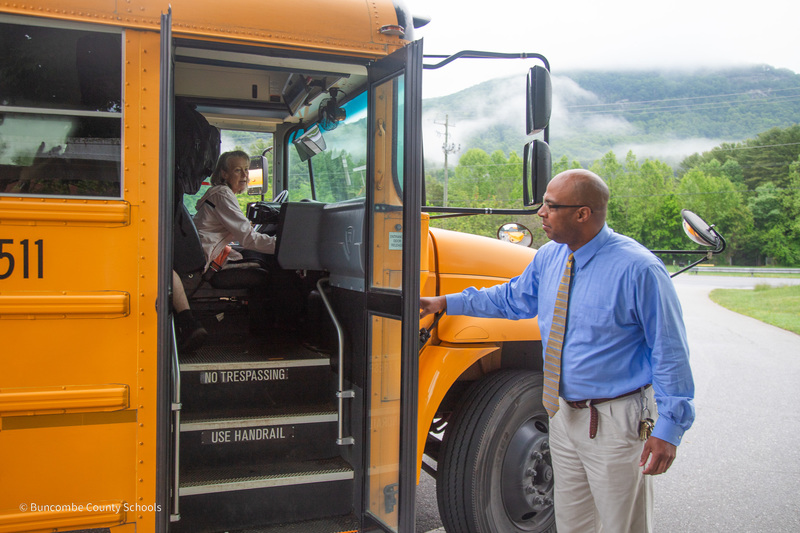
Public schools continued to serve more than 1.5 million students across North Carolina in the 2025-26 school year — or about 84% of market share, a percentage that is about the same as previous years.
Market share is a term used to describe how many students are served by different sectors of schools, including public schools, private schools, and homeschools. The Division of Non-Public Schools (DNPE) releases data on homeschools and private schools annually in July, when EdNC updates our market share analysis.
The Department of Public Instruction’s (DPI) and the State Board of Education’s strategic plan aims to increase market share from 84 to 89% by 2030.
 Sign up for the EdWeekly, a Friday roundup of the most important education news of the week.
Enrollment in public charter schools and private schools increased in 2025-26.
The number of public charter schools increased from 208 to 214, according to annual DPI data, and the number of charter students served increased from 156,524 to 161,057, an increase of 4,533 students.
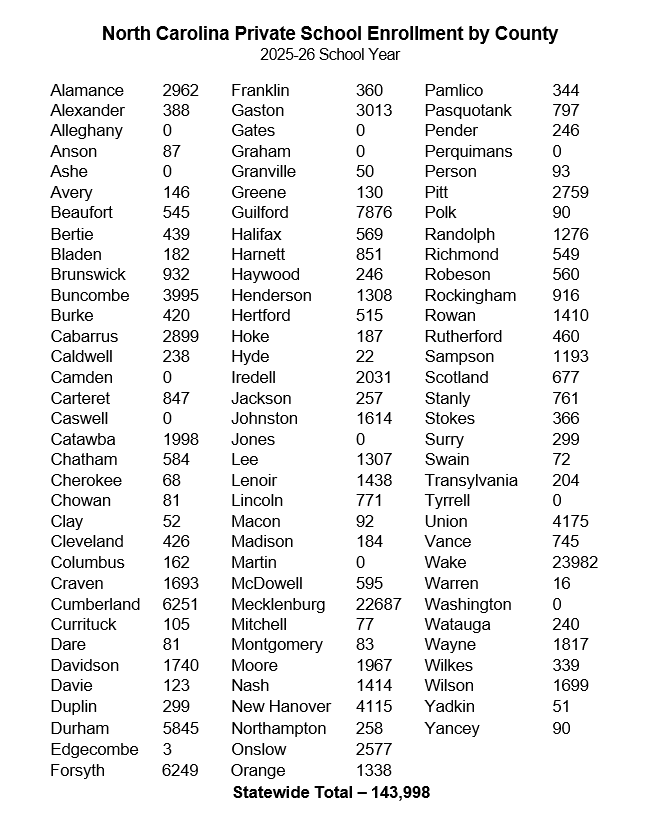
The number of private schools increased from 930 to 997, DNPE data shows, and the number of students served increased from 135,738 to 143,998, an increase of 8,260. In 2023, the legislature expanded school choice and access to universal vouchers is expected to further increase private school enrollment.
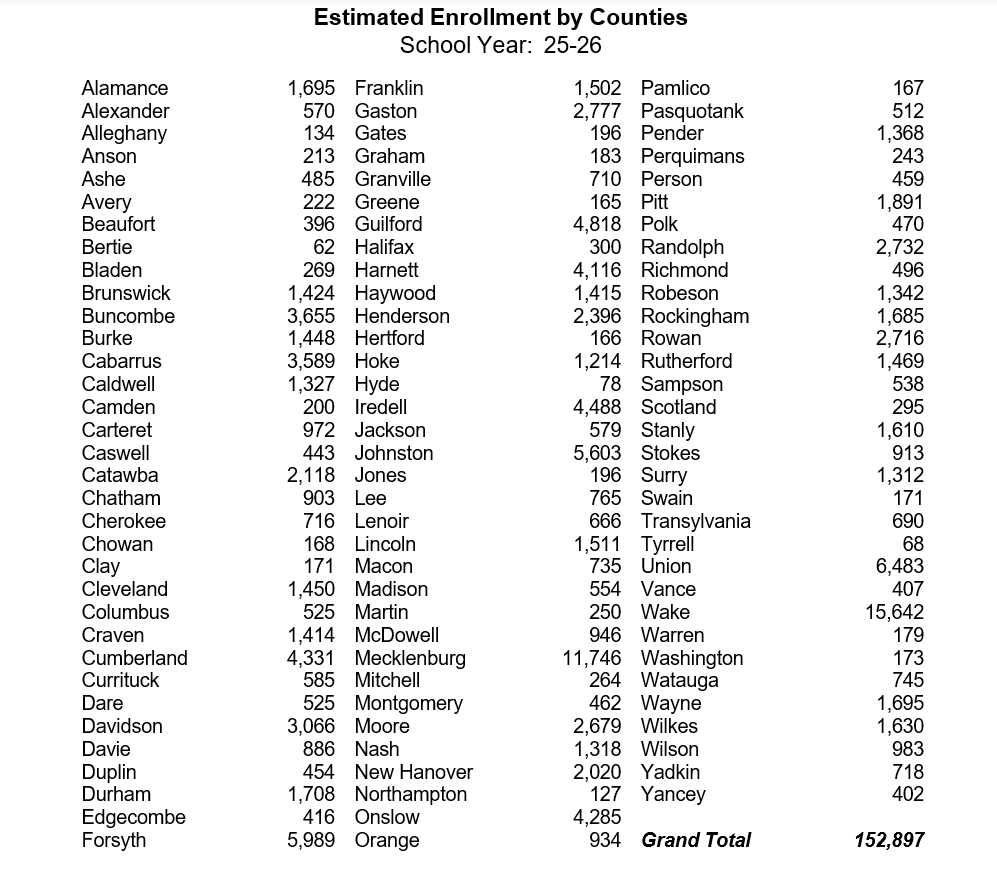
In the 2025-26 academic year, the number of homeschools statewide declined from 101,880 to 95,190, according to DNPE data. EdNC focuses its reporting on the number of registered homeschools rather than homeschool enrollment since the number of students enrolled in homeschools is an estimate, but the estimated number of students declined from 165,243 to 152,897, a decrease of 12,346. In 2020-21, the estimate of homeschool students peaked at 179,900 during the pandemic.
In 2025-26, here was the enrollment by sector of students in schools across North Carolina, compared to data from 2024-25:
| Sector | Number of schools, 2024-25 | Number of students, 2024-25 | Market share (% by sector), 2024-25 | Number of schools, 2025-26 | Number of students, 2025-26 | Market share (% by sector), 2025-26 |
|---|---|---|---|---|---|---|
| Local public schools | 2,467 | 1,380,910 | 2,473 | 1,371,839 (see p. 6 of source) | ||
| Public charter schools | 208 | 156,524 | 214 | 161,057 (see p. 27, 33) | ||
| Public lab schools | 7 | 989 | 6 | 831 (see p. 34) | ||
| Public regional school | 1 | 140 | 1 | 142 (see p. 34) | ||
| Public subtotal | 1,538,563 | 84% | 1,533,869 | 84% | ||
| Private schools | 930 | 135,738 | 7% | 997 | 143,998 | 8% |
| Homeschools | 101,880 | 165,243 (estimated) | 9% | 95,190 | 152,897 (estimated) | 8% |
| Total | 1,839,544 | 1,830,764 |
Sources: DPI’s Budget Highlights, and the NC Division of Non-Public Schools annual reports for homeschools and private schools. Please note we are not sure why the page 1 number in Highlights is 20 more than our public school subtotal or why the page 1 number is different than the page 7 number, which does match our public school subtotal. EdNC uses funded ADM (average daily membership) for this analysis.
There are two ongoing challenges in looking at market share in North Carolina.
As mentioned above, and unlike the data for the other educational sectors, the data on the number of students enrolled in homeschools is an estimate. Another challenge is which denominator to use. Many researchers add up the number of students across the sectors and use that for the denominator, as we did here. Others look to projections of how many students should be in each county.
Here is the estimated number of homeschool students by county, according to the new DNPE data:
Here is private school enrollment by county, according to the new DNPE data: