
Someone in their corner: How an Alleghany County mentor program helps students find their own way
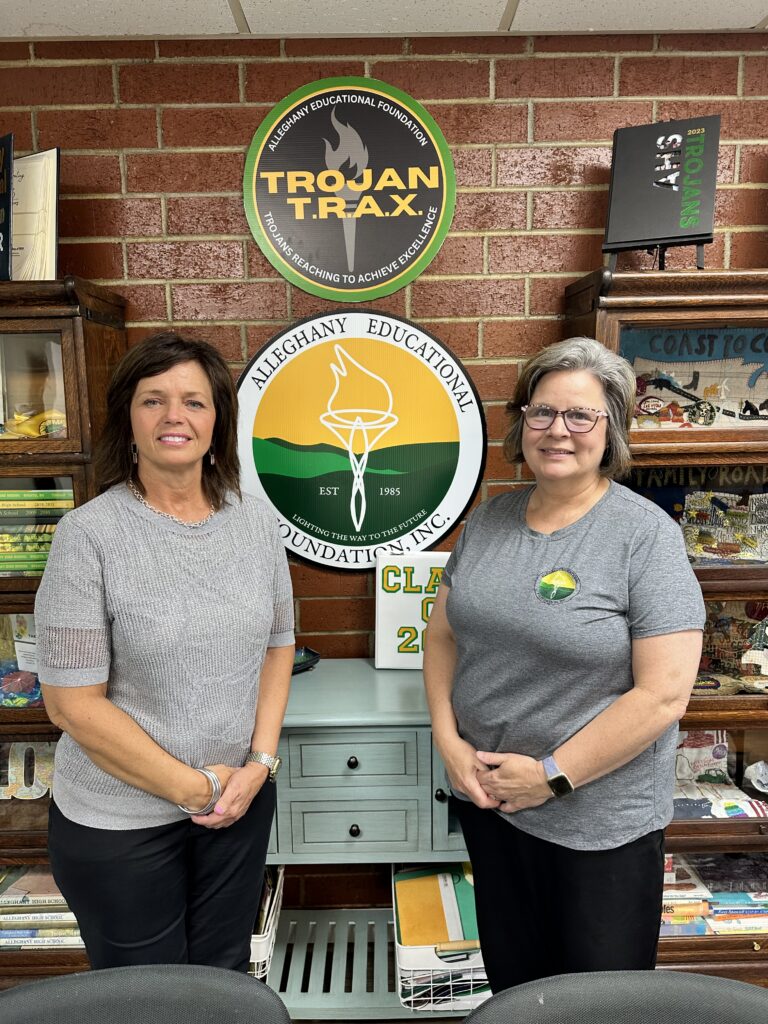
For nearly five years, Sadie Edwards has had the same person in her corner. Cindy Atwood became her mentor when Edwards was in eighth grade, facing high school and unsure what came after it. Now Edwards is a rising senior at Alleghany High School, thinking about a four-year college and a career with room to be creative, and Atwood is still there — still meeting with her, still asking the questions that help Edwards figure out her own answers.
Edwards is in the first group of students to grow up inside Trojan T.R.A.X. — Trojans Reaching to Achieve EXcellence — the flagship program of the Alleghany Educational Foundation. She’ll graduate next year as one of the first to have had the same mentor throughout her studies.
When Melissa Vestal and Susan Nilo took over the foundation, there was no T.R.A.X. There was a scholarship operation, and it was a good one — around 140 awards a year, all privately funded, built up since 1985. But all of it kicked in at the finish line, when a senior applied. There was nothing for the years leading up to that.
 Sign up for the EdWeekly, a Friday roundup of the most important education news of the week.
When the two took over the foundation about four years ago, they had just retired from Alleghany County Schools. Vestal was a principal who led her building through COVID.
“Our board was really talking about, what are we going to do before these kids graduate to get them ready?” Vestal said.
The answer came from Rutherford County, where a foundation had run something similar for years. Vestal and Nilo connected through myFutureNC, drove down to see it, and came home converted. The plan was to launch the next school year. That lasted about as long as the drive home. Somewhere before the county line, they decided it had to happen now.
They pitched the superintendent that week. The model ties a scholarship to benchmarks: mentor meetings, a weighted GPA, a college-entrance score, good character, and 100 volunteer hours. If a student meets those benchmarks, the money is theirs — they don’t have to get paired with a donor or hope it works out.
But the scholarship, it turned out, wasn’t the heart of the thing.
“We had no idea the mentor program was the meat of it all,” Vestal said.
They’d added mentors almost as a logistics fix — somebody had to track all those volunteer hours. Rutherford’s Monica LeShane told them flatly they couldn’t do it without mentors. She was right, and not for the reason they expected.
The first mentors were nearly all retired educators, recruited with a few phone calls. Vestal and Nilo wanted that group precisely because it would be a hard sell — teachers are weary of programs stacked on programs, the kind that arrive with fanfare and aren’t built to last. So they put it in front of the toughest crowd they could find and waited for the holes to get shot in it.
Atwood was in that first room of recruits. A reading specialist and teacher for 34 years, in Elkin City and at Sparta Elementary, she had good questions in that meeting — the kind Vestal and Nilo were hoping for. She was also paired with Edwards, and the match stuck.
It helps that the two have a lot in common. Edwards’ family farms — Christmas trees, dahlias for a while — so they talk about farm stuff, classes, and what comes after high school. Atwood’s read on the work is plain: you build the relationship first because it’s the only way a teenager opens up to you. Then you can lead them in finding their own ways to improve — do you take notes? do you study? — instead of handing them the answer.
“I think she understands where I’m coming from,” Edwards said of Atwood.
The meetings happen four times a year, but the relationship doesn’t stop there. Mentors turn up at wrestling matches and eighth-grade promotions, cheering for kids who might not have had anyone else in the stands.
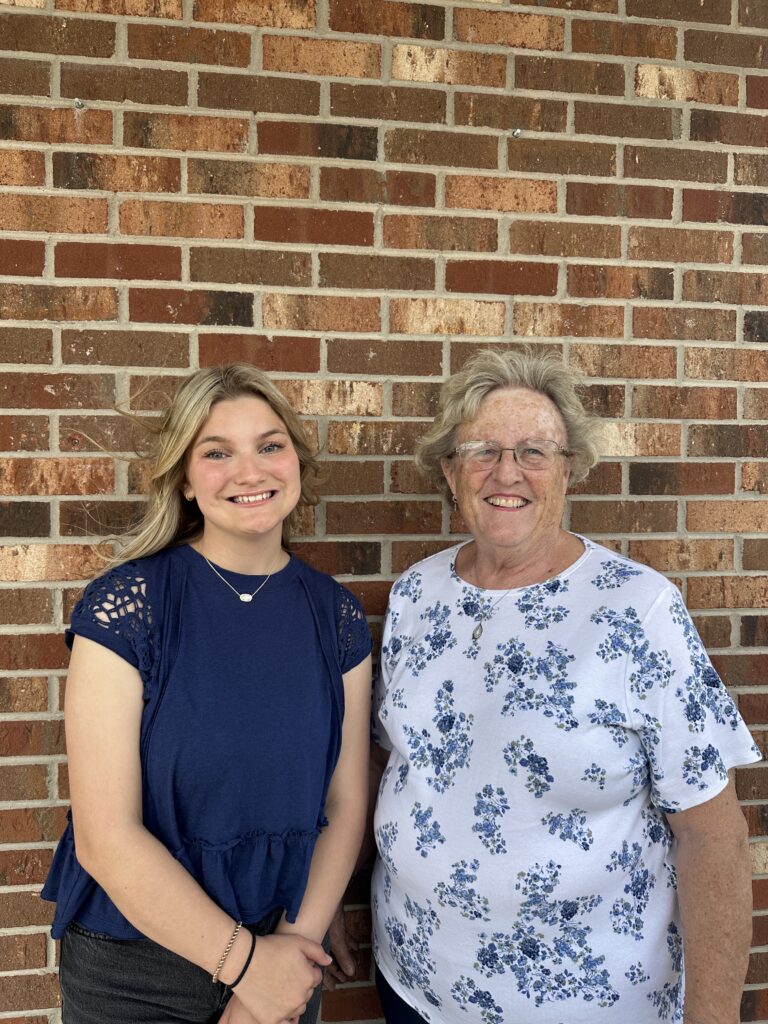
Liz Dean, the high school’s guidance counselor, will admit she was a skeptic.
“At first, I thought, oh, just another thing — a lot of extra work for me,” she said. “But that’s not what’s happened. It has been so helpful.”
She’s one person and can’t meet with every student as often as she’d like. Mentors who reinforce the same message all year change what students bring to her door.
Now they come in knowing what to ask for.
“They know to come to me and say, ‘Hey, I don’t need this class, and this is why,’” Dean said. “‘This class is in my pathway. This is why it would help me.’”
They have the words now, she said. Students are more in control of their high school plan and more in control of their future plan.
The program has grown faster than anyone planned, with about 400 students now, climbing to 500 next year and with a waiting list to become a mentor. What T.R.A.X. is careful not to be is a machine for pushing kids toward college. The foundation has paid for pilot’s licenses and credentials in welding, line work, and dog grooming. Its promise is to support students “as they find their own individual paths to success,” and in a rural mountain county, that phrasing is doing real work. Some kids leave. Some, like Edwards, may want to stay close to home and find a way.
For Atwood, after 34 years in classrooms, the surprise has been how much she gets back. A growth experience on both sides, she calls it “personally rewarding, the feeling of still making a difference.” It has also made her, improbably, a student of wrestling: one mentee was a gifted athlete, so she learned the whole sport just to meet him where he was. That, in the end, is the entire idea.
To learn more about Trojan T.R.A.X. or to become a mentor, contact the Alleghany Educational Foundation at 336-372-5010 or alleghanyeducationalfoundation@gmail.com.