State Board discusses North Carolina’s next chapter of early literacy work

North Carolina’s early literacy work is entering a pivotal phase as the state shifts from large-scale training efforts to the harder task of sustained classroom implementation. During this week’s planning and work session, members of the State Board of Education, Department of Public Instruction (DPI), and district leaders examined the progress, challenges, and next steps tied to the state’s sweeping literacy reforms.
The discussion reflected both the urgency and complexity of the work, as districts continue adapting to new instructional requirements, professional development expectations, and accountability measures aimed at improving reading outcomes for students across North Carolina.
 Sign up for the EdWeekly, a Friday roundup of the most important education news of the week.
In 2021, the state made a significant investment in science of reading training for K-5 teachers and in building a statewide literacy infrastructure. That work is beginning to show results, particularly in kindergarten and first grade foundational reading skills. But state leaders said on Wednesday that the next phase will be more complex.
Student and School Excellence Committee Co-Chair Jill Camnitz framed the work as a shift from “initial implementation to sustained effective classroom practice,” noting that students must move beyond foundational skills into comprehension, knowledge-building, and increasingly complex texts.
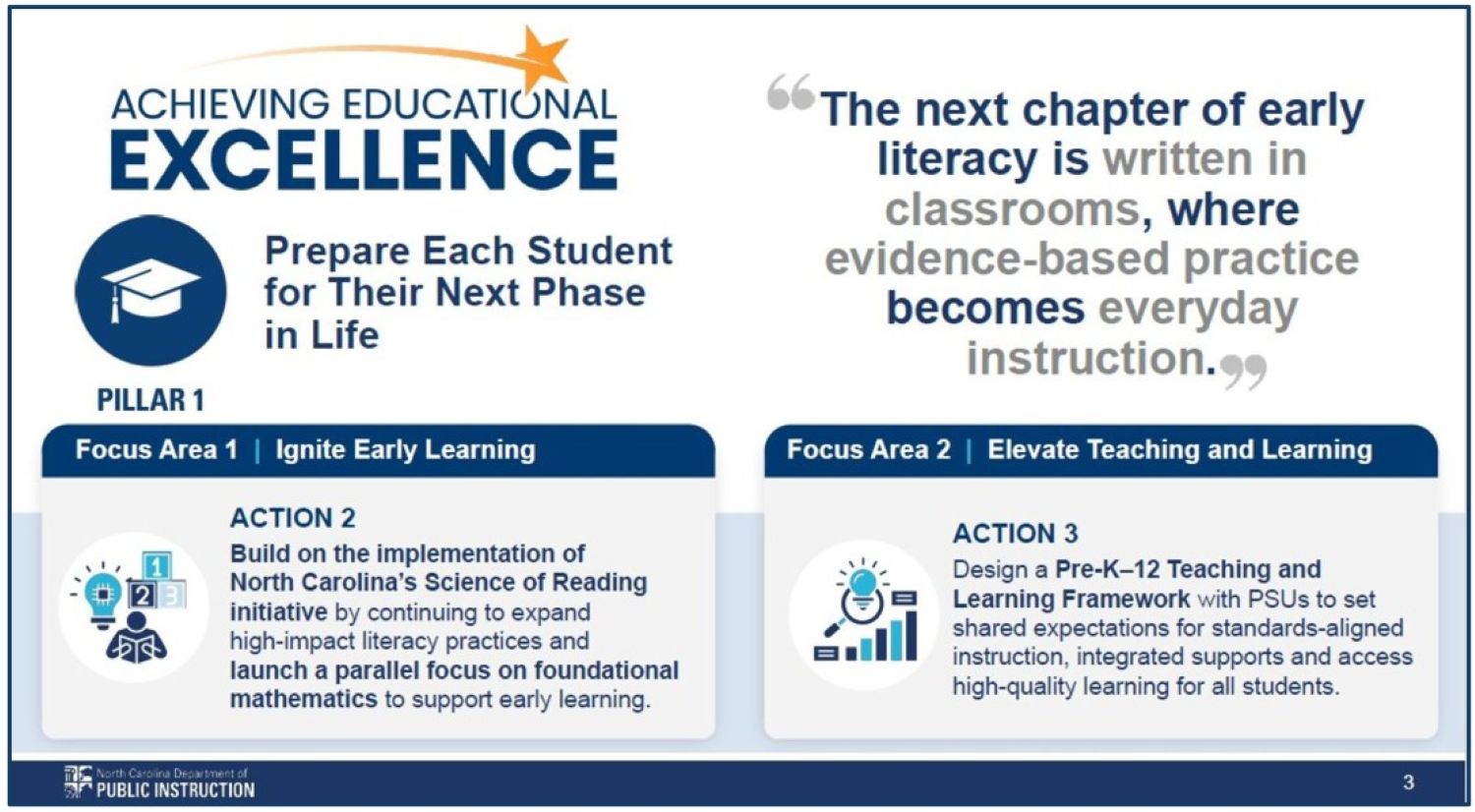
Dr. Cynthia Barber, director of DPI’s Office of Early Learning, described the state’s work as moving from a historic investment in literacy training to sustainable implementation centered on coaching, instructional coherence, and data-informed support.
The presentation, titled “The Next Chapter in Early Literacy: Moving Theory to Practice,” highlighted North Carolina’s continued investment in Language Essentials for Teachers of Reading and Spelling (LETRS) training, with more than 42,000 educators participating in over 1,700 training sessions since the initial completion of 44,000 K-5 educators during the statewide cohort trainings in 2022-24.
Early gains in foundational reading skills
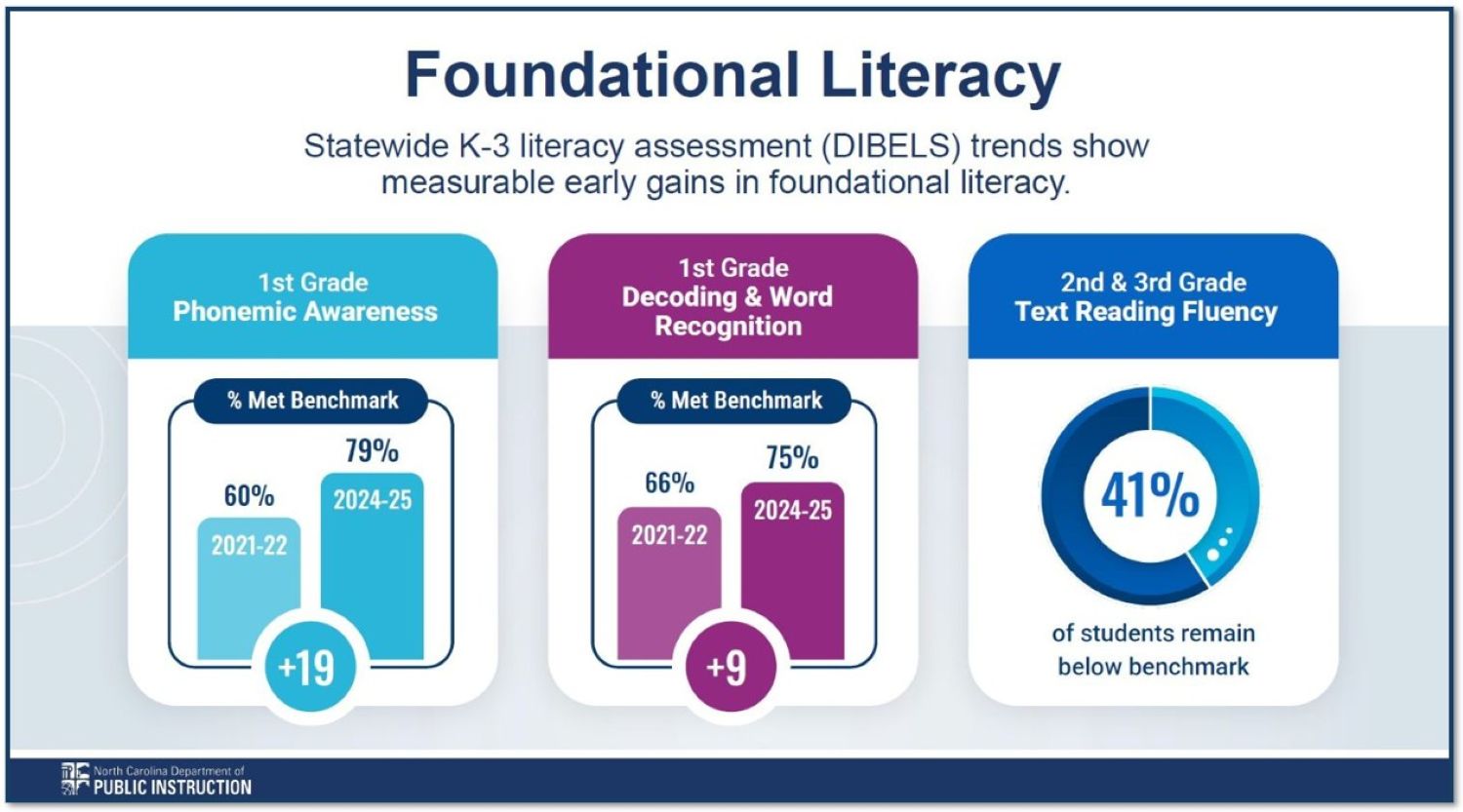
Dynamic Indicators of Basic Early Literacy Skills (DIBELS) benchmark data presented during the meeting showed strong foundational growth in kindergarten and first grade.
First grade phonemic awareness increased from 60% of students meeting benchmark in 2021-22 to 79% in 2024-25. First grade decoding and word recognition increased from 66% to 75% over the same period.
“Since 2021-22 and the adoption of the Excellent Public Schools Act, students in NC have made tremendous gains in foundational skills,” Barber said.
Barber said North Carolina is approaching “critical mass,” defined as 80% of students meeting benchmark, which signals that core instruction is becoming increasingly effective.
Second and third grades become the state’s focus
Despite those gains, state leaders identified a plateau in text reading fluency in grades 2 and 3, describing the transition as the state’s “highest-leverage transition point” for literacy improvement.
Mary Derfel, assistant director of the Office of Early Learning, said the state is shifting its emphasis from training to classroom practice through intensive, job-embedded coaching.
Derfel explained that by second and third grades, word recognition and language comprehension should work together “effortlessly and automatically” so students can independently make meaning from increasingly complex texts.
Many students, she said, are getting stuck at that point.
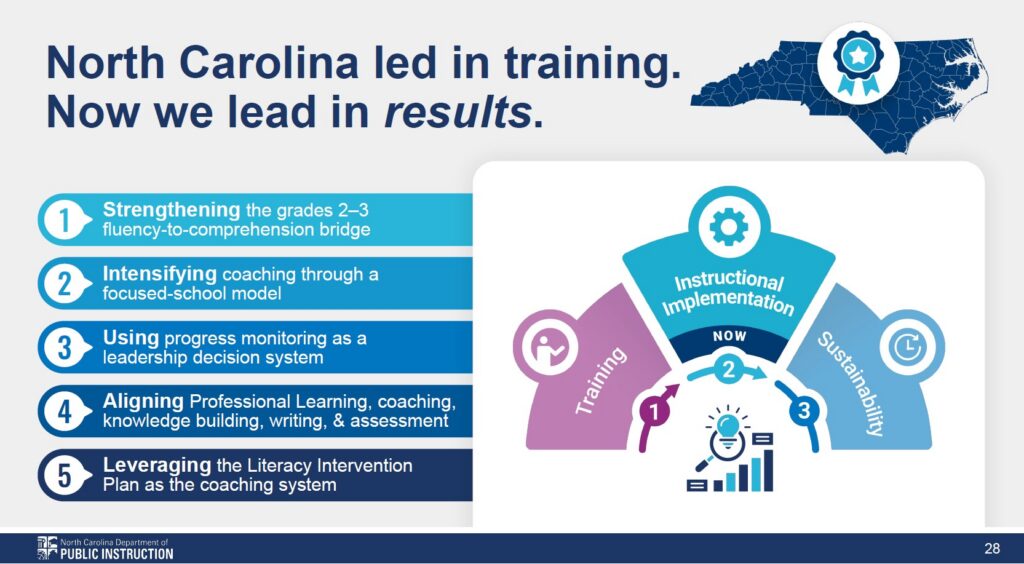
The Office of Early Learning outlined several operational priorities for the coming year, including:
- Sharpening the focus on grades 2-3 text reading fluency,
- Aligning coaching cycles to student data,
- Expanding a focus-school coaching model,
- Using progress monitoring as a leadership tool, and
- Leveraging Literacy Intervention Plans as coaching systems rather than compliance documents.
The state’s coaching structure is also shifting from broad systems support to more targeted models grounded in Fundamentals of Literacy Coaching professional development modules developed by the Florida Center for Reading Research (FCRR) and ExcelinEd.
From training to implementation
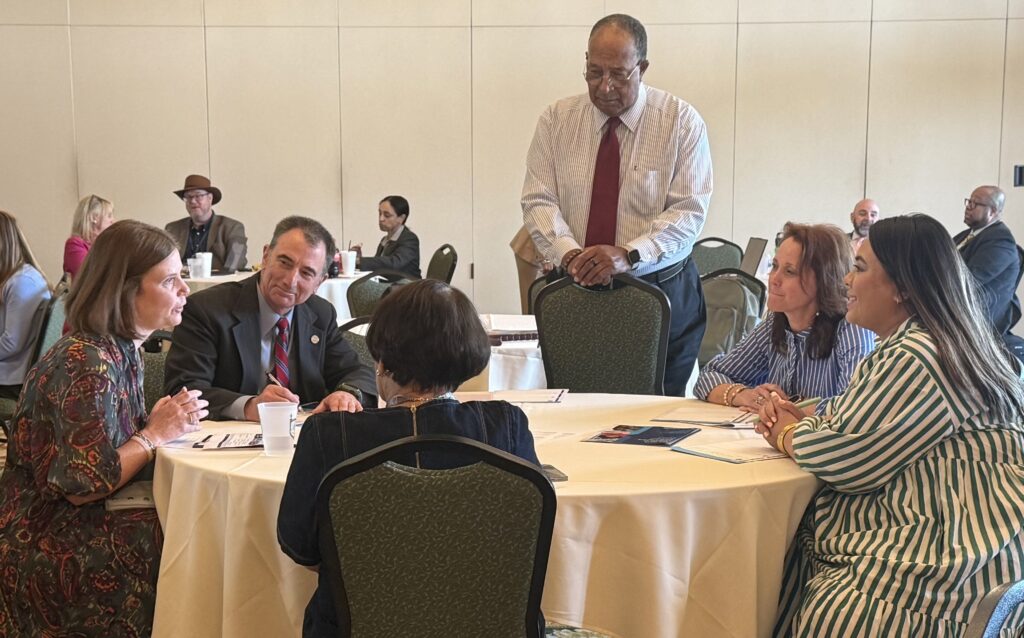
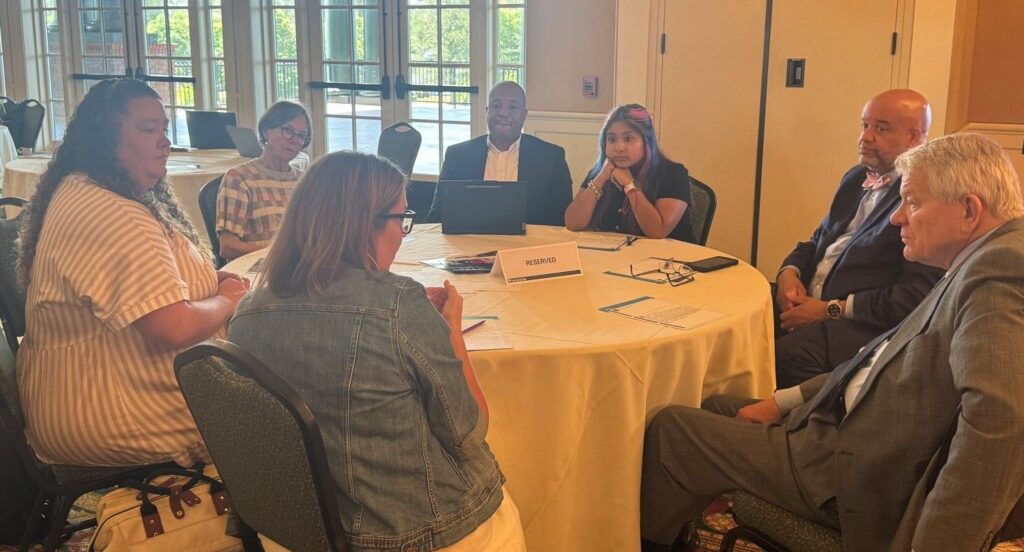
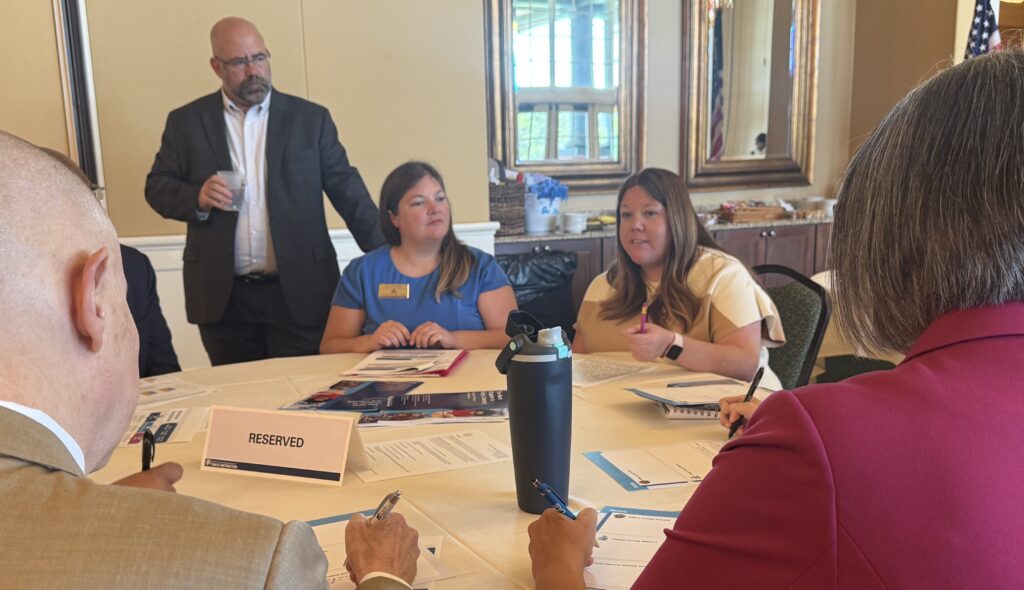
District leaders from Wilkes, Orange, and New Hanover counties participated in breakout sessions during the work session, sharing how LETRS training is translating into classroom practice and student outcomes.
Representatives discussed changes in instructional practice, district focus areas, and strategies they believe could support statewide expansion.
State leaders emphasized that sustaining literacy gains will require alignment across state, district, school, and classroom levels. They pointed to the importance of protected literacy blocks, clear instructional expectations, coaching systems aligned to data, and daily evidence-based instruction.
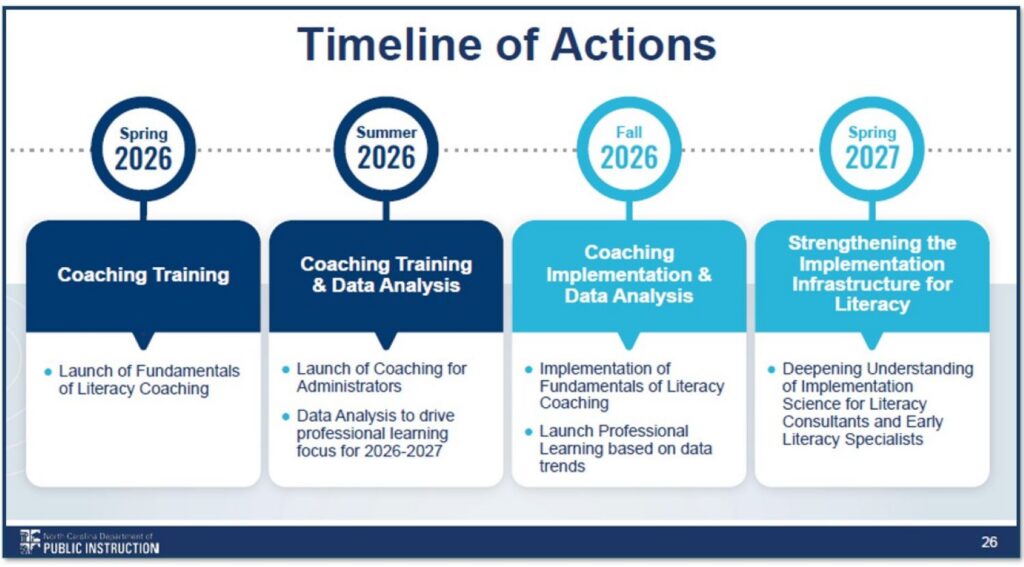
Looking ahead, Barber outlined a timeline extending into spring 2027 that includes additional coaching training, administrator support, data analysis, and implementation science work for literacy consultants and early literacy specialists.
The presentation concluded with a revised message from earlier phases of the state’s literacy work: “North Carolina led in training. We led in practice. Now we lead in results.”
As the meeting ended, one message remained clear: Literacy is not being treated as just another initiative, but as the foundation for nearly every other educational outcome North Carolina hopes to improve.
Board members and state leaders acknowledged the scale of the work ahead, while also emphasizing that sustained implementation, not short-term momentum, will determine whether the state’s literacy efforts truly change student trajectories.
For educators, families, and policymakers alike, the challenge now is moving beyond alignment and into lasting impact in classrooms across the state.