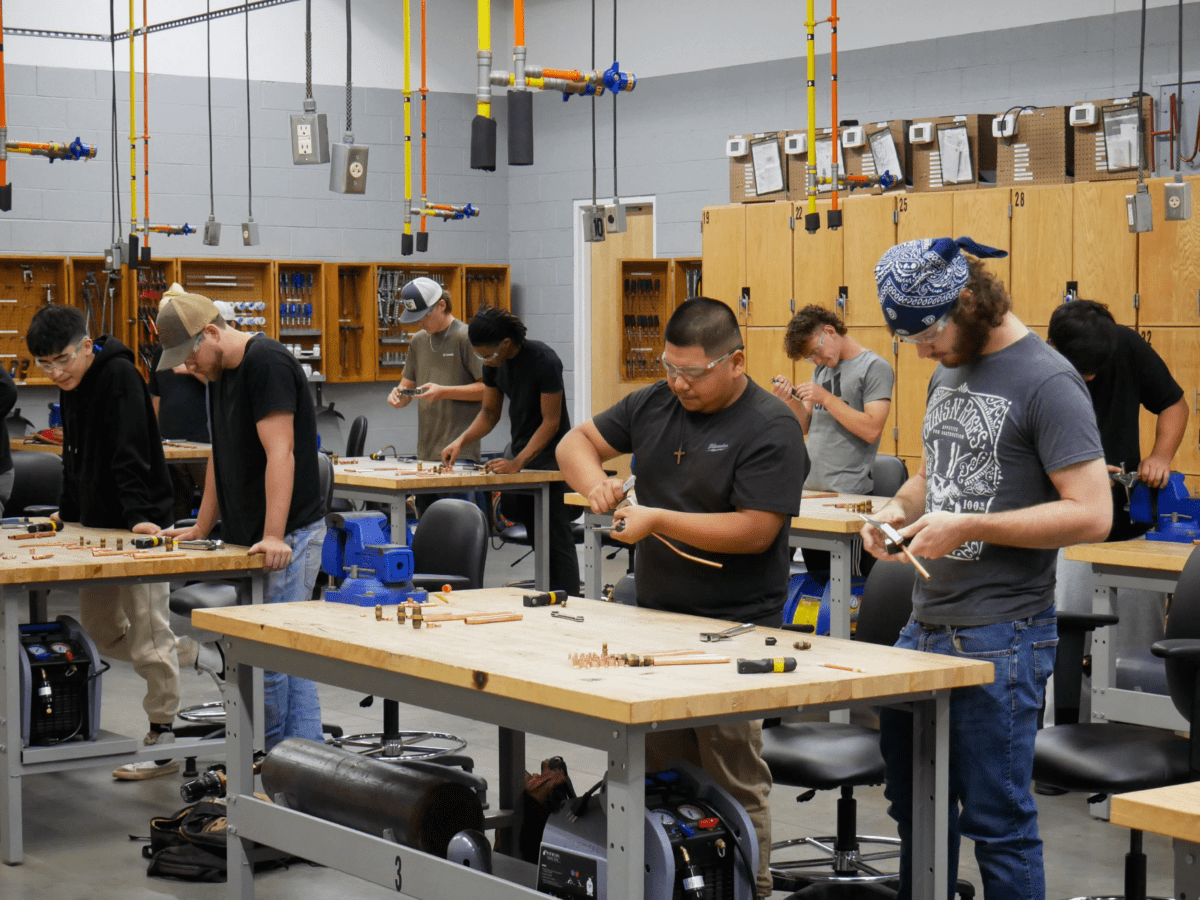
Walking around Alamance Community College’s campus in Graham, North Carolina, there are visible signs of the support available to students at every corner.
There’s the year-round, on-campus child care center, which has a 5-star rating from the state and serves children from 6 weeks to 5 years of age.
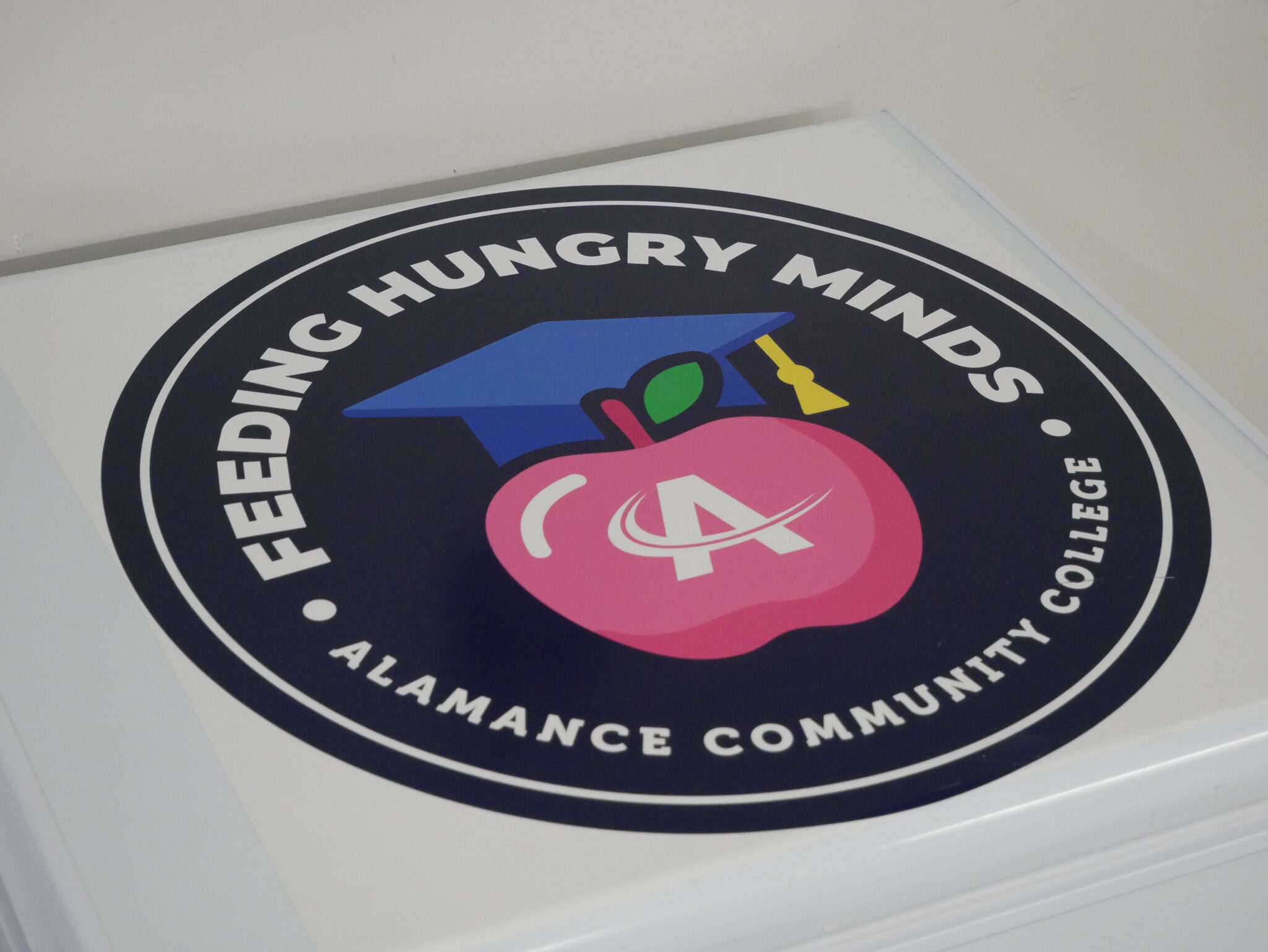
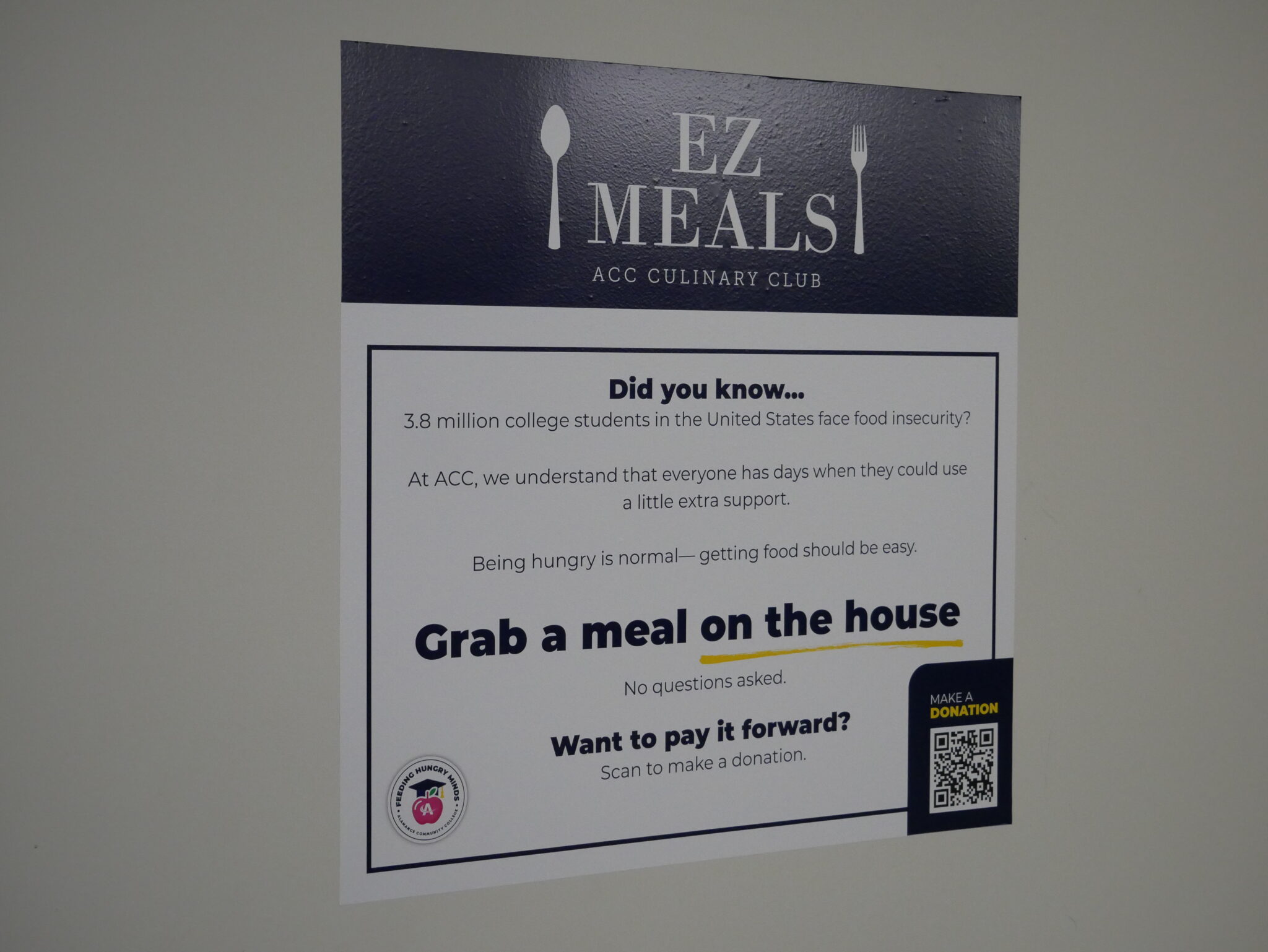
There are multiple food resources, including free frozen meals prepared by the college’s culinary club that are loaded into freezers across campus, free produce-to-go bags, and a pick-your-own garden. Recently, the college won the North Carolina Collegiate Hunger Challenge for the efforts of Feeding Hungry Minds, an initiative that works to address campus food insecurity.
There’s even an office of belonging, which works to create a culture where all students can succeed.
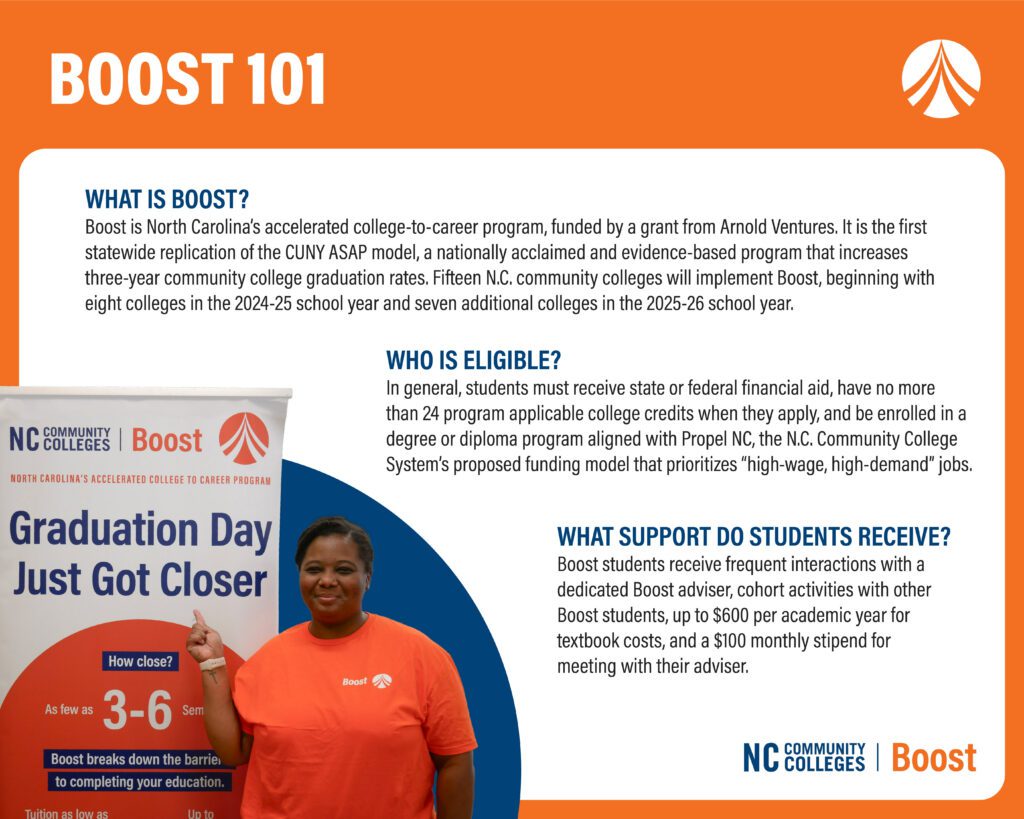
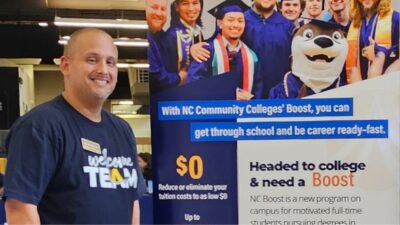
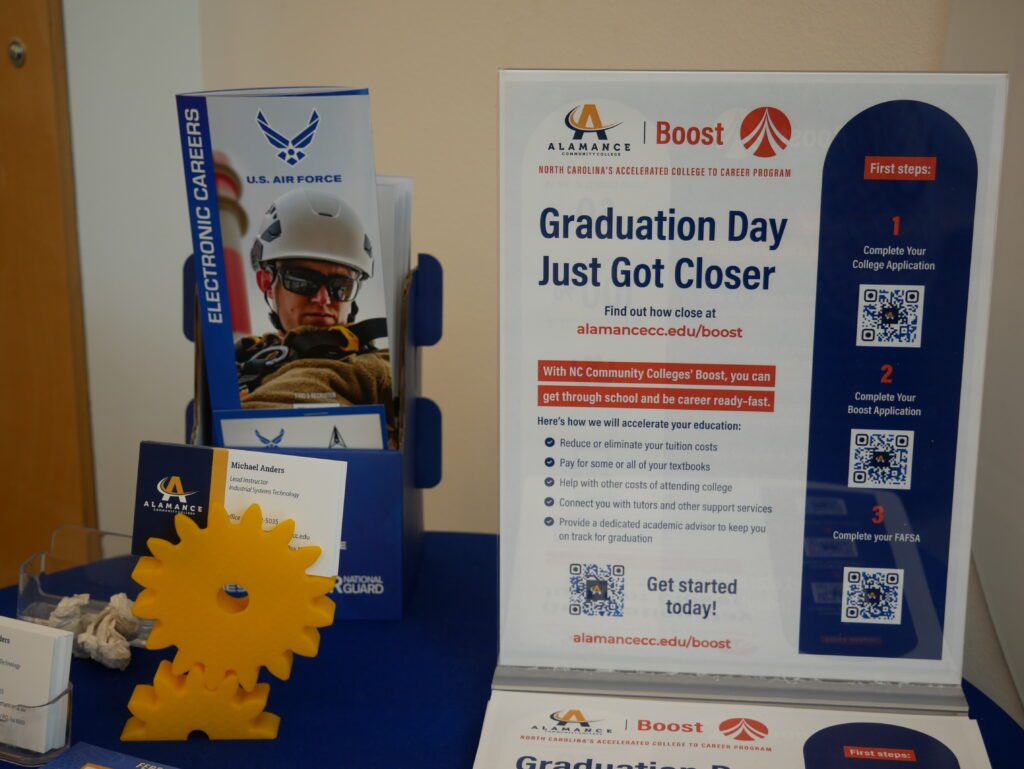
And then there are the orange and blue signs advertising Boost — a statewide initiative that provides intensive wraparound support for participating students, including high-touch advising, a $600 yearly stipend for textbook costs, and a $100 monthly stipend for meeting with their adviser.
All of these efforts, according to President Ken Ingle, come down to ensuring students get to the finish line and successfully complete their degree or credential.
“How do we support students to success? And understanding that different students have different needs — have different challenges that they’re facing — a lot of times, challenges outside of the classroom,” said Ingle.
As one of the first eight colleges to launch Boost, Alamance has implemented the program to meet the particular needs of its students. That has included integrating Boost into college-wide advising structures, removing roadblocks to enrolling in Boost through one-on-one personal outreach to students, and using storytelling to share the experiences of Boost students and staff members.
At a glance: Boost at Alamance Community College
- Number of students served: Currently, 150 students are enrolled in Boost, which is the enrollment target for each cohort. In fall 2025, 147 students joined Boost, and 13 additional students joined in spring 2026. Additionally, 90% of Boost students were retained in the program from the fall 2025 to the spring 2026 semester.
- Enrollment across programs: The majority of Boost students are on a path to transfer to a four-year university, enrolled in associate in science and associate in arts degrees. Other Boost students are enrolled in degrees in medical assisting, welding, information technology, and health sciences.
- Outcomes: Although Boost is still in the early stages of implementation, early data has shown improvements in retention, grade point average, credit accumulation, and spring enrollment persistence among Boost students compared to students not in Boost.
 Sign up for Awake58, our newsletter on all things community college.
Integrating Boost into college-wide advising structures
When Boost launched at Alamance, the college was in the midst of transitioning from a decentralized, faculty-based advising model to a centralized, staff-based advising model. In the new model, students are assigned to professional staff advisers, mirroring the structure of Boost.
“Boost is really pushing us to think critically about: what does advising need to look like, and how can we emulate some of the wraparound supports Boost provides?” said Adam Wade, associate vice president of advising and onboarding.
One of the college’s advisers had coined the college’s approach as “from application to graduation” — advisers work holistically to support students throughout their journey at the college, including proactive outreach based on grades and other early alerts. Similarly, Boost’s advising supports are designed to be comprehensive, personalized, and proactive.
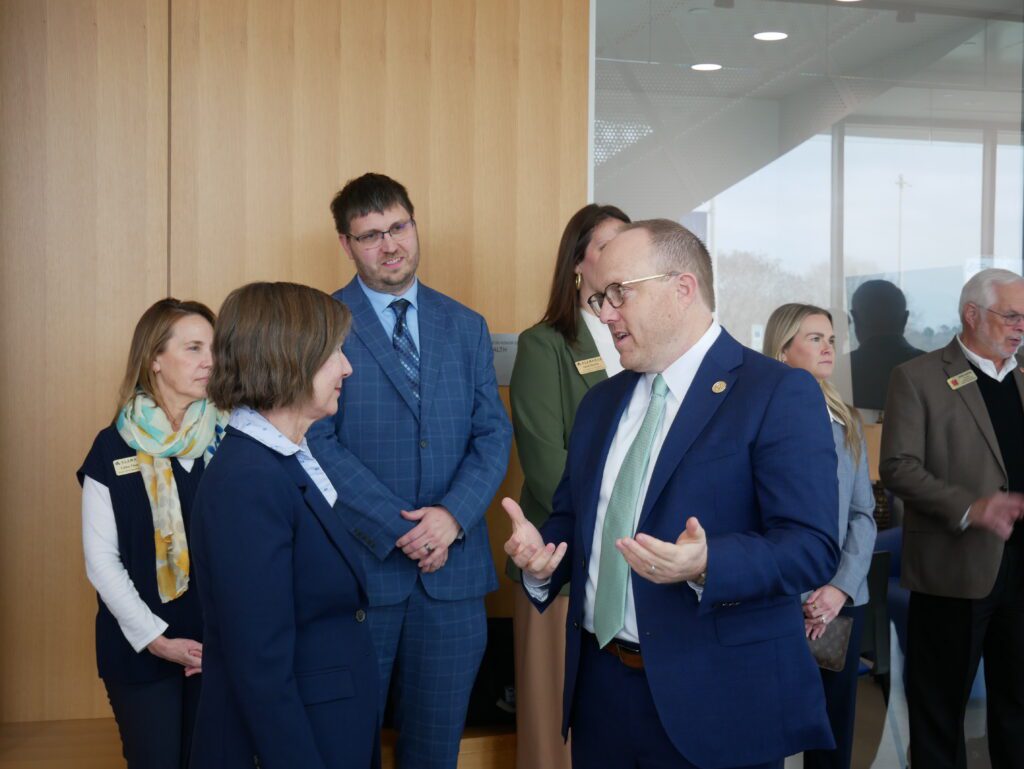
As Boost starts to influence advising structures campuswide, Ingle said the college has also intentionally brought Boost and other student success initiatives — such as TRIO, a group of federally-funded student support programs for low-income and first-generation college students — under a shared leadership structure. Wade, who was hired around the time Boost launched, oversees Boost, TRIO, advising, admissions, and Career & College Promise for the college.
“Even though, for example, our TRIO program … is not part of Boost specifically, the staff are able to come together, and talk, and share ideas, and really collaborate and say — ‘What’s working for Boost? How can we learn from that and apply it to the students we’re supporting in TRIO? Or certainly just students in general?’” Ingle said. “It’s easy to get very siloed if you’re not careful.”
Sharing learnings across student support efforts is also crucial for long-term sustainability, Ingle said.
“The grant funding aspect of it goes away — and one of the big questions always is, how do you integrate that back into the college proper, and how does that affect things long term?” said Ingle.
Read more about Boost
Removing roadblocks to enrolling in Boost
When Boost first launched at Alamance, recruitment efforts focused on email campaigns and attending open houses. Matthew Eckhoff, Boost director at Alamance, said that while those efforts built awareness, they did not move the needle on recruitment.
Instead, the Boost team quickly learned that picking up the phone and calling eligible students was more effective in getting them to enroll. To increase the odds of students actually answering, staff would cross-check students’ course schedules to make sure they weren’t in class.
“Once we did get them on the phone, I would say 95-99% of students were interested,” said Eckhoff.
After a phone call, students would receive a follow-up email with the application link and details about upcoming orientation sessions. Then, they’d receive a calendar event and text reminders right before the orientation session took place — a tactic Eckhoff said drastically improved attendance rates.
“A lot of the initial practices that we had in place were serving more as roadblocks to getting students to completion, rather than being beneficial,” he said.
Other efforts to remove roadblocks included allowing typed names to serve as signatures for Boost enrollment forms and moving more recruitment efforts to Zoom to connect with the college’s virtual and hybrid students who are not regularly on campus.
These personal conversations with students also helped staff clarify what Eckhoff described as common misunderstandings about the program. Some students thought the program was a scam, that there were fees to participate, or that they would have to pay the financial incentives back to the college.
“We were very deliberate about what we initially said when they first picked up (the phone),” said Eckhoff. “We would start off with, ‘First off, it’s a program where there’s no fees to join, no payment required, and these are the benefits.'”
The college also started incorporating this clear messaging into its marketing materials.
Telling the stories of the students and staff behind Boost
What does it actually look like to participate in Boost? Last year, Alamance Community College launched a “Behind the Boost” series on social media, regularly sharing spotlights of students and staff involved in the program. The posts serve to both recruit future students and to increase retention amongst current students.
“Future students can see someone like them in a spotlight, showing what the impact of the program was for them … but it also supports retention efforts, because it inspires other students who are on that similar path,” said Eckhoff.
Eckhoff said student spotlights are often a point of pride for those featured — students share them with family and friends and are celebrated for their hard work. The faculty spotlights emphasize the importance of campuswide support and collaboration for the success of the program.
“None of the work that we’re doing within Boost happens within a silo or on an island. It’s all in collaboration with internal and external partners that helps us achieve our goals,” he said.
Faculty spotlights have included those working in admissions and student integrity, highlighting how each department supports the success of Boost.
Crystal Barr, one of the Boost students featured in a post, plans to pursue a career in STEM after transferring to a four-year institution. According to the post, as a working parent, Barr “credits Boost with helping her stay grounded and focused during a demanding season of life.”
The structure, accountability, and support provided through Boost have helped me stay focused and consistent.
— Crystal Barr, Alamance Community College Boost student
Aaron Maynor, another Boost student with plans to transfer to a four-year university, is a first-time college student enrolled completely in online courses. According to his student spotlight, Maynor said the most meaningful aspects of Boost have been “the individualized support and sense of connection it provides.”
Even though I am online, Boost has helped me feel like I am not in this alone.
— Aaron Maynor, Alamance Community College Boost student
Looking ahead, and advice for other Boost colleges
Ingle said student feedback on Boost has been positive, and that the program is impacting how the college serves its community.
“A lot of our students … just need to know someone has their back and is in their corner and wants to see them succeed and is here to help them do that, any way that we can. And I think Boost, as much as anything, is a real exemplar of doing that,” he said.
Looking ahead to the fall 2026 semester, Alamance will bring on a second Boost adviser to serve a new cohort of 150 students, bringing the program’s total to 300 students.
The North Carolina Community College System, which manages Boost implementation statewide, recently updated the program’s eligibility criteria to allow students enrolled in diploma programs aligned with Propel NC sectors to participate in Boost. Eckhoff anticipates that this will help the program expand as it can reach a broader range of students.
Alamance is also launching a new Boost-eligible health sciences major in the fall to serve students who were formerly in pre-health tracks that were not eligible for Boost.

The student engagement strategies that Alamance learned during the first round of recruitment will be applied to future recruitment cycles and are also being used to communicate with students already in Boost. These strategies include proactive nudges and frequent reminders to students about upcoming meetings and key academic milestones, and creating structures to follow up with students who don’t show up for advising sessions.
“If they don’t make it, you go to them — wherever they are. A call, a text message,” said Eckhoff.
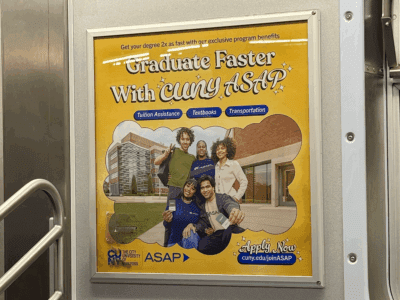
Seven new colleges will launch Boost in the fall, bringing the total to 15 colleges implementing the program statewide. Eckhoff, who also has previous experience running the CUNY ASAP program at LaGuardia Community College, shared three pieces of advice for colleges implementing Boost:
- Establish strong partnerships with institutional research and effectiveness early on. Eckhoff said these relationships were crucial to leveraging data to drive recruitment, allowing the college to reach students that were likely eligible for the program. This data also helped Boost staff understand the demographics of the students they were serving and better meet their needs.
- Do not rely solely on email to reach students. To meet students where they are, Eckhoff said, deploy tools like text messages, phone calls, and in person meetings. “From our experience thus far, it (email) has been the least effective for moving the needle not only for recruitment purposes, but also supporting students who are currently in the program,” he said.
- Provide structured support to Boost students in the beginning. Eckhoff said guidance is necessary, particularly early on, to help Boost students build more independence and understanding of the program. That includes frequent, intentional nudges to follow up on program requirements. “Once they understand the value (of Boost), they’re more likely to buy in and follow through on commitments to stay in the program,” he said.

Recommended reading