
An update from participants in the Golden LEAF Schools Initiative

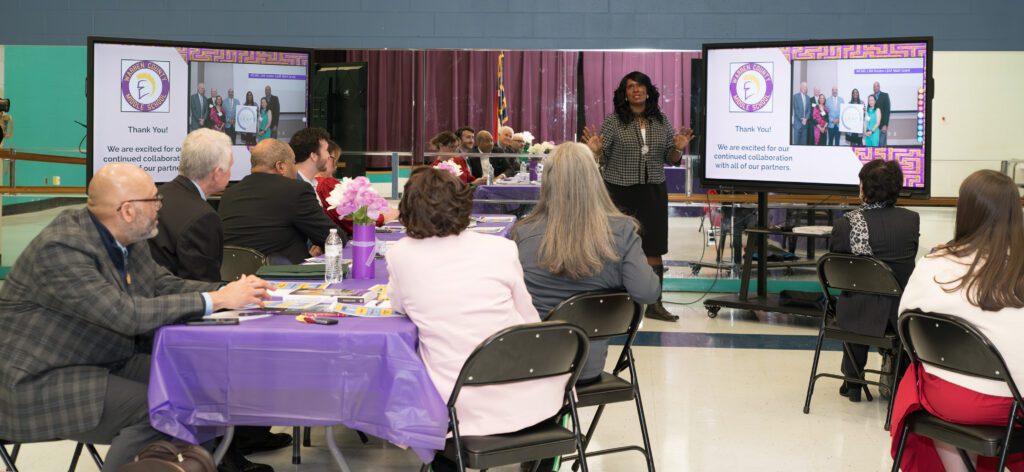
Rural school districts recently gave updates on their progress during the first year as part of a new initiative designed to improve school performance.
The Golden LEAF Schools Initiative is a five-year program which promotes educational improvement and innovation, focusing on pedagogy, leadership, school culture, career readiness, and math instruction.
Launched in January 2025, the initiative currently supports 15 schools across two cohorts, and recently announced it will award up to five additional rural middle schools the opportunity to participate in the Personalized Competency-Based Education (PCBE) cohort. The team previously selected 10 schools for its Transformative Schools cohort and five schools for the PCBE cohort in June 2025.
Participating schools will receive math resources and coaching, career readiness resources, and funding for travel, stipends, and bonuses. All participants are in rural school districts with a Tier 1 or Tier 2 economic status. Low-performing schools joined the Transformative Schools cohort and will have access to all of the initiative’s resources and interventions, which also includes many opportunities to network across cohorts.
 Sign up for the EdDaily to start each weekday with the top education news.
The initiative is based on the Marzano High Reliability Schools (HRS) Framework, which is designed to coach educators on the following things:
- Creating a safe environment for students and staff,
- Improving operational efficiency,
- High-quality instruction with clear goals, and
- Using ongoing assessments to meet student needs.
The HRS framework has five levels for schools to achieve each year under the grant. Here they are in chronological order:
- Safe, supportive, and collaborative culture.
- Effective teaching in every classroom.
- Guaranteed and viable curriculum.
- Standards-referenced Reporting.
- Competency-based education.
You can read more of EdNC’s previous coverage of the initiative in the articles below. Then, read on to see what three North Carolina schools in the cohort have learned so far.
Read more
East Alexander Middle School
In Alexander County Schools, some big changes East Alexander Middle School has made through the program — outside of receiving math curriculum coaching with Open Up Resources — is how they spend their time.
School administration administration canceled meetings they saw were redundant for their staff, for example. They then implemented professional development for their teachers centered around creating a safe, supportive, and collaborative school culture, according to a press release.
Principal Lee Swanson said that Golden LEAF programming “gets you to measure what is the right work. So what do we need to be doing? And then, selective abandonment. What do we need to stop doing?”
According to the press release, Superintendent Dr. Bill Griffin told school board members his hope is the training and redesign at East can be used in more Alexander County Schools.
“We must evolve,” said Griffin regarding modern education efforts.
Warren County Middle School
Since becoming Golden LEAF grant recipients, Principal Michelle Dunbar described how students at Warren County Middle School have more access to hands-on materials during math classes than they did before.
“The Golden LEAF Schools Initiative will allow us to strengthen our teaching practices and create more meaningful learning experiences for our students,” Dunbar said in a press release. “We’re excited to see how this investment helps both our students and staff grow.”
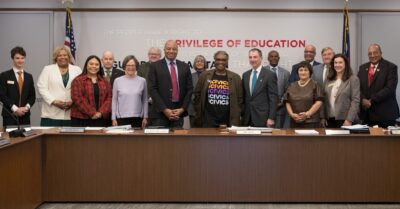
During a school visit by the Golden LEAF Foundation board, the Department of Public Instruction (DPI), and Superintendent Mo Green last week, Dunbar also described how teachers are being trained to let their students have a “productive struggle.”
“They give them the concept, they don’t say much about it, and they allow the students to figure out what’s going on. And I say productive struggle, because a lot of times they don’t know the concept, they’re kind of sitting there. But then they put what we call instructional routines, where you can talk to a partner,” Dunbar said. “There are things to get them started with their conversations, which is really important.”
Dunbar said the school has gotten a lot of support from the district as they are trying to build a culture with more stability.
“Our professional development (PD), when we have it, is all Marzano on those district days for PD, as well as the Open Up. We take the time to actually be embedded in the work. So we appreciate that,” Dunbar said. “We also have celebrations. How do we celebrate the teachers who are doing well? So have designed what we call incentive plans to address not only that, but the Marzano leadership team, as well as the math teachers who are making great strides.”
Dr. Carol Montague-Davis, superintendent of Warren County Schools, said the district is planning to embrace the initiative and eventually become a High Reliability School District.
“We have decided that that’s the way that we need to go as a district, because in a couple of years, we’ll be opening our elementary school with all our students in one location,” Montague–Davis said. “And so we need to embrace something that is going to be a continuance — going from elementary to middle to high.”
Northern Middle School
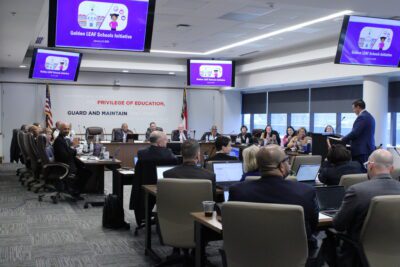
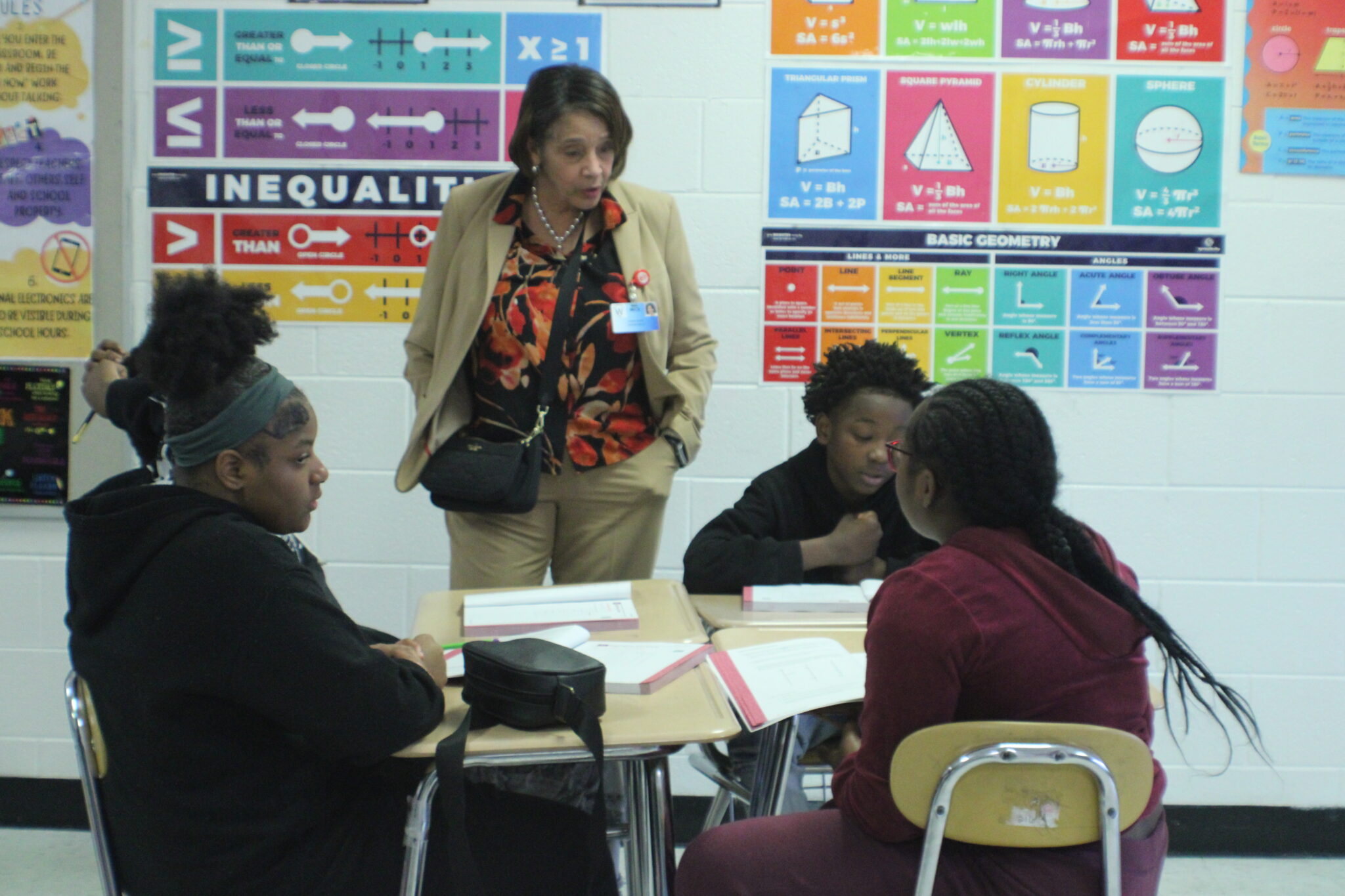
In Person County Schools, Northern Middle School’s Principal Dustin Martin presented to the Golden LEAF Foundation and DPI the structures his school put in place to successfully reach each level of the grant.
“We can’t do the work if we don’t have a strong structure in place. And so one of the other things that we’ve really tried to emphasize with our unit study process is, what does our planning structure look like? What does our intervention structure look like?” Martin said.
An example the principal gave was establishing pacing structures with the new curriculum materials they received so teachers can stay on track.
Much of the school’s level one work was targeted at gathering feedback. One survey was distributed to families, and another was distributed to teachers and administrators to get their perspectives. Martin said that the biggest insight from the parent survey was that the community wanted more formal ways to communicate with the school about how they are performing. The key insight from the staff survey was the need to build more staff capacity.
A new initiative the school has started, thanks to the grant, is the Northern Middle School Master’s Academy. Martin said that traditionally, after-school tutoring was for students who really needed remediation. Since receiving coaching under the Golden LEAF Initiative, they have implemented a process to look at student data and deliver interventions during school hours.
“One of the things that’s going to be a point of emphasis for us is, how are we looking at those students that are our higher-achieving students that maybe don’t get that same amount of time, that same emphasis on their growth?” Martin said. “So how are we utilizing the time after school, where, we adjust them and go from there?”
To prepare the school to dive into level two, each of their teachers has written two classroom engagement strategies they received from their coaching under the name plate on their doors.
“I think it’s a great opportunity for a public-private partnership for Golden LEAF,” said Dr. Rodney Peterson, superintendent of Person County Schools. “With the decreased funding that we’re getting for schools, for them to be able to offer these grants for us, to be able to secure the coaching, and do the type of not only coaching, but development that we need in our at-risk schools, is very important.”

What did state leaders say?
Particularly during a visit to Northern Middle School, Superintendent Green said he observed more student engagement than he did during his visit in 2025.
“We know it takes time to make the kind of gains we all want for all of our students and all of our schools all the time,” he said. “So thanks for doing the hard work to lay the foundation.”
In between school visits, Scott T. Hamilton, president and CEO of the Golden LEAF Foundation, said their board is very engaged in updates coming out of the initiative, “because it’s not just an education. That’s how our board sees it,” Hamilton said.
“To be successful as they move into the workforce and be able to provide economic opportunity for them, they’ve got to be successful here,” Hamilton said.
The Golden LEAF Schools Initiative is also prioritized in DPI’s strategic plan, “Achieving Educational Excellence.”
“The Golden LEAF Schools Initiative is an important step toward achieving my vision: ensuring every child in North Carolina’s public schools achieves educational excellence,” Green said in January 2025. “In order for North Carolina’s public schools to become the best in the country, we must rethink how we approach teaching and learning, and we must provide our schools with the appropriate support to do so.”
You can find the DPI’s full strategic plan here and EdNC’s reporting on it here.