
Berger-Page race likely to go to a recount, and other NC primary election results

Editor’s note: This article was was updated on March 11 to reflect the new vote count in the Berger-Page Senate race.
On Tuesday, March 17, Berger formally asked for a recount of election results which show him losing to Page by 23 votes, according to a State Board of Elections spokesperson quoted in a report from the News & Observer.
On Tuesday, March 24, Berger conceded the primary race, after the recount still showed him losing by 23 votes to Page. Berger’s term in the General continues through December; a new Senate leader is expected to be selected in early 2027.
The unofficial results are in for the 2026 primary elections in North Carolina. Now, most are looking ahead to the Nov. 3 general election.
However, county boards of elections and the North Carolina State Board of Elections (NCSBE) still need to certify the results in the coming weeks — and before that, a key race might develop further.
The Republican primary for N.C. Senate District 26, between Senate President Pro Tempore Phil Berger, R-Rockingham, and Rockingham County Sheriff Sam Page is tight; Page had the lead by two votes as of Wednesday, March 4, before some provisional and overseas absentee ballots were counted. As of March 11, after provisional ballots were counted, Page’s lead widened to 23 votes, according to the NCSBE dashboard. There could still be overseas ballots, which will be counted Friday, March 13.
 Sign up for the EdDaily to start each weekday with the top education news.
Sam Hayes, the executive director of NCSBE, said at a press conference Tuesday morning (March 3) that as of 10:00 a.m., NCSBE was receiving reports of good voter turnout. He said that early voting voter participation was up 25.4% compared to the 2022 primary, with 701,120 early votes cast this year.
This election was the first in North Carolina history conducted while more voters are registered as Republicans than as Democrats. While Republican registration has remained roughly the same, Democratic registration is falling and unaffiliated registration is rising.
See below for information on key races, and what results might mean for education. View unofficial election results for all statewide and local primary races here.
Cooper and Whatley to face off in U.S. Senate race
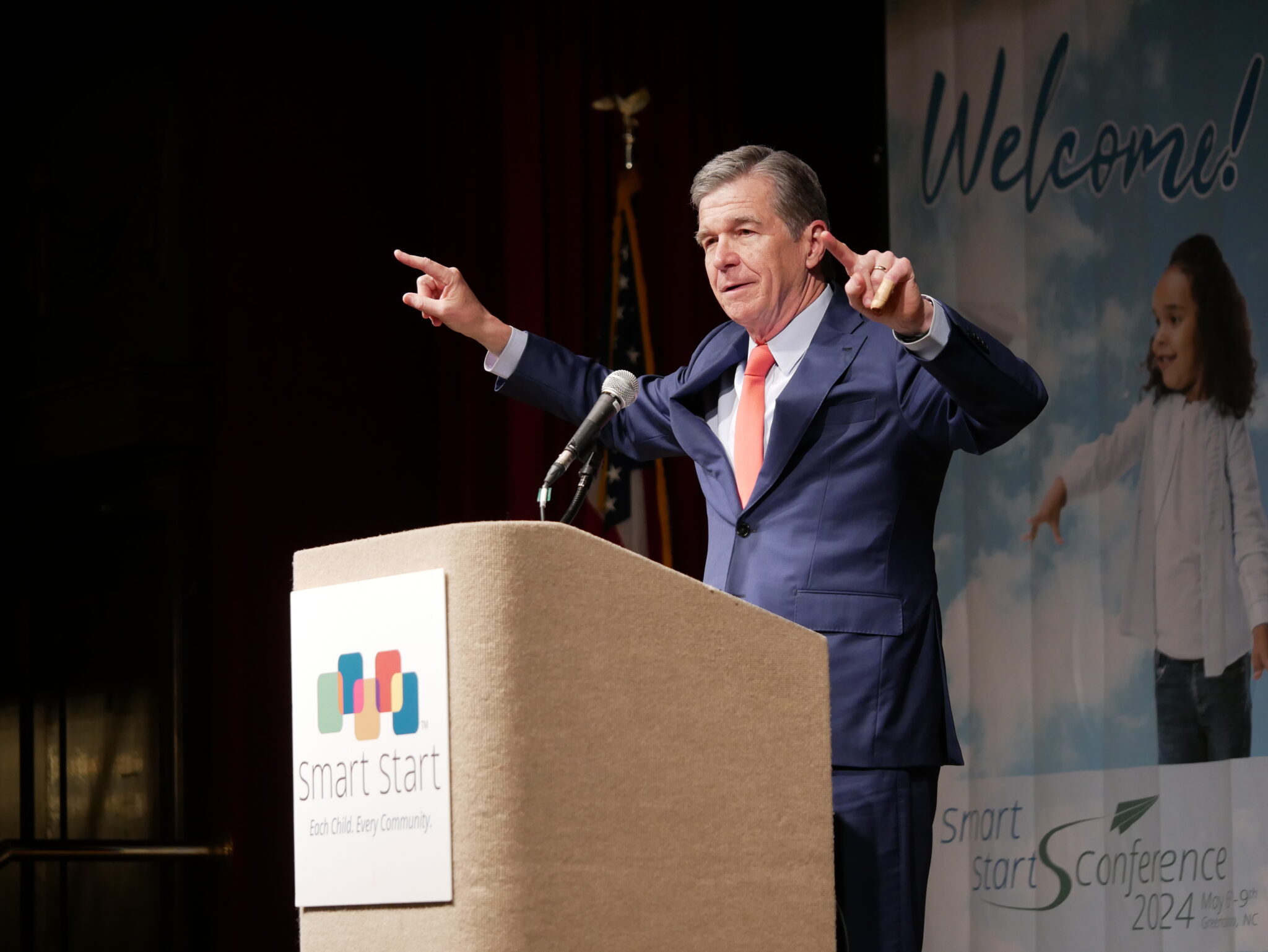
According to unofficial election results, former Gov. Roy Cooper won the Democratic primary for the North Carolina U.S. Senate seat up for grabs this year with 92.0% of the vote. The Senate seat will be left open by Sen. Thom Tillis, who announced last year he wouldn’t seek reelection following a break with President Donald Trump on Medicaid cuts.
Cooper will face off against Michael Whatley, the winner of the Republican primary. Whatley, who took his primary with 64.6% of the vote, is the former chairman of the Republican National Committee and is endorsed by Trump.
Michele Morrow, the former candidate for state superintendent of public instruction, came in fourth place in the Republican primary with nearly 5.6% of the vote.
The race between Cooper and Whatley will be key in deciding the balance of the Senate. Currently, Republicans have a 53-47 majority. According to NBC News, the North Carolina race is “a must-win race for Democrats if they have any hope of netting the four seats they need to take control of the chamber.”
Berger and Page neck and neck in closely watched N.C. Senate race
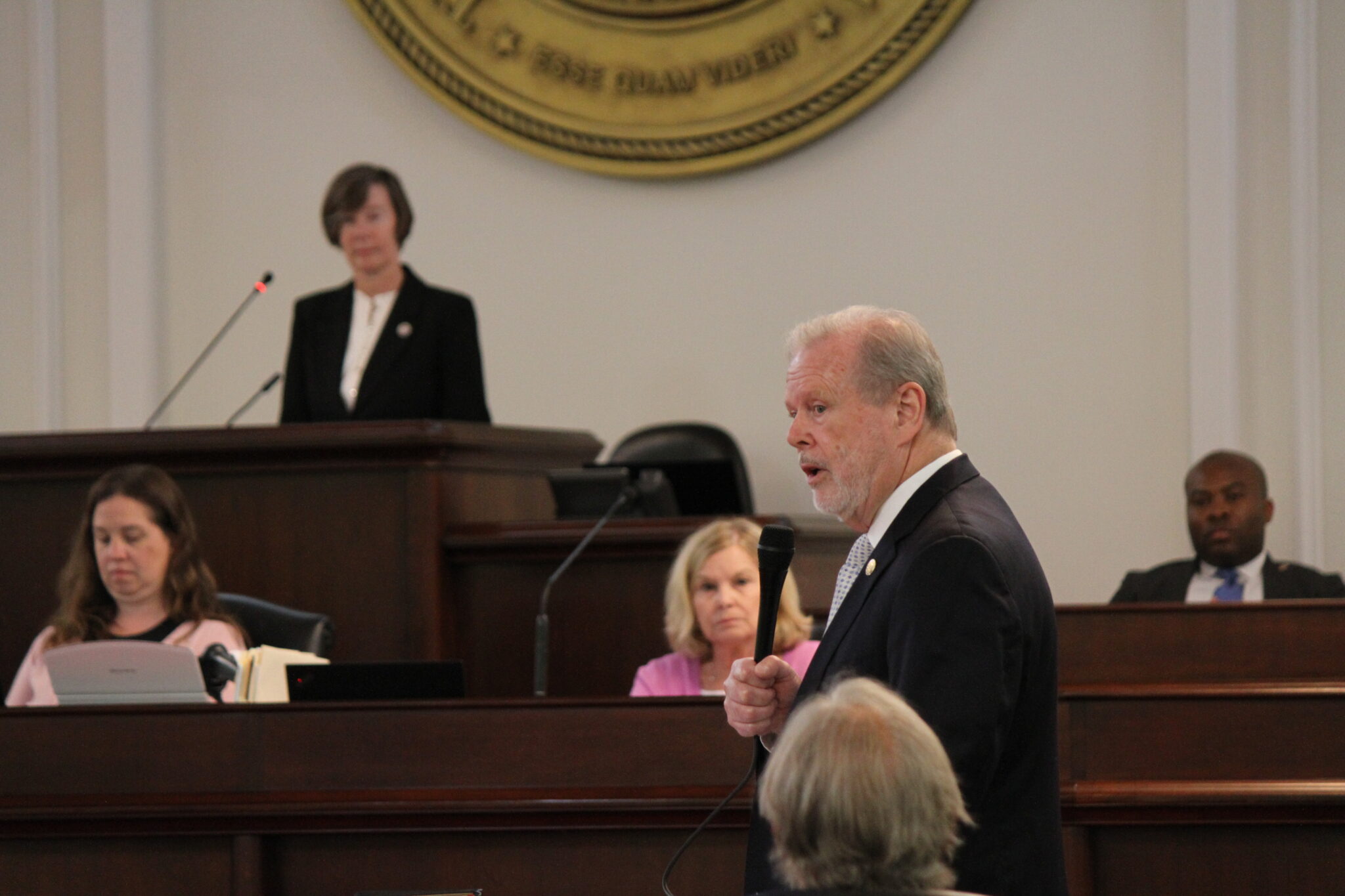
The N.C. Senate District 26 race between Berger and Page has been the focus for many North Carolinians during this primary. Berger, as the leader of the N.C. Senate since 2011, holds a lot of power, and Page unseating him could significantly shake up the General Assembly.
As of March 11, the unofficial results on the NCSBE election dashboard showed Page with a 23-vote lead after provisional ballots were counted — 13,136 votes to 13,113. Any oversees ballots are set to be counted on Friday, March 13.
The race likely isn’t over
The counts in the Berger-Page race may not be final. Canvass, the official process of determining that votes have been counted and tabulated correctly, happens 10 days after election day.
Before that official vote count, eligible ballots that weren’t counted as part of the election night unofficial results will be tallied, including military and overseas absentee ballots received by the return deadline, cured provisional ballots, and ballots that were previously unable to be read. See the NCSBE post-election procedures and audits webpage for more information.
Whether or not the outcome changes, a recount is likely to be triggered. Under North Carolina law, a candidate has the right to demand a recount if the difference in count between that candidate and the prevailing candidate is less than 1%.
“Then there’s the possibility (read: near-certainty) of legal challenges after all of that is over,” wrote Chris Cooper, political science professor at Western Carolina University, on Substack.
What’s at stake
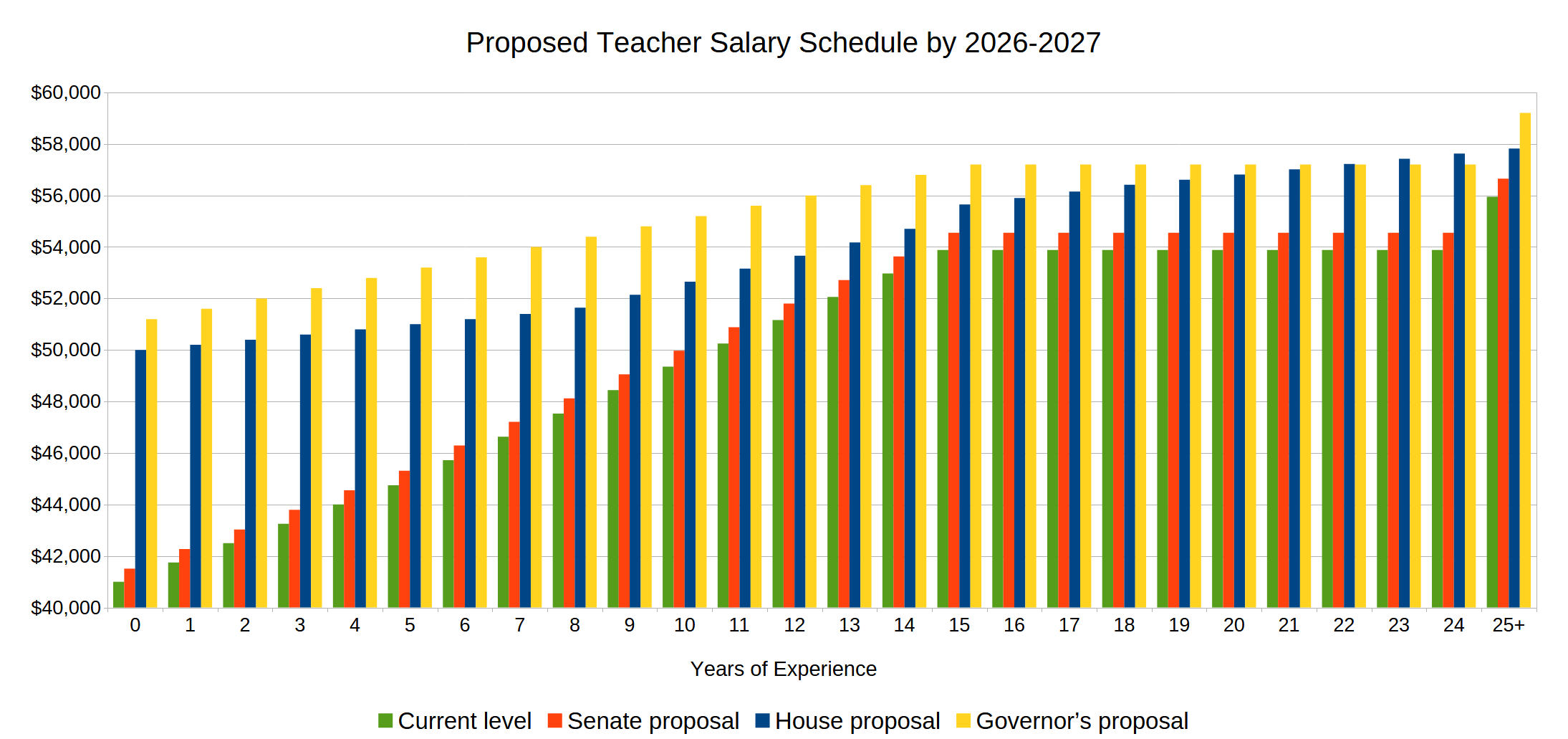
Page’s campaign website says, if elected, he would fight to raise starting teacher pay in North Carolina to $50,000 and allow “smart, accountable school choice with commonsense guardrails to ensure it works for all families, not just the wealthy or lucky few.”
The salary schedule was last updated in 2024-25, after the General Assembly failed to pass a budget during the 2025 long session. A North Carolina teacher’s starting salary right now is $41,000.
Related reads
The Senate budget proposal put forth by Berger last spring would have increased teacher pay, but not as much as the House proposal. Under the proposal led by Berger, starting pay would have been set at $41,510. The House proposal would have raised starting pay to $50,000 by 2026-27.
Educators on the ballot lost their races
All of the members of a group called NC Educators on the Ballot (NCEOB) lost their primary races.
Six candidates, all of whom are current or former teachers, ran for House seats representing portions of eight counties: Catawba, Davidson, Granville, Henderson, Iredell, Mecklenburg, Vance, and Wake.
“Educators are running in these primary elections to ensure that voters who care about strong public schools have a real choice, and a real voice, at the moment it may matter most,” NCEOB’s website says.
Ahead of the primary, the group was criticized by Republicans who said it was an attempt to mislead voters. The group has denied that claim.
The NCEOB website says, “The Republican Party currently holds a supermajority in the NC General Assembly. That means most education policy decisions are made within the Republican caucus. By encouraging educators to run in Republican primaries, we bring new voices into the process and give voters in those districts a real choice.”
Winston-Salem/Forsyth County Schools results
Winston-Salem/Forsyth County Schools (WS/FCS), after a year in the spotlight due to fiscal challenges, had more than 30 primary candidates running for nine school board seats.
Three of the seats are at-large, and the other six are divided into two districts. Currently, unofficial election results show that three of the six incumbent school board members running for reelection have lost: Richard Watts, Susan Miller, and Steve Wood.
EdNC’s reporting on the WS/FCS budget shortfall

As with the Berger-Page race, there is a potential for shifts in rankings due to additional votes being counted and recounts.
View the at-large results, the District 1 results, and the District 2 results.
Some incumbent lawmakers lose their primaries
All N.C. House and N.C. Senate seats are up for election this year. With the primaries over, eyes are now on the general election, when the needle could potentially move on the Republican near-supermajority in the General Assembly.
According to WUNC, at least eight incumbent N.C. legislators lost their primaries — nine if Berger loses to Page.
The losing incumbents included Rep. Carla Cunningham, D-Mecklenburg, Rep. Shelly Willingham, D-Edgecombe, and Rep. Nasif Majeed, D-Mecklenburg.
All three voted with Republicans last year to override some of the governor’s vetoes, and their primary losses could mean that House Speaker Destin Hall might have a harder time achieving a veto-proof coalition if Republicans don’t win a supermajority in the House in the general election.
The general election will be held on Nov. 3.