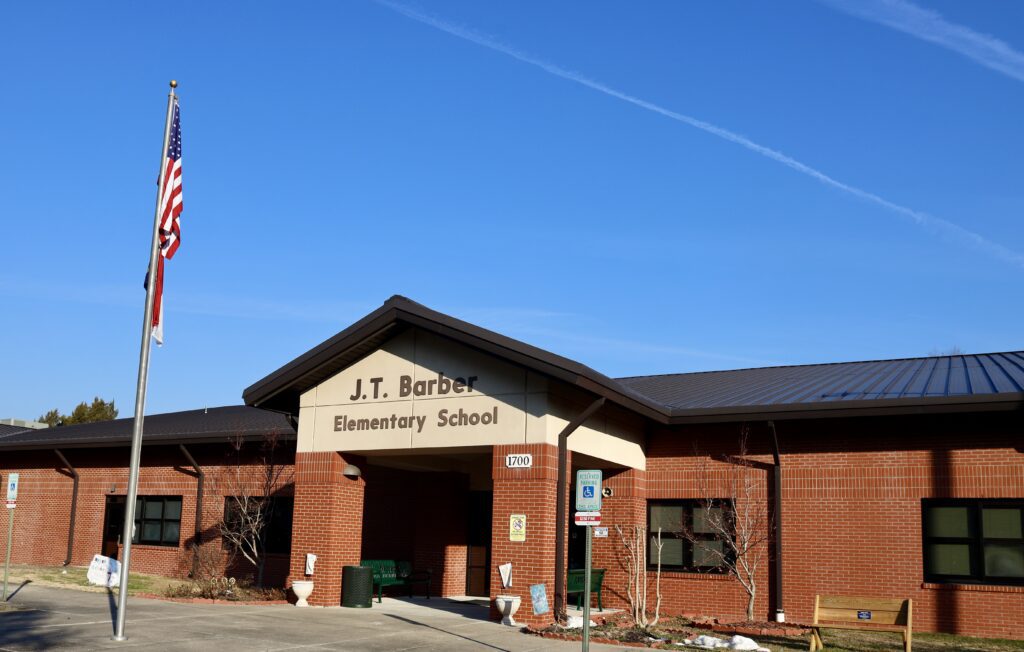
An A+ School ‘on the rise’ in Craven County embraces arts-based learning


“Would a tenth be greater or less than a hundredth?” asks fifth grade math teacher Johnicia Simmons to her class at J.T. Barber Elementary School. It’s a few minutes before 9 a.m., and her students are jumping, pointing, and negotiating with their partners before deciding on the answer and hitting the floor.
There is laughter, enthusiasm, and movement in this math class. Students manipulate their bodies to demonstrate something that is big or small, showing themselves and their teacher the difference. Simmons is getting her students to think about percentages by leaving their desks and taking up space.
The essential question for this lesson is written on a white board at the front of class: “What strategies or skills must we know to perform operations with decimals?” Before, the students used blocks to understand the lesson, but by getting out of their desks and incorporating movement, the students have become the blocks.
 Sign up for the EdDaily to start each weekday with the top education news.
J.T. Barber is in its first official year as an A+ School of North Carolina, which takes a whole-school, arts-based approach to teaching in every grade and every class.
To teach place value, Simmons integrated movement into the lesson to help students learn this particular fifth grade standard. The by-product of combining math and movement — other than comprehension — is a group of students having a lot of fun with a little theatrics.
Amber Harr is the visual art teacher at J.T. Barber and the A+ Schools coordinator. She said a great benefit of being an A+ School is seeing the students’ reactions when they are doing an out of the ordinary lesson.
“One of the things that we all expected — even some of the teachers — (was that) the kids are going to think that we’ve stopped teaching, and that we’re just playing all day because this is so much fun,” Harr said.
Before A+, addressing attendance
Dr. Roneca Wallace joined J.T. Barber as principal in July 2023. The school had just been designated a Restart School, which is one of the state’s four reform models for eligible low-performing schools. After a year of planning, J.T. Barber would be allowed charter-like flexibilities in budget, curriculum, employment, and more.
NC Report Card’s overall performance grade for the school in 2022-23 was an F. The summer before school began, Wallace asked faculty what areas they wanted to focus attention on for improvement. One of three things mentioned was attendance.
In her first year as principal, Wallace kept a close eye on those stats. She had around 230 students for the 2023-24 school year, and she tallied up 2,383 unexcused absences and an additional 1,569 tardies.
“I track it purposefully,” said Wallace. “Because if kids aren’t here, they aren’t learning, and if they’re not learning, they’re not growing.”
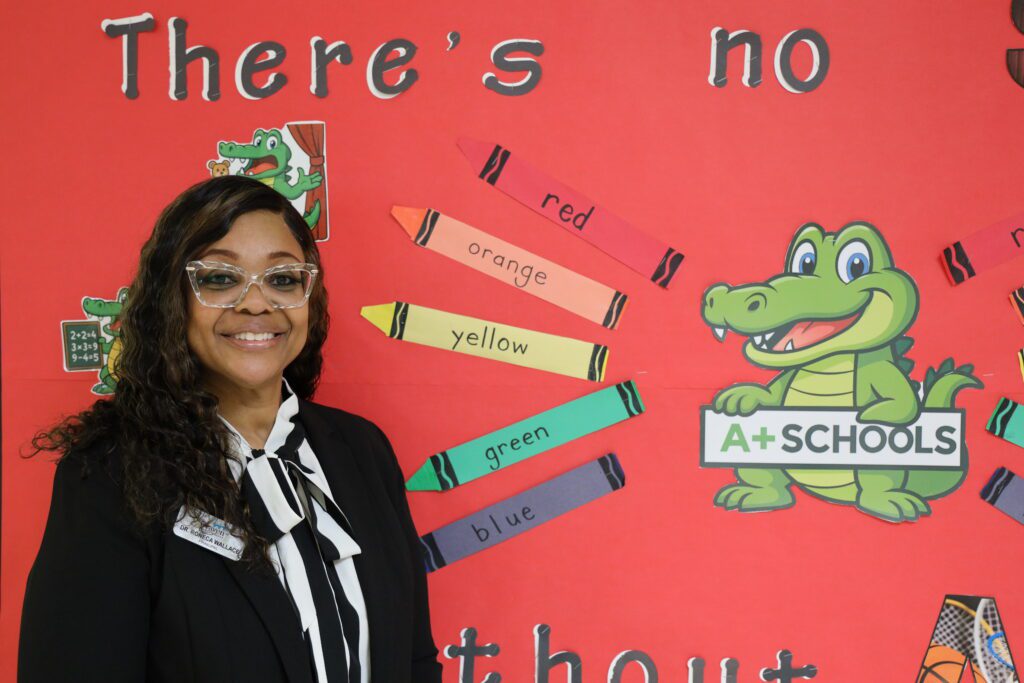
That first year coincided with the Restart School transition. Wallace began asking questions to the staff and community to try and figure out where the school was thriving.
She recounted, “We had the community come out. We invited the parents.” She asked questions like, “What is it that we want our kids to experience?” and “What do you want to experience as a community? As parents?”
One of the ideas that bubbled up was an embracement of the arts. “J.T. Barber, historically, has always supported the arts,” said Wallace. The community wanted to return to that legacy.

Prior to Wallace’s arrival at J.T. Barber, she worked at a different A+ School in the district. She knew if the community and staff were invested in an arts-based approach, this was a good option for the school.
Wallace appreciates “everything about integrating the arts and the nonarts together” and it seems to be working. “The kids that we service learn better that way,” she said.
After that first year, Wallace and her team created strategies to attack the attendance issue and began incorporating the arts more as they were working on their A+ School application.
Becoming an ensemble at J.T. Barber
At the beginning of the 2024-25 school year, Wallace took the school’s accountability director to meet with families at a community hub called The Village to educate parents on why attendance is important and on the differences between excused versus unexcused absences.
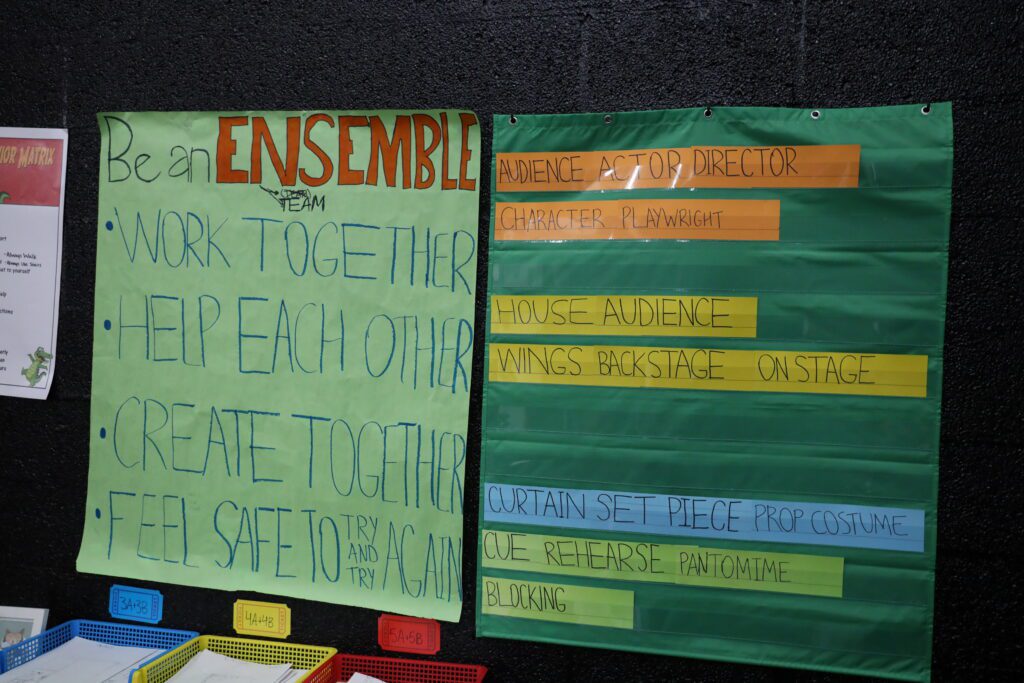
They now host three annual events where they share attendance and other student data with parents. The school has a Sunday evening call that includes data updates with overall attendance rates, as well as the number of unexcused absences and tardies. This same information is posted on the school’s Dojo page.
Additionally, leadership meets individually with parents of students with chronic absenteeism to develop personalized attendance support plans.
The effort and transparency has paid off. In the 2024-25 school year, unexcused absences decreased by 44% compared to the previous school year. The school also rose a letter grade on the NC Report Card.
And this past summer, the school was officially inducted into the A+ Schools program. The entire faculty — even the nurses — attended a five-day A+ Institute training that showcased everything that is possible when a school combines art into everyday class.
“There was hardly any sitting down,” said Harr, the school’s visual art teacher, of the summer training program. “We were engaged in it. We were singing songs. We were dancing. We were creating art.”

“We got to know each other really well. I think we’re closer as a team — as coworkers — because of it,” said Harr.
Now at J.T. Barber, it isn’t uncommon to hear a song incorporating multiplication tables to the tune of “K-Pop Demon Hunters’” hit song “Golden,” or to see a class out of their seats doing a dance to demonstrate the concept of perimeters.

And these are within everyday lessons, which isn’t including the dedicated art classes students attend. One day a week, students in one grade engage with all art offerings — rotating between theater, visual art, music and P.E.


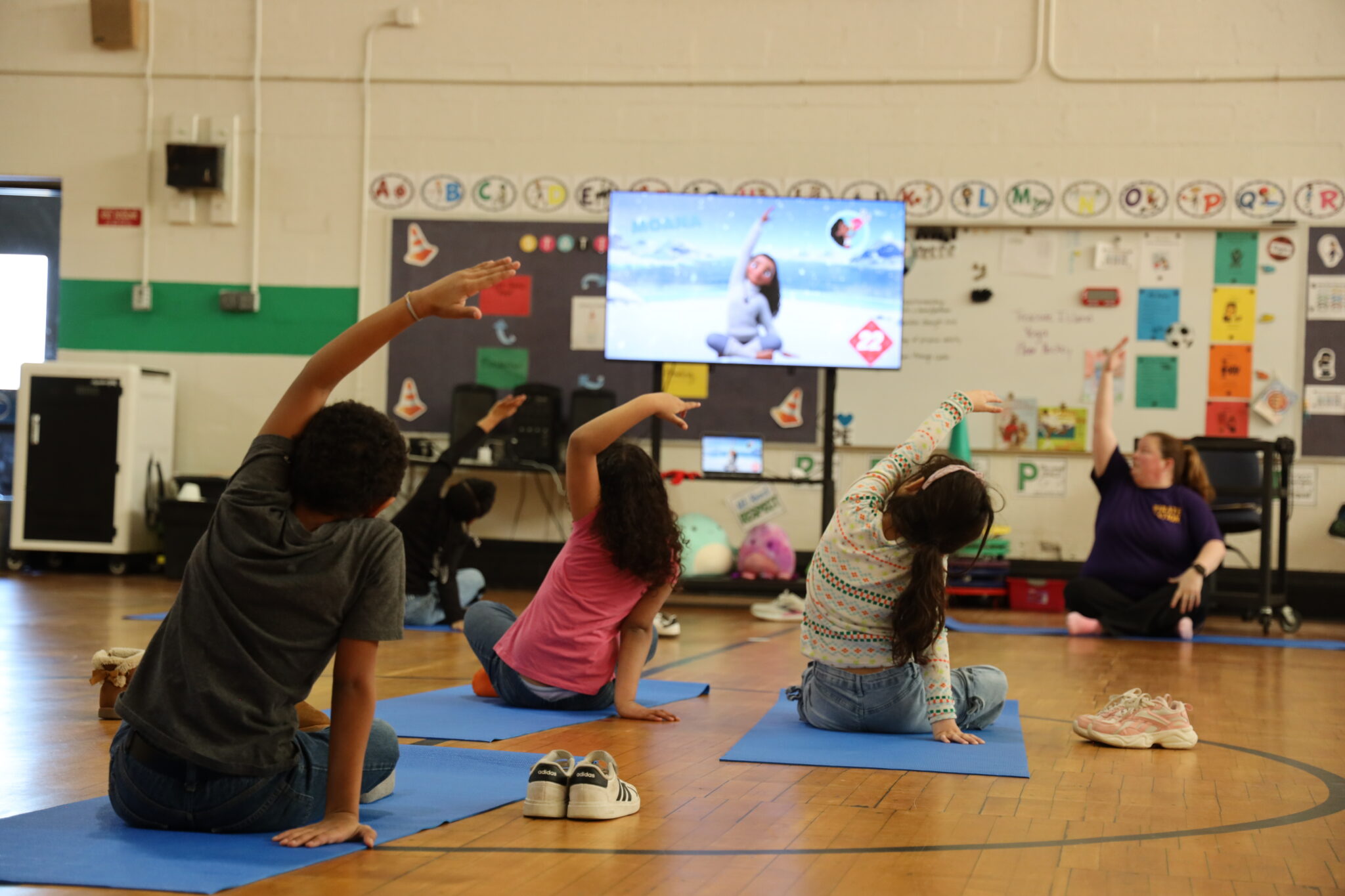
Back in November, J.T. Barber hosted parents at the school for a night called “Plearning through the Arts.” They had stations where parents participated in similar art projects their kids were experiencing every week at school.
Parents used multiplication in the art room and read stories in theater class. They made habitats out of cereal boxes and learned the difference between beats, sounds, and tones in music class. Wallace said parents really started to understand what being an A+ school was all about.
Harr believes that J.T. Barber’s leadership is setting the tone for success by bolstering the new program.
“Dr. Wallace is just super supportive of the arts,” said Harr. “She sees the value. She sees the benefit that it’s going to bring to our students.”
Since Wallace’s arrival, the school’s overall scores continue to increase, and attendance has improved dramatically.
“We’re a school on the rise,” Wallace said.
J.T. Barber has seen many different iterations of school dating back to 1951. This may be the first year of adopting an arts integration program, but the building and community are celebrating 75 years of education.
J.T. Barber: What’s in a name?
To know J.T. Barber Elementary School and its importance to the community is to understand the history of the school and its namesake.
The school is tucked in the middle of a neighborhood near downtown New Bern. Parts of the building itself were erected in 1951, originally to house seventh and eighth grade students from the West Street Graded School — the first public school for African Americans in New Bern.

John Thomas Barber was an educator and leader who worked at the West Street Graded School for 39 years before retiring in 1944, and is lauded locally for his enduring legacy and leadership. In 1955, the high school moved officially to the aforementioned building and adopted its new name.
In the 1954 case, Brown v. Board of Education, the Supreme Court ruled that separating children in public schools on the basis of race was unconstitutional. However, J.T. Barber remained segregated until 1970.
J.T. Barber was a middle and a high school before becoming an elementary school in 1990. The building was added to the National Register of Historic Places in 2006. The school’s application to receive the designation reads, “The initial five years of the school’s existence… laid the groundwork for New Bern’s African American citizens’ sense of pride and ownership in their association with J.T. Barber School.”
There is no doubt that the history of the building and the offerings within its walls hold special meaning to Craven County. In homage to the past, the composite picture of the school’s first graduating class — with J.T. Barber himself — hangs in the entrance hallway as you enter the now elementary school.
Just past the pictures of alumni, is a bulletin board with the message, “There’s no SMART without ART.”