
How Boost helps Cape Fear Community College students stay on track to work in high-demand fields


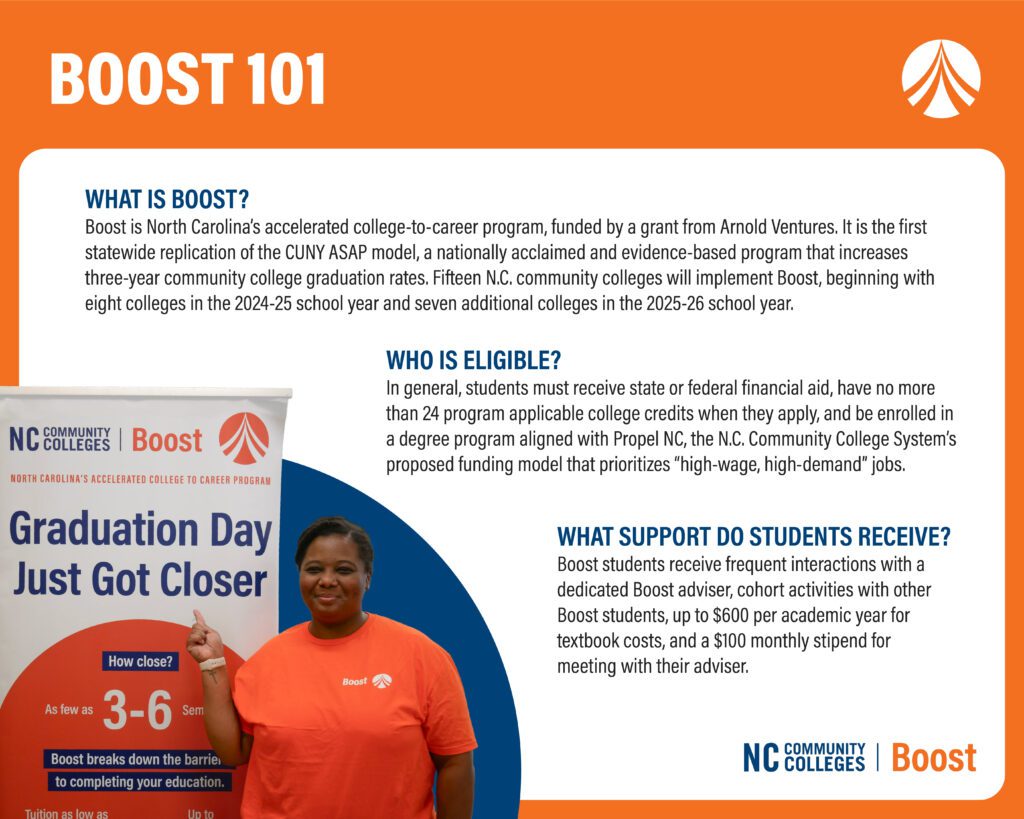
Boost, North Carolina’s new accelerated college-to-career program, launched at Cape Fear Community College (CFCC) in the fall. Since then, the program has provided advising and financial support to students as they work toward degrees that align with high-wage, high-demand fields.
CFCC is one of eight community colleges in the first cohort of Boost, an initiative funded by a grant from Arnold Ventures. Boost provides students, who must qualify for state or federal financial aid to enroll, with a variety of supports including personalized advising services, a $600 stipend per year for textbook costs, and a $100 monthly stipend for meeting with their adviser.
Boost at Cape Fear Community College
During a recent EdNC visit to CFCC, college staff said Boost has been successful so far. CFCC’s Boost director, Lauren Goalder, said enrollment in Boost quickly hit the enrollment cap of 150 participants per academic year.
“We were full by January this year,” Goalder said of enrollment in Boost. “Given the short runway that we had getting to that point, we were really pleased with, kind of, the momentum that picked up as the fall went on.”
Goalder said the college’s Boost recruitment strategy was the biggest factor in that momentum. She and the college’s Boost adviser, Tyler Perry, pulled rosters for first-year classes in programs that are Boost-eligible and then visited classrooms to share information on the financial and advising benefits of Boost. When time allowed, the Boost team would pre-vet the eligibility of students prior to visiting their classes.
Goalder said these targeted classroom visits yielded the most recruits compared to other strategies like mass emails and tabling at events — though they did those things, too.
Read more of EdNC’s Boost coverage
So far, Goalder said, Boost students have found the program beneficial. One of the key benefits for students is access to regular, personalized advising. The 1:150 adviser-to-student ratio mandated by the Boost program, at a college as big as CFCC, is particularly notable.
Sabrina Terry, senior vice president of student services at CFCC, said the typical adviser-to-student ratio across the college is roughly 1:600 or 1:700 in September. An EdNC survey found the average ratio across 22 community colleges to be 1:258.4.
“I definitely think that the advising model has been great for helping with student outcomes,” Goalder said.
The lower-than-average student caseload for Perry has allowed more advising time per student and has enabled the Boost office to become a kind of one-stop shop for campus resources for students.
Nearly 94% of CFCC students who participated in Boost in the fall semester remained in the program during the spring semester — a sign of success for Goalder. Another sign of success is what students are saying.
“I really just think the testimony from the students is probably the best feedback,” Goalder said. “I don’t know how you measure it, but the … happiness and the overall satisfaction of students that are in the program … we already see that.”
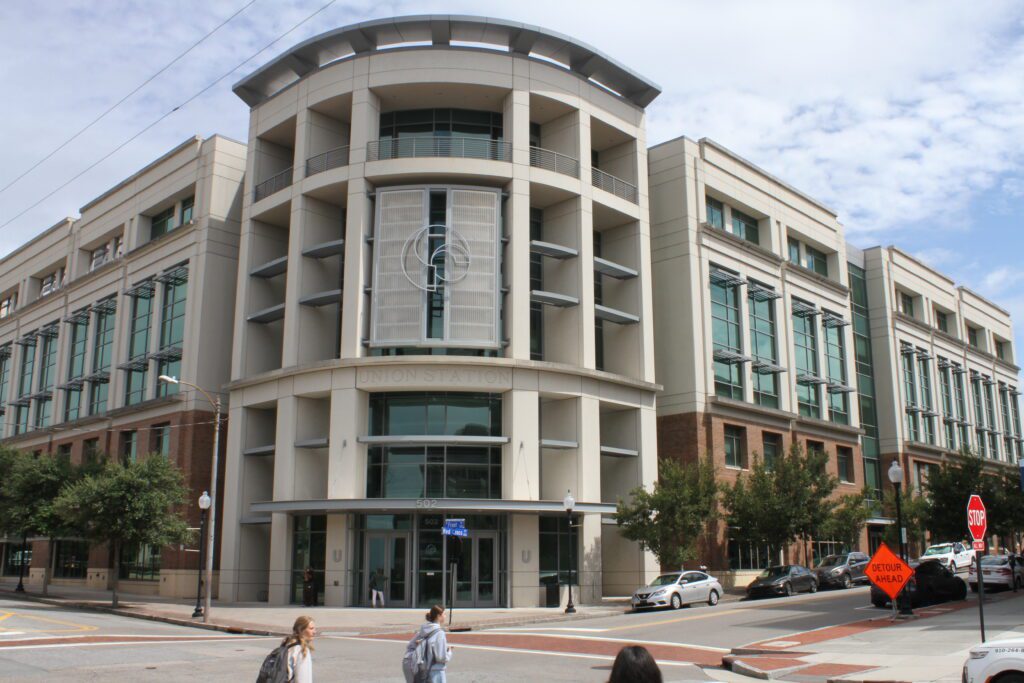
Key statistics about CFCC’s Boost program
According to data provided by CFCC, the college’s Boost program has the potential for huge growth. As of the current semester, 1,348 CFCC students are eligible for participation in Boost, based on the following criteria:
- Received the Next NC Scholarship
- Resident of North Carolina
- Completed less than 24 credits as of spring 2026
- Have a high school diploma
- Enrolled in a Boost-eligible program
So far, 292 CFCC students have applied to Boost, and 176 of those were eligible — exceeding the enrollment cap of 150 students per academic year. CFCC just hired a second adviser, which Goalder hopes will increase the Boost program’s capacity to serve 300 students by the fall.
Of the 150 students currently enrolled, 69 are in university transfer programs, while 81 are in career and technical education (CTE) programs. Of those in CTE programs, 27 are in health sciences. There is an increasing need for health care professionals in the Wilmington area, CFCC staff said.
CFCC President Jim Morton on Boost
CFCC President Jim Morton said he was excited to be one of the first colleges to hit the 150-student enrollment mark, and that so many of those students are enrolled in CTE programs. He also said Boost is a good supplement to other wraparound services CFCC offers, like free drop-in child care.
Such support services, including programs like Boost, are expensive, Morton noted. This year is the first year of a five-year Boost pilot funded by Arnold Ventures. After year two, grant funds to cover program costs will gradually decrease, tapering to 90% in year three, 60% in year four, and 30% in year five.
“Colleges, the System Office, and the NCCC Foundation will work collaboratively to raise additional funds to sustain and expand the program,” according to the North Carolina Community College System (NCCCS) website.
Looking ahead to year three, Terry said CFCC will look for whatever support is available to maintain Boost practices that are working. Beyond year five — assuming outcomes are strong and backed up by data — CFCC will hope to continue Boost, she said.
“We’ve got a good team working on it,” Morton said of Boost at CFCC. “Maybe the legislature comes with funding to expand it — hopefully the results are going to speak for themselves.”
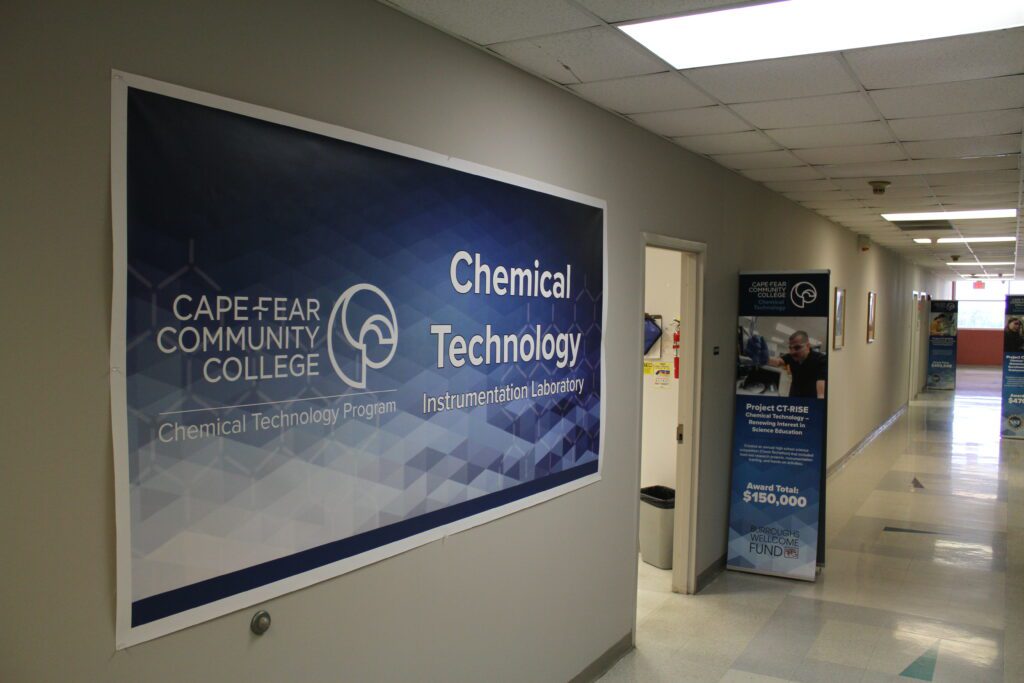
Highlighting CFCC’s Boost-eligible chemical technology program
To qualify for Boost, students must be enrolled in an associate degree program that aligns with Propel NC, the NCCCS proposed funding model that “prioritizes connecting students to high-wage, high-demand jobs.” In practice, that includes degrees spanning health care, engineering and advanced manufacturing, trades and transportation, information technology, and public safety. Students can also enroll in a university transfer program.
One of the Boost-eligible career and technical education programs at CFCC is in chemical technology, which provides a unique example of a program designed to prepare students to enter quality jobs that align with local and state workforce needs. Now, chemical technology students enrolled in Boost are receiving financial and advising support to help keep them on track for on-time graduation.
Building the only chemical technology program in the state
The chemical technology program at CFCC is the only such program in North Carolina. Graduates of the program should qualify as entry-level chemical laboratory technicians, or chemists, according to the program’s webpage.
“Their duties may include chemical solution preparation, raw material, product, or environmental sampling, and/or sample testing via wet chemistry or instrumental techniques,” the webpage says.
What that means, practically, is that chemical technology students learn how to operate and maintain industry-standard equipment — equipment that is rare to find in classrooms. Operating that kind of equipment might allow them to analyze the ingredients of sunscreens, test water samples for contaminants, check the fat content of hamburger meat, measure blood alcohol levels, or distill a very highly pure ethanol sample — moonshine.
“We are the only chemical technology program in the entire state, of 58 community colleges,” said Tracy Holbrook, the program’s director and sole full-time faculty member. “We’re very proud of that.”

Holbrook has headed the program since 2008, when he moved to the coast from the mountains of southwest Virginia. Since then, the intention of the program has been to replicate the conditions of the laboratories that graduates would eventually work in.
That necessitated renovations. Holbrook, with the help of CFCC — but also through a lot of single-handed work, other CFCC staff said — built out modern lab spaces. Holbrook applied for and received grants from the National Science Foundation and Burroughs Wellcome Fund totaling over $1.1 million. He also brought in equipment donations from local industry partners.
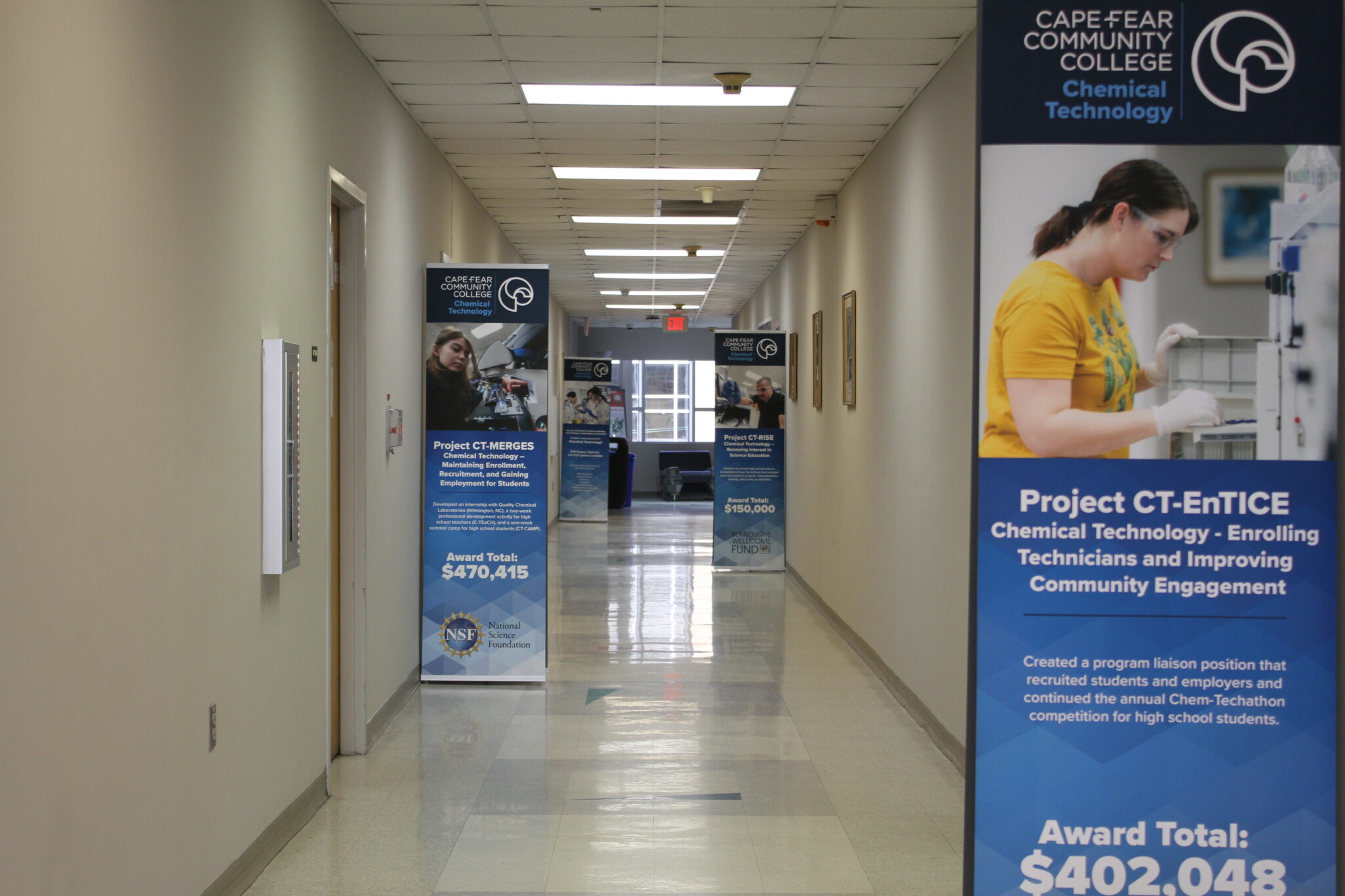
“When I came on board, we had some outdated equipment. Nothing at that point was computer-driven, software-driven,” Holbrook said.
Since 2008, there has been a “total overhaul.” The six chemical technology lab rooms, housed in a dead-end hallway, are now filled with modern machines, including a gas chromatography mass-spectrometer (GC-Mass Spec), a half dozen high performance liquid chromatography instruments, automated titrators, and two ion chromatography systems.
“We did not have a GC-Mass Spec at the time. We did not have a purge-and-trap at the time,” Holbrook said. “We now have dissolution. We have disintegration. We have metal furnaces.”
Despite the perhaps intimidating names of the equipment, anyone can enter and complete the chemical technology program, he said — the program has no course prerequisites.
“I often say that if you can cook in your kitchen and read a recipe off of a cake box, you can do chemical technology work. You can work in a lab. It’s the exact same thing,” said Holbrook.
The students in the chemical technology program
Reflecting the unique nature of the chemical technology program, Holbrook’s students range from recent high school graduates to people with Ph.D.s in chemistry.
“The Ph.D.s have joined our program because of the instrumentation training,” Holbrook said. “They’re not going to get that anywhere else, so they come to Cape Fear.”
One current student, Gwendolyn Abraham, is an Advanced Placement (AP) Chemistry teacher of more than 36 years, currently working at a local public high school. She plans to retire this June and is completing the chemical technology program in the hopes of getting a pharmaceutical industry job.
“I have a master’s degree. (I took) 500-level science classes. And I’ve learned more, as far as the science behind this, than I have in any other class,” Abraham said. “I learned how to crunch numbers, I learned how to work the machines, I learned how to make the samples. I learned how to do everything from start to finish. In my master’s degree, I didn’t touch anything. It was all theory. Everything was straight out of a book.”

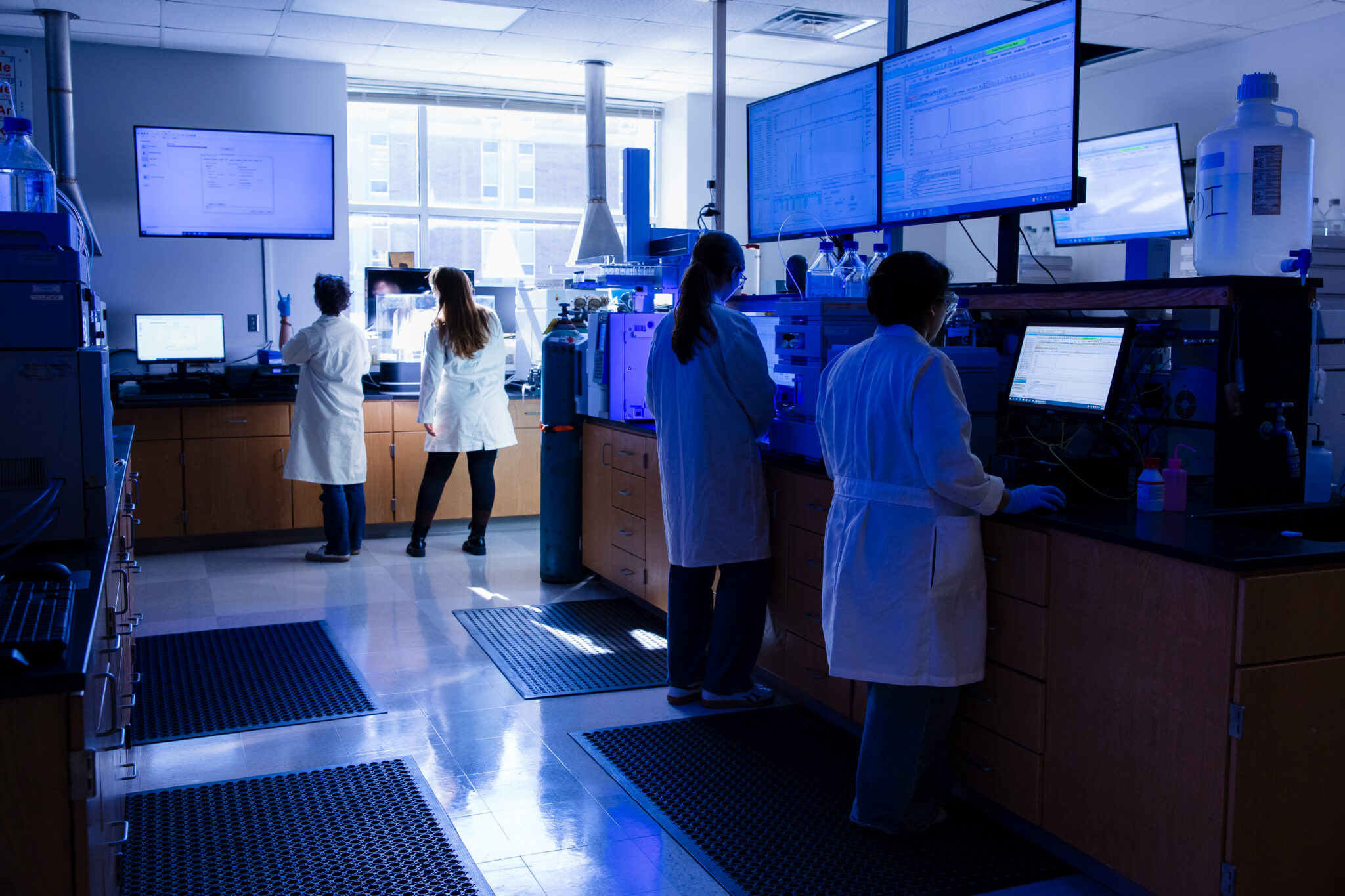
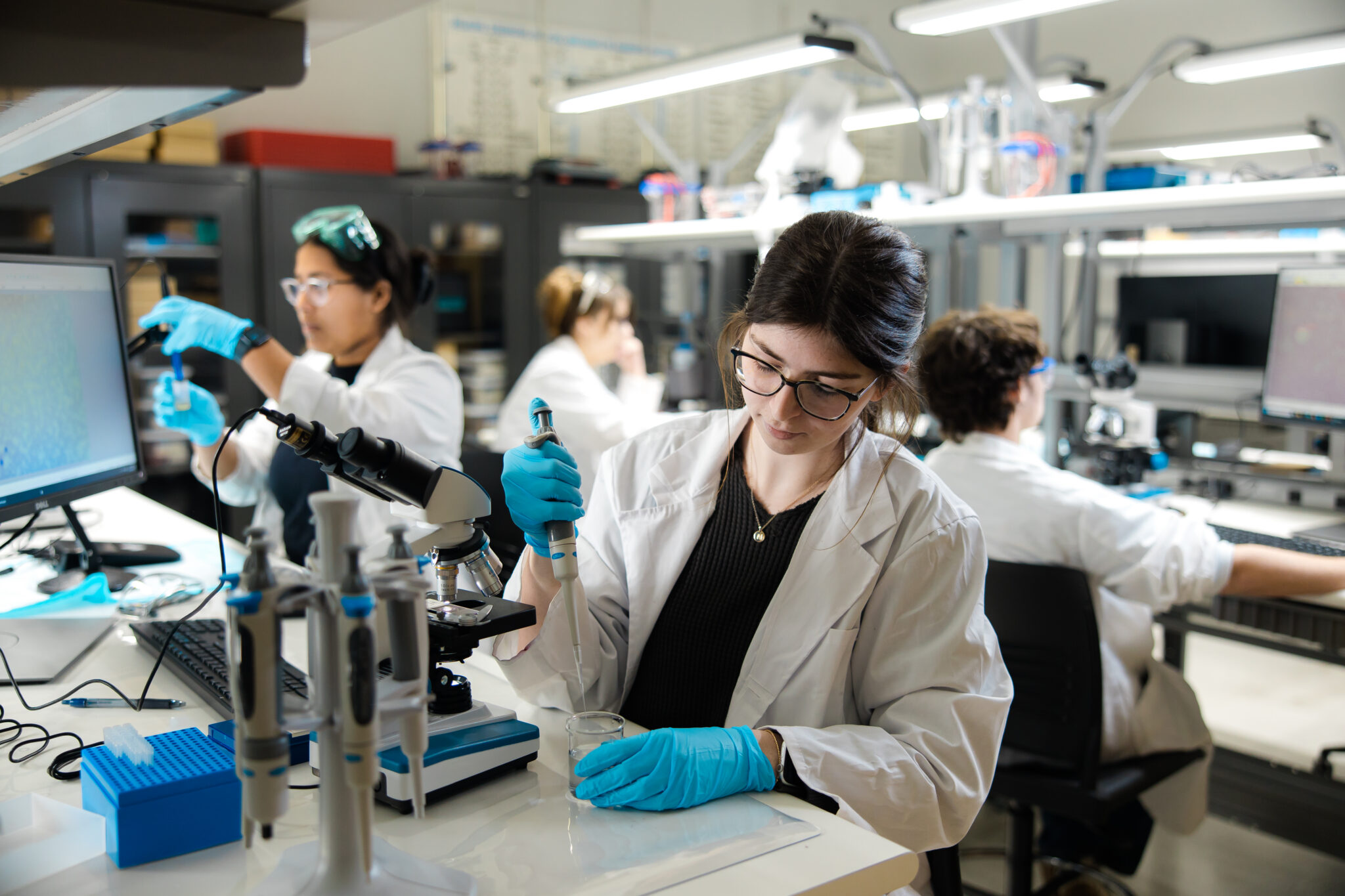
Chemical technology alumni go on to work in places like pharmaceutical labs, food production facilities, environmental labs, and cosmetic production labs. The range of jobs graduates are qualified for aligns well with workforce needs in Wilmington and in North Carolina, a state with a large number of biotechnology and pharmaceutical companies.
Demand is so great for alumni of the program that Holbrook fields calls from employers who reach out before posting jobs to ask for graduates or to offer current students part-time work.
“It actually happened last week,” Holbrook said.
Hallie Jefferson, who graduated from the chemical technology program in 2019, now works in a Wilmington pharmaceutical lab at Quality Chemical Laboratories. How did she learn about the company?
“Actually, Tracy mentioned it, and I interviewed there, and it went well,” Jefferson said.
The future for chemical technology and workforce programs at large
Holbrook hopes more chemical technology programs start up at other community colleges. He also hopes rigorous associate degree programs like his are helping dispel the mentality of many employers who require a bachelor’s degrees or higher by default for jobs.
“As they are becoming more aware of what the community college system can provide, whether it’s chemical technology on our behalf, or biotechnology, or some other type of STEM-related program at another community college within the state,” Holbrook said of employers, “they are realizing quickly that these students are bringing the hands-on training, the job knowledge that they really are after.”
Editor’s Note: Arnold Ventures and Burroughs Wellcome Fund support the work of EducationNC.