
Q&A | Meet Ashley Logue, who oversees and supports NC charter schools

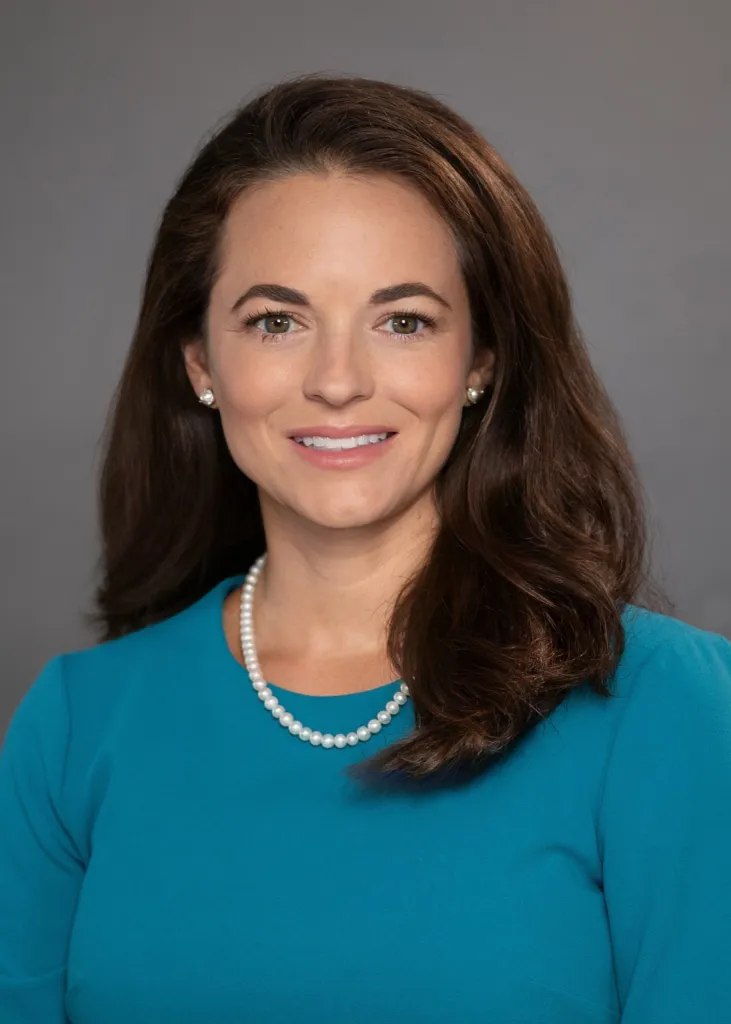
Ashley Logue is the executive director of the state’s Office of Charter Schools, a position she has held since 2022. In that role, she oversees and supports North Carolina’s system of public charter schools, providing technical assistance and guidance for currently operating charter schools as well as training for new charter schools. In addition, she serves as a key staff liaison to the North Carolina Charter Schools Review Board.
In her role, she has a critical vantage point for assessing and monitoring the success and sustainability of the state’s charter school movement.
Kristen Blair, the North Carolina Coalition for Charter Schools’ communications director, recently spoke with Logue about changes in North Carolina’s charter sector, student enrollment challenges, recent mid-year charter school closures, and more. You can read the interview below.
Coalition: You’ve been the director of North Carolina’s Office of Charter Schools (OCS) since 2022. How have you seen the state’s charter movement change during your time leading the office?
Ashley Logue: My overall feeling is that the environment continues to become more challenging and complex.
Both from surveys of school leaders and from observations and discussions with leaders, several challenges are frequently noted. Budget constraints remain a primary concern for many schools. This includes serving Exceptional Children within state funding caps, budget instability on state and federal levels, and high costs in general.
Facility challenges continue. Finding land and facilities is difficult, but even for long-established schools there are stresses, particularly regarding the costs of expansion and ongoing maintenance. Staffing difficulties — specifically recruiting and retaining quality staff — represent an ongoing challenge across the sector. These issues consistently appear in our conversations with schools and show no signs of diminishing.
 Sign up for the EdDaily to start each weekday with the top education news.
Coalition: As you’ve pointed out before, new charter schools in North Carolina are finding it harder to meet their student enrollment targets. Why is that?
Logue: Honestly, it’s not just new schools. We’re seeing some more established schools also have a harder time with enrollment. I believe the primary reason is competition. There are a plethora of options now, whether that’s more choice schools, like magnet or charter schools, voucher availability, or more parental interest and openness to things like homeschooling or microschooling.
So, I think parents have a lot more choice, and therefore the schools that might be struggling in some regards are impacted. Maybe they don’t have the facility that the parents prefer or they’re having a lot of teacher turnover. Whatever the case may be, parents are more willing to try an alternative and have more ability to do so than ever before.
Read more

Coalition: What do new charter leaders need to know about the state’s current K-12 landscape? In your view, what needs to change — to the Ready to Open process or in other areas — to position new charter schools for success and sustainability?
Logue: One thing I think (aspiring school leaders need) is better knowledge about what it takes to run a school in today’s environment. I would love to see new schools get funding earlier and schools receive greater funding overall. But I don’t have any control over those things.
What’s probably more actionable is for boards that want to start charter schools to understand how complex it is. We see a lot of new schools where one person wears multiple hats. I just think that’s harder and harder to do because of the complexity of operating and leading charter schools and the sheer volume of things that need to be handled internally with staff and students. Then you also have all of these state-required policies, procedures, and surveys. I’m sure for school leaders, this seems like never-ending paperwork. The regulatory burden has without a doubt increased since I started in this office nearly eight years ago. And to be clear, it is not coming from DPI (the Department of Public Instruction) or OCS. We simply follow legislation or administrative code as to how and what must be submitted to the General Assembly or collected by our office.
I don’t think the boards at some of these newer schools understand that if you put an academic leader in there as a principal with no additional administrative support, they are actually going to spend most of their time managing operations and not have enough capacity to lead teachers or academic programming. That’s not an effective or sustainable model for running a high-quality school.
Coalition: As you know, the Charter Schools Review Board (CSRB) was forced this year to close two charter schools mid-year, because these schools were operating outside the parameters of state law. There’s a lot of media coverage when schools are forced to close. What’s important for the charter sector and the public to know about these closures?
Logue: It’s important for them to know that while closing a school is never easy, CSRB closely reviews these decisions, always gives boards an opportunity to be heard, and only closes schools when it’s in the best interest of the public. It preserves public taxpayer dollars and ensures that students are in safe, excellent learning environments. Just like OCS, CSRB is required to follow state law regarding charter operations whether that is related to enrollment, financial governance, or academic performance.
So, while it might look negative or chaotic from the outside, I think it shows that the processes we have for accountability and for monitoring charter schools actually work. And hopefully, we continue to learn from closures in a way that leads to better policies and procedures in the authorizing and monitoring of charters.
Coalition: When we talked in 2022, you mentioned the heightened visibility of the charter movement and the need for accurate stories about charter schools. What would you say now — is that still relevant?
Logue: Yes, it’s definitely still relevant. The majority of media coverage that I see tends to be negative. And that goes for probably all public schools, but definitely for charter schools. There needs to be more highlighting of all of the great work that’s being done, not only with really difficult circumstances — like kids still trying to recover from Covid learning loss or increased mental health and disciplinary issues in schools — but also insufficient funding.
Research shows that North Carolina is one of the lowest-funded states for public education. And yet, charter schools are serving diverse student populations, across vastly different geographical regions (and local resources), with unique programming and innovative ways of operating and teaching.
So, I think highlighting the amazing things that schools are doing under those circumstances is really important, rather than constantly picking out the negative. School leaders, teachers, and students deserve to see more of the positive that takes place every day at over 200 charter schools across this state.
Read more



I also think it’s important for school leaders and board members to understand the role of the General Assembly and be vocal in that regard. Often complaints or concerns I hear from school leaders stem from decisions of our state government. Elected representatives should hear directly from our charter leaders who should advocate for policies and funding that would be beneficial from their unique perspectives.
Coalition: What still needs to happen in North Carolina’s charter movement to remove barriers to educational opportunity?
Logue: Access is still hard in some areas. I really think most of that comes down to funding. I’m a big proponent of comprehensive transportation and child nutrition programs in charter schools as avenues of access, and that requires funding and staffing to make work.
So, any way we can try to improve those programs will help give more kids the opportunity to attend great schools.
Coalition: What do you see as the opportunities ahead for North Carolina’s charter schools?
Logue: There’s an opportunity for collaboration with districts, especially with the challenges that schools are facing now in the way of funding and staffing. I’m not wearing rose-colored glasses, and I don’t necessarily think that’s an easy thing to do. But I do think it’s possible, and that there are ways that districts and charter schools could collaborate.
There’s also an opportunity for continued innovation, whether that’s with our new schools or our established schools that are trying new programs and new processes. All of those represent areas where there’s a lot of space to think of creative out-of-the-box ways of doing things in schools.
Coalition: We talked about challenges for new schools, but what are some ongoing challenges for the overall charter movement?
Logue: Broadly, funding and staying competitive with their programming. Schools will need to be creative in solving challenges and attracting families with high quality programming.
Editor’s note: This Q&A was originally published by the North Carolina Coalition for Charter Schools.
You can read all of EdNC’s coverage on charter schools on our website.