Editor’s note: This article was originally published by the North Carolina Coalition for Charter Schools.
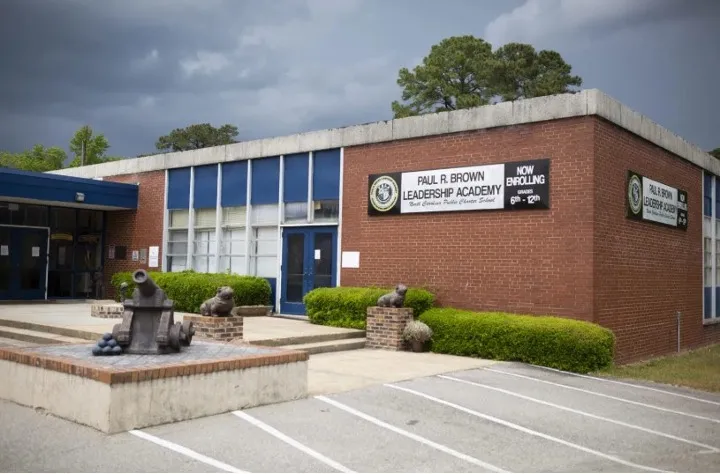
A few months ago, Wake County Public Schools (operating budget: $2.3 billion) turned to an unlikely source to help train its principals: the leader of a small public charter school in Bladen County that just three years ago teetered on the verge of closure.
This is the story about why.
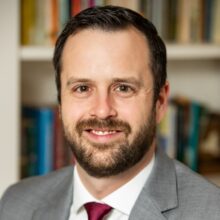
“When I see kids in the cafeteria, I ask, ‘What skill did you learn in math today, and why did you learn it?’” said Dr. Jason Wray, who leads the Paul R. Brown Leadership Academy, a grade 6-12 public charter school in one of the lowest-income counties in North Carolina.
 Sign up for the EdDaily to start each weekday with the top education news.
He took over a dire situation at the school in 2022. From its founding a decade earlier to Wray’s arrival, the school earned an “F” in every year but one, and it missed academic growth benchmarks more years than it met them.
The vast majority of the student body — 86% — is non-white, and 81% are economically disadvantaged. It’s also a military charter school, one of only a handful in the country. Parents often enroll their children in the school because they struggle elsewhere.
“But one thing I tell the teachers and the staff: ‘Don’t mistake behavior for ability,’” Wray said.
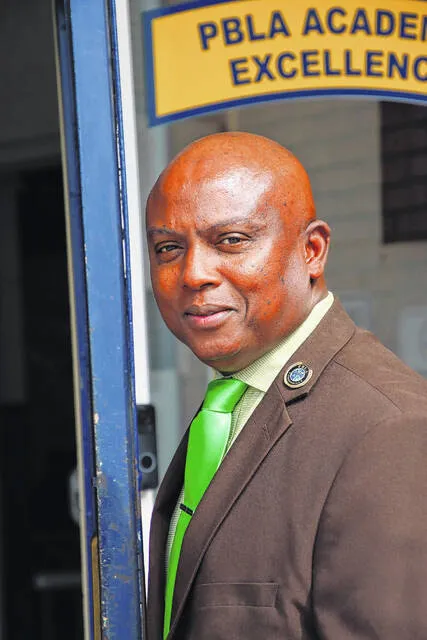
He would know. Wray grew up in the housing projects of Portsmouth, VA, one of seven kids raised by a single mother. Though he was the second-youngest of the group, he was the first to graduate high school.
“I did not like school. When I graduated high school, I never thought I’d go to school again,” he recalled. “But having a good education changed my situation, and it can change theirs.”
Paul R. Brown Leadership Academy hired Wray from East Bladen High School, where he successfully instituted a turn-around plan as principal. He quickly set out to change the culture at Paul R. Brown, and not just with the faculty.
Wray applied leadership principles he learned during 22 years in the military, together with support from North Carolina-based executive coaches Dr. Chico and Bertha Caldwell. He established goals and a process to achieve those goals, but he didn’t dictate them from the top.
“Everyone in the school is part of the process, from the custodians to the people in the cafeteria,” Wray said. “When the custodians felt they were a part of school success, that’s when I knew we were at a turning point.”
Wray then turned to the school’s curriculum. He convened the teachers who stayed (10 resigned early on, which Wray described as one of the best things that happened when he arrived).
“I told the teachers, ‘I’m not in the classroom 90 minutes a day, four times a day. You are. So we have to make sure you’re comfortable with what we’re trying to do,’” he explained.
Together they established a new curricular “matrix” — a kind of flow of classes, from establishing basics to introducing more advanced concepts.
The new matrix required students to take two full semesters of foundational courses — a deviation from standard practice, but one Wray and the faculty felt would best serve their student body.
From there, they communicated to students what was expected of them. After all, students are the entire purpose of the school, and they needed to buy into the new culture.
Every teacher put the day’s learning targets on the board. Upon entry, each student has to read the targets and ask themselves what they’re learning that day and why — a tactic Wray borrowed from Dr. Kathy Kennedy’s “11 High Probability Instructional Practices.”
To reinforce the culture of expectations, Wray often marches through the cafeteria — the “mess hall” — and prompts students to tell him what they learned and why.
“I wanted the kids to know the school improvement targets, then I saw the kids have a turn-around,” he said. “If you keep kids informed how well they’re doing, and what the process is and the purpose is, then that changes the dynamics of the students.”
To say Wray’s plan worked doesn’t quite do justice to the scale of success. In 2022, Paul R. Brown Leadership Academy ranked almost last in Bladen County for both student achievement and student growth. Closure loomed on the horizon.
Just three years later, the school out-scored every other public school in Bladen County for student growth, and ranked second in student achievement.
Even so, when Wake County Superintendent Dr. Robert Taylor — who previously led Bladen County Public Schools and hired Wray at East Bladen High — called, Wray was surprised.
“He asked me to come up and talk to his principals about instruction strategies and the success we’ve seen,” Wray said. “A small charter leader coming to the largest school district in the state… I was really in awe of it. Originally he asked me to send him a video, and I told him, ‘No, I’m coming in person.’ It’s a big difference.”
Is there a student who sticks out to Wray as representative of the transformation at Paul R. Brown Leadership Academy?
“We had a kid who came here in sixth grade and started his own fight club — he was fighting other kids every day,” Wray recalled. “He stayed here six years and ended up being a first captain — the highest rank in the battalion (what the school refers to as the class). Now he’s a United States Marine.”
“Give it a chance,” Wray said. “Give it a chance.”
Paul R. Brown Leadership Academy is a Coalition member school.
Recommended reading