
Perspective | Racism is not a dirty word

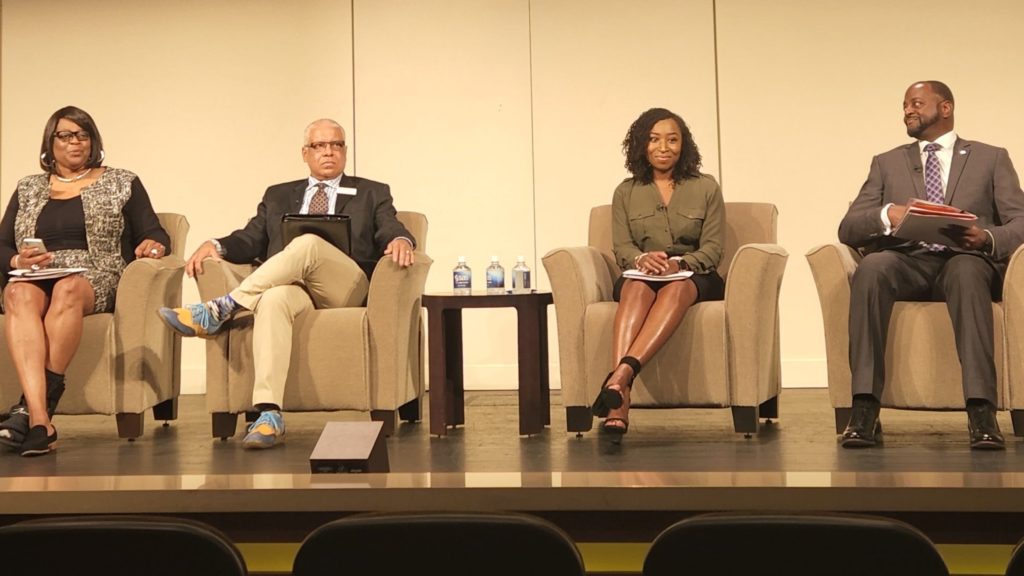
Racism is not a dirty word. That was my mantra as I sat on stage, an invited panelist at this past month’s Best NC Innovation Lab. My colleague and co-panelist Dr. Anthony Graham, provost at Winston Salem State University, challenged us to “have the conversation that needed to be had,” and to spend time diving into the real challenges facing education today. While it was implied, and most understood, it wasn’t until I said the word “racism” that the unspoken was now out there to be dealt with.
Saying the word racism, race, or any mention of Critical Race Theory not only makes people uncomfortable, but it also poses a challenge to psychological safety. And there I was, ready to risk it all for the sake of moving our work forward. While there was tightness in my chest as I spoke, the room applauded, and my colleague and dear friend Jenny O’Meara encouraged them to do so. It was clear that no one in this room was afraid of having a difficult conversation centered on racism.
How did we get here — to a place where we cannot talk about racism when discussing education considering the very construction of the education system as we know it? In September 2020, President Donald Trump issued an executive order excluding from federal contracts any diversity and inclusion training interpreted as containing “divisive concepts,” “race or sex stereotyping,” and “race or sex scapegoating.” Among the content considered “divisive” is Critical Race Theory (CRT). In response, the African American Policy Forum, led by legal scholar Kimberlé Crenshaw, launched the #TruthBeTold campaign to expose the harm that the order poses.
With our nation facing challenges recruiting teachers to the profession, our work at Profound Ladies is to influence the conditions in which our teachers work given the structural challenges that impact Black, Indigenous, People of Color (BIPOC). After integration, there was widespread dismissal, demotion, or forced resignation of tens of thousands of experienced, highly-credentialed Black teachers and principals who staffed the Black-only schools. After schools were integrated, many white superintendents in the southern U.S., who were against integration in the first place, were unwilling to put Black educators in positions of authority over white teachers or white students.
In addition to the implications of attempted integration, the reality is that our teachers were once students. They were the same students who are now feeling the inequities of an education system that was designed without them in mind. The implications of exclusion remain today. There is real trauma felt by our educators who were once the recipients of the very education system they are teaching in today.
Not talking about race when talking about education won’t make it disappear. You cannot solve race-based problems with race-neutral solutions.
First, let’s work from a shared understanding and definition of racism. Dismantling Racism Works provides us a working definition of racism by considering the following: Racism is different from racial prejudice, hatred, or discrimination.
Racism is when the power elite of one group, the white group, has the power to carry out systematic discrimination through the institutional policies and practices of the society while shaping the cultural beliefs and values that support those racist policies and practices. Our colleagues at CREED have offered research outlining what we already know — we still have challenges with racism in education in North Carolina.
The Profound Ladies approach is twofold, one that first works towards anti-racism. Alongside powerful allies, we question everything, including the ways in which we were socialized about our beliefs. Then, we provide a space for our educators of color, who like our students, are navigating racism in education, to process, heal, and be in the community with other educators who share their same experiences. Profound Ladies is a refuge from racism. Respite. The respite teachers deserve. The respite they need.
That’s big work. And we are poised to take it on. You can do your part by taking one small step at a time.
- First, familiarize yourself with the Leandro case. I recommend Jenny O’Meara and Donnell Cannon’s podcast The Hummingbird Stories. The first episode of this season dives deep into the case and outlines what is possible in our state.
- Read this report from CREED. Where do you see your district, your leadership, your classroom in this report?
- Be realistic about your specific district’s data. You can reference the Civil Rights Data Collection.
We are ready and willing to partner with you. Together we can create real change. You can learn more about our work here.