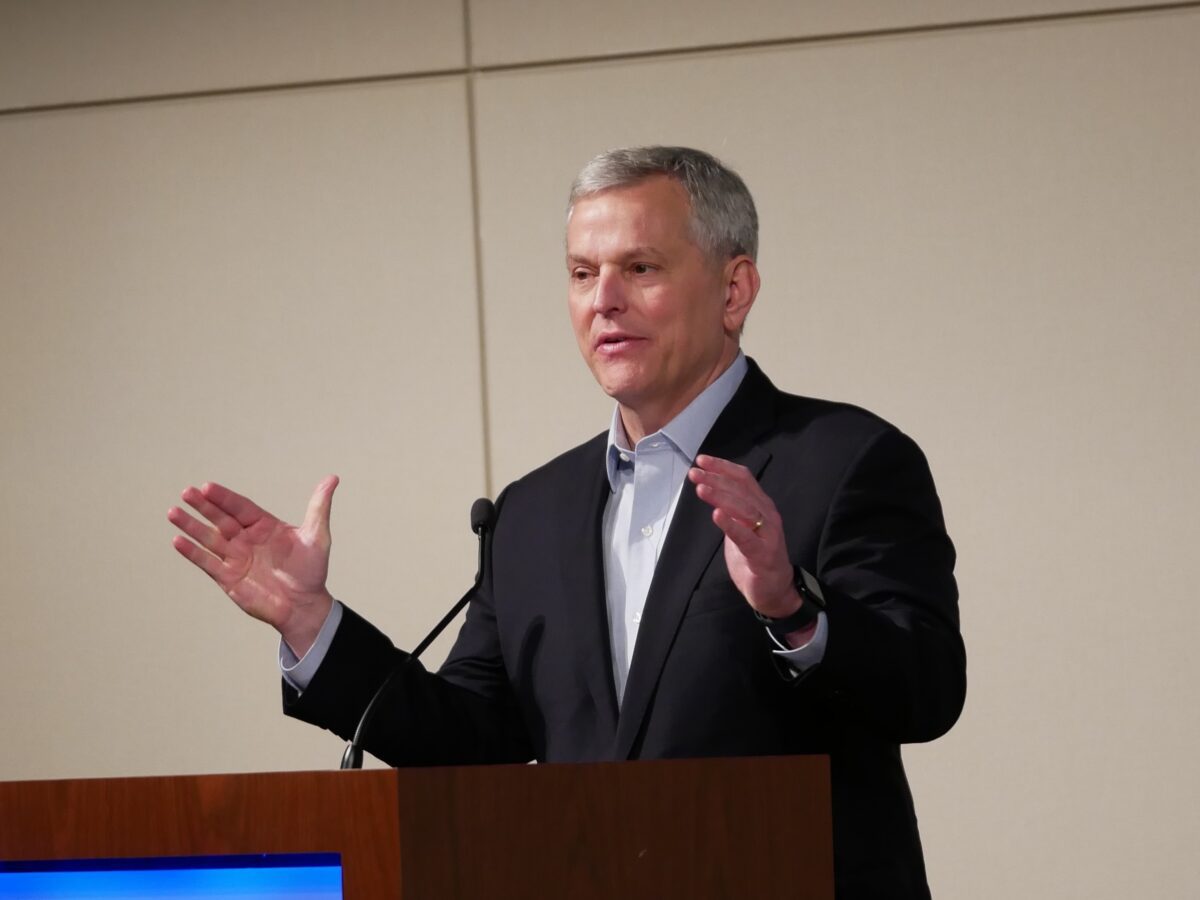
Gov. Josh Stein on Monday outlined his education priorities ahead of this year’s short legislative session, including raising teacher compensation and adding additional school support personnel to meet students’ nonacademic needs.
“If we truly believe that kids are the future of this state, then we have to make the job of educating them more attractive,” he said to a room of education leaders at nonprofit BEST NC’s annual Education Innovation Lab meeting.
 Sign up for the EdDaily to start each weekday with the top education news.
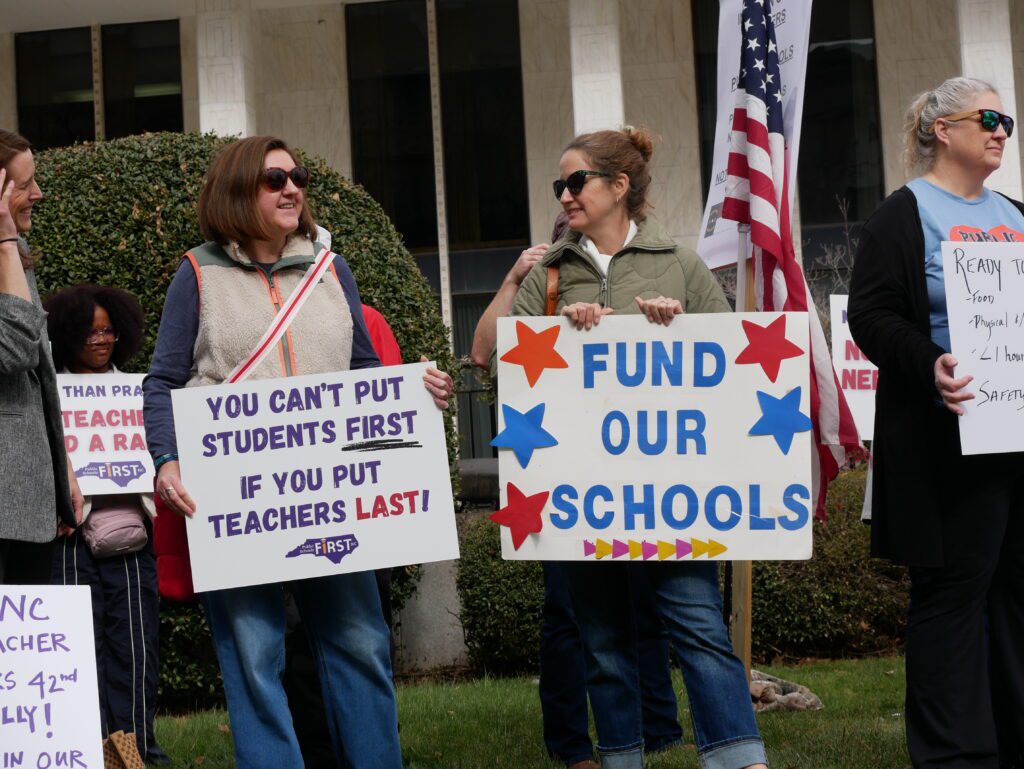
Stein highlighted education items in his $1.4 billion “critical needs budget” proposal, released earlier in March, including 5.8% average raises for teachers, funds to restore master’s pay for more than 1,000 teachers, and a 2.5% raise for principals. Beginning teachers would receive a 13% pay raise in the plan.
The state legislature starts its short session in April. It has not passed a new comprehensive budget since 2023. Stein’s proposal says it includes “critical funding needs that cannot wait until next fiscal year.”
He said teacher pay raises are needed to raise student outcomes, pointing out that the state’s average teacher salary ranks 48th in the nation, with its per-pupil spending ranked at 47th in the nation. Those rankings come from an analysis from the Reason Foundation using data from 2023.
“Teachers drive student success,” Stein said Monday. “They are the No. 1 in-school factor of student achievement. We know this, but we have not passed a meaningful raise for our teachers in years.”
Schools also need more support personnel, he said, like social workers, nurses, psychologists, and nurses to meet students’ nonacademic needs.
Stein celebrated recent wins, including the state’s highest four-year graduation rate, highest participation in Advanced Placement (AP) courses and highest scores on AP exams, and highest participation in Career and Technical Education (CTE) courses.
He praised the state’s move to train teachers in “the science of reading,” or a body of research on how students learn to read. All pre-K to fifth grade teachers completed LETRS training, a professional development program funded by the state’s 2021 legislation revamping its long-time efforts to improve reading proficiency.
Related reads

He also highlighted advanced teaching roles, the principal fellows program, TeachReadyNC — a teacher apprenticeship program — and student cellphone restrictions passed by legislators and signed by Stein last year.
Local innovations like a Perquimans County program exposing high schoolers to hands-on teaching experience, he said, have much to teach the state.
“We have to take inspiration from and match our teachers’ tenacity and our principals’ passion,” he said. “If we believe that our kids are our future, investing in kids is the best we can do.”
Stein pointed to the newly established Blue Ribbon Commission on Public Education, which he created with Senate President Pro Tem Phil Berger and Speaker of the House Destin Hall, as an example of bipartisan partnership.
“Public education is not a Democratic policy,” Stein said. “Public education is not a Republican policy. It is a North Carolina policy. It affects every child in this state. There are so many areas like the cellphone ban, where we can and we must work together for the benefit of our public school kids.”
Related reads
Stein also urged the General Assembly to reconsider its tax policy, adding that upcoming federal cuts to Medicaid and the Supplemental Nutrition Assistance Program (SNAP), have changed the state’s financial pressures.
“The No. 1 item on the chopping block when cuts have to made will be our K-12 schools,” Stein said. “So your voice matters in these debates. I urge you to use it.”
The Office of State Budget and Management (OSBM) in December 2025 projected a budget gap between $2.5 and $4 billion between fiscal years 2027-28 and 2032-33 between the state’s revenues and the funding levels needed to continue its current services, adjusted for inflation and population growth. Current law has automatic tax reductions in place if revenue targets are met, including a 3.49% personal rate in 2027. The corporate rate is set to drop to 2% in 2027 and to 0% by 2030.
On Tuesday, state’s nonpartisan Consensus Forecasting Group (CFG) released a revised consensus General Fund Revenue forecast for the 2025-27 biennium, showing that while there is an expected increase in the General Fund, there is a $360 million decrease in revenue expected in Fiscal Year (FY) 2026-27.
Stein said the loss of state revenue, along with federal funding cuts, will make the state unable to maintain its current funding levels, much less invest in new education efforts.
“Few ideas to enhance public education come with zero cost,” he said, estimating a $3.5 billion funding gap in the next two years. “Typically, they come with some cost, which is why, as a state, we must get our fiscal house in order.”
He said much of the state’s overall success, like its rankings as No. 1 for business and workforce development, is the result of education investments “over the course of many decades.”
“We are bearing the fruit of an orchard that was planted a long time ago,” he said, “but today we risk hollowing out the institutions that have helped to create our success.”

Recommended reading