
Public education in a time of ragged governance

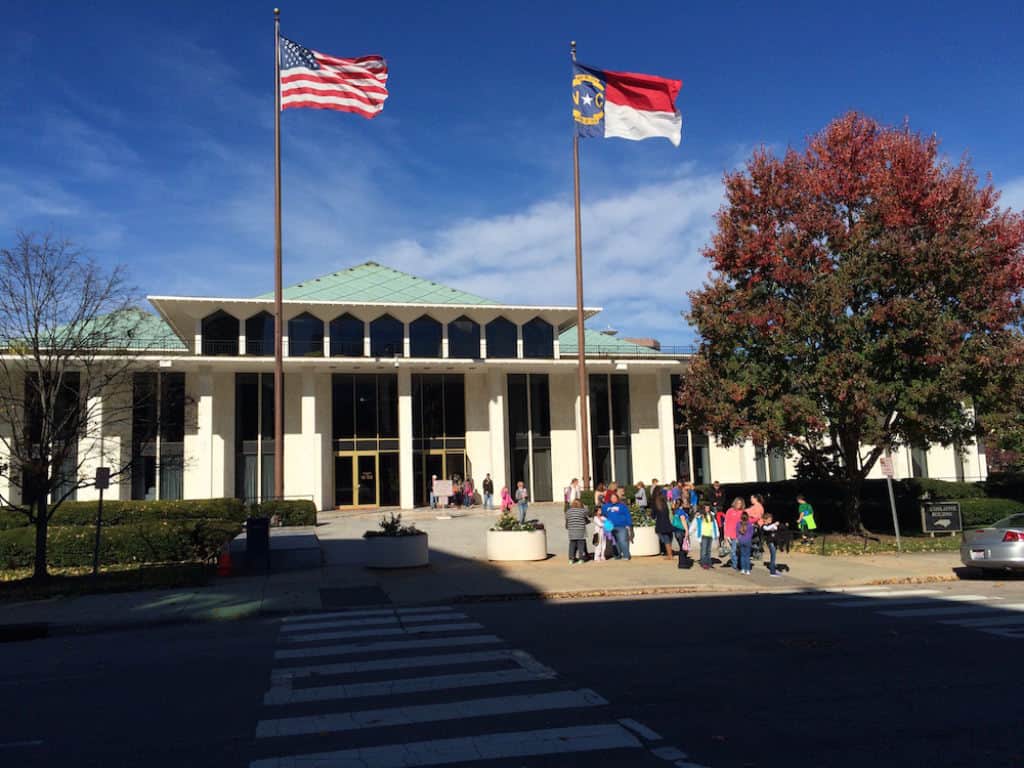
No doubt, students will arrive at school this morning, and teachers will engage with them until the dismissal bell without giving a thought to the education governance issues facing North Carolina. After all, “governance’’ is the often-murky work that bureaucrats and politicians do.
But of course, public education is a function of state and local governments, and the current array of governance issues bears on the effectiveness of schools, colleges, and universities. The failure to find a fix on class-size reduction without threatening arts and music instruction is indicative of jagged policy-making. The governance issues are both structural and political.
In the recent special session of the General Assembly, the Republican majority decided to sustain its mandate to local schools to reduce the number of students in grades K-3. And lawmakers left it to local administrators to figure out how to accommodate the mandate in providing teachers and space within schools.
In reality, the nation’s ninth largest state ought to have the fiscal capacity to afford both class-size reduction and robust arts, music, and physical education. And yet, to look beyond this episode of state-local friction is to see diffused decision-making in frayed and fractious governance.
It did not take long after her arrival in North Carolina for UNC System President Margaret Spellings, a veteran of Texas and U.S government, to notice the Tar Heel state’s tradition of limiting power through layers of governance structures. In a conversation with Brenda Berg, president of BEST NC, the business-funded education advocacy organization, Spellings pointedly noted a “lack of clarity around who’s supposed to do what, when.” It is a “competitive disadvantage’’ for the state to be tied up in governance procedure, she said, and added, “We’ve got to move, people.”
Spellings has in mind a P-16 commission as a vehicle for thinking through how to align the state’s separate governance structures for schools, colleges, and universities to create clearer pathways for students from pre-K through a bachelor’s degree. In mid-summer, Gov. Roy Cooper issued an executive order to create a 17-person commission to develop a fresh response to the Supreme Court ruling that every North Carolina child has the right to a “sound basic education.”
Meanwhile, the Democratic governor has nominated new members for the state Board of Education, but the Republican majority in the legislature has simply declined to vote on their confirmation. At the same time, the new Republican Superintendent of Education Mark Johnson and the state Board, chaired by Republican Bill Cobey, tangle in a court case over their powers in setting education policy.
Over the past five years, Republicans lawmakers have used their veto-proof majority to exercise power in education policymaking. In education and other issues, they have overridden vetoes by both Republican Gov. Pat McCrory and Democratic Gov. Cooper. In practice, education policy has seldom emerged out of long, informed public debate, but rather through internal GOP decision-making in party caucuses and between House and Senate budget writers — and in a succession of short, special sessions. Often, as in the class-size issue, debate ensues after legislation.
A Saturday morning “education summit’’ before a football game in Chapel Hill, convened by the UNC School of Education, turned to a discussion over the current decision-making environment in the state. Richard A. Schwartz, a Raleigh attorney who practices education law, observed that “people aren’t talking to each other, aren’t listening to each other.” Johanna Edens Anderson, executive director of The Belk Foundation in Charlotte, noted “real dysfunction’’ that makes it difficult for education reform-minded Democrats and Republicans to forge agreements to address key issues. “If we don’t have this unified vision,’’ she said, “we’re toast.”
It is difficult to imagine a quick fix with such a myriad of intertwined structural and political factors at play. After all, the Leandro case has rolled on for two decades, with its findings illuminating education shortcomings but its rulings seldom potent enough to compel policy change.
From its founding as a state, North Carolina has had a relatively weak governor in terms of formal powers. Unlike his predecessors, Cooper became governor in the especially difficult position of having to deal as a Democrat with a Republican legislature. Still, the state’s history suggests that educational progress usually comes through the initiative, agenda-setting, and exercise of leadership by a governor. He may not prevail in the short-run, but the governor is the only elected official with a strong enough pulpit to define an agenda with a chance to surmount the dysfunction of governance.