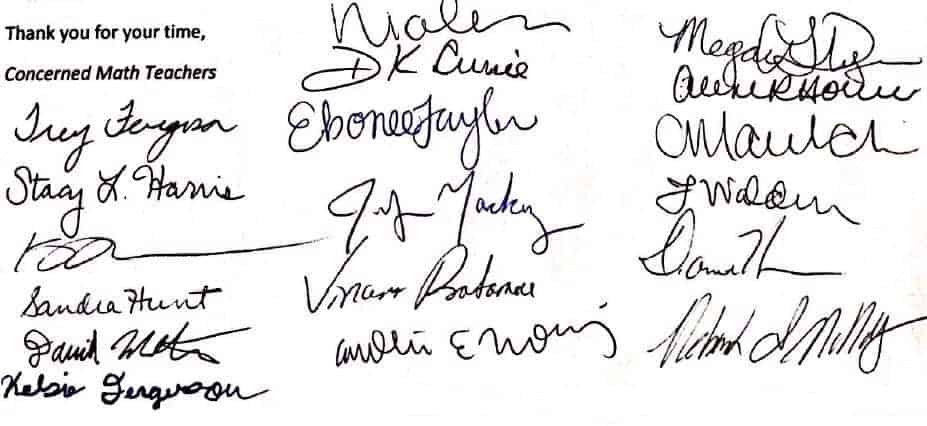
Math teachers write letter to Academic Review Standards Commission

Dear Members of the Academic Review Standards Commission,
We appreciate your ongoing analysis of the Common Core state standards and their impact on the success of North Carolina schools. We implore you to look at all sides of this issue and understand these standards and practices are a much needed change to our students’ learning, and their success is hinged on consistency in the curriculum.
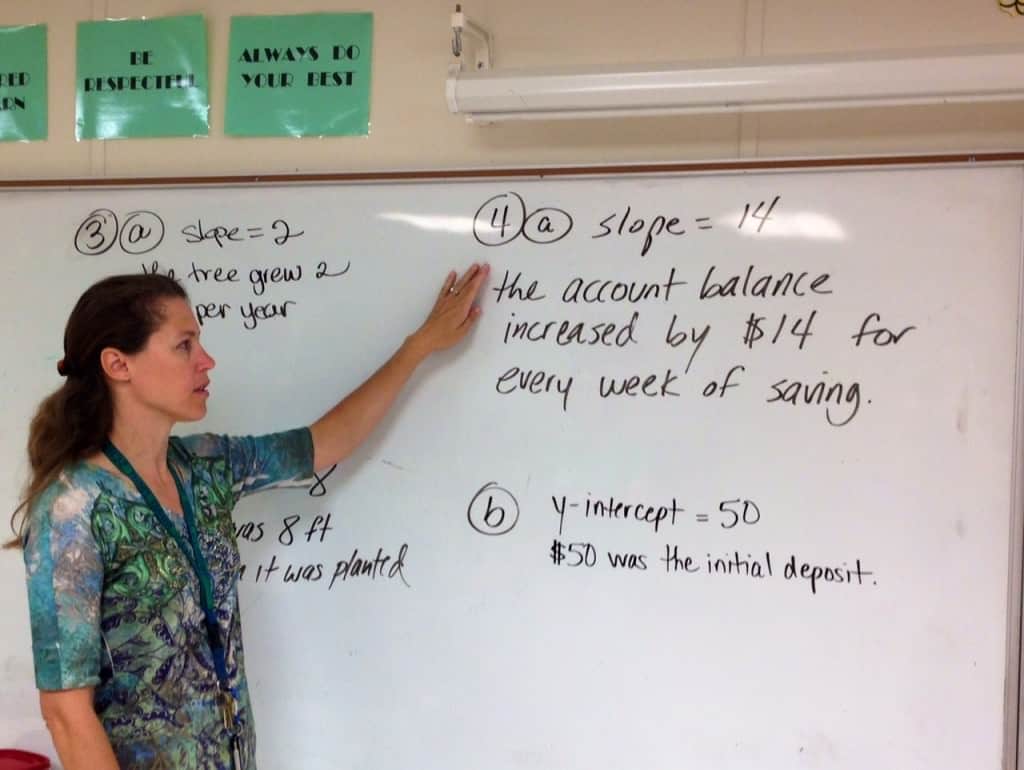
In mathematics, these standards provide students of all levels the opportunity to dig deep into discussion on a variety of methods to solve problems and think critically about abstract concepts, not just procedural ability. They encourage discovery and an integrated approach to topics that were typically seen as mutually exclusive. Geometry and Algebra are now learned alongside each other, as they were discovered, and not seen as two distinct subjects. Student learning objectives are aligned within their specific courses, but also vertically amongst previous and future courses. Many may see this as a repetitious approach to learning, but true mathematical understanding can be achieved when students build upon concepts and utilize previous knowledge from course to course.
Aside from the standards themselves, the mathematical practices encourage collaboration, appropriate tools/methods for problem solving, and applicable modeling of course concepts. This distinction of the Common Core sets it aside from other curriculum in that it places emphasis on how students learn not just what they learn. The investigative approach to learning give students an opportunity of self-discovery and relevant meaning to the standards.
As an educator, these standards and practices coupled with standardized tests pose a challenge to a successful implementation; however, when done correctly, students see the connections and ultimately glean a better understanding of what mathematics truly is. If the mission of public education is to truly ensure students are equipped to think critically and problem solve as self-reliant community members, which also prepares them for global citizenship, then the Common Core does this better than any alternative. Nearly every day our students demand the relevance of what they’re learning. These state standards utilize mathematics content as the vehicle for learning the applicable skills needed for schools to meet their objective.
While there is a major push for the repeal of these standards, it is important to note that we in the school system have not seen the true benefits of the Common Core’s implementation yet. Elementary-aged students who are learning fundamental mathematic skills in this new curriculum are learning to think about math as a process, not a problem, and only time will allow us to see the lasting effects. Educators around our state have worked countless hours on creating completely new, integrated mathematics courses, and our work should not be wasted.
We hope you take this information into your committee meetings and classroom observations, and keep it in mind when you formulate a plan of action for the future of North Carolina education.