
A year for the courts

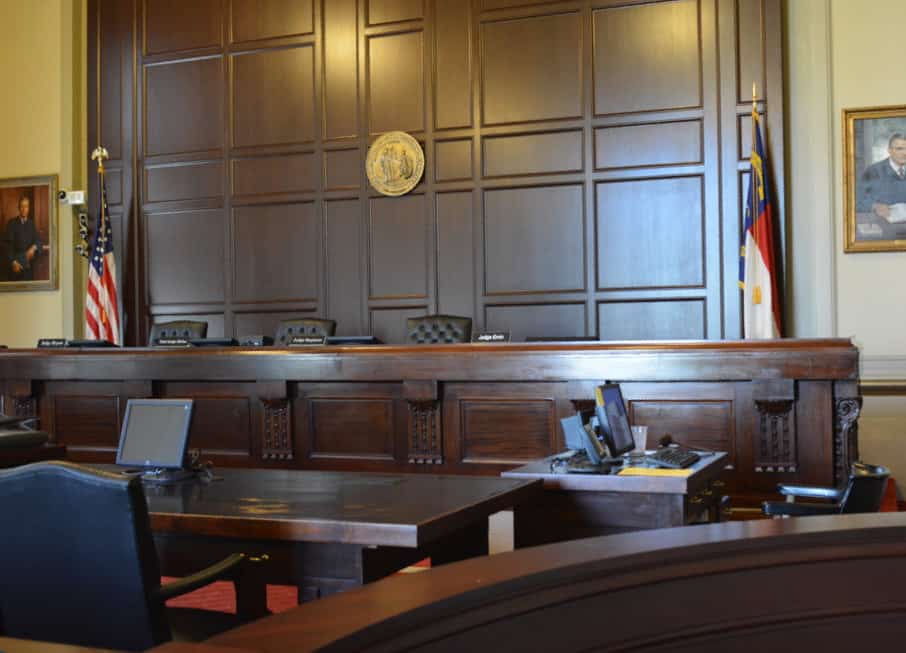
I can think of no time like now when we have so many important constitutional issues in education headed to the courts. This week, the state responded to the State Board of Education’s lawsuit over constitutional authority. Next week, a hearing in Judge Manning’s courtroom on Leandro will overlap with a Court of Appeals’ oral argument on career status. And we head into February for oral arguments in the North Carolina Supreme Court on the Opportunity Scholarships Program (also known as vouchers). And so in my first piece of looking ahead in 2015, I will focus on the North Carolina Constitution and the significant cases to be heard this year that will give shape to this supremely important organic law of this state.
Both rights and governance will be taken on by the courts this year.
But first, some background. North Carolina has always taken its constitution seriously. We operated under a state constitution before there was a federal constitution and separately passed our Bill of Rights in 1776 – a signal the North Carolina Supreme Court found significant in the importance placed on these rights. State constitutions service two primary purposes: to establish fundamental rights and key features of governance – that cannot be changed without a vote of the people. Both rights and governance will be taken on by the courts this year.
The State Board of Education – the majority of whom have been appointed by Gov. McCrory – are ready to test their authority under the constitution for rule-making. Stating that they “FULLY EMBRACE” their authority, they seek to be able to make policy that is only subject to the General Assembly and not the Rules Review Commission. As a case to watch, State Board of Education v. State not only will inform the long-standing issues of authority over education, but will be an exercise of the new legislation requiring three-judge panels for facial constitutional challenges of laws.
Judge Manning either will be reappointed under a special capacity or will be replaced in this long standing case.
After a 20-year anniversary of Leandro in 2014 (which no one celebrated), the case that has been the primary challenge of constitutional rights to education continues. Two events we know will occur in 2015 in Leandro – more officially referred to as Hoke County Board of Education v. State: a hearing scheduled for Jan. 21-22 on test results and Judge Howard E. Manning’s seventy-second birthday. The latter is important because of automatic retirement ages for judges which means that Judge Manning either will be reappointed under a special capacity or will be replaced in this long-standing case.
The constitution also will be on display on the issue of appropriation of state funds for parents to choose private schools. “Opportunity scholarships” as named in the legislation or vouchers by their opponents raise numerous constitutional issues from core funding issues to public purpose doctrine to religion. The companion cases, Hart v. State and Richardson v. State, also will be cases to watch for observing the operation of the newly composed North Carolina Supreme Court with Chief Justice Mark Martin. Already there are some signs of change. The Supreme Court chose to take this case on its own initiative straight from the trial court, bypassing the Court of Appeals. And they have shown a willingness to act quickly – responding within two days to a request for an expedited hearing of this case. That expedited hearing will occur on Feb. 17.
A more discrete constitutional challenge making its way to the courts is on whether the state and federal constitutions provide protections from elimination of career status for teachers who already have earned it. While the constitutional claims are more narrow and defined, the political implications are broad and charged. A three-judge panel of the North Carolina Court of Appeals will hear oral arguments in NCAE v. State on Jan. 22.
EdNC will provide updates on all major litigation related to education.
In these cases we will see all levels of the judiciary on display: the trial court and three-judge panel for facial constitutional challenges, the North Carolina Court of Appeals, and the North Carolina Supreme Court. How can you keep track of these important cases? Currently, trial court level documents are not available online – something Chief Justice Martin wants to remedy as a part of his comprehensive plan. EdNC will provide updates on all major litigation related to education. You also will be able to find copies of the court opinions and other major court documents (pleadings by parties, etc.) on the EdNC website. Access to EdLitigation begins today with key resources for Hoke v. State (Leandro) and NCAE v. State.
It is going to be quite a year.