In celebration of National School Choice Week, the U.S. Departments of Education and Treasury released a joint fact sheet on the federal education tax cut on Tuesday, which was included in Sec. 70411 of the federal budget reconciliation bill and signed into law by President Donald Trump on July 4, 2025. The U.S. Government is allowing late comments on the implementation of the tax credit, so more guidance will be forthcoming.
Brookings — whose researchers have written about whether the tax credit could be a boon for educational choice in red states and educational enrichment in blue states — has described three positions Democratic governors may take on the tax credit:
- “never, ever, ever,”
- “suck it up,” or
- explore how to make “this an educational enrichment program (in the broad sense), not an educational choice program (in the narrow sense).”
The first step for any state is to decide whether to opt in.
 Sign up for the EdWeekly, a Friday roundup of the most important education news of the week.
According to the press release, 23 states have opted in to the tax credit: Alabama, Alaska, Arkansas, Georgia, Idaho, Indiana, Iowa, Louisiana, Mississippi, Missouri, Montana, Nebraska, Nevada, North Dakota, Ohio, Oklahoma, South Carolina, South Dakota, Tennessee, Texas, Virginia, West Virginia, and Wyoming.
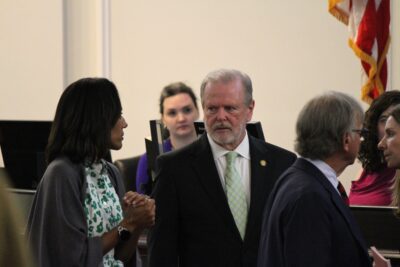
A North Carolina bill, House Bill 87, called the “Educational Choice for Children Act,” would enroll the state in the federal tax credit program. It passed the N.C. General Assembly on July 31, 2025.
On Aug. 6, 2025, Gov. Josh Stein vetoed the bill, saying that while he supports school choice, he does not agree with funding private school choice initiatives while “cutting public education funding by billions of dollars.”
“However, I see opportunities for the federal scholarship donation tax credit program to benefit North Carolina’s public school kids,” said Stein. “Once the federal government issues sound guidance, I intend to opt North Carolina in so we can invest in the public school students most in need of after school programs, tutoring, and other resources.”
As Stein and his administration consider the fact sheet issued today, HB 87 is currently calendared for a veto override vote on Feb. 9.
Here is what you need to know:
- SGO stands for Scholarship Granting Organization. In North Carolina, HB 87 would authorize the North Carolina State Education Assistance Authority (NCSEAA) to submit a list of qualifying SGOs to the federal government annually.
- Taxpayers can receive a tax credit of up to $1,700 for contributions made to SGOs that would otherwise have been owed to the government in Federal income taxes, according to the fact sheet.
- Funds may be used to provide scholarships for education-related services at private or public schools, including tuition, fees, academic tutoring, and classroom supplies, according to the fact sheet.
- In states that opt in, taxpayers can begin claiming the credit for contributions made in January 2027.
Here is the fact sheet.
Nationally, Public Funds Public Schools is working to keep public funds in public schools, and says that this tax credit will “divert federal tax dollars from the U.S. Treasury and from services, including public education.”

Recommended reading