
North Carolina high schoolers report fewer suicidal behaviors, survey shows

This article discusses mental health and suicide. If you or someone you know needs help, reach out to the National Suicide and Crisis Lifeline by calling 988.
North Carolina students are reporting fewer mental health challenges and suicidal behaviors, according to results from the 2023 NC Youth Risk Behavior Survey.
The biannual survey, which anonymously surveys middle and high school students, has been conducted in the spring of every odd year since 1993. The last survey was conducted in 2021, at the start of the COVID-19 pandemic.
“It is so encouraging to see that students are not only recovering from the effects of the pandemic, but in many cases doing better than they were in 2019 and before,” said the Department of Public Instruction’s (DPI) Deputy State Superintendent Michael Maher.
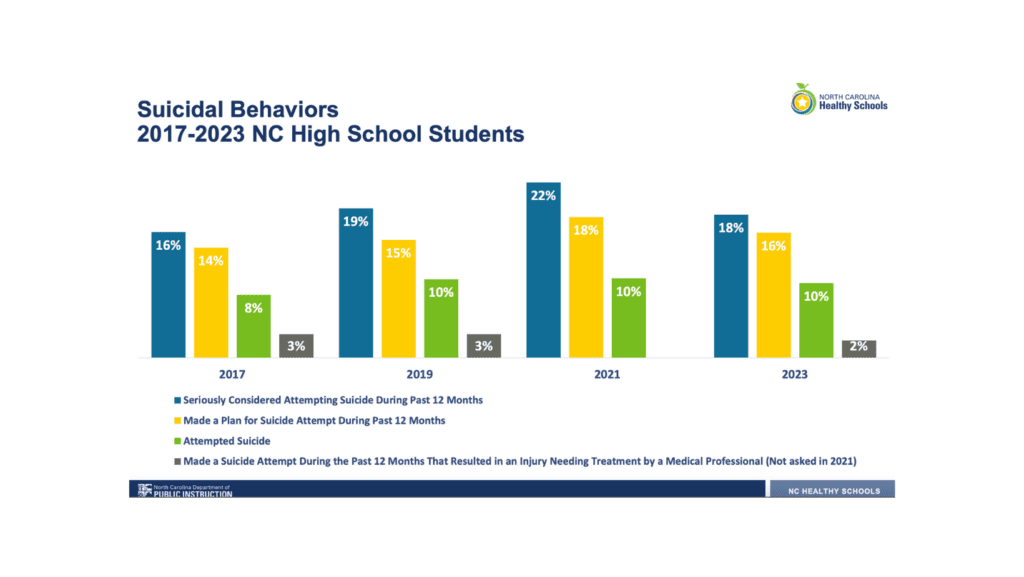
High school students who reported seriously considering suicide in the past year dropped from 22% in 2021 to 18% in 2023, per survey results.
The percentage of LGBTQ+ high schoolers who seriously considered suicide also decreased, from 48% in 2021 to 37% in 2023. However, that rate is still much higher than for heterosexual students, at 13% in 2023.
The percentage of high school students who reported feeling sad or hopeless dropped to 39% in 2023, after reaching 43% in 2021. The percentage of middle school students feeling sad or hopeless dropped from 35% to 32% during the same time period.
 Sign up for the EdDaily to start each weekday with the top education news.
The North Carolina Youth Risk Behavior Surveys are given to representative samples of randomly selected middle and high school students on odd numbered years. The surveys are anonymous and parents can opt their child out of participating.
According to a recent presentation to the State Board of Education, the survey looks to monitor the following areas:
- Unintentional injuries and violence.
- Sexual behaviors.
- Alcohol and other drug use.
- Tobacco use.
- Unhealthy dietary behaviors.
- Inadequate physical activity.
- Obesity.
- Other priority health issues.
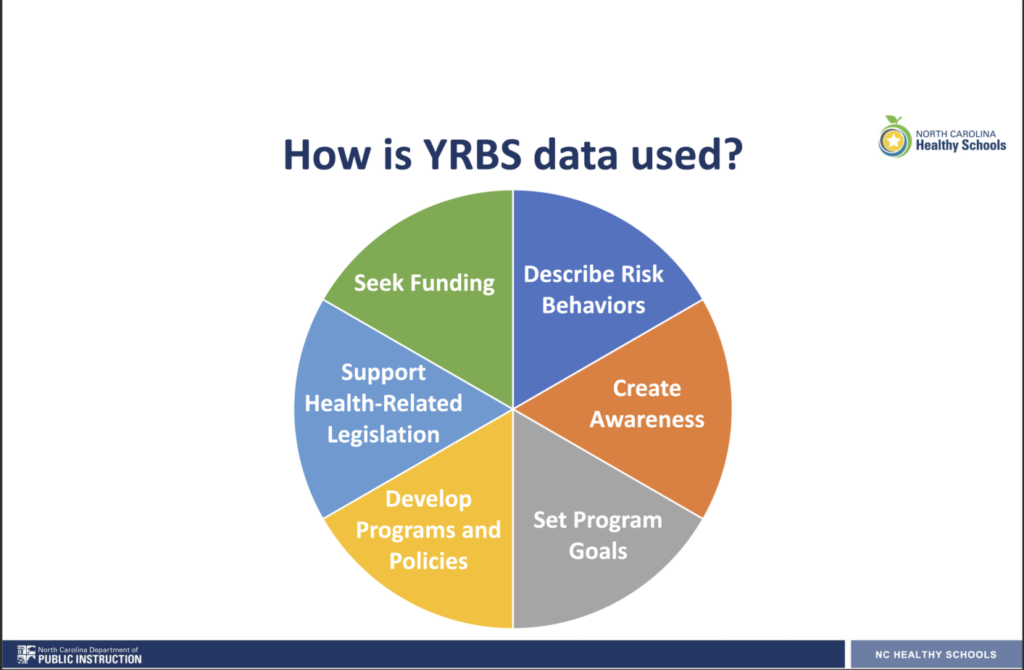
The agency chooses questions for the surveys from a list created by the Centers for Disease Control & Prevention (CDC) that is used by education agencies and schools across the nation. About two-thirds of questions came from the CDC’s standard questionnaire and it was submitted to them for final approval before being administered.
“Results allow health and educational professionals to track the prevalence of youth risk behaviors over time,” DPI’s presentation said.
More survey results
At a glance, the survey results showed a drop in risky behaviors, and a better mental state among the students.
The use of vape products, marijuana, and alcohol are on the decline for high school students. Cigarette smoking is stagnant, at an all-time low of 4%. Additionally, the survey results show no significant change in prescription painkiller drug use or bullying.
According to the survey, 30% of high school students agreed or strongly agreed that they feel alone in their life. When asked, 55% of high schoolers reported feeling good about themselves.
Almost half of high school students (48%) surveyed strongly agreed or agreed that their teachers really care about them and give them a lot of encouragement, according to DPI’s presentation to the Board. This is an increase from 42% of students in 2021.
Most students (62%) also believe there is at least one adult they can talk to at school if they have a problem, which is consistent with 2021 data.
More female students feel this way compared to male students, at 67% and 59%, respectively. High school seniors reported they had an adult they could talk to at higher rates than other grades, at 69%.
Additionally, white students were more likely to report having someone they can reach out to at school than students of other races (67%). In comparison, 64% of Native American students, 55% of Hispanic/Latino students, 61% of Black students, and 39% of Asian students reported having at least one adult to talk to.
This year’s survey included questions on social media for the first time.
More than 80% of high school students reported using social media at least several times a day, with 37% of those students reporting using it at least once an hour. Middle school students surveyed had a little less usage, with 63% using it at least several times a day. While the results showed no difference between social media use and grades, the results did show a correlation between getting at least eight hours of sleep and academic performance.
Regarding student nutrition, the results show that more students are eating breakfast all seven days of the week — 26% of high schoolers and 36% of middle schoolers.
The survey shows that 31.2% of high school students were overweight or obese.
Read more


In a press release, DPI linked gains in mental health with students becoming more physically active.
Over the last 10 years, DPI’s presentation to the Board showed that the more that students report that they are physically active five or more days a week, the less likely they are to report they are sad or hopeless.
Among high school students, more students are getting at least an hour of activity five or more days a week from 2021, from 34% to 42%, according to the survey results. For middle schoolers, that rate also increased from 44% in 2021 to 52% in 2023.
Ellen Essick, section chief for DPI’s NC Healthy Schools, told the Board that “the positive effect of exercise on mental health is well documented.”
The Board discussed an amendment to the existing Healthy Active Children Policy that would encourage high schools to offer students 60 minutes of physical activity per week. The current policy calls for 30 minutes per day of physical activity for K-8 students. The Board is set to vote on the policy at its July meeting.
“Students can’t reach their full potential in the classroom if they are not mentally and physically well,” Essick said. “Giving them more access to exercise during the school day should ultimately result in better academic outcomes.”
You can view DPI’s full presentation here.