
Meet the state lawmakers working on a final budget proposal
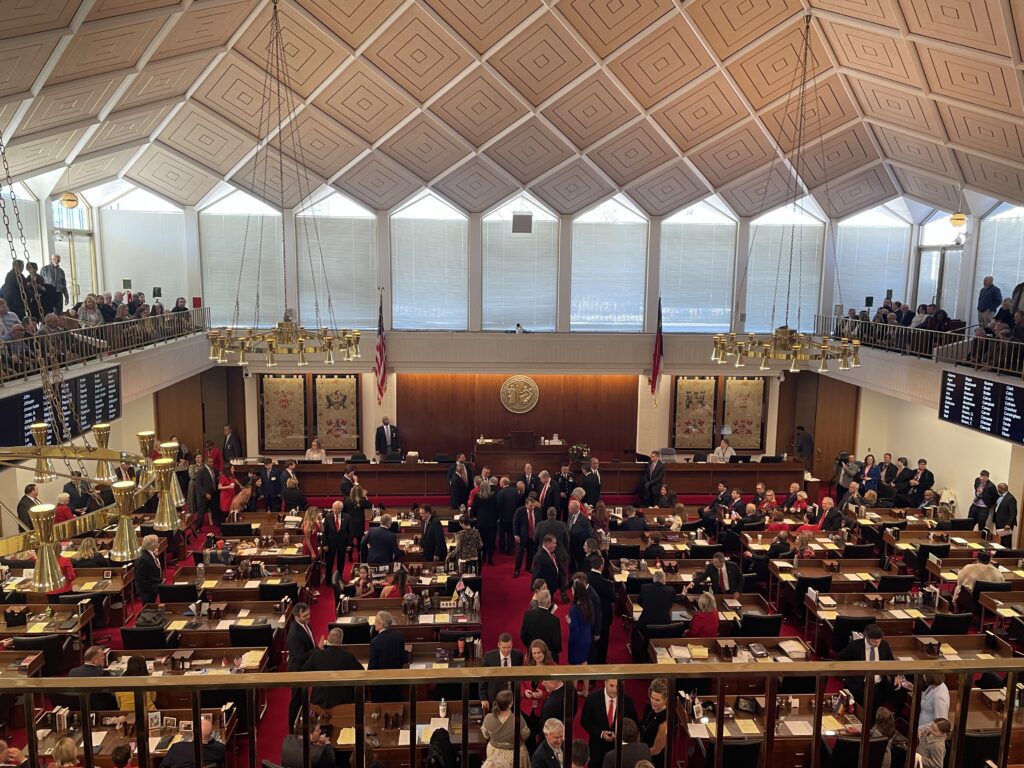
Now that the House and Senate have both released their budget proposals, the two chambers must work together to try to pass a compromise budget in time for the new fiscal year that begins on July 1. They do this through what’s called a conference committee, and the legislature recently released the list of representatives who will be serving on this committee.
In odd-numbered years, the state legislature meets for a long session, where their primary task is to set the budget for the next two years. The latest consensus revenue forecast, which helps the state know how much money it has to spend, projects that North Carolina will have $180 million less in revenue for this fiscal year than originally predicted back in February.
“The downward revision is due primarily to lower-than-expected corporate income tax collections in April, particularly related to reduced estimated tax payments from businesses,” says the updated forecast, “likely due to anticipating higher input costs and lower profits from recently implemented tariffs.”
 Sign up for the EdDaily to start each weekday with the top education news.
While it is generally expected to have a new budget in place by July 1, delays in the negotiation process are expected this year as the chambers discuss disagreements about pay raises, personal income taxes, and more.
The House and Senate budget proposals have some common ground — usually an indication that an item will make it into the final budget. Both proposals would increase funds for the State Health Plan, fund enrollment growth at community colleges, and allocate additional funds to Hurricane Helene relief efforts. They would also both raise pay for teachers and other state employees, although the House proposal focuses more on beginning teacher pay. Both proposals also have some of the same policy provisions, such as granting more authority to the state’s Charter Schools Review Board and investing in literacy initiatives for students beyond third grade.
Read more about the budget proposals
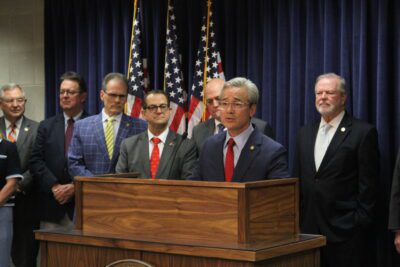
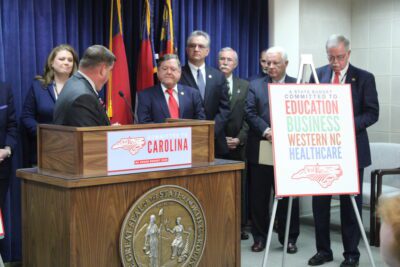
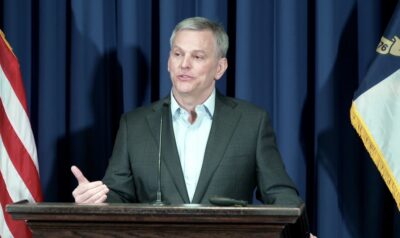
Once the committee comes up with a compromise budget, it must pass both chambers of the legislature before making its way to the governor for his signature or veto. Gov. Josh Stein, a Democrat, has indicated his support for the House proposal. Republicans have a veto-proof majority in the Senate but are one vote shy in the House. There are nine Democrats on the conference committee.
Keep reading to see the full list of conference committee members.
Senate members
- Sen. Brent Jackson, R-Bladen (Chair).
- Sen. Ralph Hise, R-Alleghany (Chair).
- Sen. Michael Lee, R-New Hanover (Chair). Lee is also a chair of the Senate education/higher education committee.
- Sen. W. Ted Alexander, R-Cleveland.
- Sen. Lisa Barnes, R-Franklin. Barnes is a member of the Senate education/higher education committee.
- President Pro Tempore Sen. Phil Berger, R-Guilford.
- Sen. Bob Brinson, R-Craven. Brinson is a member of the Senate education/higher education committee.
- Sen. Danny Earl Britt, Jr., R-Hoke.
- Sen. Jim Burgin, R-Harnett.
- Sen. Kevin Corbin, R-Cherokee. Corbin is a chair of the Senate education/higher education and appropriations on education/higher education committees.
- Sen. David Craven, Jr., R-Anson. Craven is a member of the Senate appropriations on education/higher education committee.
- Sen. Warren Daniel, R-Buncombe.
- Sen. Carl Ford, R-Rowan.
- Sen. Amy Galey, R-Alamance. Galey is a member of the Senate education/higher education committee.
- Sen. Bobby Hanig, R-Currituck. Hanig is a member of the Senate education/higher education committee.
- Sen. Mark Hollo, R-Catawba. Hollo is a member of the Senate education/higher education committee.
- Sen. Steve Jarvis, R-Davidson.
- Sen. Todd Johnson, R-Cabarrus.
- Sen. Dana Jones, R-Forsyth. Jones is a member of the Senate education/higher education and appropriations on education/higher education committees.
- Sen. Michael Lazzara, R-Onslow.
- Sen. Tom McInnis, R-Moore. McInnis is a member of the Senate education/higher education committee.
- Sen. Chris Measmer, R-Cabarrus.
- Sen. Timothy Moffitt, R-Henderson.
- Sen. Buck Newton, R-Greene. Newton is a member of the Senate education/higher education committee.
- Sen. Brad Overcash, R-Gaston. Overcash is a chair of the Senate education/higher education and appropriations on education/higher education committees.
- Sen. Bill Rabon, R-Brunswick.
- Sen. Norman Sanderson, R-Pamlico. Sanderson is a member of the Senate education/higher education committee.
- Sen. Benton Sawrey, R-Johnston.
- Sen. Vickie Sawyer, R-Iredell.
- Sen. Eddie Settle, R-Wilkes.
- Sen. Dan Blue, D-Wake.
- Sen. Paul Lowe, Jr., D-Forsyth.
- Sen. Gladys Robinson, D-Guilford. Robinson is a member of the Senate education/higher education committee.
- Sen. Joyce Waddell, D-Mecklenburg. Waddell is a member of the Senate appropriations on education/higher education committee.
House members
- Rep. Donny Lambeth, R-Forsyth (Chair). Lambeth is also a member of the House K-12 education committee.
- Rep. Dean Arp, R-Union (Chair).
- Rep. Larry Strickland, R-Johnston (Chair).
- Rep. Kyle Hall, R-Forsyth (Chair).
- Rep. Erin Paré, R-Wake (Chair).
- Rep. Hugh Blackwell, R-Burke (Chair). Blackwell is a vice chair of the House K-12 education and education appropriations committees.
- Rep. William Brisson, R-Bladen.
- Rep. John Bell, IV, R-Wayne.
- Rep. Brenden H. Jones, R-Columbus.
- Rep. Karl Gillespie, R-Cherokee.
- Rep. Steve Tyson, R-Craven.
- Rep. Harry Warren, R-Rowan.
- Rep. Julia Howard, R-Davie.
- Rep. Neal Jackson, R-Moore. Jackson is a member of the House higher education committee.
- Rep. Mitchell Setzer, R-Catawba.
- Rep. Matthew Winslow, R-Franklin.
- Rep. Jeff Zenger, R-Forsyth.
- Rep. Jake Johnson, R-Henderson. Johnson is a member of the House K-12 education committee.
- Rep. Kelly Hastings, R-Cleveland. Hastings is a chair of the House education committee on universities.
- Rep. Jennifer Balkcom, R-Henderson. Balkcom is a member of the House K-12 education committee.
- Rep. Jimmy Dixon, R-Duplin.
- Rep. Tricia Ann Cotham, R-Mecklenburg. Cotham is a chair of the House K-12 education and education appropriations committees.
- Rep. David Willis, R-Union. Willis is a chair of the House education appropriations and K-12 education committees.
- Rep. Brian Biggs, R-Randolph. Biggs is a chair of the House education appropriations and K-12 education committees.
- Rep. John A. Torbett, R-Gaston. Torbett is a member of the House K-12 education committee.
- Rep. Donnie Loftis, R-Gaston.
- Rep. Dennis Riddell, R-Alamance. Riddell is a member of the House K-12 education committee.
- Rep. Larry W. Potts, R-Davidson. Potts is a member of the House K-12 education committee.
- Rep. Timothy Reeder, MD, R-Pitt. Reeder is a vice chair of the House higher education committee.
- Rep. Donna McDowell White, R-Johnston. McDowell White is a member of the House higher education committee.
- Rep. Ted Davis, Jr., R-New Hanover. Davis is a member of the House higher education committee.
- Rep. Charles Miller, R-Brunswick.
- Rep. Dudley Greene, R-Avery.
- Rep. Carson Smith, R-Onslow.
- Rep. Allen Chesser, R-Nash.
- Rep. Frank Iler, R-Brunswick. Iler is a member of the House K-12 education committee.
- Rep. Phil Shepard, R-Onslow. Shepard is a member of the House K-12 education committee.
- House Democratic Leader Rep. Robert Reives, II, D-Chatham.
- Rep. Charles Smith, D-Cumberland.
- Rep. Carla Cunningham, D-Mecklenburg.
- Rep. Shelly Willingham, D-Bertie.
- Rep. Cecil Brockman, D-Guilford. Brockman is a vice chair of the House K-12 education committee and member of the education appropriations committee.
- Rep. Heather Rhyne, R-Lincoln. Rhyne is a vice chair of the House K-12 education committee and a member of the higher education committee.
- Rep. Blair Eddins, R-Wilkes.