National Teach for America CEO visits eastern NC, sees impact for students at Edgecombe County Schools

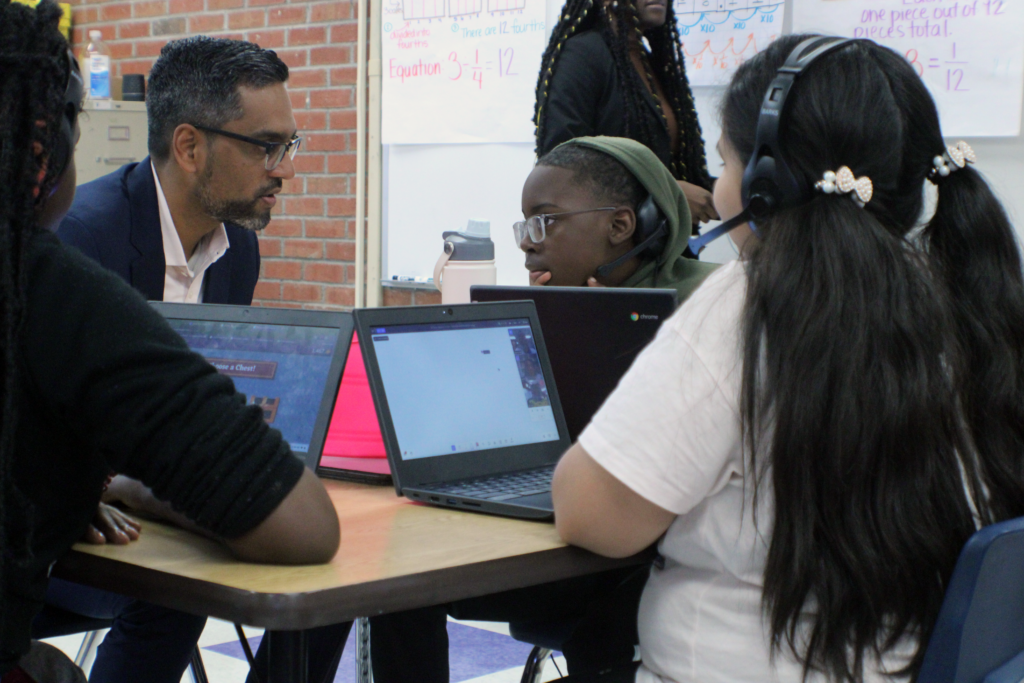
Teach for America CEO Aneesh Sohoni visited Edgecombe County Public Schools (ECPS) last Thursday to highlight the impact of TFA corps members in schools.
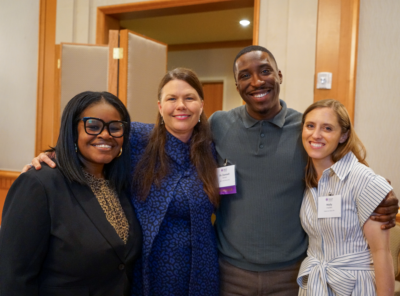
The CEO’s first stop was to Martin Millennium Academy (MMA), the only K-8 global school in North Carolina, located in Tarboro.
 Sign up for the EdDaily to start each weekday with the top education news.
MMA exceeded academic growth on their End of Grade (EOG) tests in 2024-25. However, school Principal Byron Bulluck said the school still struggles with proficiency.
To help with this, MMA partners with Teach for America North Carolina (TFA NC) by way of the Teach for America Ignite fellows.
Through the program, fellows tutor small groups of MMA students in math and/or reading over video calls for three to five hours a week. Fellows check in with a site leader informally once a week to talk about the student’s process. After 12 weeks of sessions, educators compare the scores they receive on softwares such as iReady at the end of the semester to the beginning of the semester.
At MMA, it was reported by TFA NC that 73% of fourth and fifth grade students made academic growth in math after working with Ignite tutors.
Cherelle Sanders is an Ignite site leader and multiclassroom leader at MMA. The educator said a big impact she has observed among the students was the development of their “math identity.” Students became more confident in their math skills after working with a tutor and seeing themselves as a “math person,” Sanders said.

TFA has a long history of partnership in ECPS. TFA educators visited the academy nearly a decade ago — not long after the school first opened in 2014. During that visit, the school served as an example for the visitors of how leadership plays a role in bettering the learning environment for students who grow up in rural areas. The Ignite fellows program has been present at MMA for the past three years, TFA leaders said.
“We believe we have a valued partner in Teach for America,” ECPS Superintendent Andrew Bryan said last week. “There’s a historical significance for Teach for America in our school district. And I think the renewal of that partnership that we’ve seen over the last couple of years… has gotten a little bit better.”
Jessica Rodriquez-Angeles, a TFA corps member placed at MMA, said she enjoys “how everyone helps each other out” at the school. “It really feels like a family,” she said.
Bulluck said that the partnership with TFA has been very valuable in filling teacher vacancies at MMA. As Rodriguez-Angeles is a first-year teacher who did not go to school for teaching, he said, “being able to have the support of Ignite to supplement the instruction that she is giving has been very invaluable.”
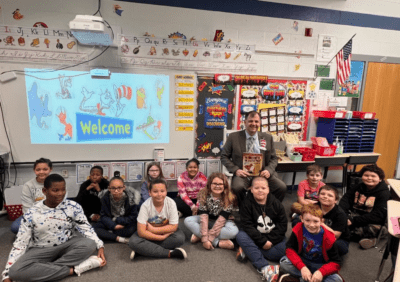
Sohoni said he saw the impact the program has on the students during their classroom visit.
“I heard another student say they were excited for the EOGs,” Sohoni said. “Which I’ve never heard a student say, ‘I’m excited for an end of year test,’ and so she’s been getting ready for that, right? So I saw multiple layers of impact.”
This academic year there were 300 Ignite tutors around the state, said TFA NC Executive Director Robyn Fehrman, and they want to double that number by 2030.
Corps member impact
Sohoni went on to visit two teachers placed by TFA NC — referred to as corps members — at Tarboro High School. The educators there talked about how they integrated into the community after living in larger cities and other states.
The first stop was in English teacher Krista Lassiter Carr’s classroom, where students were learning how to outline research papers. Sohoni and visitors from TFA NC were able to observe Lassiter Carr giving students as much one-on-one time as she could and allowing them to express their interests, with paper topics ranging from social media use to the impact of the Divine Nine.

Lassiter Carr was a part of the TFA class of 2024. She is now pursuing a master’s degree at East Carolina University. She referred to her move from Arkansas to Tarboro by way of TFA as “the best career move,” she’s ever made.
“I’ve had more opportunities as an educator here than the previous 12 years of my career combined. And the kids here are just wonderful. It’s the first place in my life I’ve ever felt at home,” Lassiter Carr told EdNC.
Sohoni and visitors also observed science teacher Owen Cole’s classroom. Cole was guiding students through an assignment using Skittles to simulate radioactive decay.
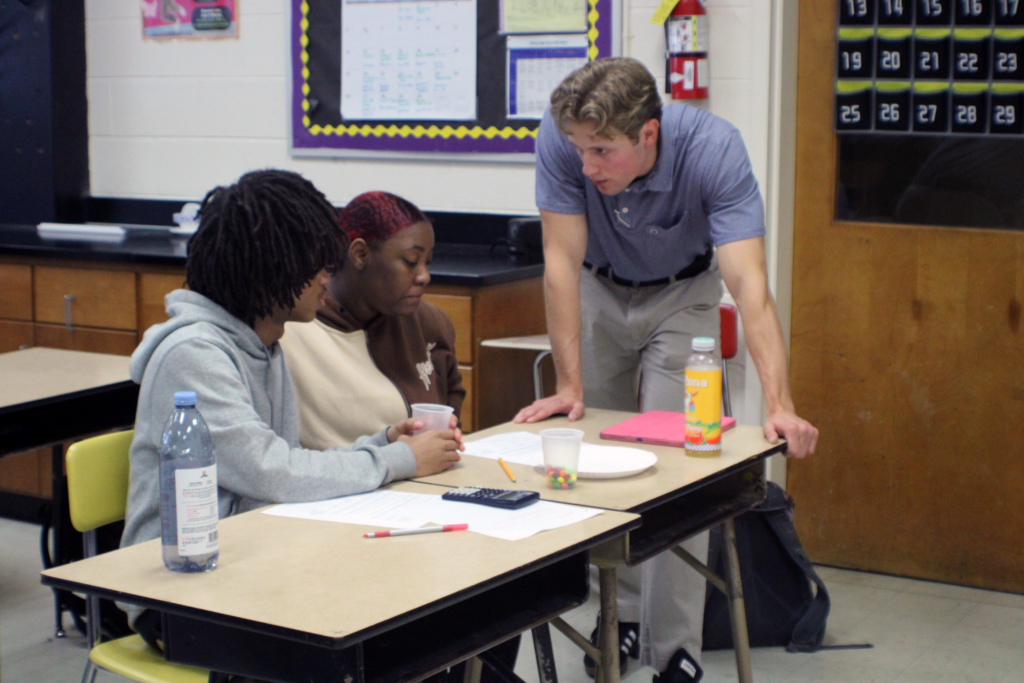
Cole has been a corps member in Tarboro since 2024. In August, he was selected as ECPS Beginning Teacher of the Year. During last week’s visit, Cole spoke on the impact the community has had on him as he’s transitioned from living in bigger cities to a more rural area.
“They inspire me to not only challenge myself, but challenge my way of thinking and to look at new perspectives,” Cole said.
Samantha Dale, who serves as the managing director of leadership development for TFA NC, said she was taught and inspired by a corps member in high school. She hopes that current students will also take that inspiration into their future careers and “build that bridge.”
“Being a byproduct of education in North Carolina, especially eastern North Carolina, I see Teach For America North Carolina being one of those foundational pillars of our communities,” Dale said. “We’ve been here for 35 years in eastern North Carolina, and I have been personally influenced and guided by a corps member, and now I get to see corps members do that for other students.”
Read more
The role of corps members in North Carolina’s future
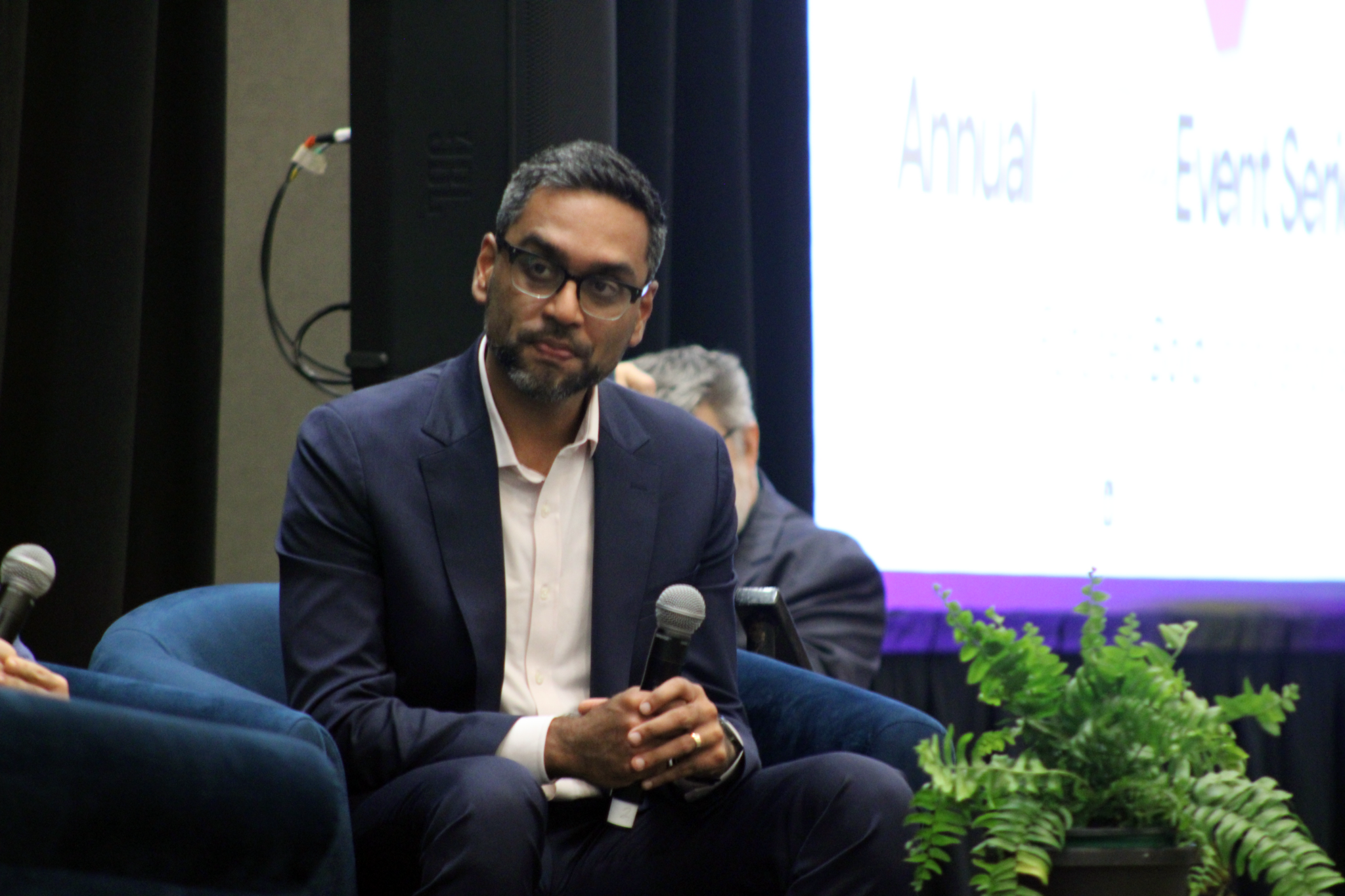
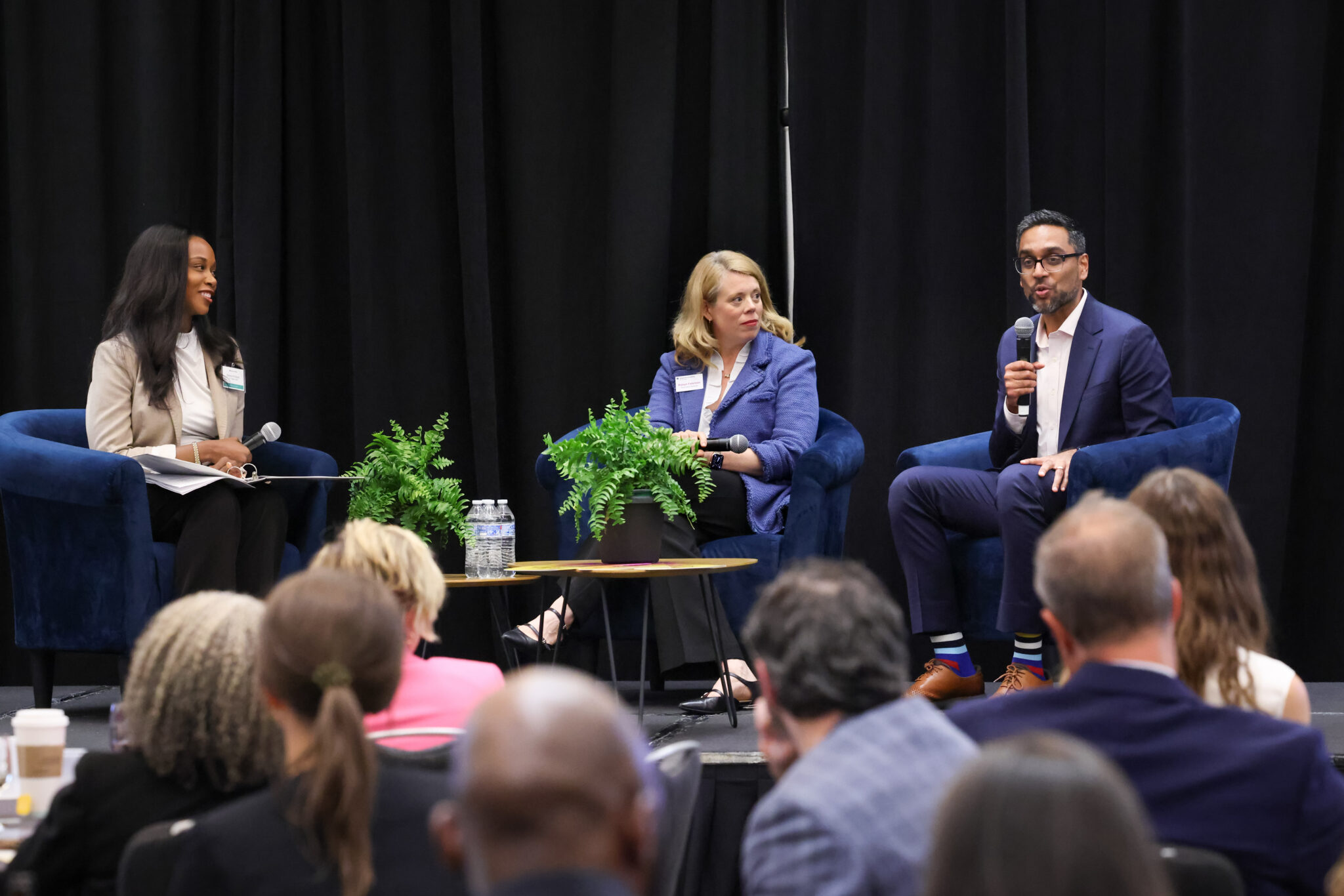
Later that day, Sohoni participated in a fireside chat with Fehrman, moderated by journalist and TFA alum Bianca Holman at the Sheraton Imperial RTP hotel in Durham.
Holman asked Fehrman about the strategies being used to get highly-qualified teachers into North Carolina classrooms. In response, Fehrman pointed to the Ignite fellowship as a way to expose people to the classroom early, increasing the likelihood of an Ignite fellow becoming a corps member.
Fehrman also said the organization is focused on storytelling. The executive director then described having messaging around, “an incredible opportunity for folks to be part of a purpose-driven career, to learn about themselves, and to make an immediate impact.”
Sohoni used his observations from ECPS as an example of teachers staying in the classroom because of their connection to the community.
“To me, this is not just about filling teacher vacancies. It’s actually about shifting the culture of communities all across the state to say a different possibility can happen for students with the right leadership and the right support as well,” Sohoni said.
The conversation then shifted to teaching amid the advancement of artificial intelligence (AI).
Sohoni testified before the U.S. House Committee on Education and Workforce on Feb. 24. He told lawmakers that while AI cannot replace teachers, the future of learning will require “a blending of technology and human expertise.”
In the future, Sohoni said that corps members will get training beyond just ethical and responsible AI use. He said they will go deep into “AI dexterity,” meaning finding uses for the technology that fit with what they are trying to accomplish in the classroom.
“As we do this, we have to be very clear that technology and AI will not replace teachers and cannot replace teachers,” Sohoni said.
Fehrman pointed to technology as a tool for academic intervention. Referring back to the Ignite program, she said no student says they “learned from their computer.”
“The through line through any technology — whether it’s calculators when we first introduced them in the classroom, whether it is the various apps we use on devices, or whether it’s artificial technology — what we know about what makes it work is the human,” Fehrman said.
The conversation concluded with the leaders speaking about the future of TFA alumni and the impact they can have on sectors inside and outside of education.
“The only way we’re going to effectuate local systems change is not national TFA. It’s not from Washington, D.C. It’s going to happen by leaders on the ground in communities who understand their context the best, working toward a shared goal,” Sohoni said.
Fehrman talked about the value of companies and organizations having TFA alumni “who know what is happening in classrooms.”
TFA NC has been active in the state for over 35 years. More information about the organization’s growth, starting in eastern North Carolina, can be found here.