
Why? Why? Why? Why are cuts to early colleges on the table?
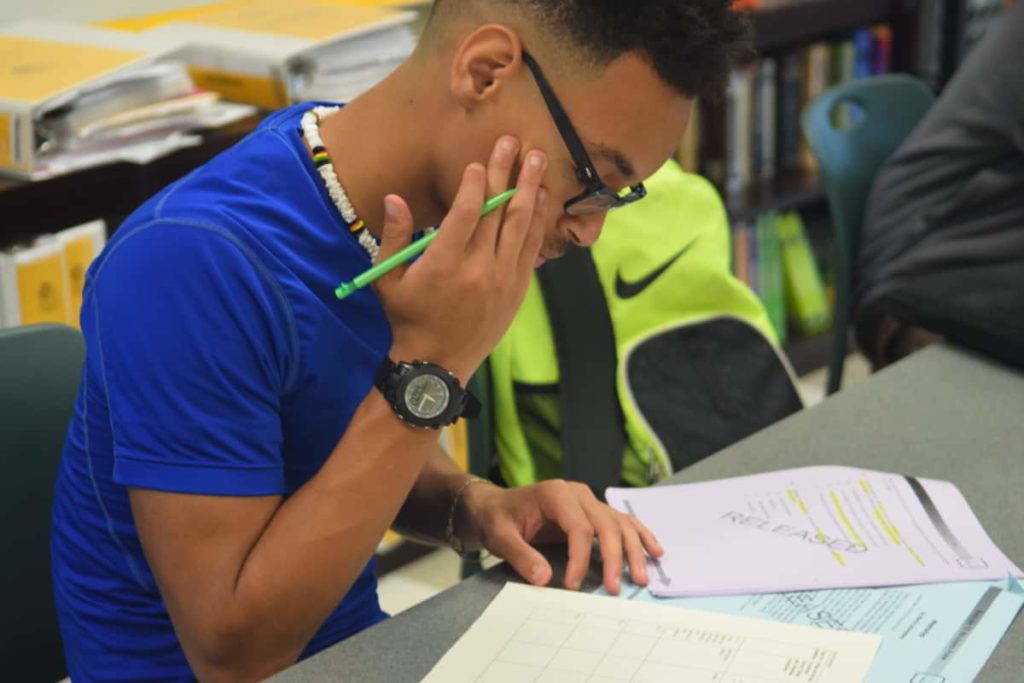

Earlier today, EdNC’s Alex Granados and Liz Bell reported that proposed cuts by the Senate to North Carolina’s early colleges are on the table as the House and Senate negotiate budget differences.
https://www.ednc.org/2019/06/14/early-college-high-schools-face-grim-future-under-senate-budget-plan/
Some quick facts, as Alex and Liz reported:
- North Carolina has 133 Cooperative and Innovative High Schools, 90 of which have early college in their name. Early college high schools allow students to earn college credits while working towards graduation and are paired with institutions of higher education in the area, most often community colleges.
- Ninety-seven of the state’s 115 school districts have a Cooperative Innovative High School.
- The schools are aimed at students who are at risk of dropping out of school, first-generation college students, and students who can use the extra attention and accelerated atmosphere provided by the schools.
- The supplemental funds received by Cooperative Innovative High Schools are above and beyond the traditional funding that schools in North Carolina receive.
- Traditionally, each of these schools received $300,000 in supplemental funding. But in 2017, the General Assembly broke up fund amounts between county tiers. Schools in Tier 1 counties, the poorest, received $275,000 annually. Tier 2 got $200,000, and Tier 3 received $180,000. This extra funding is essential because these schools are small.
- Under the Senate plan, new Cooperative Innovative High Schools will get this supplemental funding for their first three years only. Existing schools would see a phased elimination of these supplemental funds.
- Students at these schools do well. In 2017-18, 72% of the schools received a school performance grade of A. Only 6.5% of traditional public schools can say the same. These schools also score better on measures such as high school retention and completion, individual assessments, and high-school drop-out rates.
Brenda Berg with BEST NC tweeted, “Early College high schools are outperforming their peers.”
We are always asked about the outliers on the chart … so we addded a legend. Early College high schools are outperforming their peers. pic.twitter.com/iDlMh2rVXP
— Brenda Berg (@BrendaBerg) June 14, 2019
Earlier this year, EdNC published this series about early colleges. Please read it. Please share it. Please take the time to understand the important role these schools are playing in the lives of our students and our communities, in building a better future for our state.
https://www.ednc.org/2019/01/07/cooperative-innovative-high-schools-what-are-they-and-why-does-north-carolina-have-so-many/
https://www.ednc.org/2019/01/08/the-difference-early-college-makes/
https://www.ednc.org/2019/01/09/a-day-inside-tri-county-early-college/
https://www.ednc.org/2019/01/10/one-university-two-different-innovative-high-school-models/
https://www.ednc.org/2019/01/11/p-tech-early-college-a-model-for-industry-k-12-and-postsecondary-partnership/
https://www.ednc.org/2019/06/13/early-college-leaders-plan-for-next-year-at-rti-as-senate-proposes-defunding/
Since EdNC published this article, our reporters have been asking why these cuts to high performing schools serving our students who need them most are on the table. I haven’t heard a good reason yet.
The Senate budget’s net appropriations for K-12 is $9,883,577,151 in FY 2019-20 and $10,176,433,406 in FY 2020-21, and the state has a budget surplus of $643 million. In contrast, the state spends just under $30 million in supplemental funding for Cooperative Innovative High Schools. That number would stay roughly the same under the Senate plan, but it would only go to new schools. Why?
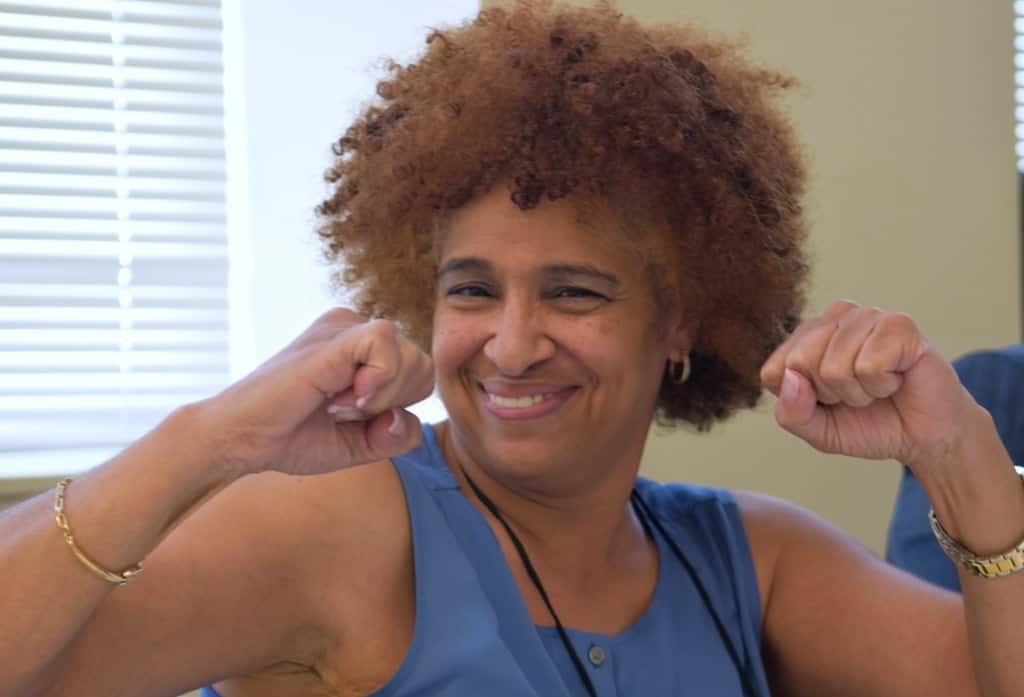
Colleen Pegram-Wike, principal of SandHoke Early College
We spend a lot of our time traveling across North Carolina looking for best practices in our classrooms and our schools and then doing research on how to scale them.
Back in 2015, I met Colleen Pegram-Wike, the school leader at SandHoke Early College. In 2013-14, more than 80% of the incoming students at SandHoke Early College were first generation college-going students. She said, “We cannot cheat our kids — that’s malpractice.” Pegram-Wike drove from her home in Charlotte to serve her students in Hoke County.
The legislature needs to explain to our students, our schools, and our state why this cut to existing early colleges is being considered.