The NC Rural Education Collaborative is the new state affiliate of the National Rural Education Association (NREA), which serves as “the voice of all rural schools and communities across the United States,” according to its website.
The collaborative is led by Theresa Gibson and Nancy Mangum, both of whom are well known in the education community from their leadership at the Friday Institute for Educational Innovation.
Advisors — including Appalachian State University’s Office of Rural Promise, the NC Rural Center, SERVE at UNC-Greensboro, the Public School Forum of North Carolina, and East Carolina University’s College of Education’s Rural Education Institute — will help guide the work in the 2025-26 school year as the collaborative launches.
The mission of the collaborative is “to serve as a coordinating body for existing organizations and to step into the gaps in order to meet the unique needs of rural schools in our state, offering support that is as practical as it is inspiring.”
Initially, there are three services the collaborative aims to provide:
- Services that allow rural schools to pool resources, access high-quality materials, and reduce costs;
- Professional learning opportunities designed specifically for rural educators and leaders; and
- Convenings and communities of practice where educators, administrators, and stakeholders from across rural North Carolina can share ideas, solve problems together, and build a stronger collective voice.
 Sign up for the EdDaily to start each weekday with the top education news.
The first two editions of the collaborative’s newsletter have been sent out. You can sign up here.
This school year there is a free, online community of practice for rural school and district leaders.
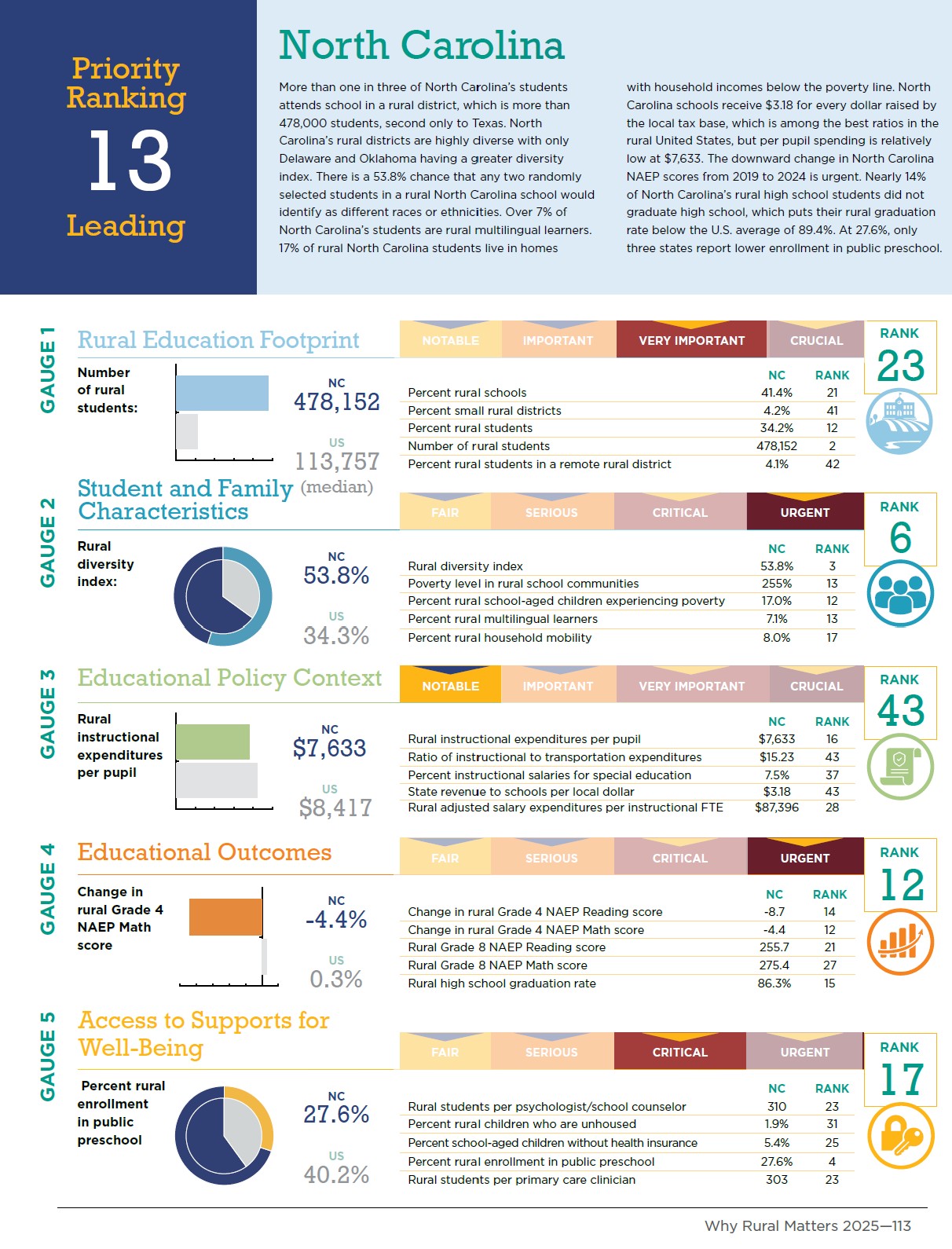
In October, NREA released its national report, “Why Rural Matters.”
“The data in Why Rural Matters 2025 tell a clear story: rural schools are leading with creativity and resolve, even amid significant challenges,” said Dr. Melissa Sadorf, executive director of the NREA. “Our task now is to use this information to drive collective action that ensures every rural student has the opportunity to flourish.”
“Rural schools educate nearly one in five students in the United States,” said Dr. Jerry Johnson, researcher and co-author of Why Rural Matters 2025. “Our findings show both extraordinary strengths and persistent inequities that demand immediate policy attention.”
The report includes state-by-state rankings. North Carolina ranks 2nd in the country for the number of rural students served, according to the report. More than 7% of our students are rural multilingual learners, ranking 13th. Only three states report lower rural enrollment in public preschool.
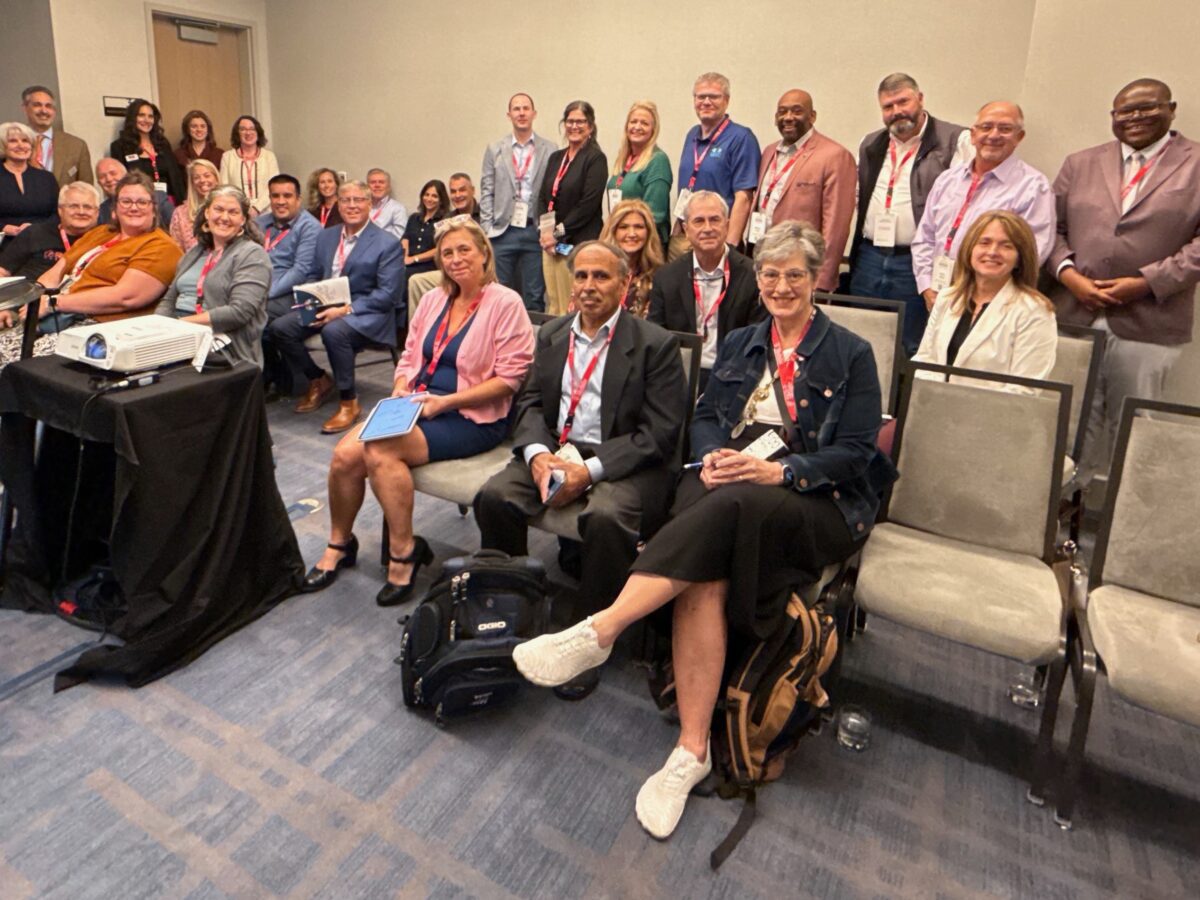
Gibson and Mangum recently attended the National Forum to Advance Rural Education in Salt Lake City, Utah, where they said they spent time connecting with colleagues from across the country, sharing stories, exploring innovative practices, and finding purpose in the work of supporting rural students and communities.
“We aim to address the multifaceted challenges rural schools face,” said the leaders of the collaborative, “by bringing together rural leaders and celebrating the strengths and innovations that already exist in our communities.”

Recommended reading