
What Biden’s executive order promoting LGBTQ+ rights means for North Carolina students

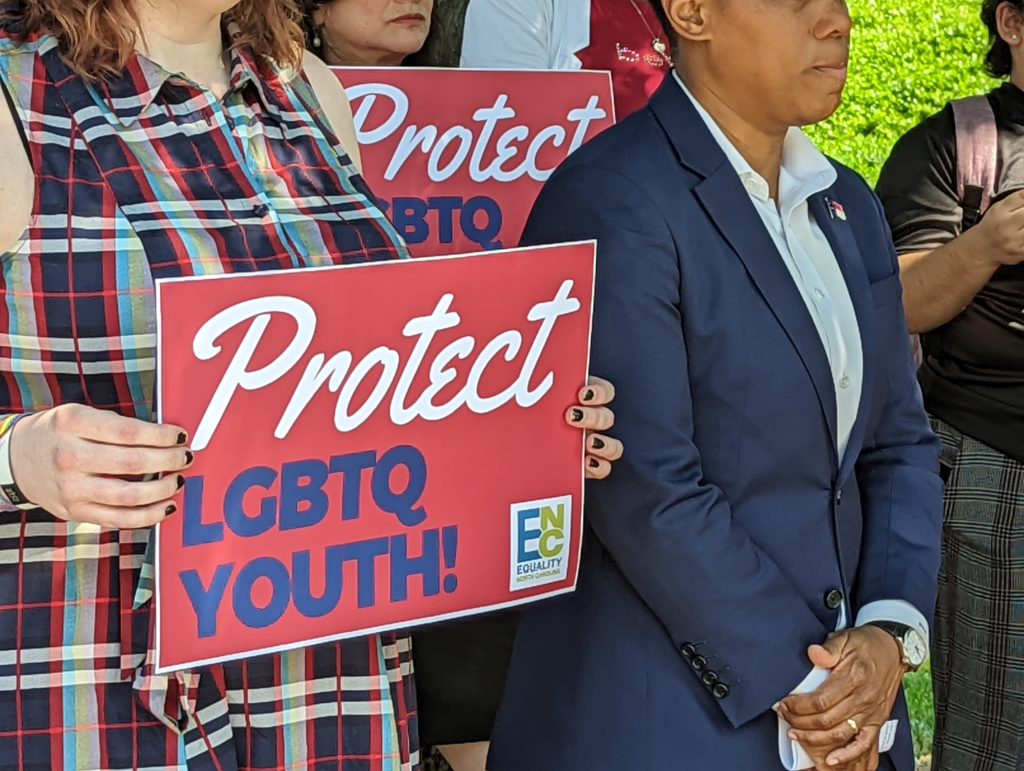
President Joe Biden signed an executive order on June 15, 2022 directing government agencies to support gender–affirming care and inclusive learning environments for LGBTQ+ individuals.
“Right now, there are young people sitting in their bedroom, doors closed, silent, scrolling through social media, staring at the ceiling, wondering if they’ll ever be loved, ever marry, ever have a family and be accepted by their own family sometimes,” Biden said during the signing of the order.
The order cites numerous laws that have been passed in state legislatures over the last year restricting LGBTQ+ students’ access to health care and sports teams, as well as how gender and sexuality can be discussed in schools.
It also gives several specific directions to federal agencies about how they can support LGBTQ+ people, specifically youth. The order lays out several tasks for U.S. Education Secretary Miguel Cardona, including developing a list of sample policies supporting these students that can be shared with schools.
“At a time when we’ve seen escalating attacks on our LGBTQ+ communities, these moves are deeply necessary,” Equality NC Executive Director Kendra Johnson said in a statement. “Our communities have been under extreme pressure this year, and in years prior, the signing of this order provides welcomed hope for us all.”
Here’s a look at what the executive order means for North Carolina.
 Sign up for the EdDaily to start each weekday with the top education news.
Access to health care
According to a 2022 national survey from the Trevor Project, nearly half of LGBTQ+ youth seriously considered attempting suicide in the last year. That is one of Biden’s main concerns he hopes to address in this executive order.
Under the order, the U.S. Department of Health and Human Services will:
- Address the barriers that LGBTQ+ individuals and families face in accessing health care, including mental health care, reproductive health care, and HIV prevention and treatment.
- Work with states to expand access to gender-affirming care.
- Prevent suicide by expanding access to suicide prevention resources and issuing guidance on providing evidence-based mental health care for LGBTQ+ youth.
In addition, the order discourages “conversion therapy” — a discredited practice that seeks to change someone’s sexual orientation, gender identity, or gender expression — by calling on HHS to restrict federal funding for programs that use the practice.
Addressing discriminatory laws
Over 300 anti-LGBTQ+ bills have been filed in states so far this year, Biden said. The order lays out his priority of “fighting back against state-level attacks on LGBTQI+ children.”
According to the White House, the U.S. Department of Justice is intervening in lawsuits across the country to challenge state laws banning transgender children from participating in school activity and receiving health care. The order also directs the health and education secretaries to protect LGBTQ+ individuals from harmful laws whenever possible.
The North Carolina Senate recently passed House Bill 755, which would ban teaching about gender and sexuality in grades K-3, but it has since stalled in the House.
Providing other resources
According to the same survey from the Trevor Project, only one in three nonbinary or transgender youth reported that their home was gender-affirming. And, according to the report, LGBTQ+ youth who felt supported at home or in school had lower rates of attempting suicide.
LGBTQ+ individuals also experience disproportionately high rates of homelessness due to family rejection, according to a UCLA School of Law study.
“Providing these young Americans and families with the resources and support they need will help ensure more children and families have access to loving homes that decrease the risk of abuse and suicide,” the White House said in a statement.
The order:
- Charges HHS to strengthen nondiscrimination protections in the foster care system and launch a program to partner with state child welfare agencies to improve outcomes for LGBTQ+ youth.
- Expands access through HHS to voluntary family counseling and support programs.
- Launches a Working Group on LGBTQI+ Homelessness and Housing Equity within the U.S. Department of Housing and Urban Development.
- Directs the U.S. Department of Education to establish a Working Group on LGBTQI+ Students and Families, which will “advance policies for states, school districts, and other educational institutions to promote safe and inclusive learning environments in which all students thrive.”
- Creates a clearinghouse within the Office of Juvenile Justice and Delinquency Prevention within the Department of Justice to provide training and other resources for jurisdictions to better serve LGBTQI+ youth in the justice system.
Share this story
- The order directs government agencies to support gender–affirming care and inclusive learning environments for LGBTQ+ individuals. Read more about how.
- The order cites more than 300 state laws that have been passed over the last year restricting LGBTQ+ students’ access to health care and sports teams, as well as how gender and sexuality can be discussed in schools.