
Trip to Singapore opens educator’s eyes
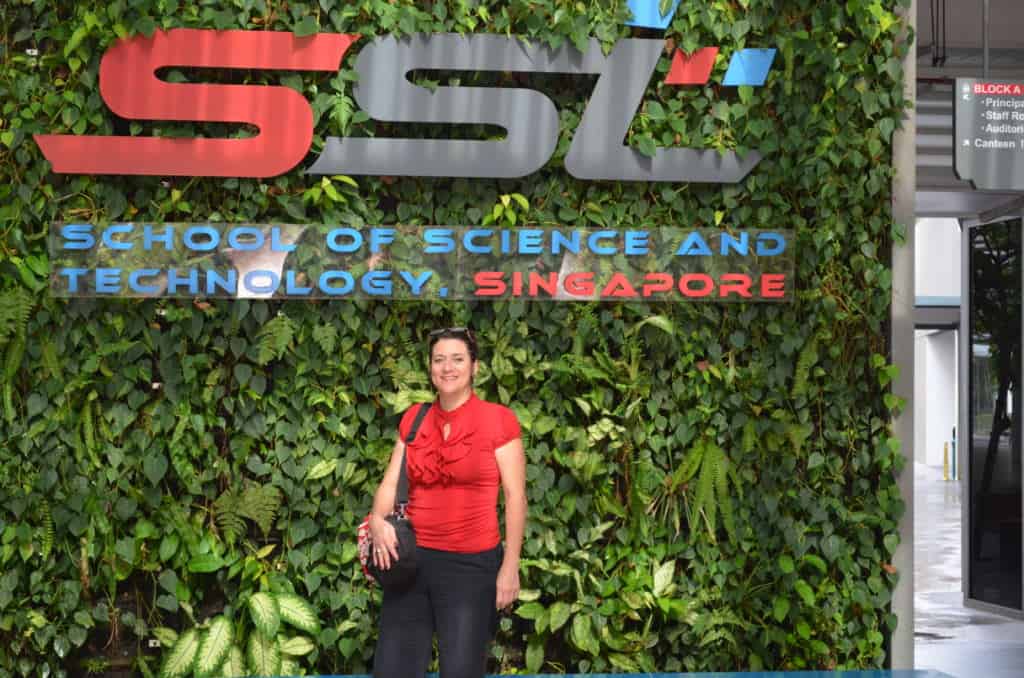

Eleven middle school and high school educators from North Carolina traveled to Singapore July 15-24 to learn about the best practices of teaching science and mathematics from their counterparts in one of the world’s most-acclaimed education systems.
Why Singapore?

Singapore is a relatively young nation, having established its independence in 1965. Once a small fishing village, it is today a bustling multicultural and cosmopolitan city-state that commands a strong presence in the world with its free trade economy and highly efficient workforce.
From the beginning, Singapore’s leadership recognized that education would be crucial to its cultural and economic success as a nation. Thus, Singapore’s leaders implemented an innovative education system to build on one of its greatest resources — its people. The system has further evolved as the needs of the nation have grown.
Today, only 50 years later, Singapore’s students consistently rank near the top in international comparisons of performance in mathematics, science, and literacy. Singapore was rated the best performing education system, with an excellent teaching force in a 2008 McKinsey and Company study, “How the World’s Best Performing School Systems Came Out on Top.” More recently, in May 2015, Singapore topped the global school rankings published by the OECD, based on an analysis of math and science test scores in 76 countries.
Singapore traditionally draws teacher education students from the top 10 percent of the secondary school graduating classes. Furthermore, there is a strong tradition of teacher training that emphasizes providing teachers with pedagogical skills, instructional technology, and practical experience. Additionally, Singapore has created a sophisticated approach to identifying and training future educational leaders. These qualities and more make Singapore an ideal place to explore best practices in education.
What is the impact this experience has on teachers?
Go Global NC, a public service program of the University of North Carolina, leads the trip to Singapore. Since 1995, this organization has sent more than 900 teachers and administrators abroad to more than 15 different countries through its professional development and partnership programs.
Go Global NC has found that increasing teacher knowledge about the world helps increase teacher confidence and competence in providing students with the skills to navigate successfully through a globalized and interconnected world. NC educators who have participated in past professional development programs have collectively created over 400 lesson plans that help bring a global perspective into the classroom. In addition, teachers have gained the increased ability to view issues and problems from multiple perspectives, have increased their commitment to teaching, have gained exposure to best practices and new teaching methodologies, and have increased their comfort level in using cutting edge technology applications in the classroom.
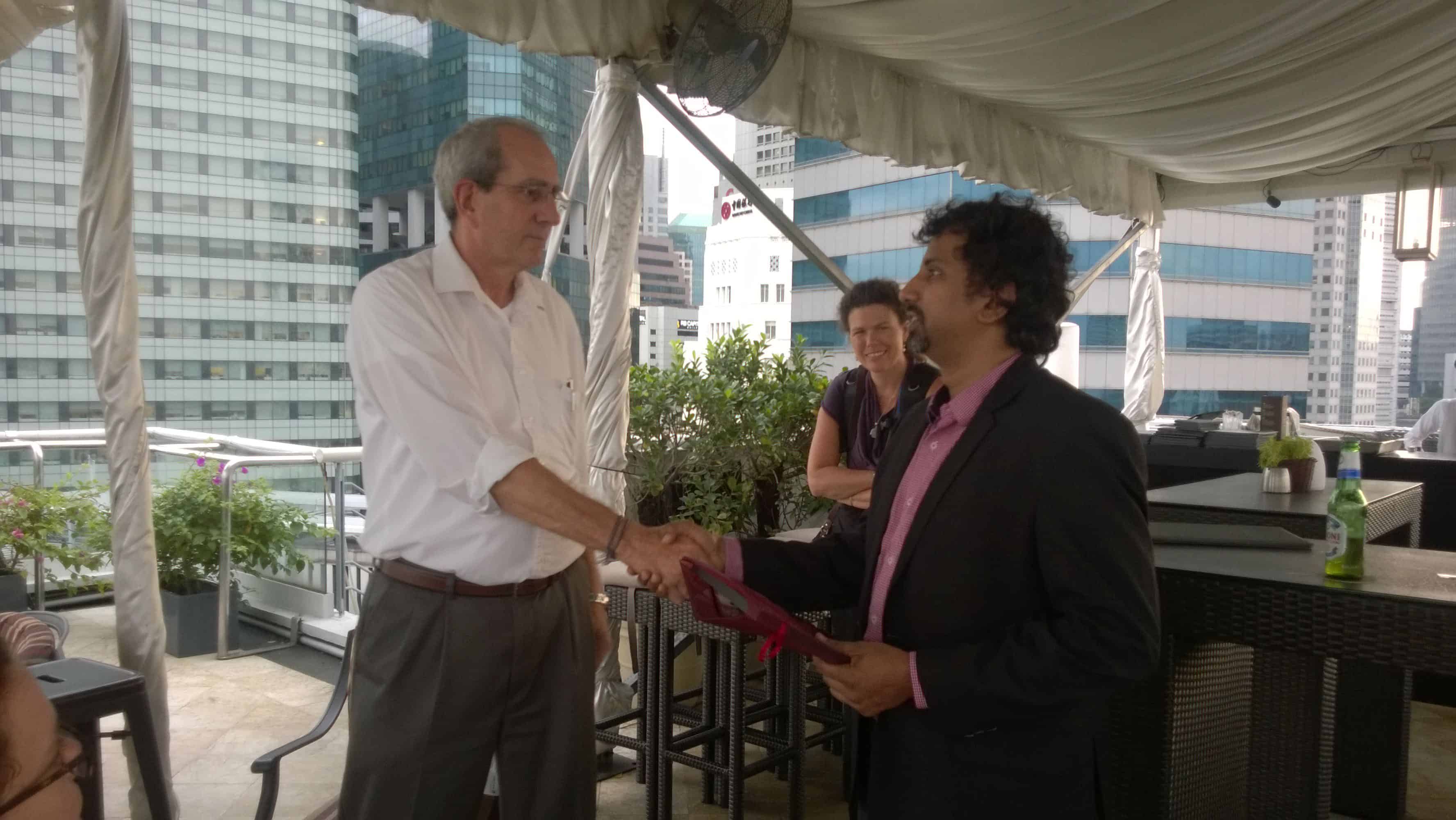
“Three stages are defined for a global educator: cultural awareness (knowing foods, flags) leads to cultural sensitivity (there are external signs but this is going deeper to get to know the culture) which then leads to cultural competency (happens in the environment with one to one relationships by experiencing daily existence).” — Rick Van Sant, executive director, Go Global NC
Implementing change in the education system
The mission of the Infocomm Development Authority (iDA) of Singapore is to develop information technology and telecommunications within Singapore to serve citizens of all ages and companies of all sizes. iDA actively supports the growth of innovative technology companies and start-ups in Singapore, working with leading global IT companies as well as developing excellent information technology and telecommunications infrastructure, policies, and capabilities for Singapore.
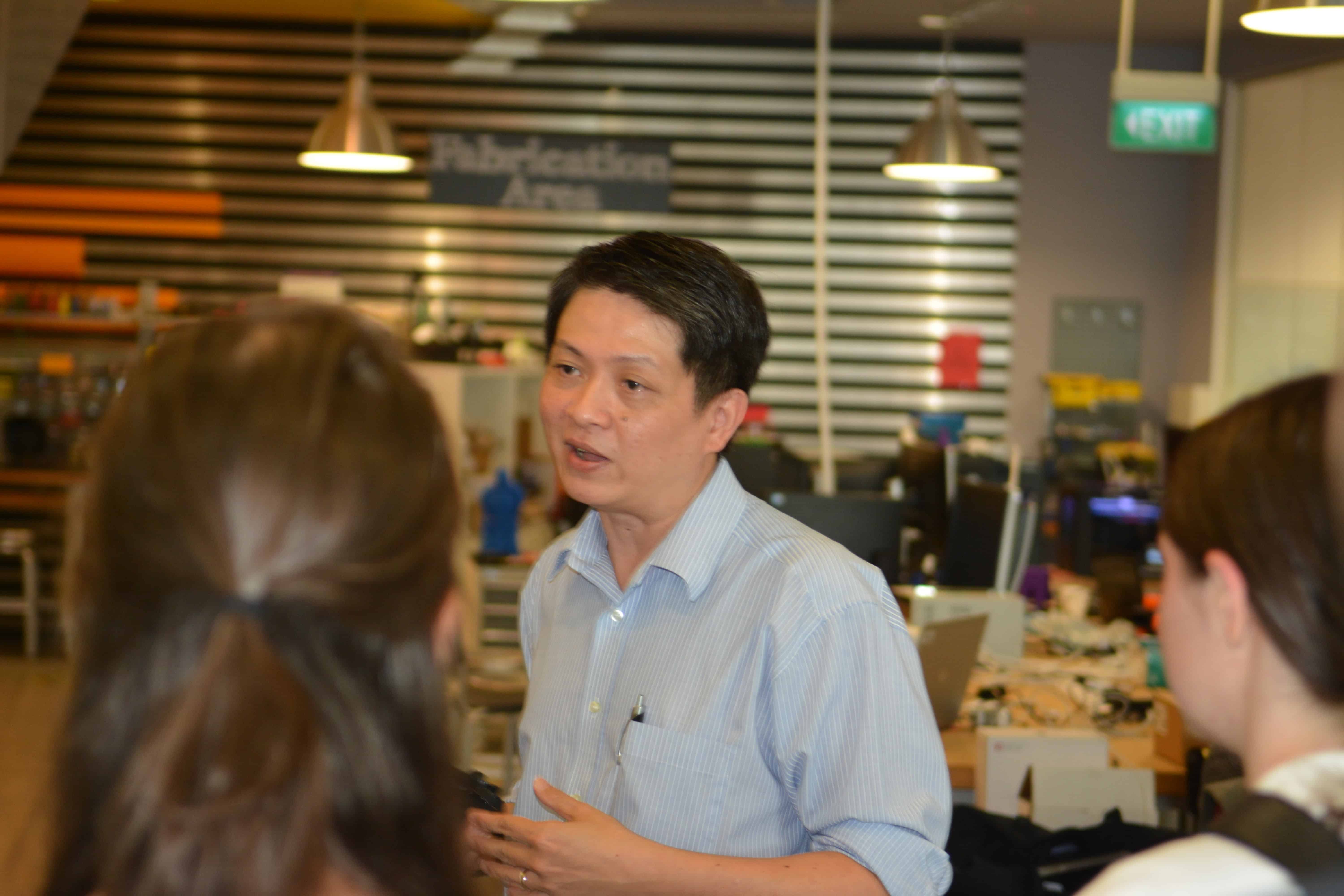
Adrian Lim, the director of the education sector of iDA, spoke to the Burroughs Wellcome Scholars regarding trends in education before the group toured the iDA labs and makerspace. He stated he was in the education sector for 18 years as a science and math teacher and principal and feels “it’s very important to have an educator perspective when implementing technology.”
iDA is working with Singapore schools as they transition from “server-based” learning to “makerspace” learning. They are currently testing technology enabled toys, like robots and modular circuit stickers, and moving away from screen-time devices like iPads. Students are also learning programming and sequencing, which ties into all work skills needed in today’s market.
Lim is passionate about how technology can be used to support and change education, and he says the solutions will be school-based, bottom-up solutions that are driven by educators.
“What,” Lim asks, “if we involved the educators from the very beginning? What we if we designed the education system together?”
Because of the country’s commitment to the development of human capital, teachers are respected and teaching is a respected career in Singapore. Only about 40 percent of students go on to a university, and of those, teachers are groomed from the top 30 percent. At Woodlands Secondary School, Principal Tan Ke-Xin says, “For most of us here, teaching is what we have wanted to do since we were young.” Teachers are treated as professionals with office space in the school separate and apart from the classroom.

We have yet to process all this trip has given to us, from trying new foods like grilled stingray, navigating foreign airports and transportation, to discovering a new thought process in myself for how change is possible in our education system.
Here in America, we have a need for good science and math teachers, while language arts, social studies, and arts positions are difficult to come by. It’s the exact opposite in Singapore. Seems like there is a great opportunity for learning and partnering between their country and ours.