
Taking off: GTCC’s aviation program rises to industry demand
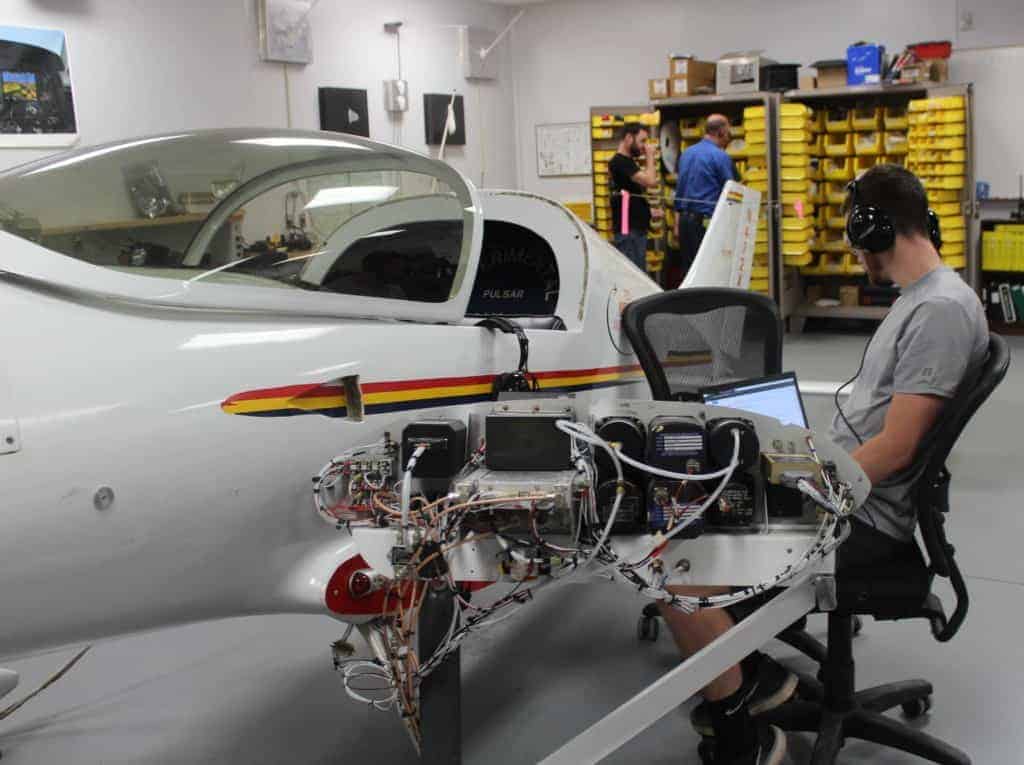

Marlo Mendoza and Dylan Nguyen start their shift as avionics technicians at Hong Kong Aircraft Engineering Company (HAECO) in Greensboro at 6:30 a.m. Their shift wraps at 3 p.m., but their day isn’t over — they’ve got an evening Airframe and Powerplant (A&P) class across the street at Guilford Technical Community College (GTCC) from 4 p.m. to 9:30 p.m. This is their 15-hour weekday schedule for two years as they work toward acquiring their A&P certificates. In short, it’s dedication.
“The FAA has very strict requirements. It has to be five hours a day, five days a week,” Mendoza said of the A&P program. “So any time that you miss, you have to make it up, because that’s more of a legal aspect. You have to spend a certain amount of hours actually learning, and then there’s three exams that you have to take per section.”
Next month, Mendoza says they’ll wrap up the airframe portion of the program — anything dealing with aircraft structure — and be eligible to test for their certificate before continuing into the powerplant program, focused on aircraft engines.
“I think the most important part is realizing that going to school and getting your licenses and your certifications, especially in this industry, is a lot different than going to a regular degree,” Mendoza said. “A lot of times you go and get your degree and you’re not able to find jobs. A lot of times people don’t even use the degrees that they go to school for. With aviation, especially because a lot of the aviation generation is older now and a lot of them are retiring, the young generation has a lot of incentives to go get educated, go get experience, and get your foot in the door at a place.”
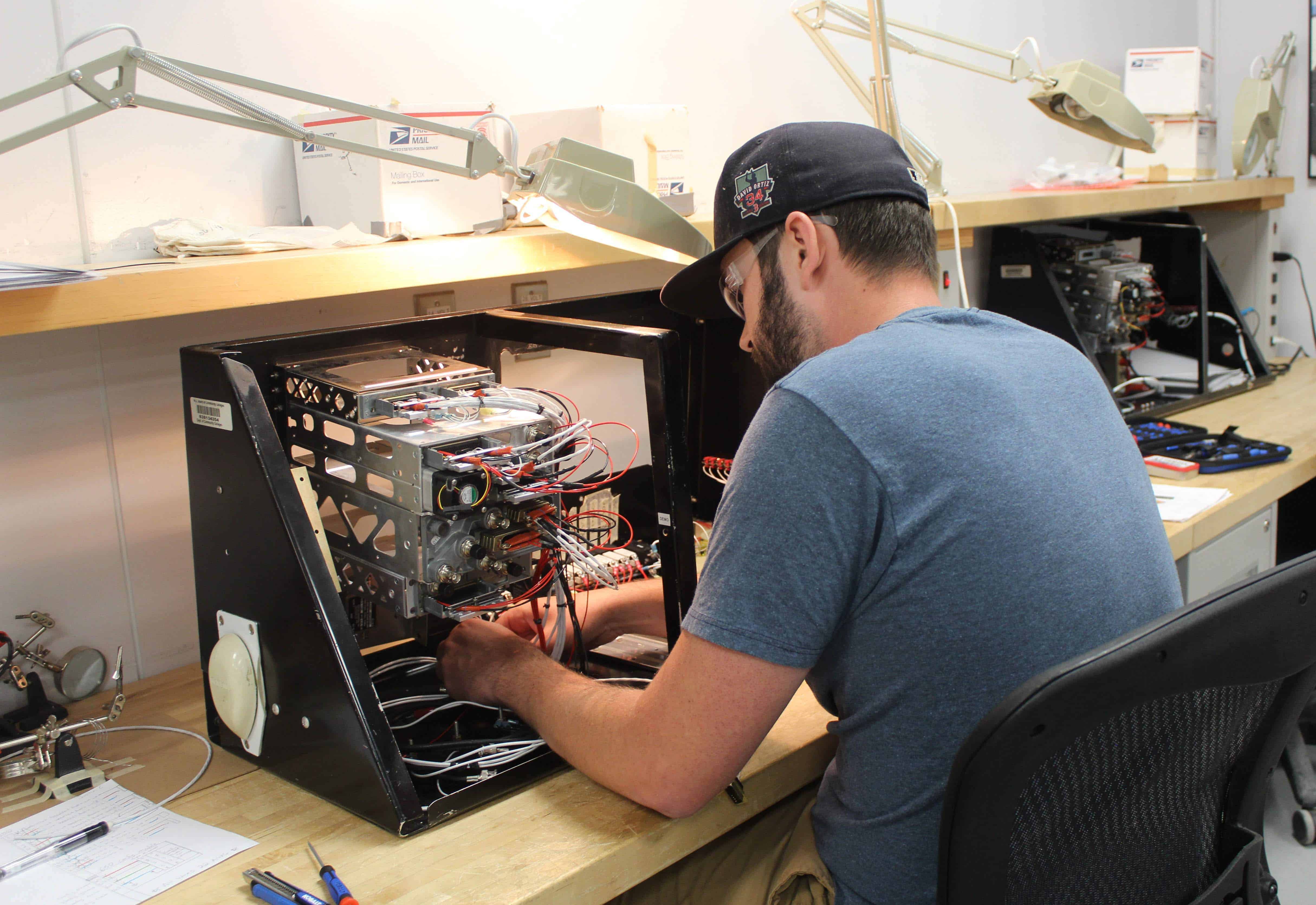
Mendoza and Nguyen both received their avionics (aviation electronics) degrees from GTCC, and were lab partners, before joining HAECO. Although they are now committed to the industry, at first neither knew what they actually wanted to study after high school.
“When I first started at GTCC, I was doing dental hygiene,” Nguyen said. “That wasn’t for me. I went to talk to my adviser and she asked me what I’m good with, and I told her I’m good with my hands and I like to travel.” She recommended avionics, and Nguyen found his fit in the program.
“You do different stuff every day,” he said. “It’s not repetitive, and you learn from it and from other people.”
After high school, Mendoza had planned on studying business, but ended up staying in Greensboro due to a family matter. “So I was working for a restaurant for a year after high school, and I really didn’t know what I wanted to do,” he said. “Airplanes was never in my head, honestly.”
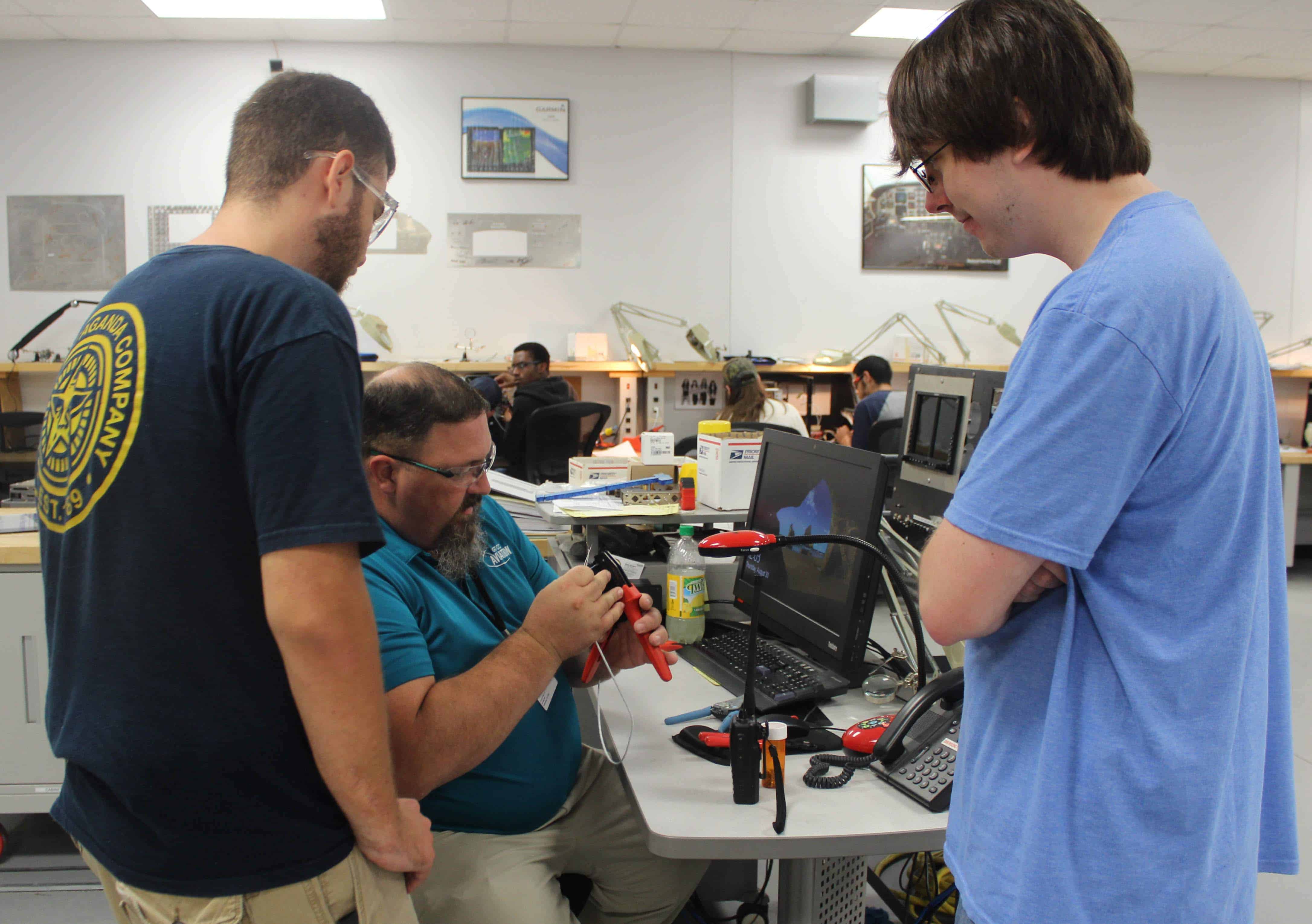
At his cousin’s graduation ceremony from the Naval Academy, he sat next to a family member who had completed their A&P degree at GTCC.
“It was funny because the Air Force flew by over the stadium saluting everybody, and I just got amazed seeing an airplane that close.”
He did some research, but found the A&P program was already full. “The recruiter told me, ‘Hey, well you know avionics is a growing field if you like more electrical things,’ and I didn’t know what I liked,” Mendoza said. “I had no idea. I decided to just take a try … and it honestly turned out to be one of the best decisions I’ve made.”
That’s because employers are hungry for technicians like Mendoza.
“People want you as opposed to you wanting places,” he said.
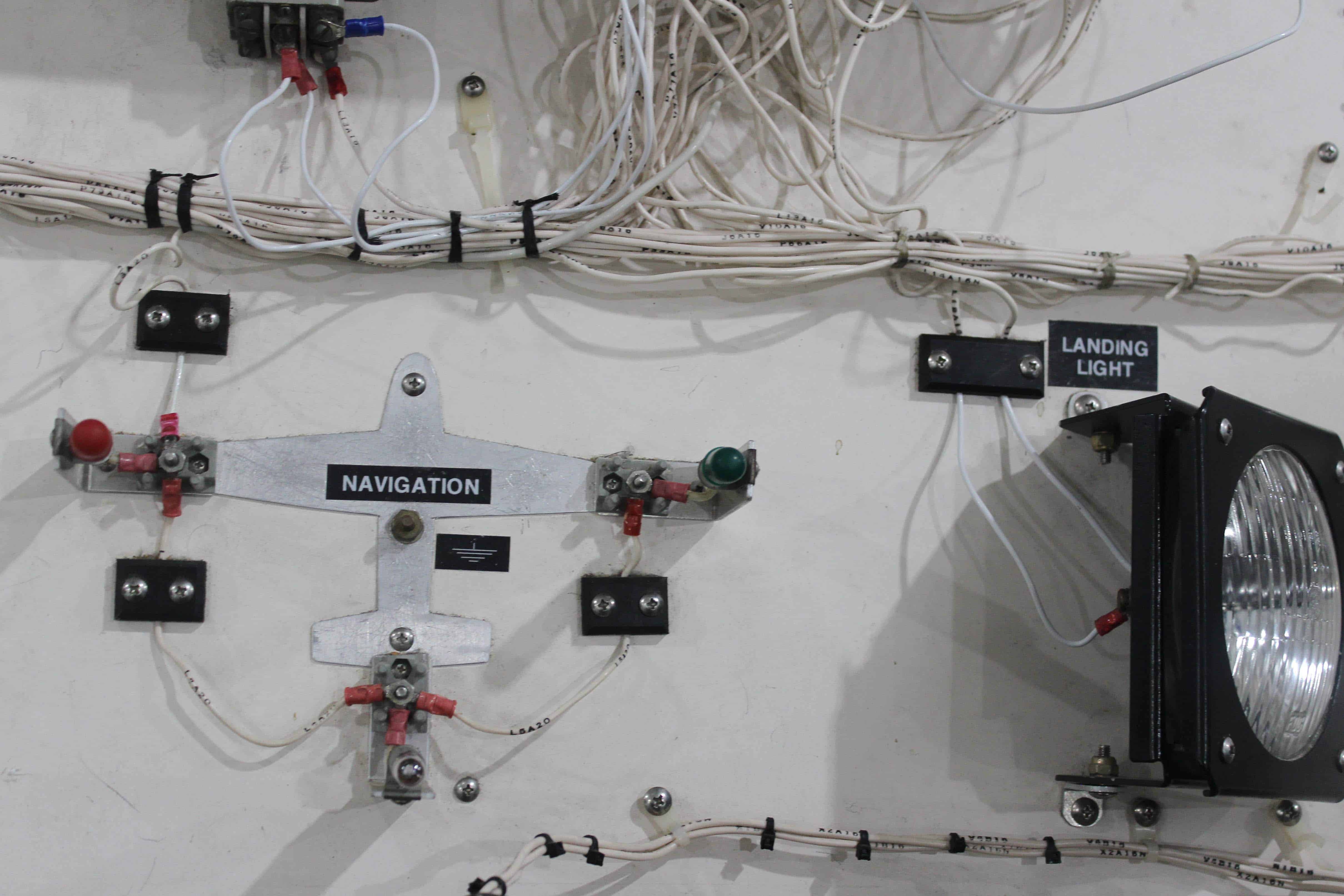
And he’s right. According to a Boeing market study, the new technician demand from 2018-2037 for North America will be 189,000 employees. The world demand is a whopping estimated 754,000 new technicians due to the growing aircraft industry in Europe and Asia.
“The demand for technically skilled employees with the proper diplomas and experience and licensing is just tremendous,” said Nick Yale, director of aviation at GTCC. “And some companies that are not planning well are actually going out of business or cutting back on business because they can’t find enough people. That just shows that getting a degree from here will pretty much guarantee a job.”
https://twitter.com/yasminbendaas/status/1035279387405504514?ref_src=twsrc%5Etfw
Not only does GTCC provide high-demand aviation industry degrees — aviation management, career pilot, aviation systems technology (in which A&P is offered), avionics, aerostructures manufacturing and repair, and aviation manufacturing —the college also provides specialized industry training tied directly to local companies. Greensboro is home to the Piedmont Triad International Airport and several leading aviation companies: HAECO, Honda Aircraft, Textron Aviation, and Signature TECHNICAir.
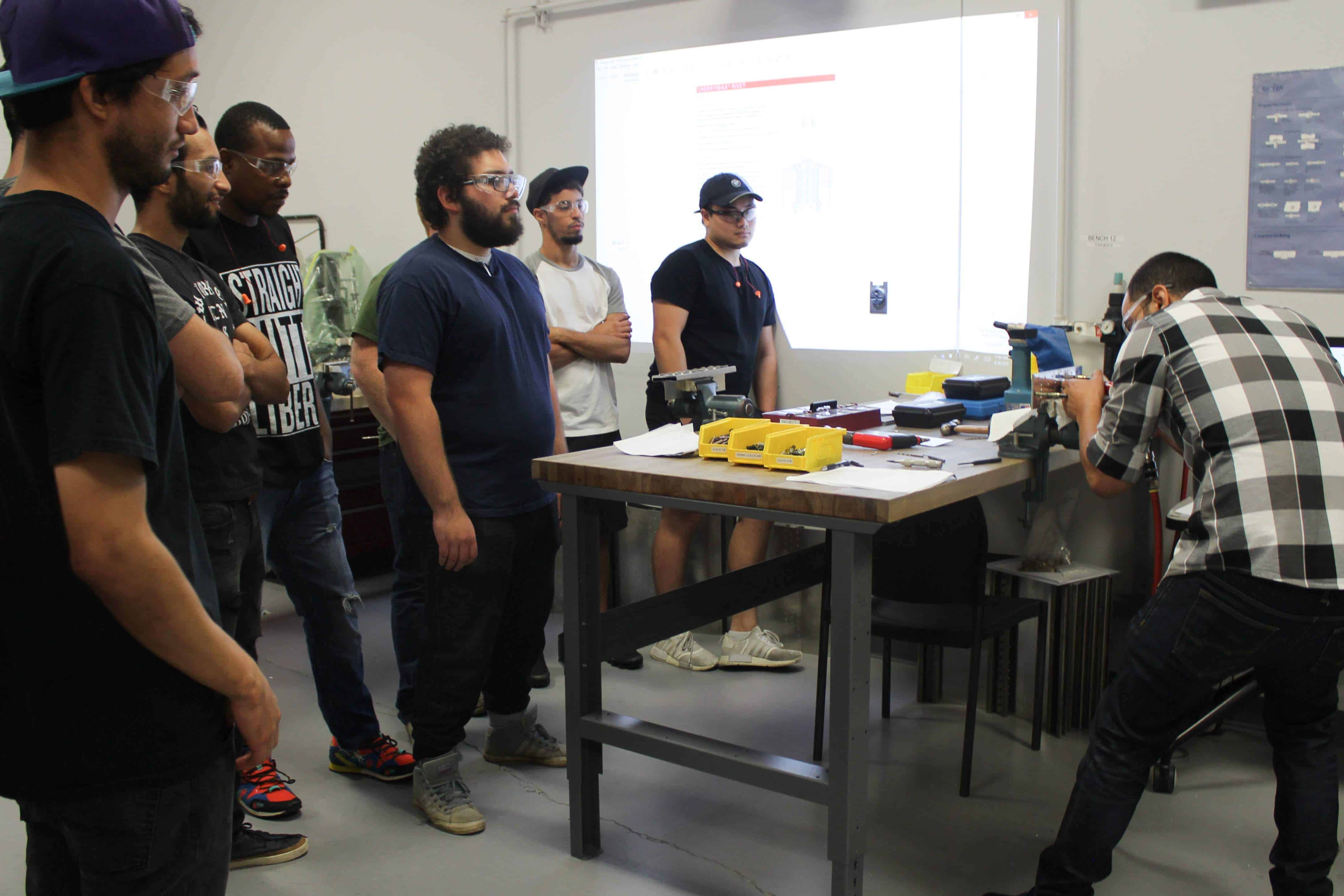
“Members from all of those companies, all of the local aviation companies, are on our board of advisors,” Yale said. “We talk to them on a regular basis about what their needs are, what kind of technical needs they have, how many more employees they need to hire, [and] anymore growth spurts they might be having that we have to prepare for.”
Currently, over 530 students are enrolled across GTCC’s aviation programs. These students gain experience working on active aircraft with engines and flight controls, trainer systems, flight simulators, over 40 break-out subsystems, and more than 18 different airplanes.
https://twitter.com/yasminbendaas/status/1035278203554816002?ref_src=twsrc%5Etfw
“Anyone that comes to these programs and completes will get employed,” Yale said. “The way the market is going right now, this is a job. This is not just coming to class and getting a couple of credits under your belt.” But even having over 500 students isn’t enough to keep up with the demand.
“We have room in some of our classes,” Yale said. “It’s depressing for me when you see classes where every student gets hired coming out of it, making really good money… but I don’t have enough [students] to fill all the need.”
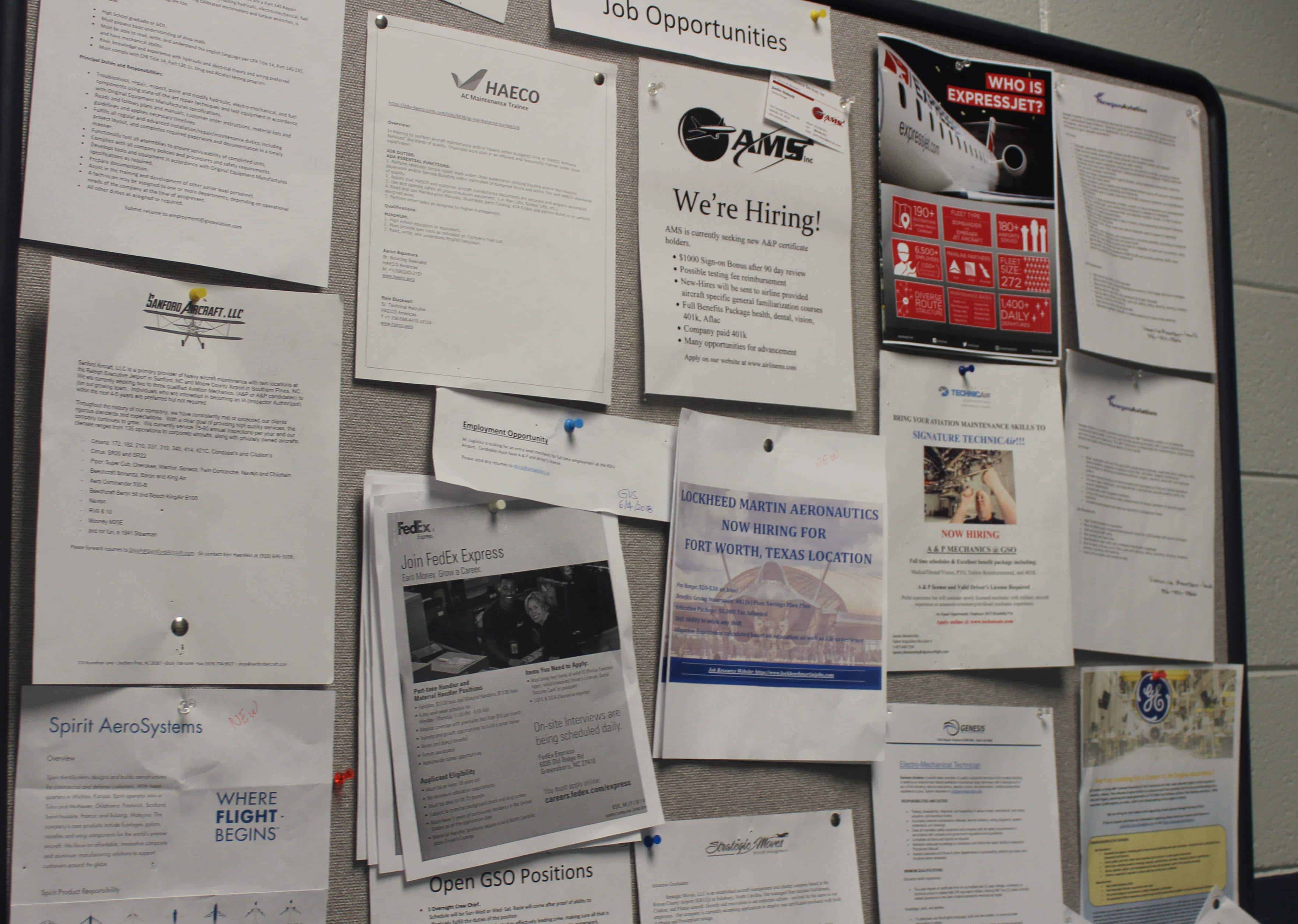
For Nguyen and Mendoza who are back for more, their plans in the aviation industry are far from over.
“I’m investing in myself and they’re investing in me,” Nguyen said of HAECO. He may even have his eyes set on one more degree from GTCC: aviation management.
Mendoza shares the same commitment to his future in the field. “Yes, it’s tough going to school full-time and working full-time, but the coolest part is that what you’re going to school for is what you’re working as,” he said. “You get motivation from work to go to school, and you get motivation from school to go to work. It’s really nice to be able to be on airplanes all the time.”
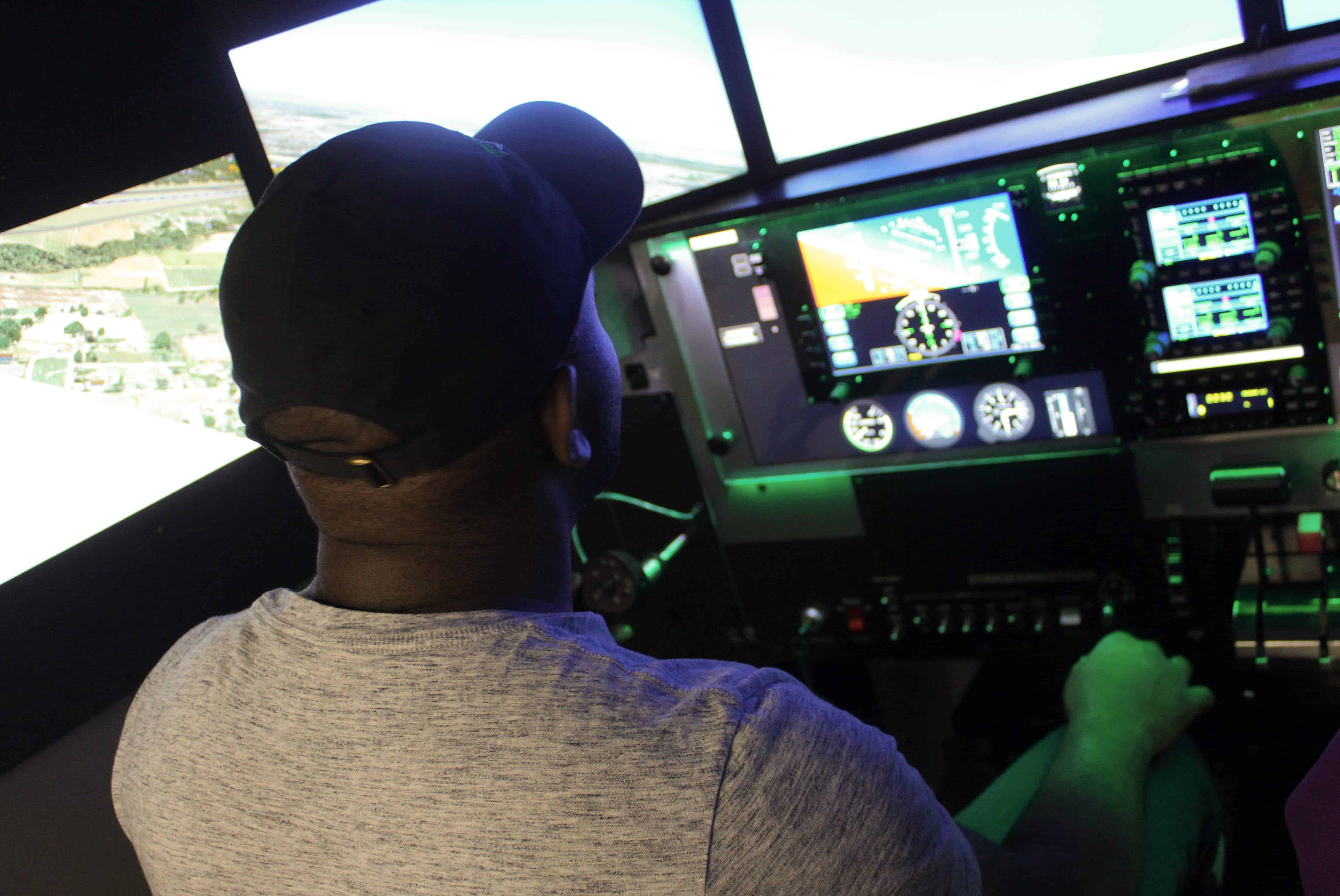
“It sounds cliche, but the sky is not the limit when it comes to aviation,” Mendoza said. “You can really go where ever you want with it.”