“Urban” may be the adjective that comes to mind when many people think of Raleigh.
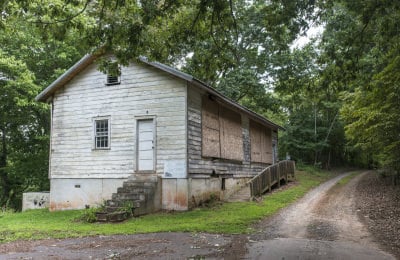
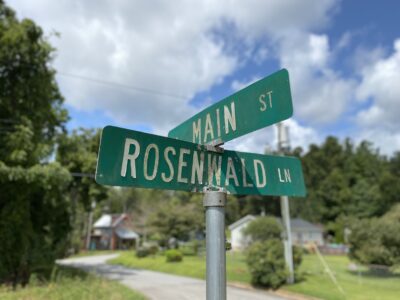
However, the Panther Branch Rosenwald School is situated on the outskirts of Wake County, less than five miles from the Johnston County line. Despite having a Raleigh address, the school is perched on land characterized by the same rural features of neighboring counties.
For Dr. Pam Thompson, an educator and former cancer researcher, the Panther Branch Rosenwald School is a part of her sense of “home.”
Thompson’s earliest memory consists of her great-grandfather sitting on the stoop with a metal Igloo cooler, distributing lemonade to the community as they gathered for the school’s homecoming. The same building also served as a gathering location for Vacation Bible School when she was growing up.
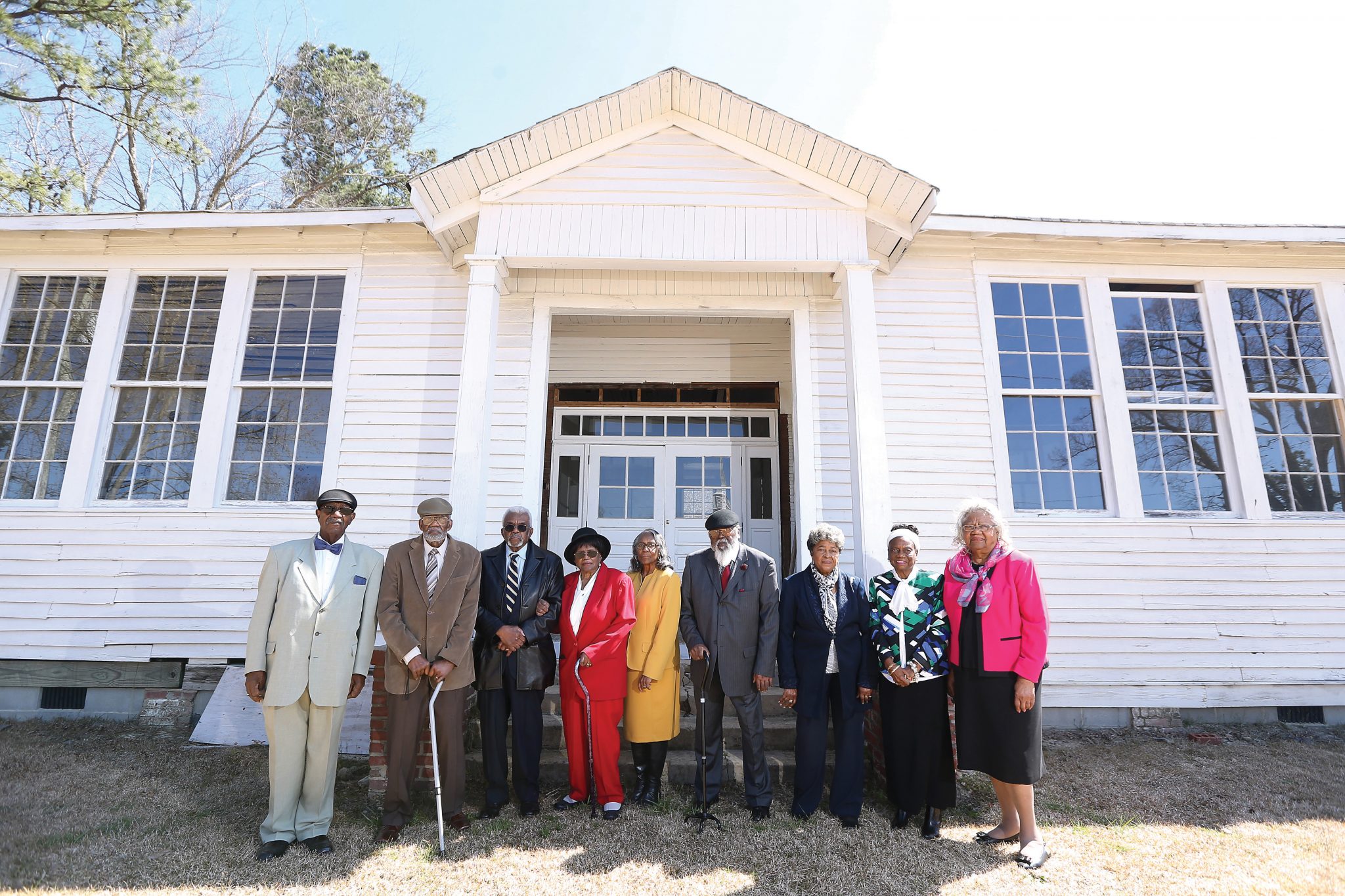
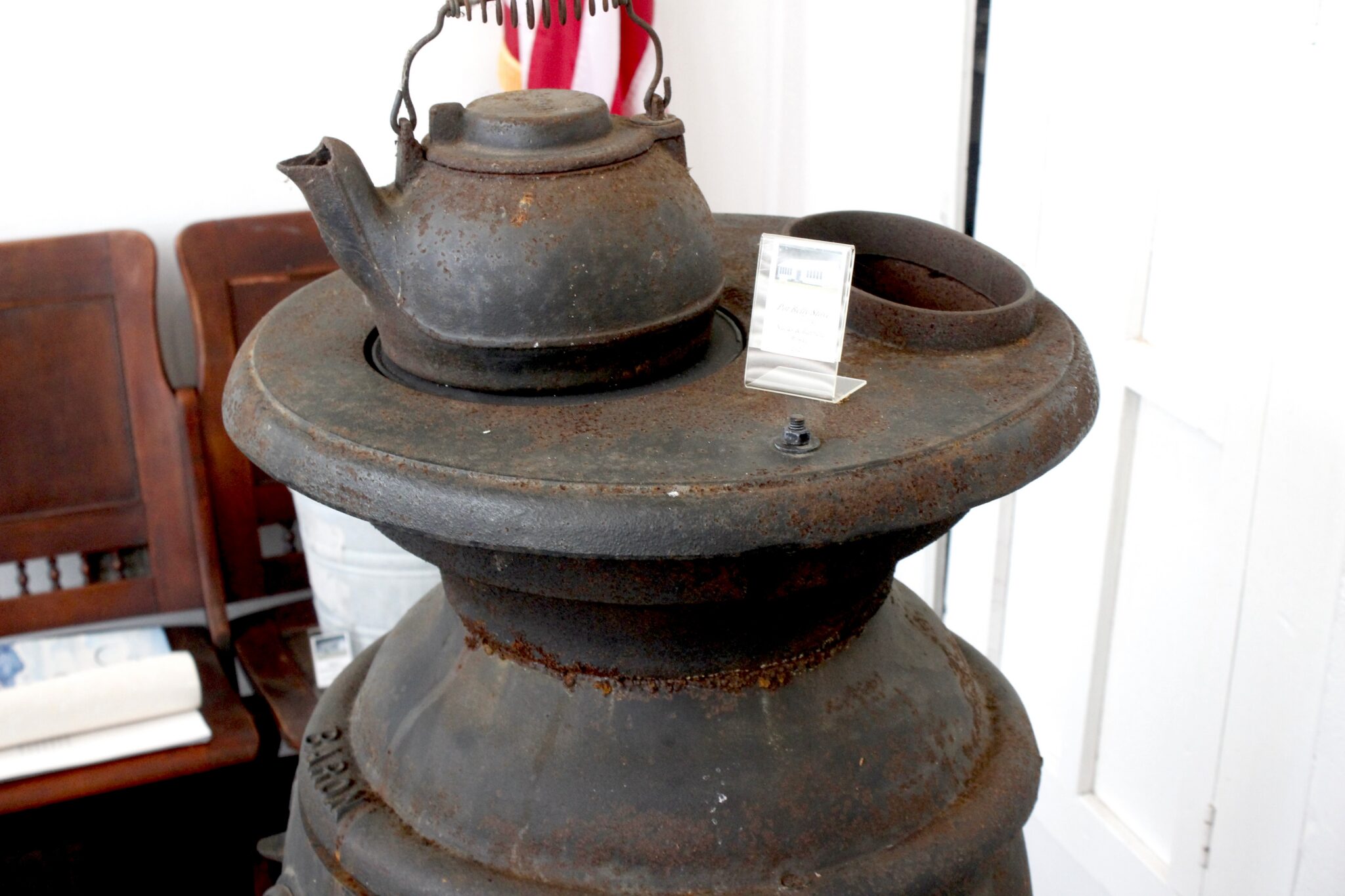
It is also the place where Thompson’s mother went to school as a child. She recalls her mother’s stories explaining everyone’s determination to get an education — some of her peers walked over eight miles to and from school, and a potbelly stove was positioned in the middle of classrooms and used to heat the space.
Present day, Thompson serves with an after-school program at Panther Branch. She still considers it a space for family and hope, one that allows education to take place.
“This place is full circle with helping any and everybody in the community,” she added.
 Sign up for the EdWeekly, a Friday roundup of the most important education news of the week.
A brief history of Rosenwald Schools
In the early 20th century, amid segregation in the Jim Crow era, a partnership between Tuskegee Institute’s (now Tuskegee University) founder, Booker T. Washington, and the president of Sears, Roebuck and Co., Julius Rosenwald, established a fund dedicated to expanding access to education for African Americans.
As a philanthropist, Rosenwald granted up to a third of the cost for each school built across the southern region of the United States. Notably, Tuskegee faculty and North Carolina natives, Robert R. Taylor and William Augustus Hazel, developed the architectural designs used as the first models for what became known as “Rosenwald Schools.”
North Carolina’s first Rosenwald School, the Warren Grove School in Chowan County, was completed on Oct. 8, 1915. North Carolina continued to construct over 800 other schools using this model — the highest number out of any state. Nationwide, it is estimated that over 5,000 schools were built before the program’s end in 1932.
Ultimately, Rosenwald schools faced a stark decline in enrollment, particularly following the 1954 Brown v. Board of Education ruling that determined schools segregated on the basis of race were unconstitutional. As a result, many of the former Rosenwald School buildings were abandoned and left to decay in time’s palms.
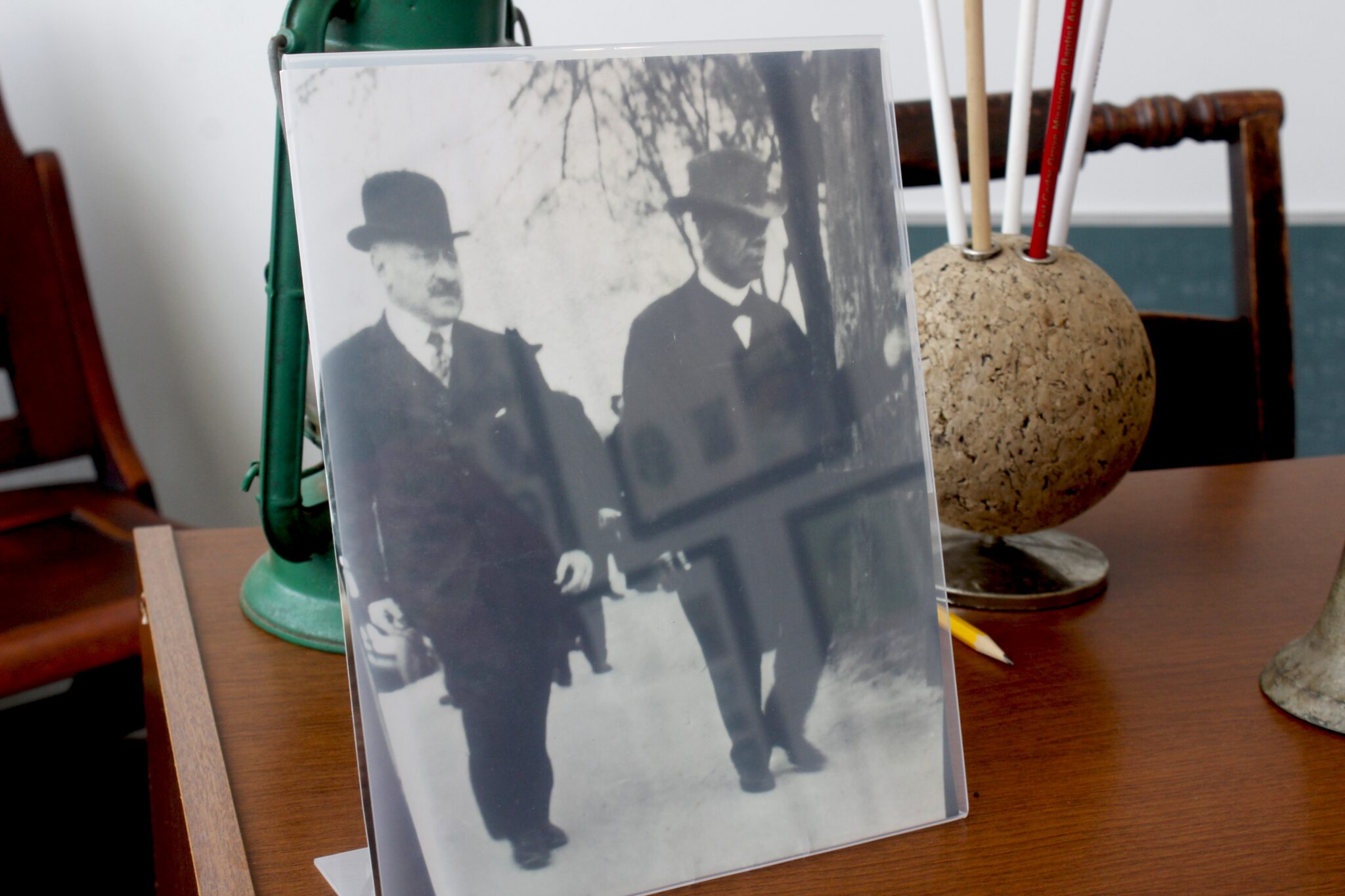
However, through preservation efforts, some of these buildings have been reclaimed as historical landmarks. Sites like the Panther Branch Rosenwald School have been given both a new breath of life and a fresh coat of paint.
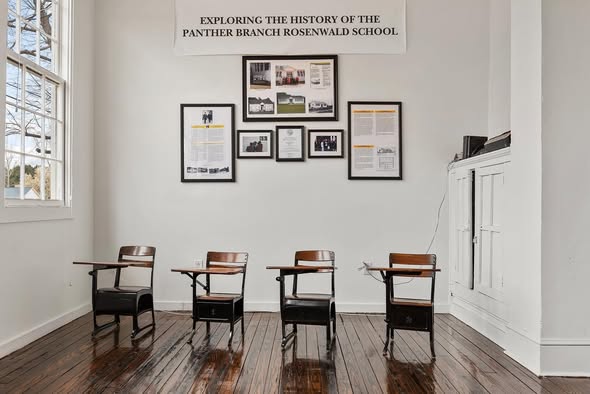
Throughout EdNC’s visit, while telling the history of the land, community member Betty Thomas highlighted original features of the schoolhouse like student desks, a classroom door, and the aforementioned potbelly stove that remains on display. Thomas also showcased the latest features from the renovations completed in 2021.
Now revitalized, the school continues a century-long journey, serving the same community with a greater purpose.
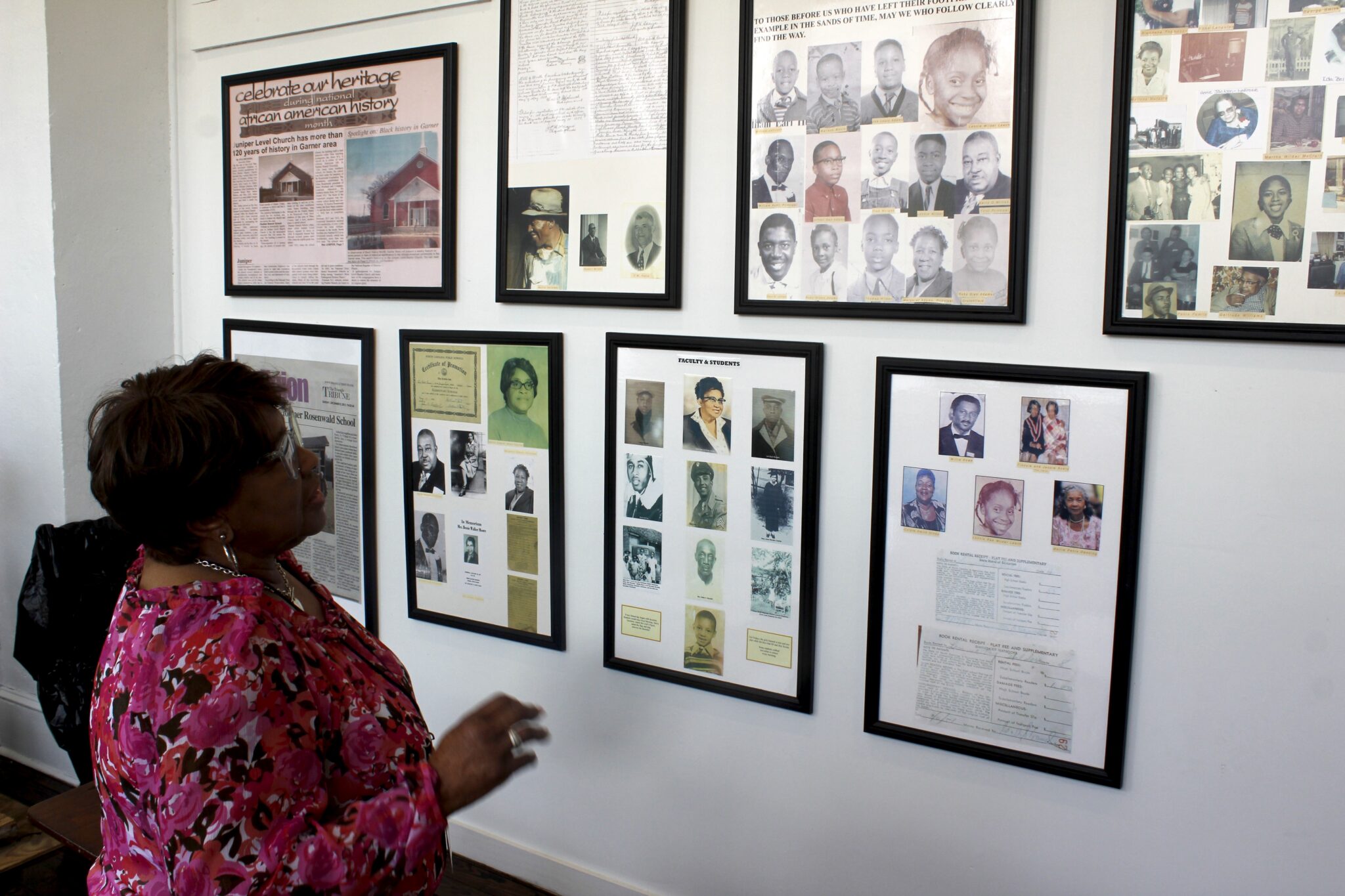
The old has gone, the new is here
In 2013, Dr. Jeffrey Robinson became the senior pastor of Juniper Level Missionary Baptist Church (JLMBC). Situated across the street from the Panther Branch Rosenwald School, upon first seeing it, Robinson recalled joking about how the building could be blown down with just a hard breath.
That was before he learned that the church owned the school, after it had raised the required matching funds in 1926 to build a Rosenwald School, and opened the school on the church grounds. The school remained in operation until 1956.
Robinson went on to join the effort to renovate the building. Yet, after several preservation meetings resulted in stagnation, he said, “I cannot keep going to a meeting and we talk about what we can’t do. What can we do?”
Faced with tens of thousands of dollars in costs solely to scrape the old paint, around 2015, members of the church gathered to do it themselves. Over time, it became evident to one group of onlookers that the collective didn’t quite know what they were doing. After a period of chuckling at the motivated Juniper helpers each morning, the spectating neighbors, one of whom happened to be a contractor, offered their support by completing the scraping and applying a new coat of paint.
For JLMBC, that was the momentum that they needed.
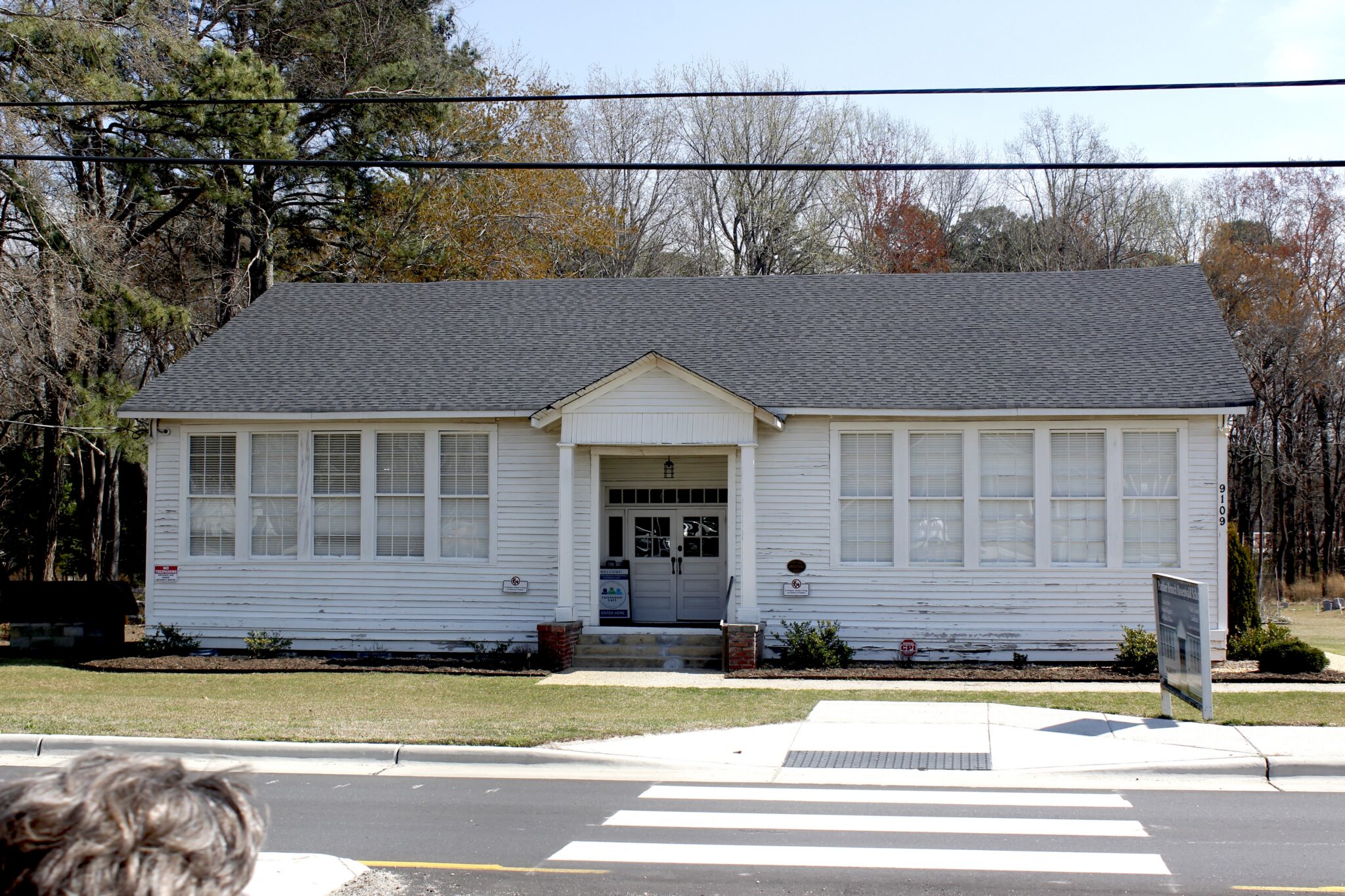
Robinson said that the church was then able to secure a grant from the Rosenwald Foundation to install the specific windows that were in alignment with preservation guidelines established by the school’s 2001 historical site designation. After raising the entire building to replace the footers, the five-year renovation process was complete just as the community braced for the pandemic.
Since then, the church has aimed to leverage the school and expand its holistic approach to serving the community, especially amid the challenges of COVID-19 in the rural area.
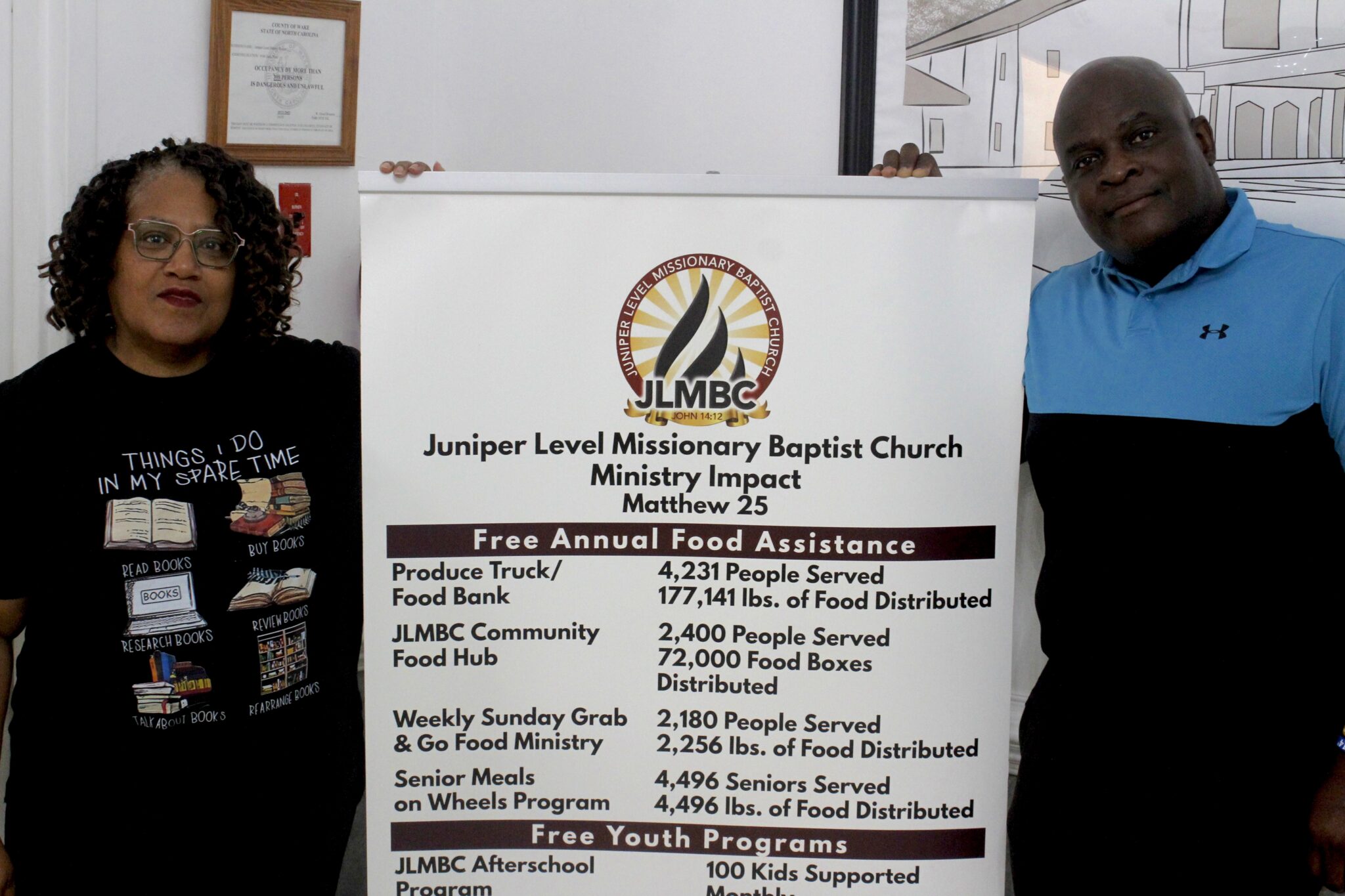
‘A Matthew 25 church’
In the Christian Bible, Matthew 25:31-40 includes the Parable of Sheep and the Goats, depicting righteousness through acts such as providing food, drink, shelter, and clothing to those in need, while also visiting the sick and imprisoned.
“Truly I tell you, whatever you did for one of the least of these brothers and sisters of mine, you did for me,” verse 40 reads, emphasizing a call to serve those most in need, even if they are strangers.
Robinson expressed that Juniper Level strives to be a “Matthew 25 church” through its efforts to expand beyond just church members and to support the greater community.
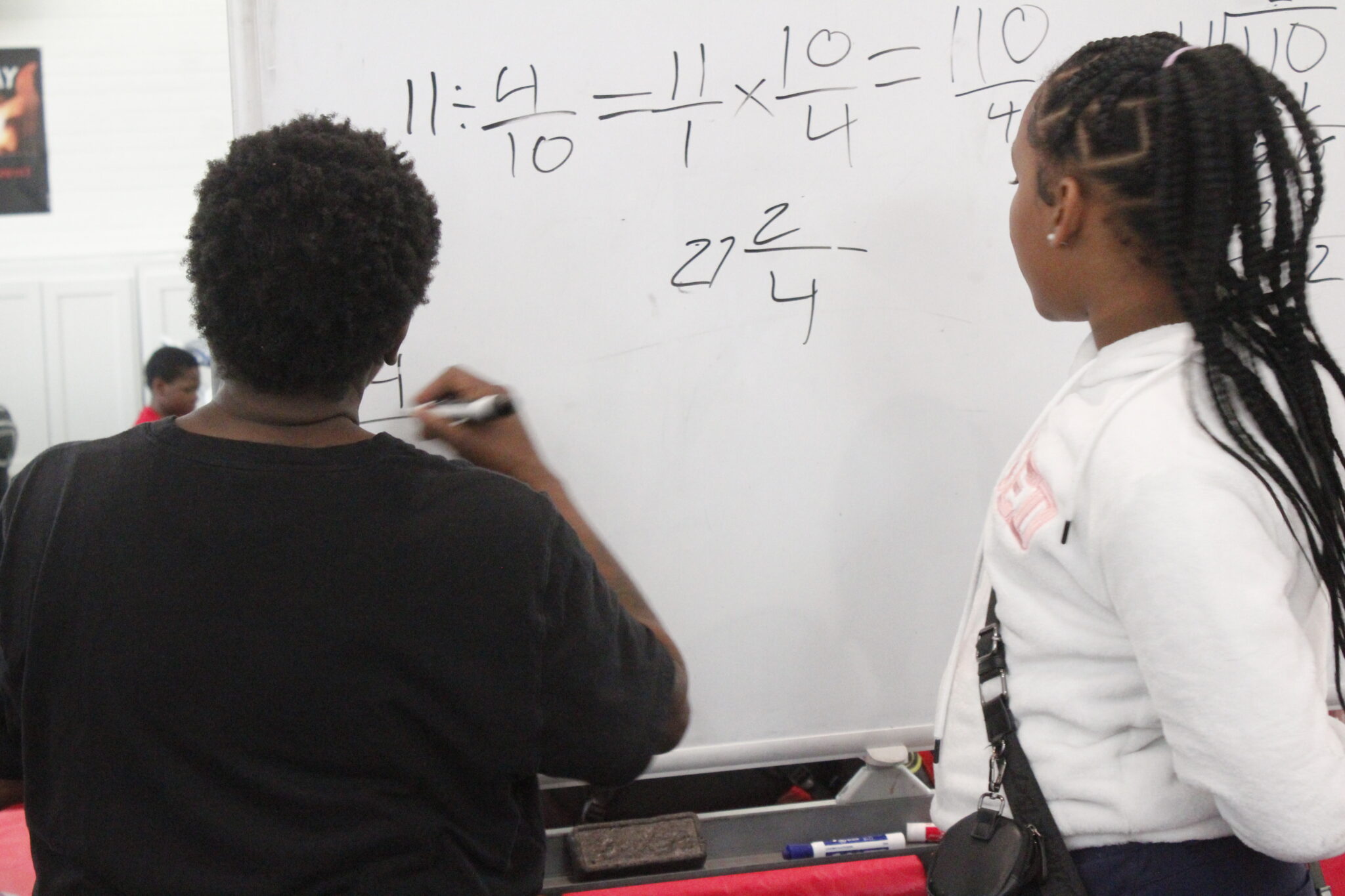
Supported by funding from the American Rescue Plan Act (ARPA) since 2022, the Juniper Level After School Program is one of the offerings provided to families in the local community at the Rosenwald School. Juniper Level Baptist Church Community Alliance executive director, Frances D. Bisby, estimates that the church buses travel upward to 18,000 miles a year, providing transportation for students throughout the year.
Renee Robinson, first lady of JLMBC, stated that beyond providing transportation, meals, snacks, and care for students, the program also supports participants academically. The program is staffed with volunteers who collectively have classroom experience with math, reading, and exceptional children.
First Lady Robinson emphasized that the group of volunteers goes beyond and engages with parents and schools to sustain student progress. “It’s not just a place to drop your kids off. It is truly a place where we’re engaged in what your child is doing,” she added.
“My heart is to get every youth to reach their potential,” said Jeanette Sanders, after-school program director for Juniper Level. “That’s why we’re here, so we can push them.”
The push continues into summer programming, the time in which First Lady Robinson states that a four-week camp is offered to students from 16 different schools. Similarly, transportation is provided each day at no cost to families, in addition to field trips and other learning activities.
Aside from after-school and summer programs, JLMBC efforts stretch further through the Rosenwald School’s designation as one of ten Wake County Friendship Cafe locations via Meals on Wheels. It is a program for elders 60 and up to access free meals and other opportunities for social connection. According to Bisby, the program serves up to 3,500 meals a year.
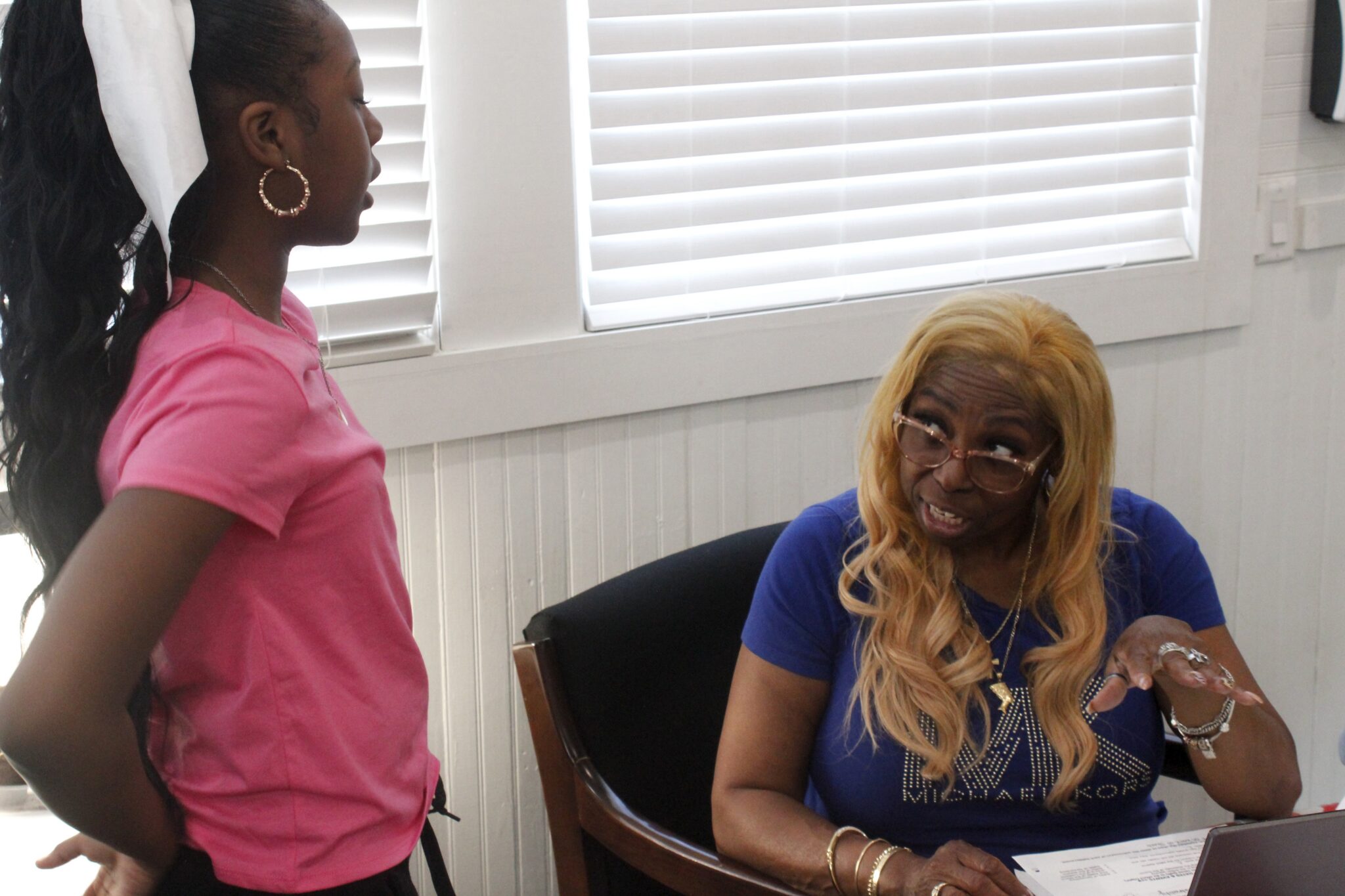
Another one of the church’s programs focuses on juvenile crime prevention. In the title, The A.R.T. of Hustling Forward, art stands for “aggression replacement training.” Designed for youth who are involved, or at risk of involvement, in the school disciplinary and juvenile justice system, the program is said to support youth with interpersonal skill building, anger management, positive conflict resolution, addressing negative peer involvement, and resetting harmful behaviors and decision-making processes.
It is through these actions and many others that Robinson views JLMBC as being aligned with what it means to be a Matthew 25 church. In all, First Lady Robinson believes that they are called to be the hands and feet of Jesus Christ.
“People would rather see a sermon than be preached to,” she added. “If you’re not going to feed people, if you’re not going to help people, if you’re not going to help children, then what’s the point? To me, you’ll be heavenly minded but no earthly good.”
Related reads
The path ahead
2026 marks the 100th anniversary of the Panther Branch Rosenwald School’s existence.
For the church’s after-school coordinator, Bonita Mayberry, seeing the building still standing today is representative of a village that gathered to not only establish the place, but to sustain it, so that children today can both access and benefit from the history.
“If we don’t continue this, it’s going to fade away,” she stated.
For JLMBC, sustaining the legacy set forth by the implementation of the school is attached to its effort to continue using the site to make a greater impact on the surrounding community. With ARPA funding scheduled to end in June 2026, JLMBC is advancing its search for resources to continue the after-school and summer programming for youth in the area.
When speaking about the shared vision and goals amongst her team, Mayberry said, “We are all on the same path to make sure that the children are taken care of, they are learning, and that they are going somewhere.”
Recommended reading