
Rookie teams excel in FIRST NC Robotics competitions while building STEM skills

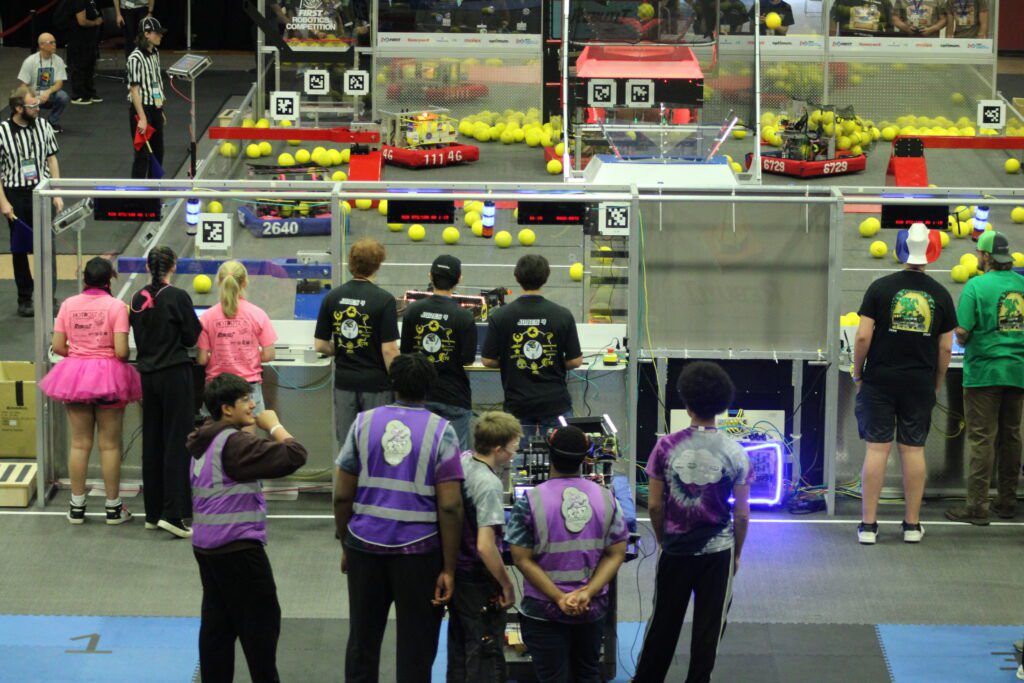
Anything can happen to a robot at any moment. Take the students participating in the FIRST North Carolina Robotics Competitions’ word for it.
“Two things actually surprised me. The first was how fast we finished the robot as a first-year team,” Kacee Smith, competing on the “Visionary Sparks” team from Halifax County Schools, said at one of the matches. “And the second was how many complications we had to face with the robot. I thought everything — I wouldn’t say would be smooth sailing, but we have had maybe a couple hiccups. But we’ve been overcoming it.”
For many North Carolina students, it was their first time diving deep into the world of FIRST, as well as science and engineering as a possible career path.
EdNC spoke with first-year teams about what it was like to construct, collaborate, and compete during the spring 2026 FIRST Robotics competitions.
 Sign up for the EdDaily to start each weekday with the top education news.
What it takes to compete
This year, 90 teams across 42 counties participated in FIRST NC Robotics Competition events. Nine of those teams were rookies.
The FIRST Robotics competition is for high school students. To get started, teams require two adult coaches, and there is no required number of students or skill level for them to sign up. Some teams are formed amongst families and communities and others are formed in schools across their districts, according to the FIRST website. Some community colleges partner with the teams as well.
Each team receives a kit of parts from FIRST that they need to build their robots. Throughout the school year, teams build their robots — weighing up to 135 pounds — while fundraising and being guided by mentors.
Leo Malonzo, science teacher and coach for the Visionary Sparks, said he had little experience in the world of robotics when their team was formed in fall 2025. He recalled how you could “see the eyes of the students” as boxes and boxes of supplies got delivered and see how overwhelmed they were.
“But I think with my students being curious, and with the support of our district and all of our sponsors, we were able to put things together and create something that works,” Malonzo said.
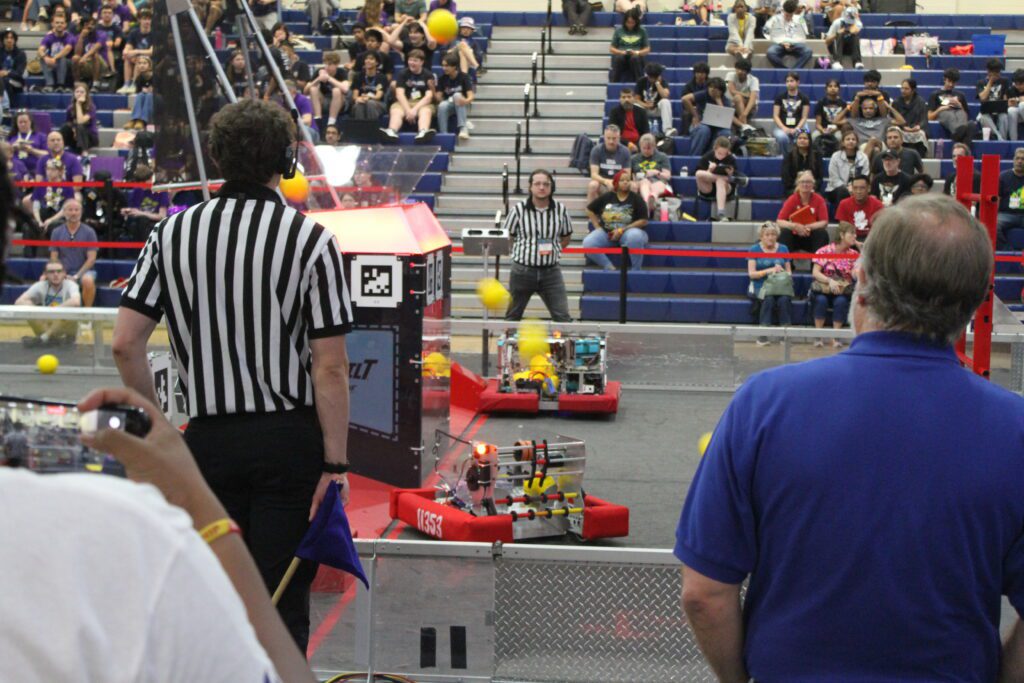
In a letter, the FIRST NC Board of Directors said the variety of robots and strategies on the playing field demonstrated something powerful: “North Carolina students are ready to adapt, iterate, and lead in a world that never stops changing.”
Each year, the robotics kits and the competition has a new theme. This year’s theme was “Rebuilt,” meant to show students how to discover, restore, and innovate. Through the competition, students can see how engineering and creativity can shape the future, according to a letter from Chris Moore, CEO of FIRST.
“Today’s students have unprecedented opportunities to dig deeper than ever before; using STEM skills, collaboration, and technology to uncover insights from history and inform a brighter future for all,” Moore said in the letter.
Read more
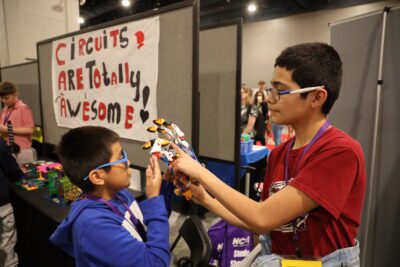
Inside the competition
The build season of the global FIRST Robotics Competition officially began in January. FIRST NC’s regional matches began in March, and the statewide championship took place April 10-12.
During the three-day rounds of matches, teams form and compete in what is referred to as alliances. Alliances are three different teams who work together to maneuver their creations around the play area.
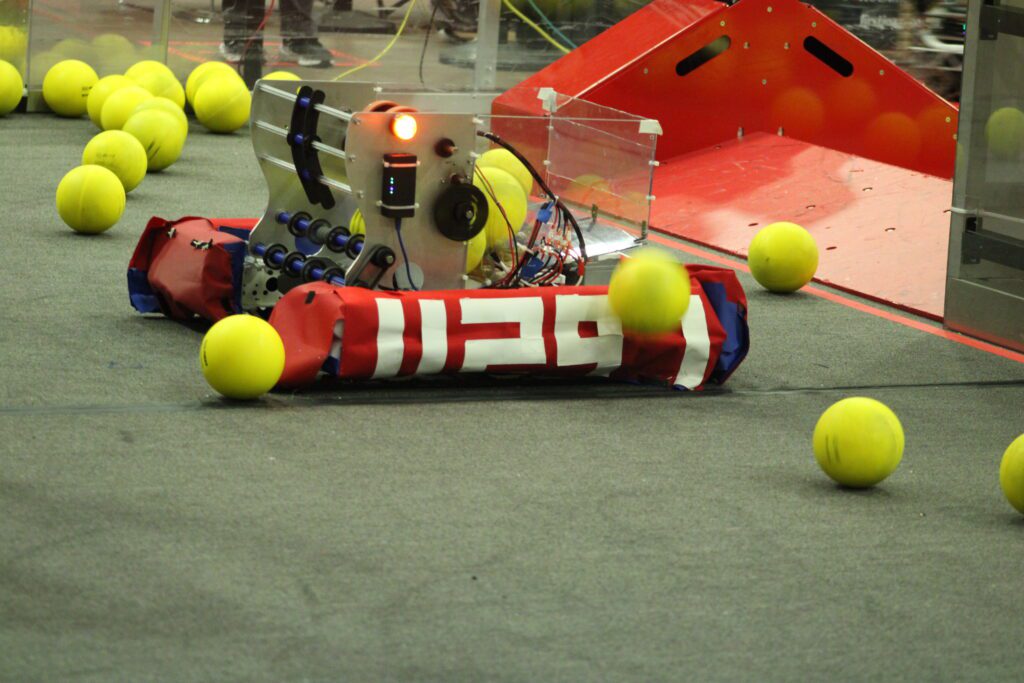
Teams use the robots to score game pieces, called Fuel, into their alliance’s goal, called the Hub. Scoring happens when teams use their robot to move ground balls into their hub. Their creations can either shoot the balls into the hub directly, or maneuver the ball into a slot where the human teammate can shoot it. A visual of the game play can be found here.
After the two minute and forty second match, the alliance with the most points wins — advancing on to future matches.
Teams from Halifax, Hertford, and Robeson county schools described the challenges that come from simply being a rookie; anything from building a robot backwards or having issues with parts and recruiting teammates.
Robeson’s team, the “Iron Corsairs,” was coming into the competition after participating in the FIRST Tech Challenge. The team’s coach, Jonathan Sturdivant, said the team was happy both competitions required robots being designed to shoot, and they were happy to have a final product in enough time to participate.
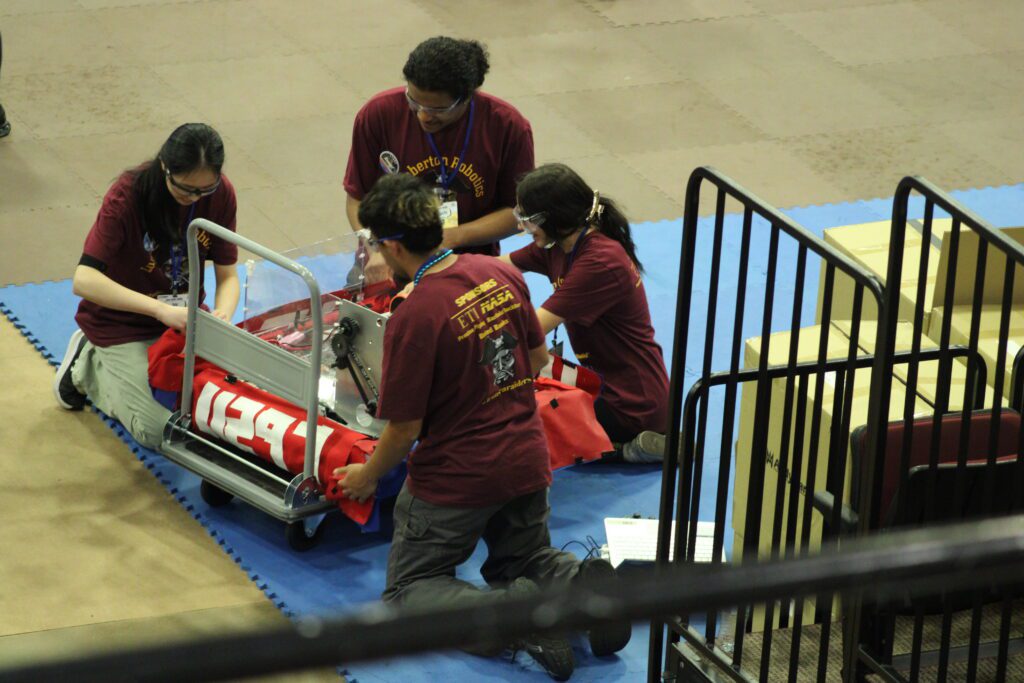
“We came in and we had a month to go, so we were just all really encouraged that we had something working and able to do stuff when we came in today,” Sturdivant said.
Rookie teams said they benefited from being in alliances from other experienced teams.
Justin Resendiz from “The Purple Autobots” in Hertford County said, “We’re getting advice from all of our teammates that we have, (on) building a robot piece better, different strategies.”
Despite it being a competition, teams spoke about the matches being friendly environments.
“When we first came for our inspection, we were meeting new people. People were so nice. They were letting us borrow stuff, like multimeters, just anything,” Smith said. “We wind up talking about stuff other than robots.”
More on FIRST
FIRST NC is the state partner for the global nonprofit, FIRST.
FIRST, which stands for For Inspiration and Recognition of Science and Technology, describes itself on its website as a global community that encourages students to pursue careers in STEM. They hold many events, which includes the FIRST Robotics competition.
“Our proven programs combine the thrill of competition with the foundations of science, technology, engineering, and math (STEM). In classrooms, workshops, and arenas across the globe, students collaborate to solve problems, take applied risks, and learn to fail safely in an environment that values persistence as much as success,” a statement from the FIRST annual report reads.
Per the annual report, over 50,000 students across 66 countries participated in the FIRST Robotics Championship in 2025. Of the students who responded to the FIRST survey, 92% said they increased their problem-solving skills.
Lessons learned
As for North Carolina, 50 teams went on to compete in the statewide championship. The teams from Halifax and Hertford counties both competed.
While not directly competing in the state championship, the team from Robeson county received the “Rookie All Star Award” for the state’s season, which qualifies them to go to the global FIRST Robotics Competition in Houston on April 29.
FIRST NC President Marie Hopper said the competition brings students together to appreciate the different skill sets they bring to the table as a team.
“One of the things that we love about the FIRST Robotics Competition program is that it appeals to students who are involved in AP (Advanced Placement) classes and on the AP track, and it appeals to students who are following the CTE (career and technical education) pathways,” Hopper said.
Whether they win or lose, students talked about how participating in FIRST impacted their future career goals.
Naomi Gutierrez Rodriguez, a student from Robeson’s Iron Corsairs team, said she aspires to study aerospace physiology and enlist in the Air Force after graduation.
Among FIRST NC participants surveyed, 99% of which said that they planned to pursue a four-year college degree, per the 2025 impact report. As a comparison, data from the Department of Public Instruction shows that 42% of high school graduates in 2025 shared that they planned to attend a four-year college.
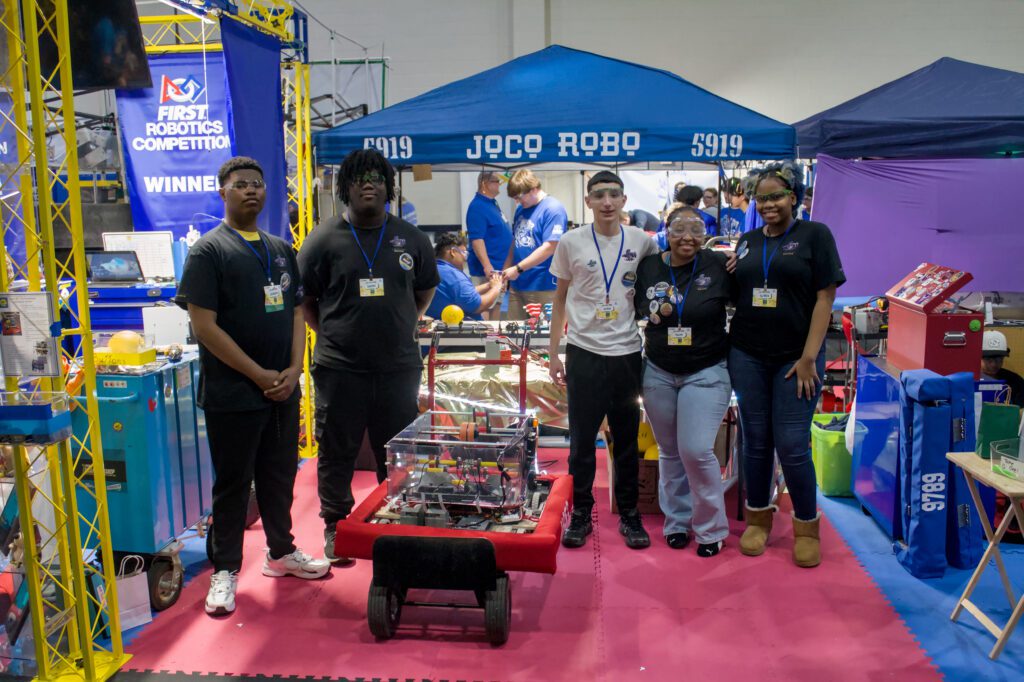
Zabdiel Dewar, a student from the Visionary Sparks team, said he originally planned to major in aeronautics and aerospace. However, he said the competition “brought back a sense of accomplishment that I once had” with coding, so he may go into cybersecurity instead.
Visionary Sparks coach Malonzo said that other rural districts who want to start a team should know that despite having limited resources, the goal should be inspiring students to be creative and think about their futures.
“As a coach, most of the time you got to get your hands dirty,” Malonzo said. “You have to show your students that you can also build it. You know you can help them. You can give them directions on how to build something that works. And you know, aside from winning the competition, inspiring students to become leaders, I think is a great, a great achievement.”
Eighty-three percent of FIRST alumni pursued a STEM-related career by way of a four-year college degree, the FIRST annual report said.
Viewers can cheer for the Robeson Iron Corsairs — and 14 other North Carolina based teams — when they compete on April 29-May 1 by streaming the event here or going to the official FIRST Youtube page. Results from past FIRST NC 2026 events can be reviewed here.
Editor’s note: EdNC’s Ben Humphries contributed reporting to this article.