
Perspective | Where community colleges and early childhood education collide

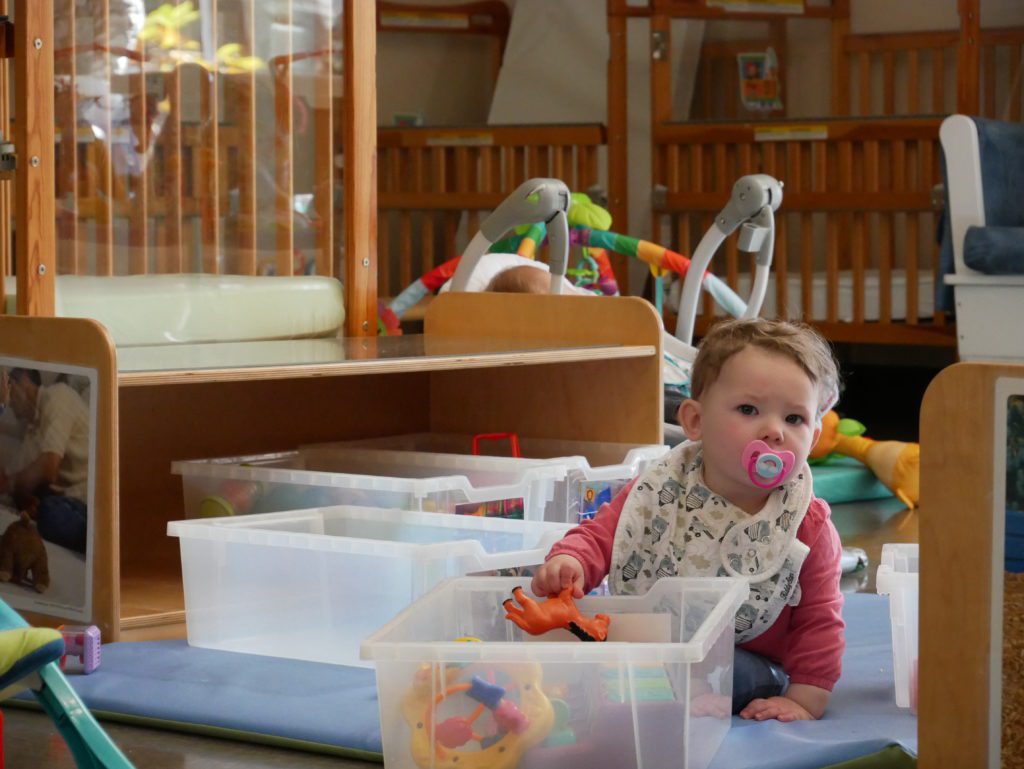
Community colleges and early childhood education are inextricably linked through a long history of tandem growth combined with devaluation of the critical roles they play as economic engines of our country.
Both entities fight for their broadly-overlooked relevance, and both at times have attempted to become what they are not through the process of isomorphism: community colleges have tried to squeeze themselves into 4-year university clothing; early education facilities have looked to elementary school structures to model the basis of their care. Unfortunately, this trend perpetuates the myth that these structures are “lesser” versions of the organizations they emulate.
The truth is, community colleges and early care and education are extremely vital and worthy in their own rights, providing foundational support to children, families, and students. They are distinct and noble spheres that increasingly require our collective attention and advocacy, and we must find common ground to allow the two to lift one another up for the sake of children’s health, family well-being, and economic mobility.
In 1985, NAEYC published a position paper entitled, “Guidelines for Early Childhood Education Programs in Associate Degree-Granting Institutions,” that paved the way for the creation of early childhood education associate’s degree pathways. Standards for these pathways were more fully fleshed out in 1991, when NAEYC established a set of professional guidelines for the workforce. In the late 1990s through the early 2000s, states began to put forth requirements for early childhood educators serving children aged three to five. These became widely supported by community college systems that were responsible for the majority of early educator preparation programming. In North Carolina, 74% of the early childhood workforce had received their credentials from a community college in 2019, with 31% attaining an associate’s degree.
While early childhood education degree programs can be found in both 2- and 4-year institutions, most departments devoted specifically to early childhood remain in community colleges. Two-year community college early educator preparation programs provide a great deal of hands-on support to the workforce, though their lack of funding means that community colleges were less likely to offer content on diversity, inclusion, and child advocacy, and were more likely to rely on part-time adjunct faculty than their 4-year counterparts. In North Carolina, 12% of licensed child care centers received a five-star rating in 2019, while one in five were considered the lowest level quality possible to meet children’s basic needs according to the Child Care Services Association. An increased investment in child care is necessary to begin to tackle these systemic issues in communities across North Carolina.
One substantial barrier is that community colleges do not have data-gathering structures in place to quantify the students that drop out due to child care concerns. Members of the workforce often have children and families of their own to care for or are working multiple jobs to make ends meet with the low wages early educators receive. According to EdNC reporter Liz Bell, “The North Carolina Early Childhood Foundation surveyed a representative sample of 802 working parents with children younger than 5 in 2020, finding that 45% of respondents reported dropping out of college or training, or declining training, because of insufficient child care.”
The state has allocated money to the community college system to help students afford child care since 1993, but this program needs more funding and broader eligibility to be effective. Currently, only 13 of our 58 community colleges have on-site child care; four have closed in the last four years.
With child care itself in a continuous state of crisis, child care centers will keep closing and enrollment in community college education departments will dwindle. Entrants into the early care and education workforce will continue to leave after dipping a toe into the water, which is hardly surprising considering that four in 10 educators in our state were on public assistance in 2021.
Community colleges can assist students enrolled in early childhood education courses and support student parents simultaneously through on-site, affordable child care programs that are designed to operate at the highest quality. Colleges can do what they have historically done to prepare the early education workforce, but in a well-funded way that meets the needs of an increasingly diverse student body and instills the skills of high-quality care in their education students.
Community colleges pride themselves on being nimble in a changing economic landscape, and the landscape persists in shifting. Hands-on learning in early education department child care facilities can allow college students to place their children in the hands of qualified and supervised early education students who are building skills.
Local businesses and large corporations seeking employee training through community colleges could dedicate funds to those colleges specifically for the creation and maintenance of early education facilities for their students with children, enabling their employees to provide developmental benefits for their children while receiving on-the-job training.
The supportive and nurturing relationships between faculty and college students strengthens the learning and professional development process. The intimate settings of community colleges are ideal for this type of relationship-building. Ideally, faculty would be robust and sufficiently compensated to help to stabilize teacher preparation programming as they connect deeply with their students.