
Perspective | TikTok, teens, and teachers

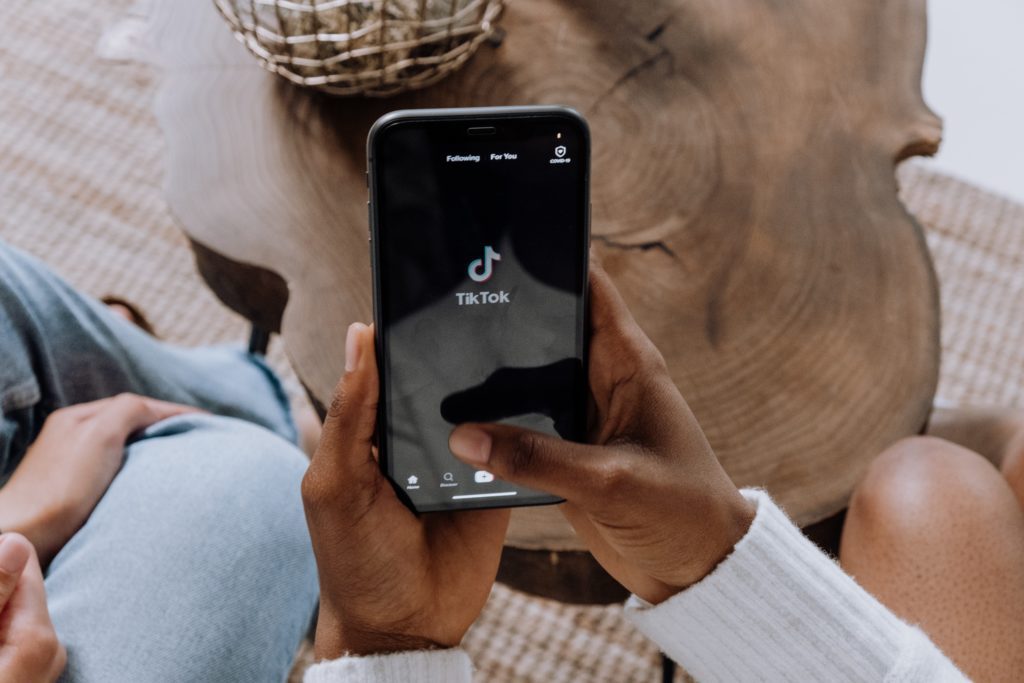
Teenagers arrive at school these days bearing devices that link them not only to each other but also to the treasures and tumult of the world in which they live. Their teachers, coaches, and counselors show up for their daily encounter with students in a cultural environment shaped by what digital technology has wrought.
In a spring survey of 1,316 Americans ages 13 to 17, the Pew Research Center found that 97% of teens say they use the internet daily. Nearly half — 46% — say they are online “almost constantly.”
“The landscape of social media is ever-changing,” says the Pew report, which tracks teenagers’ use of 10 popular platforms. YouTube remains the most widely used — by 95% of teens — while Facebook has dropped from 71% in 2015 to 32% in 2022.
The Pew researchers emphasize their finding that TikTok has “rocketed in popularity … and now is a top social media platform for teens” among the 10 in the survey. “Some 67% of teens say they ever use TikTok, with 16% of all teens saying they use it almost constantly,” according to the survey.
TikTok, a powerhouse owned by a Chinese company, built a huge audience as a site for music and short videos. And now, as The New York Times reports, “TikTok is becoming increasingly important as a destination for political content, often produced by influencers.”
“Ahead of the midterm elections this fall, TikTok is shaping up to be a primary incubator of baseless and misleading information, in many ways as problematic as Facebook and Twitter, say researchers who track online falsehoods,” The Times reports. “The same qualities that allow TikTok to fuel viral dance fads — the platform’s enormous reach, the short length of its videos, its powerful but poorly understood recommendation algorithm — can also make inaccurate claims difficult to contain.”
Recent media manipulation case studies published by a team of researchers at the Harvard Kennedy School identify attributes of TikTok that facilitate the spread of rumors, conspiracy theories, distortions, and inaccuracies damaging to democracy and to everyday civic harmony. The Harvard scholars make a distinction between misinformation (unintentionally misleading or inaccurate) and disinformation (false or misleading matter intentionally spread to deceive).
“On TikTok,” says one of the case studies, “anyone can publish and republish any video, and stolen or reposted clips are displayed alongside original content … Pseudonyms are popular on TikTok, making it harder to discern who a poster is, where they are, and whether their video content is original or real … Parody and role-playing videos are all common genres on the platform, and viewers who aren’t familiar with this specific form of comedy could mistake them as real.”
A fascinating, and unnerving, case study examined the “slap a teacher” hoax. Word spread online and in mainstream media in fall 2021 of a TikTok challenge to students to “slap a teacher.” No such challenge existed, but the mere mention of a TikTok dissemination sparked fear in schools in several states.
Of course, TikTok is not the only online source of entertainment, as well as misinformation and disinformation. In aggregate, social media offer an astounding mixture of benefits and mischief. This is not the first time Americans have been challenged to use a new communications technology to spread knowledge, build community, and foster democracy while avoiding descent into distortion and mediocrity.
In 1961, for example, FCC chairman Newton Minow told broadcasters that when television is good “nothing is better.” But he famously chastised them for producing a “vast wasteland” of TV programming.
In 2022, it is surely unrealistic to expect middle and high school teachers to monitor the enormous flow of chat-texts, music, videos, games, and websites available to teenagers on their tablets, cell phones, and wrist devices. But, as in the 1960s when teachers had to recognize that television shaped the environment of teenagers, now educators have a critical role in guiding a generation of students attached to devices they carry everywhere.
Schools remain institutions for preparing young people for a productive career in a technology-rich economy. But a free, open democratic society also relies on schools to help form well-rounded citizens who act ethically and who think critically — who can discern the difference between the online treasure trove of knowledge and information and the social media “wasteland’’ reached by a mere click or key stroke.