
Perspective | The first classroom: What the children taught me

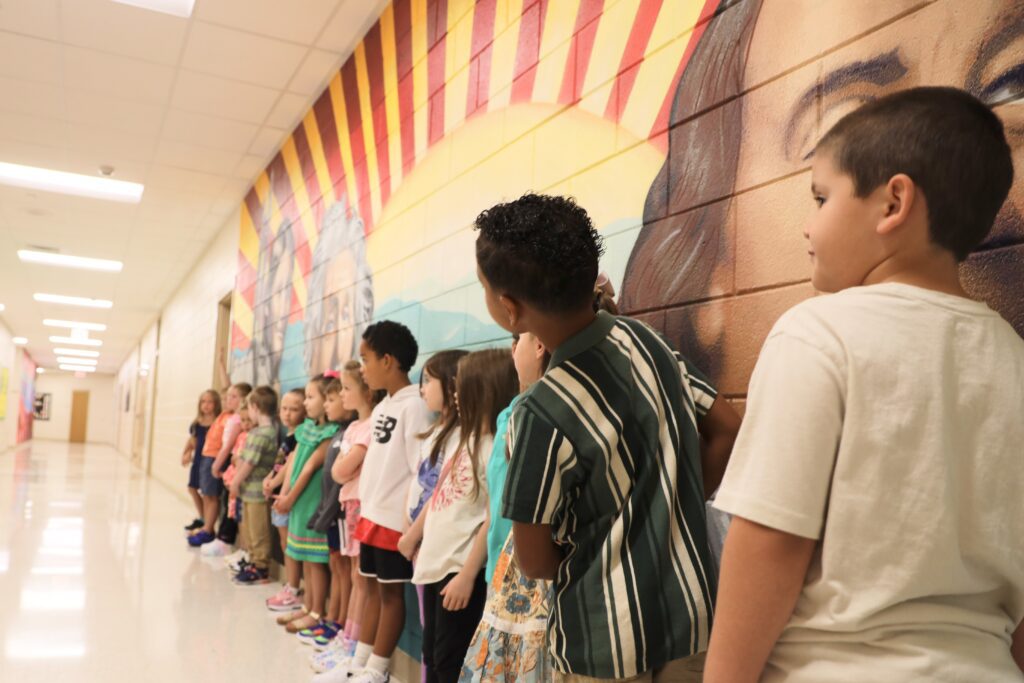
They say every educational journey has a first classroom. Mine was a very small room, a former office, at the end of a long cinderblock hallway, filled with second graders — most of whom were supposed to be third graders.
These children showed me the difficulties and triumphs new teachers face. For over 25 years, my path would wind through the halls of elementary schools, community colleges, and university lecture halls, but I have always carried the lessons from that first classroom with me. It was there, kneeling beside the desk of a nonreader or huddling close to hear a whispered secret, that I learned the one nonnegotiable truth of education: Everything is built on the foundation of relationship-building. It is the fertile soil in which all other learning takes root.
In those early years, the curriculum was important, but it was never the script. It was a map. The real navigation came from watching a child’s face light up with understanding or cloud with frustration. This was my immersion in developmentally appropriate practice — not as a dry academic term, but as the daily, vital art of meeting a child where they are.
 Sign up for the EdWeekly, a Friday roundup of the most important education news of the week.
The trust families placed in me was a sacred charge. They shared their struggles — food and housing insecurities, the lack of resources, the quiet worry that their child would be left behind. Their stories seeded a deep, lingering question within me: What would it take to ensure that every child, in every rural community, had access to a quality education?
That question became the compass for my career, propelling me from the elementary classroom to university instruction and community college leadership. This journey granted me a panoramic view of a student’s educational arc and a sobering clarity: A shaky foundation doesn’t just create cracks, but entire fault lines that threaten to undermine all future learning. And in that view, the single most critical agent for repair — the one who can mend the cracks and reinforce the entire structure — is the empowered teacher.
My passion for teacher mentorship was born from this realization. I am not just training teachers; I am nurturing the stewards of those crucial classroom relationships. This is the heart of my message to new educators:
- Your map is more important than your script. A quality curriculum is a tool, not a tyrant. If a child is fascinated by a ladybug on the window, put the script aside. That moment of shared wonder is your map to a lesson on science, empathy, or descriptive writing. Autonomy means trusting your professional judgment to follow those teachable moments.
- Listen to the whispers. The most important data aren’t always in a spreadsheet. They are in the quiet comment a child makes about their weekend, or in the artwork that seems unusually angry. Relationship-building means being a detective of the heart. When a student sees you notice — really notice — that is when trust is built.
- Anchor your practice in development. A frustrated child isn’t a “defiant kid;” they are often a child whose developmental needs aren’t being met. I think of a first grader who had broken his dominant hand in kindergarten. He still struggled with the fine motor control needed for a standard pencil. His mother, trying to help, brought a thick, easy-grip pencil to school, hoping it would bridge the gap. Yet, the well-intentioned teacher, bound by a strict interpretation of policy, felt she couldn’t allow it without an official accommodation plan. For weeks, the boy’s paperwork was processed while his frustration grew and his writing lagged.
Developmentally-appropriate practice means looking at that child and asking, “What is the barrier to his success, and how can I remove it today?” It means viewing a parent as a partner and having the autonomy to find a temporary, compassionate solution that says, “I see you, and I will help you,” ensuring the child’s confidence remains intact while the official wheels turn. Why not let him use the pencil? Meeting a child where they are is the first step toward growth.
Related reads

I became a fierce advocate for teacher autonomy, because a scripted lesson plan can’t console a struggling child or ignite a moment of curiosity. An empowered teacher, trusted to use their professional judgment, can. They are the ones who can take a quality curriculum and breathe life into it, adapting it to the specific, beautiful, and complex needs of the children in front of them.
So now, when I speak of improving education, I am not just speaking of policy or funding. My career began in rural eastern North Carolina, but my new role has shown me these systemic inequities are present in every corner of our state. This is not just a rural issue; it is a North Carolina issue.
The solution lies in a cycle of empowerment. It begins by mentoring a teacher, affirming their expertise, and giving them the tools to build their own “first classroom” — a place where every child is known, where learning is alive, and where the relationship built today becomes the foundation for every tomorrow.