We tell kids a lie every single day. We tell them that if they just work hard, keep their heads down, and grab that degree or diploma, the doors to the middle class will swing wide open.
But for thousands of young people across the Carolinas, especially those from low-income ZIP codes, that door is locked, and the key isn’t a piece of paper. It’s a phone number. It’s an internship. It’s the social capital that wealthy families take for granted and the rest of the world calls “knowing the right people.”
In the 1940s, a child in North Carolina had a 90% chance of out-earning their parents. Today, that’s plummeted to 50%. In Charlotte, a child born into poverty has just a 4.4% chance of reaching the top income bracket, one of the lowest economic mobility rates of any major city in America. We are sending kids into an AI-driven, rapidly shifting economy with 20th-century maps and expecting them to find their way. The bottom rungs of the career ladder are eroding before our eyes, and we’re still arguing over curriculum standards while the ground disappears beneath our students’ feet.
 Sign up for the EdDaily to start each weekday with the top education news.
The reality of the Carolinas today is a tale of two economies. On one hand, we have booming tech, health care, finance, and manufacturing sectors. On the other, we have a regional talent pipeline that is failing to meet the moment.
Because our systems aren’t producing workers with the right mix of skills and exposure, many of these companies are forced to hire from outside the region. We are importing talent while our own brilliant, capable young people sit in a holding pattern, lacking the gatekeeper experiences that signal readiness to an employer.
It’s not for a lack of talent; it’s a lack of sight. Recent data shows a staggering exposure gap: While 75% of students have the natural aptitude for high-demand careers like tech or advanced manufacturing, very few express interest in them. Why? Because they’ve never seen them. They haven’t been exposed to the world of work early enough to realize they belong in it. Despite the fact that 79% of high schoolers say they want work-based learning, only 2% actually land an internship before graduation.
Traditional classroom instruction is necessary, but it is no longer sufficient. A LinkedIn Global survey revealed that 70% of people were hired at a company where they had a connection. You can’t learn the rhythm of a high-growth industry from a textbook. You can’t build a professional network from a desk in a silent study hall. And you certainly can’t navigate the hidden curriculum of the modern workplace (the unwritten rules of how to lead, collaborate, and adapt) if you’ve never stepped foot inside one before graduation day.
This is why we launched the Carolinas Career-Connected Learning Challenge.
To be clear, a single RFP (request for proposals) isn’t the silver bullet that will solve a multigenerational systemic failure. It’s going to take far more than one initiative from a regional philanthropic organization to move the needle. But we believe this area, specifically within K-12, is ripe for innovation.
We want to use this RFP to seed and surface the kind of bold, disruptive ideas that can actually push our regional ecosystem forward. We need to stop treating career prep as an elective or a postscript to a degree. If a student leaves high school or college with a credential but no exposure or connections, we haven’t actually educated them, we’ve just given them a receipt for their time.
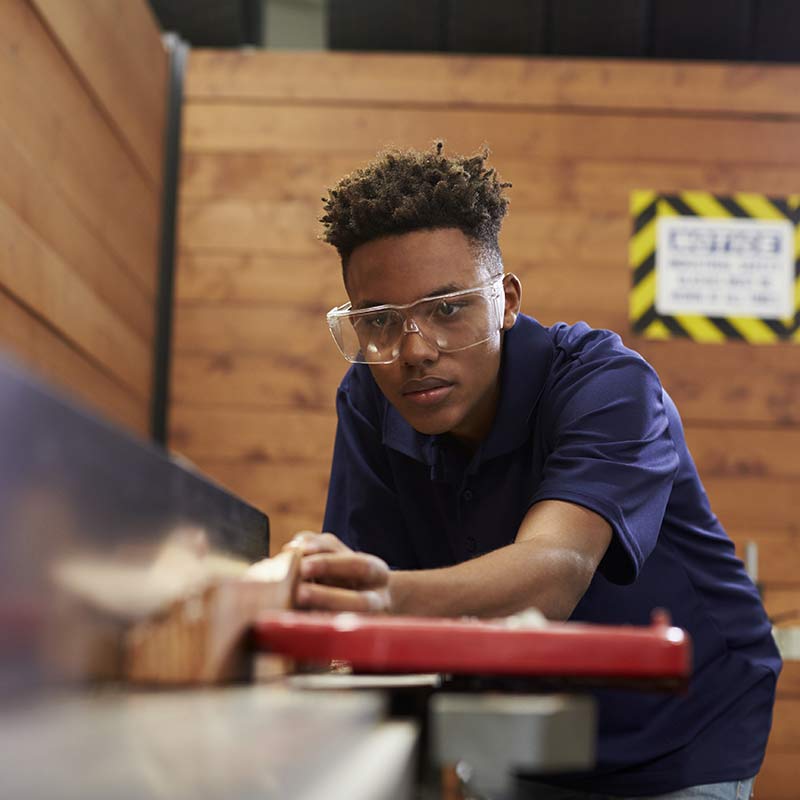
Career-connected learning is the bridge. It’s about ensuring that a student’s first real job isn’t a shock to the system, but the practical realization of their education. It’s about mentors who actually know their names and networks that actually answer their emails.
We need to stop pretending that meritocracy works in a vacuum. While merit still matters, it is often just opportunity in disguise. By scaling career-connected learning, we aren’t just fixing a pipeline. We are dismantling the barriers that keep social mobility a myth for the many and a reality for the few.
The old way of doing school is comfortable for the adults in the system, but it is failing the kids. We have the resources, the industry partners, and the talent in the Carolinas to do better. The challenge is set. Now, we have to decide if we’re actually brave enough to change the game, or if we’re just going to keep printing diplomas that may not lead anywhere.

Recommended reading