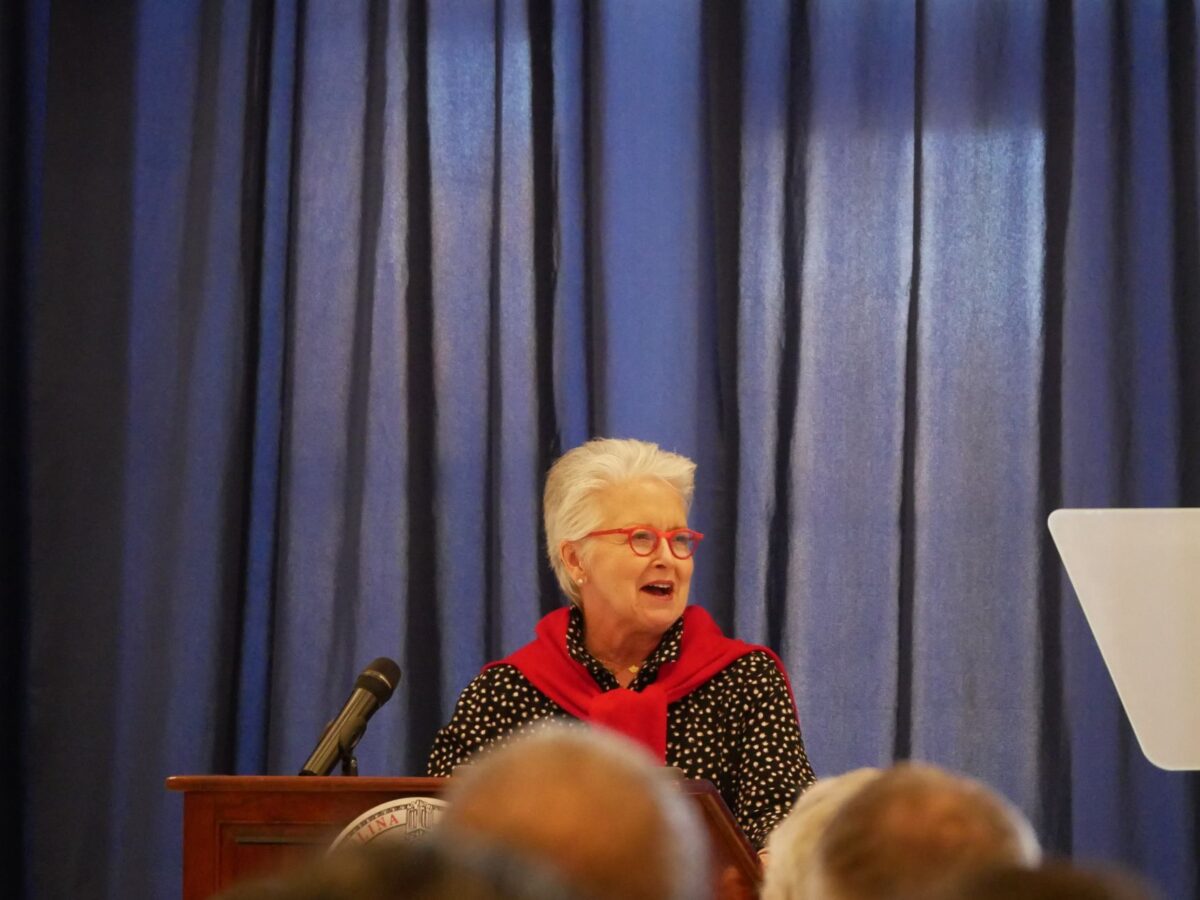
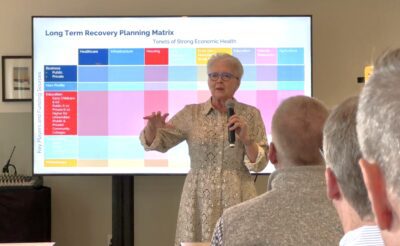
Editor’s Note: The following is a response to the 2025 Dallas Herring Lecture by Dr. Jason Wood, delivered on Nov. 18, from Sharon Decker, former N.C. Secretary of Commerce and current senior advisor for long-term recovery for the Governor’s Recovery Office for Western North Carolina (GROW). You can read her remarks, edited lightly, below.
It’s so nice to be with you today. I am honored to have the opportunity to be here. I am not sure what qualifies me to respond to Dr. Wood. My sister — who is a lifelong educator, was a teacher in North Carolina, an assistant principal, served in South Carolina as an elementary school principal, and then in a number of education districts in the state, as associate superintendent around curriculum and then retired as associate commissioner of schools in the state of Kentucky — thinks that I have finally arrived by being asked to speak today in response to you, Dr. Wood, and before a group of educators. She says there may be hope yet that I will do something with my life. What an honor it is to be with you.
I would say my only other qualification for being here, other than being the sister of an educator, is that I met my husband in the parking lot of Cleveland Tech, now Cleveland Community College. He at the time was — shows how old I am — teaching math to folks who had returned home from Vietnam on the GI Bill, and one of the smartest decisions I made was to marry a community college instructor.
 Sign up for Awake58, our newsletter on all things community college.
And I’m the daughter of a Southern Baptist pastor who taught for fun, he would say, at Gaston College for most of my growing up years. And I still run into people who will say, you know, “I remember Dr. Allred so well. His classes were always so much fun in Old and New Testament and in business communications.” But what they most often tell me is, “He just piqued my interests to learn more,” and isn’t that what is maybe the best sign of a skilled and capable educator?
My life as a business executive has only deepened my love for our community college system. As a young 16-year-old, I took my first class at a community college to learn sign language so that I could speak with members of our church. And then, later in my life, I was fortunate to serve on the board of the community colleges here in North Carolina. So that was many years ago, and our board chair is here today, and I’m so thankful for the work they are doing. I just have so much respect for what you do.
As a business leader, I personally had the opportunity to benefit from training in our community colleges and the places where I was looking for employees. And as our state secretary of commerce, I know the value of what you offer as absolute incentive to business to come to this great state. I can tell you that things like Toyota and Honda, and new businesses that we’re welcoming into western North Carolina, are greatly encouraged by your workforce development programs, and by your willingness to be partners, and we’ll talk some more about that. But without our community colleges, the great success we’re experiencing in our state, to be identified as the No. 1 state for business, simply would not happen. And I believe that with all of my heart.
So I’m honored today to be asked by the Belk Center to come. Thank you so much, provost, dean, thank you for the honor to be on your campus. I wore red as I was instructed to do.
Dr. Wood, thank you for your challenge to us today, but thank you especially for your heart, for your students, and the communities where you serve. If we leave with nothing else today, may we be challenged by that part, for that ought to be our motivation. So thank you so much.
The need for courage, humility, and urgency
I could respond to many things that the doctor shared today, and it was hard when sent the information to pick exactly where I would focus. I point to a number of things that he said I simply want to underscore.
- We don’t graduate people into poverty. Amen to that.
- We should be asking ourselves, “What difference does it make that the student came through our programs? Has the experience made a difference at all?”
- Opportunity without outcomes is unfulfilled promise.
- Get to know the students with the greatest challenges to success, those least likely to succeed.
- Have a student success plan for each student before they start classes so they know what the road might possibly look like, including a financial package and a path for how they get through this and the next steps beyond it.
- Collect data. And I’m going to say: data, data, data, data, data. Know the facts on completed plans, program completion, placement and don’t let graduation be the finish line. Continue to follow them, connect and collect the data on their progress beyond the experience with your program. Know where they are and how they’re doing.
There’s so much that I could share on every single point, but I’m going to leave it at emphasizing those points again, and I want to focus on one line in his comments today: Any college can innovate with courage, humility, and urgency.
I’m pretty sure that every community college president in this room and listening from around the country, any leader in our community colleges, would agree that we’re in challenging times, wouldn’t you? Our budgets are getting smaller while the demands are getting greater. Many young people seem to be more interested in becoming influencers than educated professionals. Politics at every level is more challenging than I’ve known it in my lifetime — challenges around funding priorities and even political challenges to the curriculums that you teach.
If we don’t want to graduate people into poverty and we truly are motivated and galvanized by the purpose of preparing people for meaningful careers and compensating them well so they can have fruitful and productive lives, so that they can raise their families and contribute in their communities. How do we go about it in an environment, in a climate like this, that challenges us in ways we’ve never been challenged before?
Everywhere we turn, we read about labor shortages, we experience it in our own cities and towns and here in North Carolina. Achieving family-sustaining wages, I want to tell you, depends on the vitality of our community colleges.
I don’t want you to underestimate the importance of your role — and Dr. Wood has given an example of how they made this happen in Wisconsin — of your influence on how wages are changed at a community level. You can influence that in partnership with businesses in your community.
I believe it does start with courage, paired very closely with another “c” word: community.
It takes courage to admit that what we’re doing right now may not be exactly what we need to do moving forward. It takes courage to admit that maybe we don’t have it all figured out yet. It takes courage to recognize that some of our long-held practices are no longer serving the students and the communities as they need to in a world that’s changing as it is.
Is my college aligning programs with high-wage and high-growth industries? Are we ensuring that every credential and degree we offer leads to a living wage, not just a job, but a pathway to economic mobility? Are we asking ourselves those questions?
It takes courage to try some new approaches, yes, to even take risks, knowing not all will be successful. Chances are it won’t, but we’ve got to have the courage to try. Because a position of no change almost guarantees that many of our efforts will fail.
You know, it takes courage to challenge the status quo when comfort may be what some of your colleagues would prefer, or maybe you would prefer. It takes courage when those in your classrooms and administrative suites would rather just not make too many waves. And some of the change may need to begin with changes in some of those seat holders.
Yes, courage is needed. And that courage is needed at a community level because that is where the work gets done. What we do here in Raleigh matters around policy, decision-making on a number of levels, but at the end of the day, whether it is public work or private work, it happens on the ground at the community level. And so it takes courage to make change there.
I agree with Dr. Wood that the work of student success must include leaders in your colleges stepping off the campus to go where the jobs are and to learn, in the workplace, what the needs are today and importantly, what the needs are of the future. The days when you as a college administrator can go to area businesses and say, “here are the courses we offer,” are over. The programs you offer, the degrees you confer, the credentials you provide, must be driven by those who are looking for the credentialed and degreed potential employees.
This isn’t about how many of each type you graduate, this is about how many you graduate and are gainfully and happily employed. You can’t begin to envision that without a collaborative and partnership approach do doing the work. Have you spent time with these employers? Do you know them? Have you called on them for anything beyond fundraising? Have you spent time in their workplaces and know what the nature of the work is, what the work environment and the culture is like?
It takes courage to go beyond the grounds of your campus and to place yourself in community to understand what the needs are and where they are. It will also take courage to make the tough decisions that inevitably have to be made to do the better thing.
Secondly, Dr. Wood said that it takes humility to lead in the midst of change. Leaders with humility aren’t doormats or pushovers, by any means. They are simply people who have a call to lead and understand that service is the driver of their purpose. If service, care, and compassion are not the things that define the character of your leadership, you just might be in the wrong profession. Leading and guiding adult students, it isn’t for the faint of heart or the weary of work.
If “being the president” or “being the vice president” is your motivation, I would suggest you are destined to fail. If purpose is not defined by your desire to see students achieve and grow and be at their best, you are destined for failure. If their success defines your personal success, you will more likely achieve your goal.
And then there is urgency. Urgency is needed. It’s kind of scary to say in my 50-year career, but that’s what it is, I don’t know that I have ever felt the sense of urgency I feel today. Maybe part of it is just growing older and realizing I’m the one running out of time, I don’t know. But I feel a sense of urgency, and in western North Carolina, we really don’t have a choice. You see, we need to refresh, we need to renew, we need to revitalize our way of going about the work of educating and equipping students in our communities for success.
Leading workforce development in the wake of Hurricane Helene
We had the challenges before Hurricane Helene in western North Carolina, because the economic declines started in western North Carolina in the ’80s. When textiles began to go offshore, when furniture began to move offshore, and then you add the recession of 2008, 2009, then you have COVID, and then just by chance, we have the most impactful hurricane in the state’s history come to western North Carolina, who even knew that was possible? Well, we’ve got a challenge, and urgency is critical. I shared with Dr. Wood earlier, and I don’t know who said this quote, but “Never waste a good crisis,” and we’re not going to waste this one.
My life work has been as a change agent. It has been coming into hard spaces to create the change that needs to take place for a business to continue to be successful for community to continue to be successful at a state level for our economic development efforts to have a new charge and to be successful.
And I agree with what Dr. Herring says that the first place we have to start is by meeting people where they are, and then helping them go as far as they can go, and that’s what I’m doing in western North Carolina.
So we’ve started by looking at kind of the core economic realities. Looking at health care, looking at infrastructure, looking at economic development, looking at arts, tourism, and culture — the greatest driver of economic growth in our region — looking at agriculture, which is still the greatest economic product in our state. Looking at the natural resources that bring folks west.
And also, very importantly, looking at education and workforce development. So from the beginning of this work, with the support of the John M. Belk Endowment, we’ve been exploring how we create the education and workforce development system that will provide the workforce we need as we rebound out of what for us has been a very long and protracted period of economic decline.
Our work is still in progress, but I can tell you that we’re taking on the challenges that Dr. Wood has identified today, engaging industry in the process of design and creation of programs, looking hard at credentialing, looking hard at innovative job site learning that might be different than we’ve done it before and in different ways than we have done it before. Creative acknowledgement of work experience and skills that people have gotten in previous work experience, and now need to make a change because those jobs no longer exist or they are determined to get into jobs that will allow them a living wage. With humility, we’ve got to listen and learn from these business partners and community leaders and then implement.
Dr. Naomi Albanese was the dean of the School of Consumer Sciences when I was an undergraduate student at the University of North Carolina at Greensboro. And I had a work study in her office my last two years, and sometimes that meant making copies, and sometimes, fortunately for me, it meant driving Dr. Albanese to board meetings. She was on the board of Duke Power, which was unheard of in the 1970s by women, and Johnson & Johnson. I mean, she was a ceiling breaker. She was a woman at about 5 feet tall, and she was powerful.
So I took advantage of these drives to her board meetings and I would ask her questions, things. It was a great opportunity to learn. So one day, I said, “Dr. Albanese, I’m just really interested. If you were to start all over again, what would you do, what would you do differently?” And I thought, “Well, you know, maybe she would have traveled the world more, maybe she would have married, she was single. Maybe she would have had children.” She looked at me and very quickly said, “I would have learned to type.”
That was not the answer I was expecting. She said, “Sharon, I was so determined not to be a secretary,” which is what was one of my primary choices in my time, “that I absolutely stayed away from the typing force, like the plague.” She said, “it was a very short-sighted decision. The world is going to be run by computers, and I can’t type a lick.”
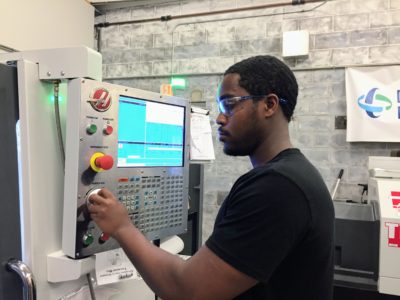
Well, I sometimes wonder, in our children’s and perhaps our quest to avoid the jobs of the past — like manufacturing or farming — are we missing the chance to help them see that both lines of work for the future look a whole lot more like their video games than they do their daddy’s 10-to-12-hour long days of labor.
What are we showing them today about what manufacturing looks like in the new economy? What are we showing them today about what agriculture looks like in the new economy? Yes, they do include a lot of hard work, but the innovation, the research, the opportunity in those fields, don’t look much at all like they did for their parents and their grandparents. It’s something we’ve got to think about.
You’ve been given two perspectives in the handouts you’ve been given today with resources on market data and good-wage paying jobs. I challenge you to take that back to your colleges and pair that information that you find there, and research from there, against the kind of curriculum you have in your local community pages. What do we need to shift to better prepare folks for the jobs for the future, that pay it the wage that gives them a sustainable future?
We’ll work to define our vision in the west, for the workforce of the future, and ensure that everyone along the food chain knows the vision, understands it from our community, our teachers, our administrators, our elected officials. Do they really know what you’re trying to do in your community college? Our parents, and yes, our students, they need to know and feel their success as our highest priority.
Related reads
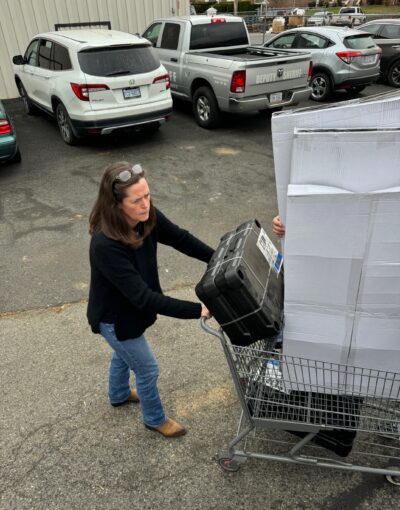
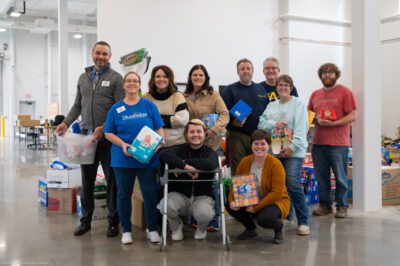
We need to understand the needs of our community, from the community’s point of view, not overlooking the vast need we have for service workers of all types. It’s almost some days overwhelming. Whether that be in health care, emergency services, teaching, and social work. We’re asking ourselves in the west, if as a group of community colleges our goal was to ensure that every health care location in the state had the workforce they need to serve the people in our communities, both rural and urban, what would we do differently to make that happen?
For communities to thrive, the basic needs of services must be met, yet our enrollment in these programs is falling below the need every single year. Skilled trades like electricians, plumbers, welders, carpenters are yet another area of need in our communities. These are perfect opportunities to engage young people at earlier ages so that they can understand what the opportunities are.
We will work with policy at the local, state, and federal level to ensure that policies align and that outcomes are measured the same. We get motivated by different measures, right? Let’s get in the same boat. If we really want to change things long-term, just not programmatically, we all need to be in the same boat, speaking the same language, and measuring the same economic outcomes.
And we are going to have to turn loose of some pride and, yes, rustle up some humility to admit that how we have been organized, how we have been funded, how we have thought about the processes and systems in the past, may not be what is necessary to carry us into the future. And once we’ve identified the problems, we don’t need to ponder them long. We need to act on them.
And one additional point — which Dr. Wood did not address, but I think he would agree with me. We will engage our children in elementary and middle school with exposure to what our region offers in terms of employment, and careers, and opportunity with hopes that many of them will see the future they don’t see right now, right here in North Carolina.
It is particularly important that young men, before they are teenagers, be engaged in seeing the positive possibilities before their lives, before they find “faster ways to fortune” that lead them nowhere. Across the education continuum, boys consistently fall behind academically, they are less likely than girls to read proficiently in elementary school, less likely to graduate from high school, and less likely to pursue a college degree. We could spend the whole morning on that topic. You can spend the whole morning on that topic. Don’t ignore it when you go back to your colleges.
Read more

‘It’s time to pull out all the stops’
A recent CBS Sunday Morning story told of a fellow named Andrew Johnson, who is Toro, the mascot for the Houston Texans. It was a great story. It’s just been named to the National Mascot Hall of Fame. When asked how he decided to pursue the career, you know what he said? “I made the decision in the fifth grade.”
The fifth grade — note that, it wasn’t when he got to the community college. It was in the fifth grade, “when the Kansas City Wolf came to my classroom,” and they have a clip of this, somebody had videotaped it, and he was asked to put the uniform on. That day, he said, “I decided I was going to be a mascot.”
Be it a lineman, an electrician, a manufacturing technologist, a nurse, a pastor, an educator, it starts early. The influence. We’ve got to expose our children earlier, and it ought to be in tandem with our community colleges and the educational leadership of our community, in a world where answers come instantly, and AI can actually provide sometimes better answers than we can. In a world where creative outdoor play has been replaced by video games and isolation is a way of life for so many of our children, not just an occasional experience. Maybe all of this transformation starts by helping children dream again — about a future where work is challenging and yet satisfying and rewarding, where learning is fun and the effort is rewarded. You think it’s possible? I do.
Gov. Jim Martin, who is a mentor and friend, used to tell the story about a pastor in western North Carolina who rode a circuit of churches. We’re back to that now. Lots of little churches and not many members, and so he would go to a different church every Sunday and he did a circuit around three different churches. One of the churches had closed and so he was introduced to a new church in his circuit. So he took his son with him, and this Sunday morning they’d go to this new country church, pulled up in the driveway, and when they walked into the back of the church, to the vestibule, there was a long table with old flowers. You’ve seen it. And there was a box on the table, and the box on the top said, “Poor box.” And so the father, wanting to set a good example for his son, took out all the money he had in his coat pocket: 50 cents, two quarters, and dropped them into the poor box.
Well, they went on in and had the service, and it was a good service, and folks were responsive and the pastor felt good about it, and the chairman of the deacons met him at the back of the church, and he said, “Pastor, we’re so glad you came. We’ll look forward to seeing you on the third Sunday of every month. And each time you come, we’re going to give you a little token of our appreciation for coming.” And he went over to the “poor box,” and he pulled out all the money that was in it — you know what it was, two quarters, 50 cents — and handed it to the pastor and said, “We sure do appreciate you coming.”
Well, the pastor and his son got in their car and they were a little ways down the road, and the little boy looked to his daddy and said, “You know, daddy, I guess you’d have gotten a whole lot more out if you’d put a whole lot more in.”
Well, folks, it’s time to pull out all the stops, challenge our assumptions, and craft new ways forward. Ask more questions, be willing to identify the problem and then act on it. What have we got to lose? I’d suggest an entire generation if we don’t.
You and your college can innovate with courage, humility, and with urgency. Thank you, Dr. Wood, for challenging us to do that.
Editor’s note: The John M. Belk Endowment supports the work of EdNC.
Recommended reading