
Perspective | Reframing ‘learning loss’ to reveal the true value of teachers

With public conversations increasingly placing the COVID era in our collective rearview mirror, it is worth pausing to examine what we have already begun to forget. While many are eager to move on, the pandemic fundamentally reshaped education — and in doing so, revealed truths about the value of teachers that our current dialogue too often overlooks.
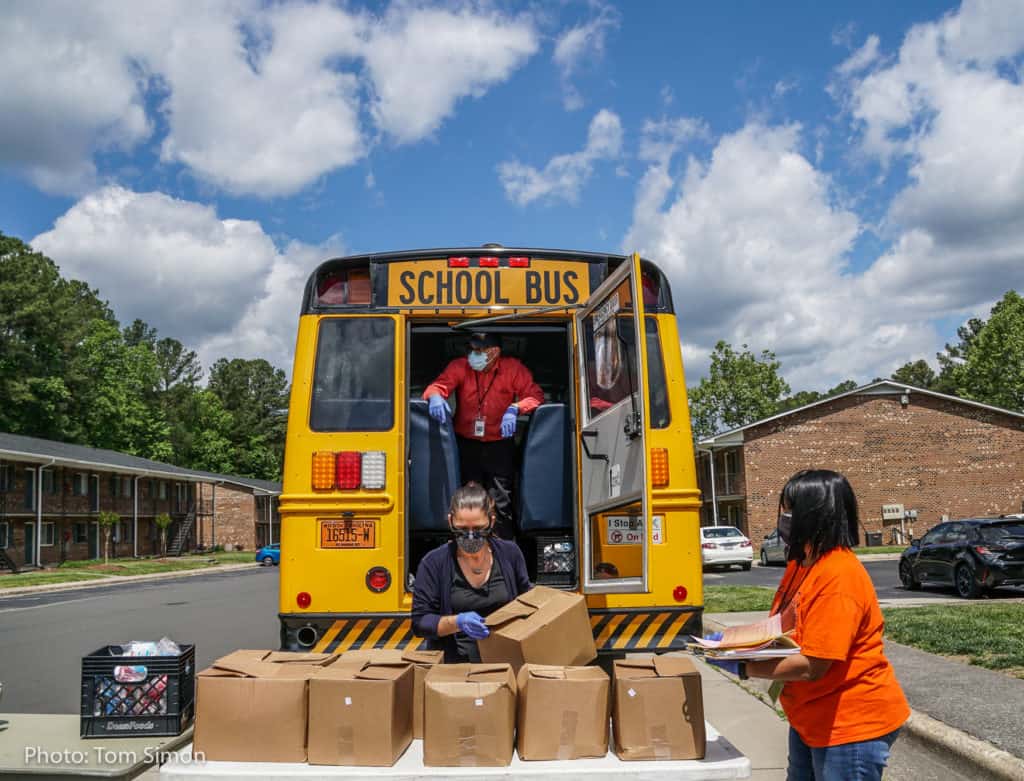
As an educator in Wake County Public School System, I was inspired by the response at every level. School districts scrambled to meet unprecedented needs. Teachers “pivoted” overnight, absorbing endless demands, constant changes, and unfamiliar technologies. Families did their best under extraordinary pressure. Across communities, social workers, teachers, administrators, and counselors gathered in apartment breezeways and community centers, guiding families through hotspot setup and online learning logins.
Schools became distribution centers. Cafeterias and gymnasiums filled with carefully prepared bags containing student schedules, Google Classroom instructions, workbooks, and learning packets — each tracked and double-checked to ensure no child was missed. Carpool lines formed as staff handed off materials and exchanged brief hellos with students before sending them home to learn online. These efforts were creative, compassionate, and deeply human.
 Sign up for the EdWeekly, a Friday roundup of the most important education news of the week.
And yet, despite this collective dedication, remote learning was not equivalent to in-person schooling. Students did not receive the same educational experience they would have in traditional classrooms. The resulting gap was quickly labeled “learning loss.”
While the term may describe a measurable outcome, it also reflects a missed opportunity. That gap does not signal failure — it reveals the irreplaceable academic value teachers bring to classrooms every day.
Teachers do far more than deliver content. They support families, stabilize communities, contribute to the economy, and attend to the mental and emotional well-being of students. However, post-pandemic discussions have often reduced their work to test scores and numerical data, especially when assessing remote and hybrid learning. Ironically, those very metrics underscore how essential teachers are to student learning in traditional settings.
During the height of the pandemic, teachers and other frontline workers were publicly celebrated. But that appreciation faded quickly as the crisis receded. In our rush to return to normal, we failed to elevate the lessons this moment offered — particularly the central role teachers play in sustaining not just schools, but society itself.
If we truly want to move forward, our dialogue must change. Recognizing the full value of teachers’ work is not nostalgia or sentimentality — it is an investment in our democracy, our communities, and the future.