
Perspective | North Carolina’s next mission: Turn around declining math scores

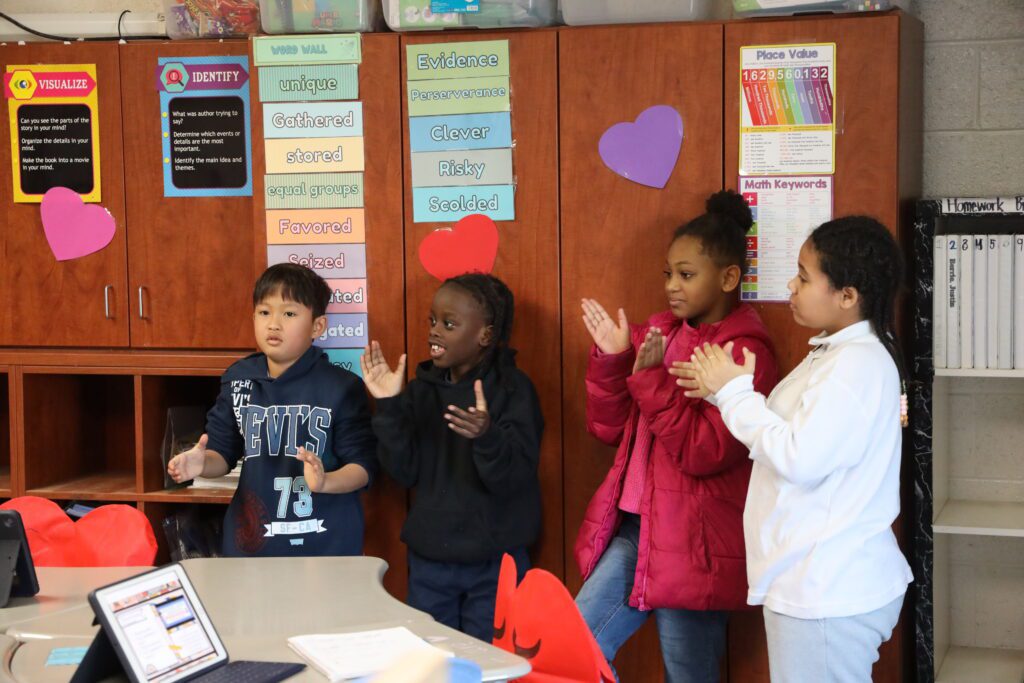
Fourth and eighth graders across the state are currently taking the Nation’s Report Card in math and reading. The National Assessment of Educational Progress, or NAEP, as it’s also called, is considered the gold standard in testing and is the only common benchmark used nationwide.
I’m paying particular attention to our progress in math, as it’s my area of expertise and was the subject hardest hit when COVID upended education nearly six years ago. North Carolina students, like most others, are still behind their pre-pandemic achievement levels in math, with widening gaps between higher- and lower-performing students. But I hope this is the year students turn the corner and rebound.
 Sign up for the EdWeekly, a Friday roundup of the most important education news of the week.
Failing to do that can have dire consequences for kids. Economists warn that staying behind would dim students’ future job prospects and lead to lower individual earnings and a weakened economy. North Carolina’s business leaders also are sounding the alarm. It makes sense. The state’s leading industries include aerospace, defense, automotive, biotechnology, and financial services, all of which depend on a workforce with strong math skills.
Fortunately, policymakers are making serious efforts to address the issue, including by overhauling the state’s K-12 math standards. A second draft of proposed standards is due out next fall. A key objective is to make math instruction more relevant to students and help them see how it can be applied in the real world. That’s vital. Like most math educators, I’ve lost count of the number of times I’ve been asked, “When will I ever use this outside of school?”
Each state sets its own educational standards spelling out what students should know and be able to do across subjects and grades, but states that have tried to align their standards with the Nation’s Report Card and its high expectations have seen achievement rise. So I’m heartened that some of what we’re focusing on in North Carolina is also reflected on the NAEP test kids are taking this year.
Updates to the 2026 NAEP math assessment also include more of a focus on real-world problem solving. And they include more data science questions, another area being prioritized in North Carolina, particularly as it relates to strengthening instruction around probability and statistics. The NAEP updates and the new draft standards also seek to ensure students can demonstrate a deep understanding of math concepts and have strong procedural skills.
Read more
I volunteer as a tutor in a local middle school and I see students respond better when math is more than memorizing a formula and is connected to real world scenarios. Students respond so much better when the math they’re studying is connected to the world around them and when they are asked to wrestle with problems using various strategies and models rather than simply memorizing a formula.
That’s important. A recent RAND survey found many of today’s students are disengaged in math class, and research shows student engagement directly impacts achievement.
North Carolina’s proposed math standards also seek to address this by creating more flexibility around the courses students take in high school. Importantly, the standards hold firm to a requirement that everyone takes four years of rigorous math. But they let students pursue a broader array of courses that might better match their interests and college and career plans.
I believe all this will fuel student achievement gains, but that requires us to really focus on and commit to making math a priority. Think about it this way: Making plans to improve your health won’t get the job done unless you actually lace up your sneakers and hop into an activity that is both challenging and of interest.
Standards alone will not do the job. True change will require sound implementation and robust supports for teaching and learning.
If we do that, change will come and our kids will be a lot better off for it.