
Perspective | N.C. can’t afford to waste our potential

Going to college was something I always thought was normal, but when it came time for me to start the process, I realized it was not normal for someone like me. I would hear my friends and classmates talk about all the different schools they were applying to and touring during my last semester of high school. I would follow along and pretend that I was doing the same.
I say this because the harsh reality is that everything was completely different for me, and I did not want to be left out. I also had uncertainty about what was to come when applying for college, because policies are not designed to support undocumented students and Dreamers on the pathway to and through college.
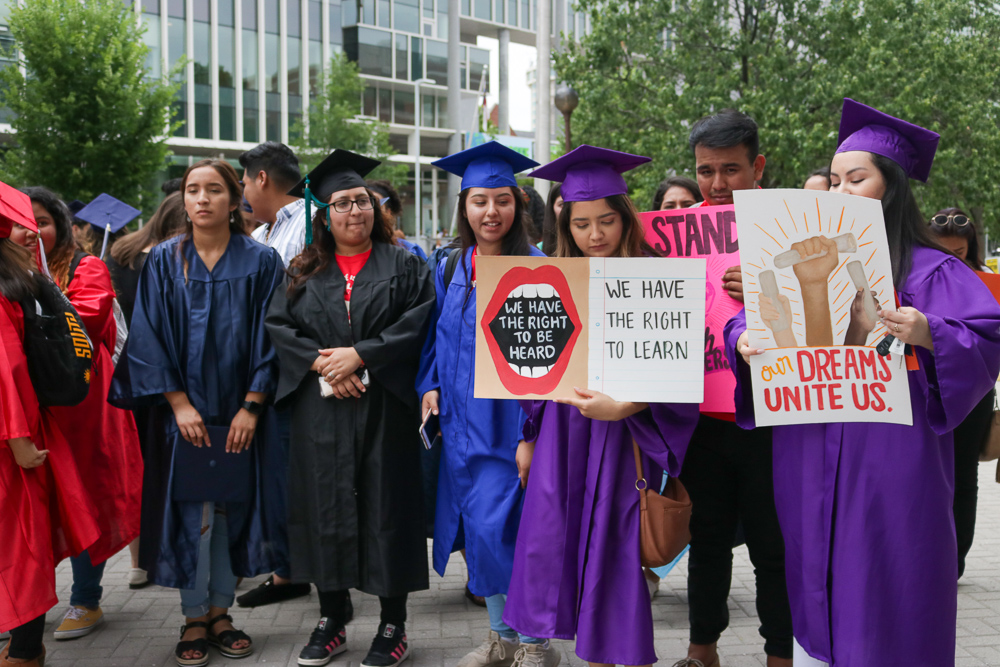
There are an estimated 3,000 students graduating each year from North Carolina schools that are facing this same uncertainty. I’ve joined other students in Our Turn, an organization focused on developing and engaging young people as leaders in their education, to advocate for our representatives to pass a bill this year that would allow all students to receive in-state tuition, regardless of citizenship status (citizen, Deferred Action for Childhood Arrivals (DACA), Temporary Protective Status (TPS), etc.).
As of 2019, North Carolina’s average per-pupil expenditure was $10,615 per student, including undocumented students, from Pre K- 12 to ensure student success. By all measurements, I would have been a great return on the state’s investment — because I not only attended North Carolina public schools since third grade, but I also earned 60 credits while attending an early college at UNC-Charlotte. And, I intend to continue being part of North Carolina’s growing banking industry as an accountant after graduation.
According to myFutureNC, our education system and economy are out of sync. “As our economy grows, the vast majority of new jobs require more than a high school diploma—something that less than half of North Carolinians ages 25-44, and even fewer from economically disadvantaged backgrounds, currently have,” reads the myFutureNC website.
Former Rep. John Fraley, R-Iredell, supports tuition equity for this reason.
He recently shared: “North Carolina is short hundreds of thousands of 25-44 year-olds with the postsecondary certificates or degrees necessary to keep our state economically sound and business focused. Hispanics have made up 82% of the growth in North Carolina K-12 public school enrollment over the last 20 years. If all these NC-located students aren’t given this fair opportunity, the state will never meet its attainment goals.
This is not an immigration issue, which North Carolina can do nothing about, it is an education and workforce development issue. In addition to just doing the fair and responsible thing like 22 other states, we must have the vision and courage to respond to the needs of our state, the economy and the students themselves.”
There are workforce shortages in critical fields, including STEM-related jobs, nurses in health care, and teachers in our education system. For example, by 2025, North Carolina is projected to have the second-largest shortage of nurses in the nation — a deficit of nearly 13,000 — according to a recent Georgetown University report.
Not only would a change in our state’s policy on in-state tuition support workforce development needs, it would positively impact our local economy by increasing revenue to higher education institutions and generate more income tax through increased wages of college-educated professionals. More undocumented, DACA, and TPS students paying in-state tuition rates would help employ others in our state, from essential workers to academic faculty.
Being the first one in my family to even apply to college, I was completely lost and not well-versed on my options. The process was stressful. I tried to figure out financial aid options by tirelessly reaching out to different institutions, often being passed from one voicemail to another, and carefully navigating how much information to share about my situation to ensure I didn’t put my family at risk.
Once I got to Wingate University, I met a lot of people that were in the same situation as me, and I realized how big of an issue it was. I know many people that give up and do not go to college because they cannot afford out-of-state tuition at public institutions, even though they have lived here and paid taxes most of their lives. In North Carolina alone, undocumented immigrants contributed over $277 million dollars in state and local taxes in 2014.
“Any student who attended and graduated from a North Carolina high school and whose parents pay taxes and reside in North Carolina and who meets postsecondary admission requirements deserves the opportunity to further their education at in-state tuition rates. This is fair and necessary in order for North Carolina to have the educated workforce required for the future of North Carolina. I applaud the work these students are doing to obtain this opportunity,” said former Rep. Craig Horn, R-Union.
College decision day was recently celebrated on May 1. Sadly, many students were not able to experience the excitement that comes with this special day, even though they have worked just as hard and met the same qualifications as other students. There is still a window of opportunity to pass legislation on this issue this session before the budget is finalized.
I’m hopeful that more of our North Carolina Senate and House leaders will see this as a policy that benefits our economy by investing in young people to limit wasted potential and reduce workforce shortages. Growing our potential earnings can increase revenue for the state, and the state can benefit from a higher return on the investment it makes in students during their time in K-12 public schools.
Editor’s note: Former Rep. Craig Horn serves on EducationNC’s Board of Directors. Kayla Morais, Our Turn’s director of organizing, also serves on EducationNC’s Board of Directors.