
Perspective | Joy as a strategy in teacher preparation

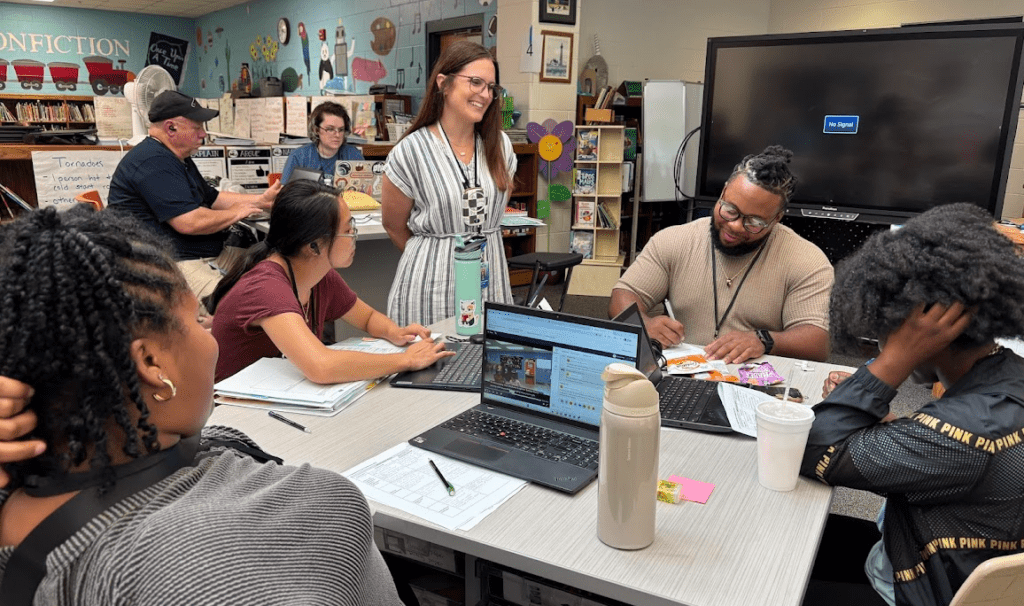
The students were seated in a U-shape, close enough to see one another, far enough apart to work independently. A first-year teacher — new to the profession and seeking EC (Exceptional Children) Adapted Curriculum licensure — stood at the Promethean board, confidently moving between slides, manipulatives, and students’ ideas. Instructional assistants leaned in to support learners. Children read aloud, sang, moved their bodies, and built sundials to understand how the Earth’s rotation creates day and night.
The lesson integrated literacy, science, math, music, and collaboration. It was rigorous. It was relevant. And it was joyful.
I’m often asked what joy has to do with teacher preparation. The answer matters — especially now.
After COVID disrupted schooling across North Carolina, Winston-Salem/Forsyth County Schools found itself in a familiar position: teacher shortages, classrooms staffed by adults without licenses, and too few experienced educators available to support those learning on the job. In many classrooms, instruction became heavily digital — even with students physically present. Engagement dipped. The buzz of learning was missing in some spaces.
When our district began designing an in-district teacher residency program in 2022, we knew we had to do more than help adults earn licenses. We had to help them want to and have the skills to stay.
Designing for what teachers actually need
Before launching the WS/FCS Teacher Residency Program, I spoke with directors of educator preparation programs across North Carolina. Many alternative licensure pathways are “licensure-agnostic,” meaning teachers across vastly different grade levels and content areas receive the same coursework. The assumption is that if someone has taken college courses in a subject, then they can teach it.
Our district chose a different approach.
We surveyed beginning teachers, held focus groups with principals and instructional leaders, and used a simple KEEP-STOP-START protocol to learn what was working — and what wasn’t. Teachers told us they needed learning experiences that mirrored the classrooms they were trying to create: content-specific, job-embedded, practical, and human.
That’s where our core value of authentic joy emerged.
What we mean by authentic joy
Authentic joy isn’t toxic positivity. It doesn’t ignore the very real challenges of teaching. It names them.
Authentic joy shows up when learning feels meaningful, when growth is noticed, and when teachers feel seen as whole people — not just employees trying to survive their first years in the classroom.
Educational researcher Gholdy Muhammad describes joy as one of five essential learning pursuits, alongside identity, skills, intellectualism, and criticality. In the classroom I observed that day, I saw all five. And I see them repeatedly in classrooms led by teachers in our residency program.
 Sign up for the EdDaily to start each weekday with the top education news.
Joy matters because it’s connected to motivation, efficacy, and persistence. Decades of research — from self-determination theory to positive psychology — tell us that people are more likely to stay in challenging professions when they experience competence, autonomy, connection, and purpose.
Teaching requires navigating curriculum demands, emotional labor, classroom management, collaboration with families, and constant decision-making. For teachers earning licensure while teaching full-time, the cognitive and emotional load is even heavier.
If teacher preparation programs don’t model the kind of learning we want for students, we shouldn’t be surprised when teachers burn out.
Joy as a retention strategy
Before becoming the director of the Teacher Residency Program, I served as an assistant principal at a large urban high school. In one year, 16 teaching positions were filled by long-term substitutes or provisionally licensed teachers. Many worked all day, attended classes at night and on weekends, and spent thousands of dollars pursuing licensure — often without finishing, or earning their initial license while still feeling unprepared to be an effective teacher.
At the same time, student engagement and attendance suffered.
I brought this information and the school leader lens to the design phase of our educator preparation program. I knew that we needed to model high-leverage practices within a supportive environment where alternatively licensed teachers would experience effective learning, then unpack the decisions made so they could emulate similar communities of practice in their classrooms.
Today, our in-district residency program centers coaching, content-specific learning, and intentional joy. We celebrate growth. We notice what’s working. We provide just-in-time support. And we model classrooms where learning is active, collaborative, and joyful.
During in-person and online coursework, teachers in the program experience joyful learning. They celebrate their own successes and those of their cohort members. They experience high leverage practices, then discuss how these strategies impact them as learners (and how they might be able to use them in their own classrooms).
The result? Stronger instruction — and teachers who are choosing to stay. In three years, we have worked with more than 100 teachers in 21 licensure areas in 41 schools, and 93% of them remain teaching in our district. All 41 principals recommend our in-district educator preparation program, reporting that the teachers are as effective or are more effective as other beginning teachers.
Here are some reflections from teachers on the question, “What specific activities or parts of the program brought you joy?”
- “I’ve never felt more connected in a professional setting. I think the encouragement by the Teacher Residency staff to unleash ourselves amongst this shared connectivity was obvious daily.”
- “Connections — when I had an ‘aha’ moment and saw connections between things we were learning. Connections with other teachers that I know will continue well after this program ends.”
- “Learning strategies that brought confidence in things that were actual concerns”
- “Being creative. Learning something new.”
Finding what works
As North Carolina works to ensure an excellent educator in every classroom, we must pay attention to pockets of success. We need to ask hard questions about what helps learning stick, what makes teachers feel and become more effective, and what inspires people to remain in public education.
I believe joy — authentic, grounded, hard-earned joy — is part of the answer.
When teachers experience joy in their learning, they’re more likely to create it for students. And when classrooms are places where people feel valued, engaged, and supported, retention isn’t just possible — it’s probable.
Joy in teacher education isn’t a luxury. It’s a strategy.