
Perspective | It’s time to build better, affordable child care for working families


North Carolina’s economic potential is immense. From education to job creation to entrepreneurship, we have invested in a state where everyone can find a good-paying job and build a home for their family.
But there’s one key area where the North Carolina General Assembly has let working families down: child care. In 2016, one in four children across our state lived in a child care desert. In 2022, the situation wasn’t much better. Fewer than one in five toddlers in North Carolina could be served by existing child care facilities and professionals.
This problem affects all North Carolinians. Over 62% of families with infants work — but seven counties across our state had no vacancies in 2022, and most of those counties had facilities for less than 10% of toddlers. This problem is especially pronounced in our rural counties, but right here in Durham, available child care spaces only existed for 21% of toddlers. Durham residents don’t need to be told this is a problem — but the General Assembly does.
 Sign up for Early Bird, our newsletter on all things early childhood.
To my fellow lawmakers, I urge you to look at the child care deserts right in your own districts. The lack of child care — much less affordable child care — is a burden on working families and a limiting factor on the growth and prosperity of our state. It’s time for lawmakers to step in to help solve the child care crisis in North Carolina.
We can start by identifying and supporting child care deserts in our state. Nearly half of North Carolina residents live in a child care desert, according to a November 2024 report from the NC Rural Center. That’s unacceptable.
Even where child care exists, costs have reached untenable levels for most families. Working families shouldn’t have to pay nearly $10,000 per year for child care. A parent making minimum wage in North Carolina only earns about $15,000 a year. When most — or even half — of one parent’s income goes to child care, it places a major burden on working families and may even push some individuals out of the workforce.
This is a clear supply problem. The General Assembly owes it to the people of this state to take a serious look at ways to make child care accessible and affordable to families. We can start by making underutilized state spaces available to child care providers for subsidized rent. This will increase the number of facilities available to children in every single county at minimal cost to the state. Better child care will allow more North Carolinians to join our economy, become entrepreneurs, or pursue upskilling or a new career.
Related reads


We also need trained child care workers to staff these facilities. These workers do so much for the early development and safety of our children, and they need our support in Raleigh. The General Assembly should pursue every available avenue to accelerate the credentialing process for qualified child care providers, lowering barriers to entering the field.
Child care careers should be better shared with graduating high school seniors — students interested in pursuing education or care careers should know about the North Carolina Early Childhood Equivalency Exam and the resources needed to pass. This can help fill some of our workforce shortages in the near term. The General Assembly should also bolster academic assistance programs available to students pursuing careers in early childhood education and care.
According to the American Communities Survey, more than one out of every three North Carolinians were born outside of the state. The North Carolina government should look into child care credentialing programs in our neighboring states and establish clear equivalency standards. Right now, North Carolina only offers automatic equivalency for national credentials — this presents unnecessary barriers to getting qualified professionals to come to our state. People want to live in the Tar Heel State, and we should make it as straightforward as possible for qualified professionals to move here and work here.
Finally, quality matters. We can support quality and address the overall child care shortage in this state by supporting franchise opportunities for high-quality centers. The General Assembly should authorize expedited permitting and financial incentives for four- and five-star centers exploring additional locations. This is the quickest path to increasing high-quality child care availability across North Carolina, with trusted partners that already have a proven track record of success.
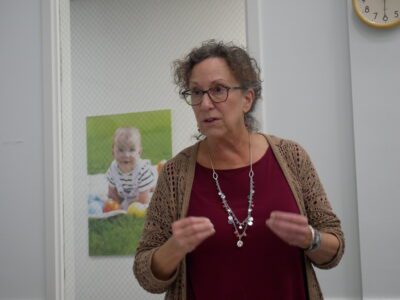
When I spoke with Durham’s own Kate Goodwin, founder of Kate’s Korner Learning Center, she told me, “I hope Gov. Stein’s task force will center its efforts on driving sustainable, long-term change. The crisis we face in early childhood education has been building for over four decades. To move from crisis to stability, we must begin by healing the workforce and redefining how we measure success in this field.”
Related reads

A challenge that we’ve watched build over the course of decades won’t be reversed overnight, but it’s time to try to build something better for the working families of our state. The lack of child care — and the lack affordability — are huge factors limiting upward mobility in our state. If a working parent has to spend an entire annual salary — or even over 50% of one — on child care, that is a serious barrier to joining the workforce and a serious barrier to building a home in North Carolina. If we want to be the best state to live, work, and raise a family, we have to do better than this for the backbone of our communities.
North Carolina has a child care crisis — and it’s untenable for working families. Parents should have the economic freedom to participate in the North Carolina economy — or even take career risks — without struggling to find and afford child care. Low availability and high costs are sending a clear signal to lawmakers that this market is broken. Now it’s up to my colleagues and I to do something about it.