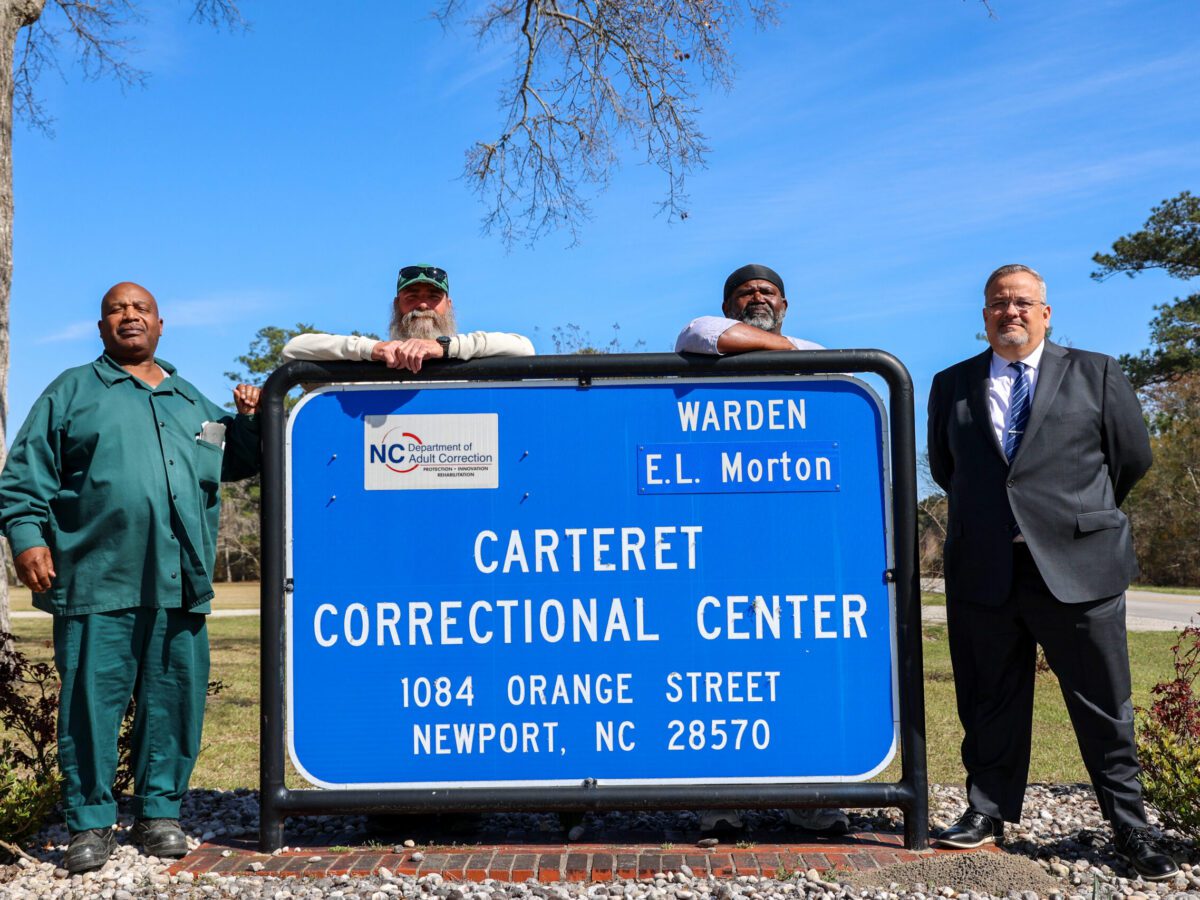
At Carteret Correctional Center in Newport, something extraordinary is taking place. Behind prison walls, where too many stories are often reduced to mistakes and sentences, Carteret Community College is helping write a different kind of ending one rooted in education, accountability, dignity, and hope.
Through workforce training, personal development, and the innovative L.I.F.E. program (Lessons in Future Endeavors) the college is proving that second chances are not just compassionate; they are necessary. They are built through preparation. They are sustained through support. They are made real when people are given the tools to return to society ready to succeed rather than struggle.
 Sign up for the EdWeekly, a Friday roundup of the most important education news of the week.
Meeting a critical need
The L.I.F.E. program was created because there was a need no one else had fully addressed.
According to program background provided by the instructor, the class began after an incarcerated man asked for a course that could help people who had been in prison for decades and no longer understood the world waiting beyond the gate.
In response, the pre-release curriculum was adapted into something more targeted, a course designed specifically to support people with life sentences as they work toward MAPP, or Mutual Agreement Parole Program, readiness.
The course now includes digital literacy, financial literacy, personal advocacy, housing, employment planning, family reunification, trauma awareness, empathy work, and release preparation. The program was accepted by Carteret Community College on Jan. 21, 2026, and today serves students who have collectively spent 612 years incarcerated, with an average incarceration length of 38 years.
But the impact of that need and the response to it is not theoretical. It is already being seen inside the facility.
A partnership driving real change
That real-world impact is what stands out most to Associate Warden Timothy Maulin, who has seen firsthand the impact of this growing partnership inside Carteret Correctional Center.
Maulin shared that the L.I.F.E. program, developed with Patricia Benefield, quickly stood out as something meaningful and much needed. He described it as providing something many of these men have lacked for years — real direction. After feeling, in his words, “stuck in a ditch,” students are now beginning to understand the steps needed to prepare for release, pursue MAPP, and build a life on the outside.
That progress builds on the college’s broader efforts within the facility. In December 2025, 19 individuals completed programs in High School Equivalency, Horticulture & Landscape, and Masonry, while earlier that year, six students in the Boat Building Academy finished a 144-hour workforce training program focused on marine trades and workplace readiness.
Together, these initiatives demonstrate what is possible when education and opportunity are made accessible.
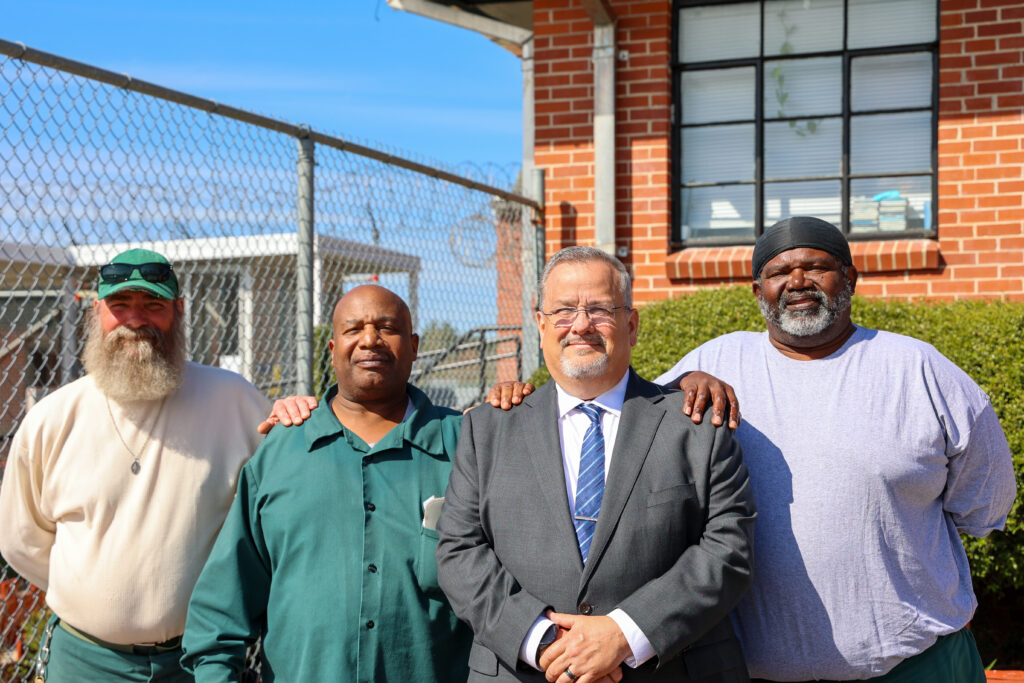
Maulin also emphasized the importance of consistency and care, noting Benefield’s ongoing commitment to her students. He made clear that the facility is “100% open” to programs like these, recognizing their role in filling long-standing gaps and supporting successful reentry.
Over time, Maulin said his own understanding of reentry has evolved, and he now sees the tremendous potential these men have to succeed. That belief is reflected in the college’s approach — treating individuals as students, not labels, and creating an environment where dignity and learning go hand in hand.
Through programs like L.I.F.E., students are gaining practical skills in communication, employment readiness, financial literacy, and technology — tools many have never had the opportunity to develop. This kind of preparation is essential. It is not enough to encourage change; individuals must be equipped to achieve it.
For men like Larry March, 64, incarcerated for 40 years; Joseph Annandale, 64, incarcerated for 39 years; and Meldon Collins Jr., 62, incarcerated for 35 years; that belief has become deeply personal. Their stories are not simply about serving time. They are about using time differently to learn, to reflect, to heal, and to prepare for the possibility of reentering society as better men than the ones who first entered prison.
A lifelong commitment to learning
Larry March speaks with the steady wisdom of someone who has learned that education is not a moment, but a lifelong practice.
When he first entered prison, he said he had very little formal education. Over time, he earned his GED from Wake Tech University and went on to complete a bachelor’s degree in business administration from Shaw University where he was a part of the CAPE program and the last graduating class of 1996.
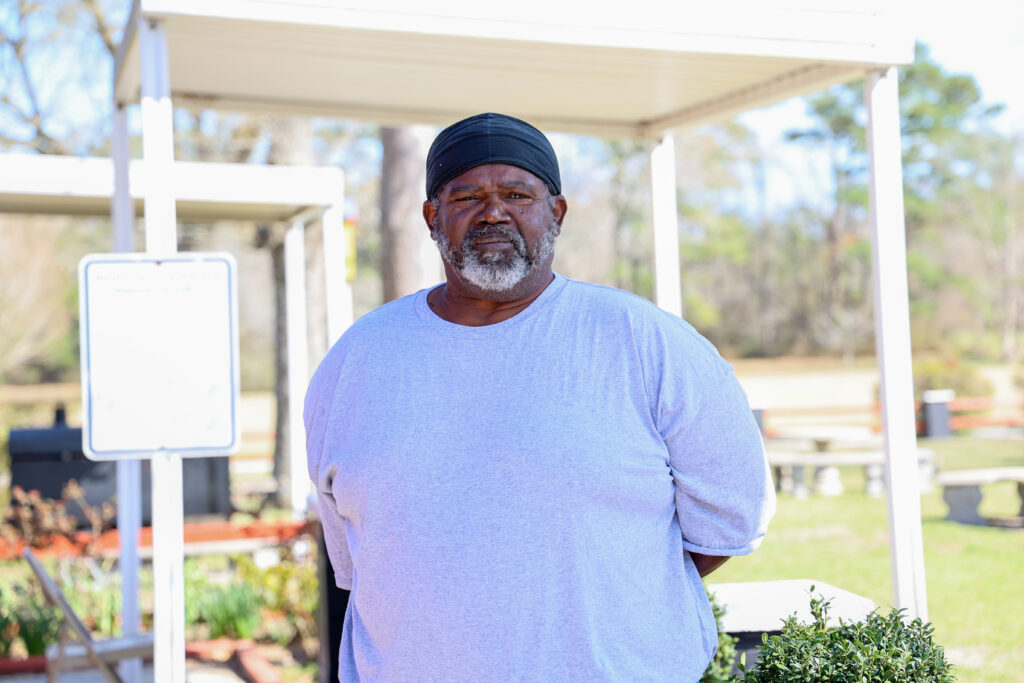
Even after decades of incarceration, he has never stopped pursuing growth. For March, education is not just about a credential. It is about becoming mentally prepared for life, family, and responsibility.
He spoke movingly about his children and grandchildren, and about his desire, when his time comes, to be able to pour into their lives with the knowledge he has gained. He wants to return not empty-handed, but equipped to guide the next generation.
For March, education is not something that ends. It is something you live every day.
His words cut through every stereotype. March understands that prison may confine the body, but it does not have to imprison the mind. That is why he values Carteret Community College so deeply. These instructors are not just sending lessons through the mail. They are showing up. They are stepping inside the facility and meeting students where they are. For March, that matters. It tells him that his life is still worth investing in.
A shift in perspective
Joseph Annandale’s story carries that same truth, but through a different lens. He described himself as an angry young man when he first entered prison, a man with a limited education and a narrow view of the future.
He left school in the 11th grade to work, not yet understanding how much education would shape the rest of his life. Later, after seeing others pursue college opportunities, he realized he first needed to earn his GED. He did, and that achievement changed everything. Education, he said, broadened his horizons. It freed his mind. It kept him from falling into the darkest mental spaces that often come with a lengthy prison sentence.
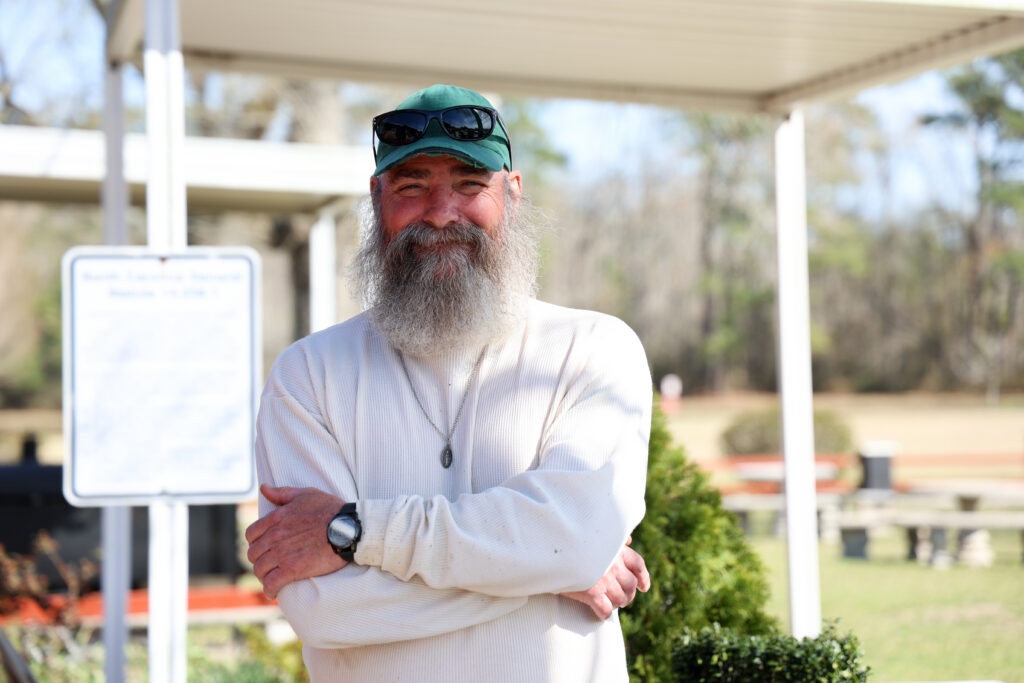
Today, Annandale speaks about learning not as survival alone, but as responsibility. He has completed coursework in culinary arts, engine repair, and other academic subjects over the years, but he says the L.I.F.E. class through Carteret Community College is different from anything he has experienced before. He describes it as cutting-edge, unprecedented, and urgently needed for people serving life sentences.
For the first time, he sees a clear path to understanding what MAPP requires and how to prepare for it. What had once felt like confusion and dead ends now feels like direction.
Perhaps most powerful is Annandale’s reflection on one of the program’s empathy assignments. Students were asked to put themselves in the shoes of victims and family members and consider how their actions changed other lives. That kind of work is not easy. It is deeply uncomfortable. But it is necessary.
Annandale shared that he had never truly sat and thought about the wider emotional impact of his actions in the way this class required him to do. That kind of reckoning is not performative. It is the foundation of accountability. And accountability is essential to rehabilitation.
Lifting others through education
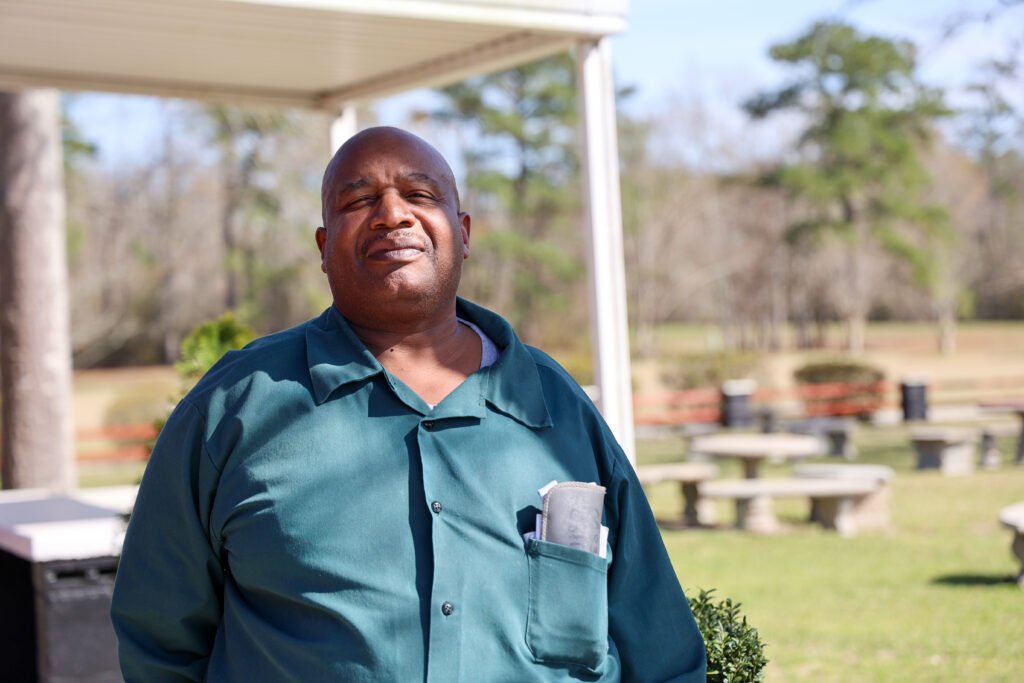
Meldon Collins Jr. brings yet another dimension to the story. Where March emphasizes wisdom and Annandale reflects on internal change, Collins’ journey is marked by service.
He said that even while incarcerated, he has felt compelled to help other people move forward. Education, for him, is not just personal progress. It is a way to lift others. He has served as a teacher’s assistant, helps with GED classes, and encourages other incarcerated men to enroll, especially those who feel ashamed of how little they know or how far behind they have fallen.
Collins understands something crucial: Many people do not avoid education because they do not care. They avoid it because they are embarrassed. They are afraid. They do not want to admit what they never learned. But he has seen what happens when someone finally takes that first step. He has watched men improve their reading, earn credentials, develop trades, and leave prison with real skills.
He has seen education change not only knowledge, but confidence. He has seen it open doors to entrepreneurship, employment, and dignity.
A shift in belief
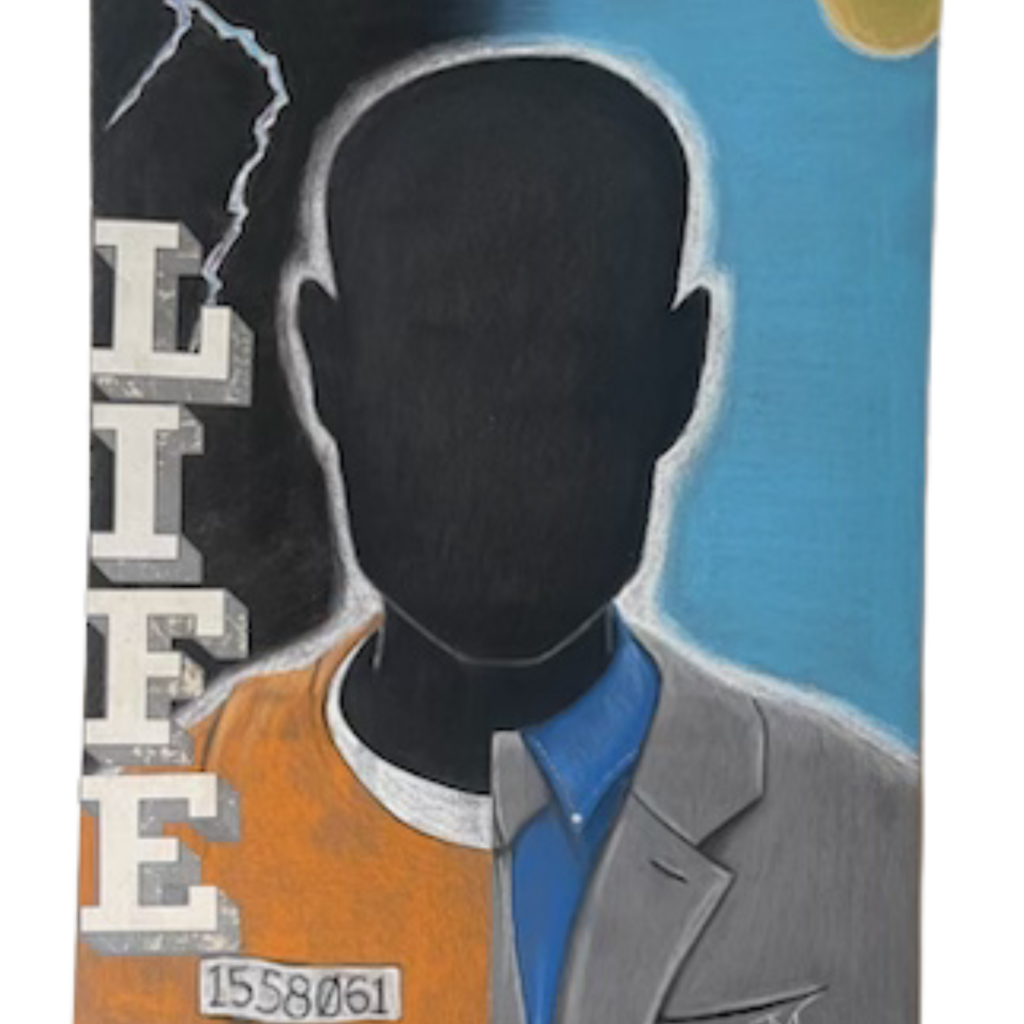
The instructor behind L.I.F.E. wrote that one of the most powerful changes she has seen is that students now laugh and smile more than they did when the class began.
She described the empathy art project as especially moving, as men created poetry, songs, drawings, and collages reflecting on how their crimes affected others. She also wrote that the most rewarding part of teaching the course is that both she and her students have begun to believe that successful release from incarceration is truly possible. That belief is not small. It is life changing.
For March, it means hoping to one day speak wisdom into the lives of his grandchildren. For Annandale, it means finally seeing a path instead of a wall. For Collins, it means continuing to help others rise, even while still fighting for his own chance.
Their stories remind us that transformation is rarely loud. Often, it happens quietly in a classroom, in a hard conversation, in a written reflection, in the decision to keep learning when no one is forcing you to. It happens when a college is willing to walk into difficult spaces and say, “You still matter. Your future still matters. Your effort still matters.”
Building momentum through programs
That long-standing commitment is echoed on the college’s side as well.
Perry Harker, vice president of Workforce Continuing Education at Carteret Community College, emphasized that this work is not new, it is the continuation of more than three decades of partnership.
For over 30 years, the college has worked alongside Carteret Correctional Center and the local Probation and Parole Office to provide education, training, and opportunity to individuals during incarceration and throughout their transition back into society.
For Harker, reentry is about more than programs, it is about the future of the community. He noted that reentry is not just a criminal justice issue, but a workforce, economic, and human potential issue.
When individuals return to Carteret County, access to education, skills training, and support systems is critical. Without those opportunities, individuals face cycles of unemployment and instability that impact not only their own lives, but also families, employers, and the broader community.
This is what real rehabilitation looks like.
It looks like a man learning how to explain his past honestly to an employer.
It looks like a student practicing how to write a professional letter on a computer after decades away from technology.
It looks like learning how to budget, how to advocate, how to rebuild family relationships, how to make lawful choices, and how to live in a world transformed by digital systems. It looks like accountability paired with preparation.
Preparing for life beyond the gate
As these men look toward the future, their vision extends far beyond their own success they are thinking about what comes next for others who will walk the same path. When asked what programs they would like to see expanded, their answers were not driven by wishful thinking, but by lived experience.
Technology and computer literacy rose to the top of that list. For men who have spent decades behind bars, the outside world has changed in ways that can feel overwhelming. As Larry March explained, something as simple as using a cellphone or navigating a self-checkout machine can become a barrier. After so many years away, even basic technology feels unfamiliar. For him and others, learning how to operate in today’s digital world is no longer optional, it is essential.
Joseph Annandale emphasized the need to expand programs that directly connect to employment courses like computer training, electrical work, and culinary arts. He spoke not only as a student, but as someone thinking about the bigger picture. The more opportunities that exist inside correctional facilities, the better prepared individuals will be when they return home and the less likely they are to return to prison. His message was clear: What is invested on the inside directly impacts what happens on the outside.
For Meldon Collins Jr., the focus was on hands-on vocational training the kind of skills that translate immediately into income and independence. Not everyone will pursue academic degrees, but programs like small engine repair and other trade certifications can provide a direct pathway to stability. These are the kinds of opportunities that allow someone to leave prison and contribute right away, rather than struggle to find their footing.
For these men, education is no longer just about learning, it is about readiness. It is about ensuring that when the door finally opens, they are prepared not just to leave, but to move forward with purpose, capability, and the determination not to return. Nearly everyone who enters prison will one day return to society. The question is not whether they will come home. The question is who they will be when they do.
Will they return with no preparation, no skills, no confidence, and no support? Or will they return with education, trades, structure, self-awareness, and a clearer understanding of how to build a lawful and productive life?
Programs like these offer a meaningful path forward, helping individuals build skills, reconnect with their families, and return to their communities with purpose. More than anything, they restore something that can be lost over time: the belief that a life can still hold value, meaning, and the possibility of something better.
Building bridges, not barriers
That is what Carteret Community College is doing at Carteret Correctional Center. Not simply offering classes, but building bridges, creating pathways, and preparing individuals not just to leave prison, but to live differently when they do.
Because when we invest in education inside prison, we are not excusing the past. We are protecting the future.
We are choosing preparation over hopelessness. Restoration over resignation. Opportunity over repetition.
We are choosing to believe that the best version of a person does not always appear at the beginning of the story.
Sometimes — with the right support, accountability, and education — it emerges much later, stronger, wiser, humbler, and finally ready.
This piece was originally published by Carteret Community College and is republished here with permission.

Recommended reading