
Perspective | In pursuit of equity, focus on teachers first

Editor’s note: This article first ran in the Charlotte Observer on Sunday, Jan. 19 ahead of a the first meeting of the Charlotte-Mecklenburg Schools Community Equity Committee on Jan 21. During that meeting, the 40-member committee divided itself into six subcommittees, one of which will focus on the “diversity, experience, performance and qualifications of faculty at each school,” according to reporting from WFAE.
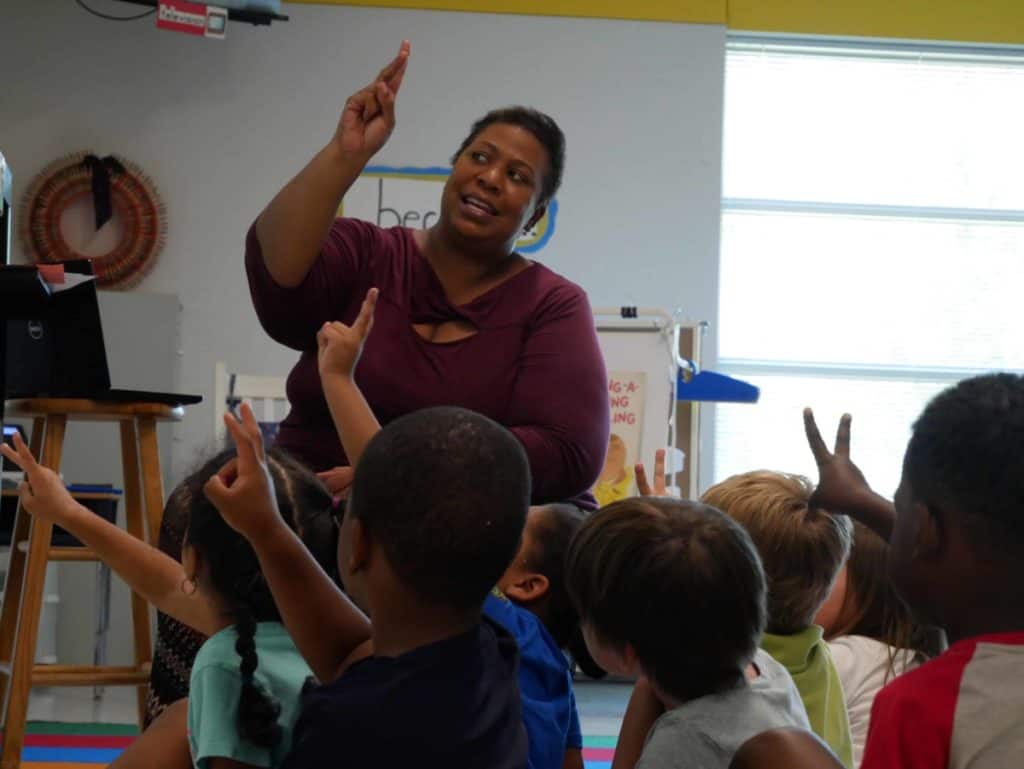
“Raise our expectations!” That’s always been Julie Hill’s mantra as a teacher coach in CMS elementary schools. “We have to stop letting excuses get in our way, like language barriers or turbulent home lives. Put all that to the side and focus on what we can control in the classroom,” says Ms. Hill, part of the CMS Teacher Leader Pathway program that promotes highly effective teachers into coaching roles, often supporting beginning teachers. “Every child can grow no matter where they start.”
So instead of staying on the same reading level for four weeks, she challenges teachers to accelerate to the next level in two weeks. Her focus on higher expectations for all students has significantly increased the number of kindergarteners on track for reading at Governors Village STEM Academy, a Title 1 CMS elementary school recently removed from a list of the state’s low performing schools because of its improved performance.
Now we have an opportunity to expand the pool of teacher coaches like Ms. Hill throughout CMS and North Carolina – and help close a persistent achievement gap that’s holding back thousands of students in low-performing, economically disadvantaged schools. On Jan. 21, the CMS Community Equity Committee met for the first time after being created by the School Board to find ways to reduce inequities in student performance. While the committee could explore many different areas of equity, more effective teachers must be their priority. Research proves that teachers, more than any other in-school factor, drive student success.
The status quo isn’t meeting the needs of our students. For example, in CMS, just 29.3% of economically disadvantaged third graders are reading proficiently, compared to 57.9% of third graders who are not economically disadvantaged. Effective teachers, and those coached by effective teachers, are the difference makers who can erase these inequitable outcomes.
When we do the math, the potential is enormous. In CMS alone, there are more than 1,700 teachers with three years or less experience. With an average of 20 students per class, a total of 34,000 students could benefit from their teacher being coached by someone like Ms. Hill, providing real time feedback, co-teaching and reviewing small group plans. In CMS, as across the state, it’s the high-poverty schools that have far more beginning teachers – a clear inequity.
The imperative for access to effective teachers is underscored by a recently released report: Sound Basic Education for All: An Action Plan for North Carolina by WestEd’s national researchers. The report was prompted by the Leandro law suit that began in the mid-1990s and established the state’s constitutional duty to provide all children a sound basic education. Of the key recommendations, WestEd flags the potential for our most talented teachers to bring up the next generation of teachers. The report implores our state to provide high-quality mentors to novice teachers and to implement advanced teaching roles — ultimately, retaining and extending the reach of high-performing teachers.
More than two decades have passed since the Leandro mandate. State policy makers also need to recognize the urgency of recognizing, measuring and retaining our best teachers. That’s why next month The Belk Foundation is convening a conversation in Raleigh on Recognizing Top Talent: National Voices on Identifying and Retaining NC’s Best Teachers.
Ms. Hill, the 30-year teacher veteran, is beginning to consider retirement and passing the baton to the next generation of educators. When it comes to coaching fellow teachers how to set and meet higher expectations for students, she says “we just have to change the mindset.” It’s a lesson we all need to heed for the benefit of 1.5 million North Carolina K-12 students.