As the school year begins to wind down, classrooms across the country start to feel different.
The rhythm of the year shifts. Final projects are being completed, desks are being cleaned out, and students begin counting the days until summer. Teachers find themselves reflecting on the journey that began months ago with new names, new faces, and new possibilities.
But for many educators, the end of the school year is not just about finishing lessons or preparing report cards. It is about hope.
Hope for what students have accomplished. Hope for the growth we have witnessed. And hope for the future that lies ahead of every child who has walked through our classroom doors.
The stories students carry
Every student enters school carrying more than a backpack.
Inside our classrooms sit young people who are navigating challenges that are often invisible to the outside world. Some students come to school hungry. Some are coping with difficult home environments. Others carry the quiet weight of anxiety, grief, or uncertainty.
Yet each morning, they still show up.
They sit in our classrooms. They open their notebooks. They try.
Over the years, I have come to understand that teaching is not just about delivering content or preparing students for assessments. It is about recognizing the whole child and understanding that learning does not happen in isolation from the lives students are living.
In many ways, the stories that fill our classrooms are the same ones we don’t always have time to slow down and name. The quiet struggles. The silent questions. The moments when a student is not asking for help out loud, but hoping someone notices anyway.
Those stories matter.
They matter in our classrooms, but they also matter beyond them.
Because when we begin to tell those stories, when we give language to what our students are experiencing, we begin to shift how others see education. We help families, community members, and even policymakers understand that behind every data point is a child with a real and complex life.
Where hope meets learning
When we think about hope in education, it is easy to imagine it as something emotional or abstract.
But hope is deeply connected to learning.
Students who feel safe, supported, and valued are more likely to take academic risks. They are more willing to try difficult problems, ask questions, and push through challenges. When students believe that someone in their classroom believes in them, they begin to believe in their own ability to grow.
In my own classroom, hope often takes shape in small but meaningful ways: a snack from our classroom “Cozy Kitchen” so a student can focus on a lesson instead of hunger; a quiet check-in after class with a student who seems withdrawn; a moment of encouragement when a student is ready to give up on a challenging assignment.
And sometimes, it looks like intentionally creating space for stories, helping students see pieces of themselves reflected, and reminding them that what they are carrying is seen and valid.
These moments may seem small, but they remove barriers that can stand between students and their ability to learn.
When those barriers are lifted, something powerful happens.
Students begin to engage more deeply in their academics. They begin to see themselves not just as learners, but as individuals capable of success.
 Sign up for the EdWeekly, a Friday roundup of the most important education news of the week.
The end of the year tells a story
By the end of the school year, teachers often look around their classrooms and realize something remarkable has happened. The students who walked in during August are not the same students sitting at those desks in May.
The student who once hesitated to raise their hand now participates confidently in discussions. The student who struggled with assignments has discovered new strategies and perseverance. The student who once felt unseen has found their voice.
Academic growth is visible in grades, projects, and assessments. But the most meaningful growth is often something deeper — confidence, resilience, belief.
These are the outcomes that cannot always be measured on a test, but they shape the trajectory of a young person’s life. And often, that growth begins in the moments when students feel seen, when their stories are acknowledged, and when someone chooses to respond with care.
Telling the stories that matter
As educators, we hold more than lesson plans. We hold stories.
Stories of resilience, stories of struggle, stories of growth that would never fully show up in a test score or report card.
Too often, those stories stay within the walls of our classrooms. But they were never meant to stay there.
When we share them, in conversations, in writing, in spaces where decisions are being made, we begin to advocate in a way that statistics alone cannot. We humanize the work. We remind others what is truly at stake.
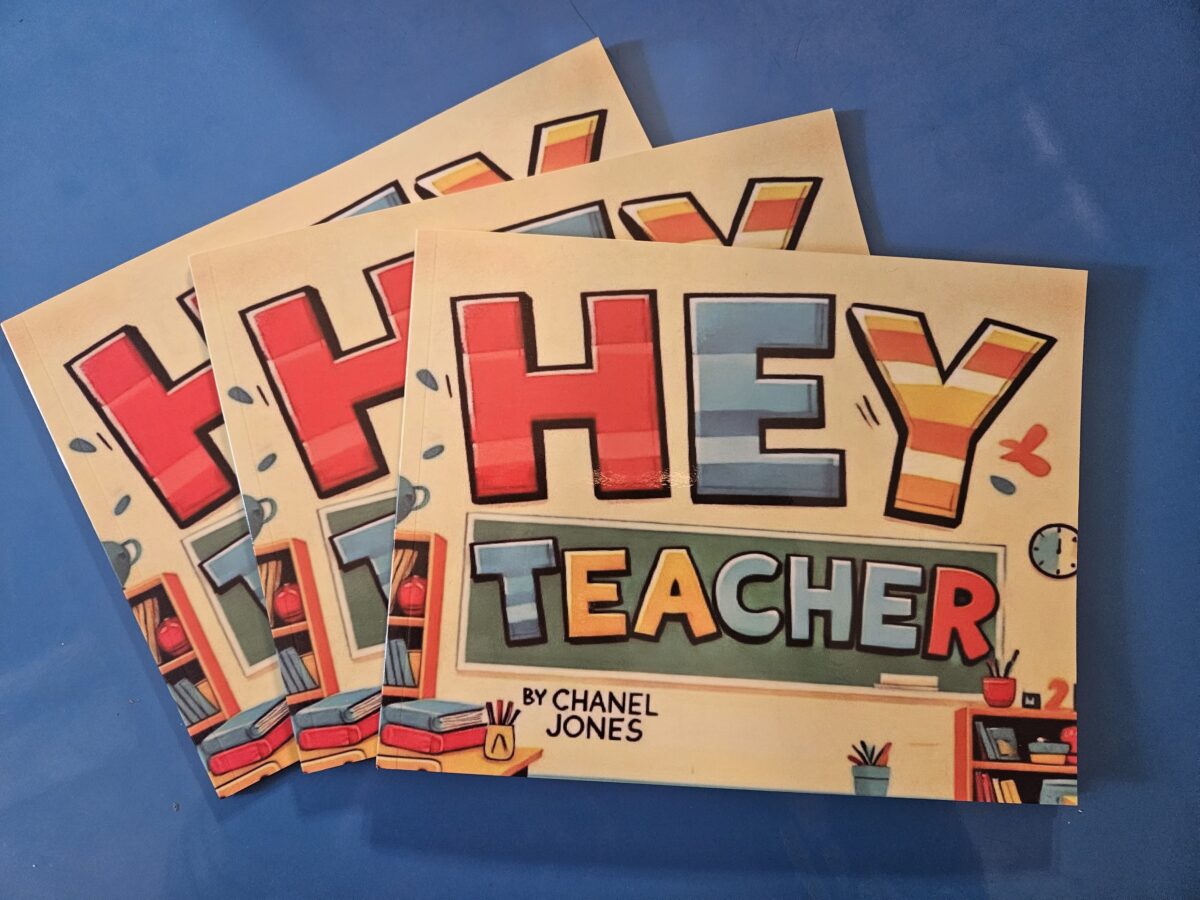
In my own journey, putting these experiences into words became a way to honor my students and ensure their realities were not overlooked. What started as moments in the classroom became stories that could be shared more widely, not to speak for students, but to make sure their experiences were not invisible.
And that invitation does not belong to one book or one teacher — it belongs to all of us.
Tell the stories.
Tell them to your colleagues. Tell them to your community. Tell them to the people shaping policies and decisions.
Because when people understand the lived experiences of students, they are more likely to respond with compassion, urgency, and action.
A future built on belief
If we could fast forward beyond the last day of school, beyond the summer, beyond even the next few years, we would see something even more powerful. We would see the students who once struggled standing tall in their own lives.
We would see the quiet ones finding their voice, the discouraged ones rediscovering their confidence, the uncertain ones stepping into purpose.
Not because their journeys were easy, but because somewhere along the way a teacher chose to see them, to listen, and to believe in them.
As educators, we rarely see the full impact of our work in the moment. The seeds we plant may take years to fully bloom. But at the end of every school year, we are given a glimpse of what hope can do.
We see it in the student who finally understands a concept they once found impossible. We see it in the confidence of a child who now knows they belong in the classroom. And we see it in the quiet realization that the work we do each day matters far beyond the walls of our schools.
Because sometimes, years later, a student will return and say the words every teacher hopes to hear: “Hey teacher… I made it.”

Recommended reading