
Perspective | Early childhood development through reading aloud

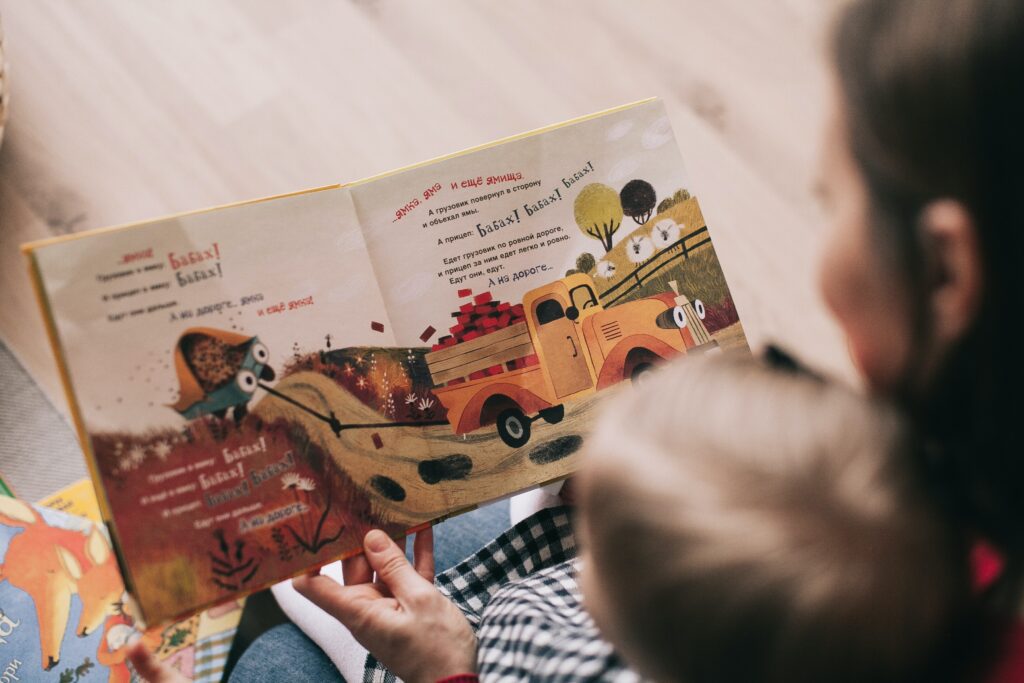
National Read Aloud Month occurs annually in March. The majority of young children’s brains are formed in their early years, and experiences that center around nurturing from a caregiver help support this healthy development.
Reading aloud is one of the best ways to not only promote children’s strengthened brain development but to plant seeds for a lifelong positive association with reading.
What the research says about reading
The benefits of reading aloud to young children are well established — the act promotes emotional and social development, better communication skills, and cognitive ability. Experiencing language-rich interactions can cultivate a better recognition of sounds, a broadened vocabulary, and an increased attention span as children are encouraged to concentrate on a slower unfolding of events (as compared to other forms of engagement or entertainment).
Reading together also provides a safe way of exploring strong emotions in the context of a story, as well as an enhanced understanding of the world. It can be a great way to start conversations that can help a child navigate familial or broader societal challenges.
Putting reading into action
The National Center for Families Learning provides some ideas for celebrating National Read Aloud Month: participating in a reading challenge, partnering with your local library to take part in a read-aloud with a resident librarian, or planning a family service learning project that is centered on reading, like reading aloud at a local children’s hospital. These activities all provide an engaging way for caregivers and children to connect and to provide exposure to words beyond the classroom.
Opportunities for reading aloud also abound at more everyday moments throughout your day — a trip to the doctor’s office or grocery store can be a great time to grab a magazine or book and ask your young one to point out words they know and to learn some new ones. For parents, whose obligations provide an obstacle to making time, these shorter on-the-go techniques can help with carving out time to reach 15 minutes a day.
There are several resources that provide access to extensive collections of diverse titles, activities, games, and reading materials, including:
Connecting to Pathways: Reach Out and Read
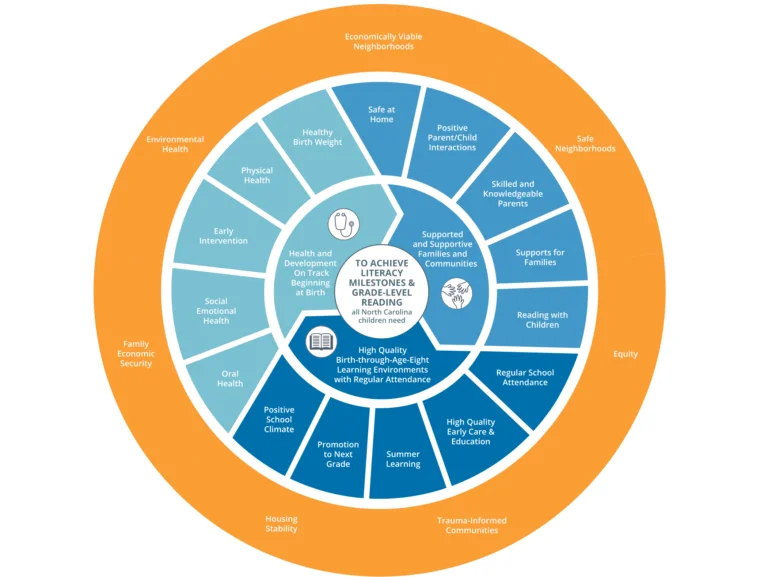
The Pathways Action Map provides a snapshot of initiatives working across the state of North Carolina to shift the needle on grade-level reading. It is organized into areas that focus on specific action areas that are important in working towards this goal.
Our third expectation focuses on ensuring North Carolina’s education system is accessible and high-quality — that North Carolina’s birth-through-age-eight education system is available to all, user-friendly, culturally-competent, employs a racially diverse, high-quality workforce, and supports all aspects of children’s development, including literacy and language development, cognition, approaches to learning, physical well-being, and social-emotional development.
One such action area is an investment in two-generation interventions. Several initiatives are working in this space, one of which is statewide: Reach Out & Read (ROR). ROR is a two-generational intervention that works at the intersection of health and education, designed to foster intentional skill-building in parents, resilience in families, and positive bonding between children and families.
Since 2019, participating ROR providers have prescribed books and shared guidance on reading together with more than 272,000 children and families across NC. Their work spans several demographics — the initiative has created a guide for families and medical providers of children with disabilities, developed linguistically-appropriate materials for Reach Out and Read providers who serve Spanish-speaking families, and established an early literacy initiative to serve American Indian and Alaska Native communities as well as extended support to military families.
Dashboard explores NC data behind literacy
The Action Map’s companion tool, the Pathways Data Dashboard, provides statewide data illustrating indicators that align with reading aloud, disaggregated by race and ethnicity. Take a look at the dashboard to explore data around the percentage of books in homes and other measures that provide a look at how our state is doing when it comes to reading with children.
The Campaign for Grade-Level Reading engages communities
Since 2015, the North Carolina Early Childhood Foundation has served as the state lead for the Campaign for Grade-Level Reading in North Carolina. The national Campaign for Grade-Level Reading has mobilized 300 communities across the country to ensure that more children from low-income families succeed in school and graduate prepared for college, a career and active citizenship. It is a collaborative effort by foundations, nonprofit organizations, business leaders, and government agencies supporting children’s school readiness, summer learning, and regular school attendance.
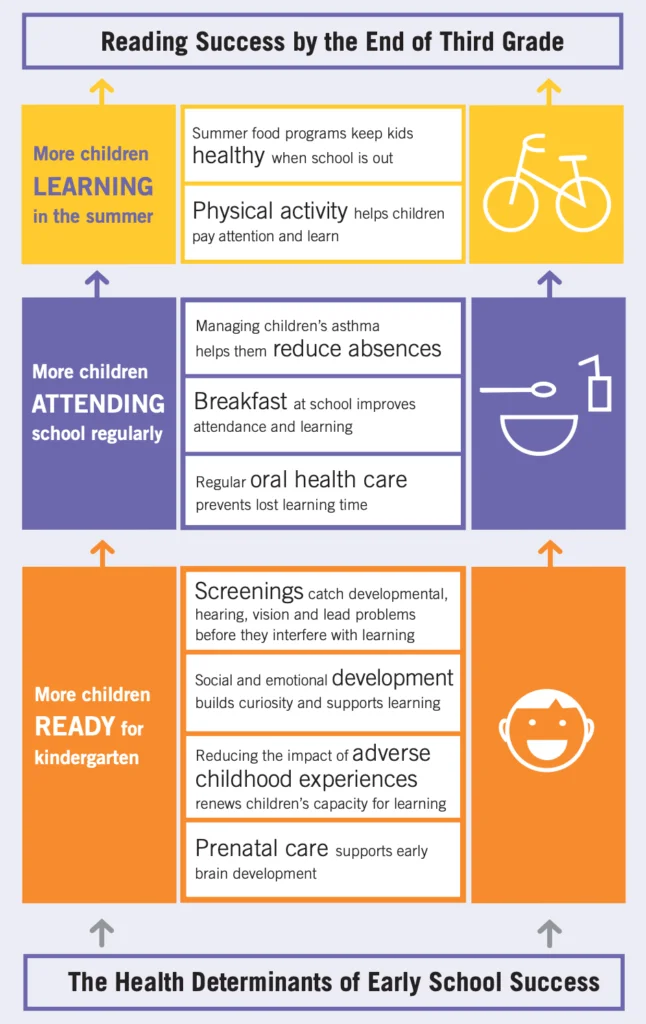
North Carolina’s Campaign for Grade-Level Reading has a vision where diverse and inclusive communities grow thriving readers, beginning at birth and continuing through third grade, so each child is prepared for success. Thirteen community collaboratives, including Book Harvest and Ready for School, Ready for Life, which are also featured on the Action Map, are currently participating in the NC Campaign.
We supported Book Harvest in creating a Parent Action Team to deepen engagement with parents of the children they serve. Parents helped develop materials and recommended outreach opportunities for Durham parents to support their children’s summer learning. From this work in Durham, we created our Summer Learning Toolkit in both English and Spanish. Our 2023 Summer Learning Toolkit will be released in early April for communities to share widely this summer and encourage summer reading.
Keep in touch with NCECF
Visit our info page to learn more about the Pathways Action Map and consider adding your work. Share it with others in your network and community, whose work you think should be spotlighted. We want to utilize the map as a resource to build awareness of innovation, make connections, and identify gaps and opportunities that can help guide policy-making, advocacy, funding, and capacity building.