
Perspective | Creating moments that matter in the classroom

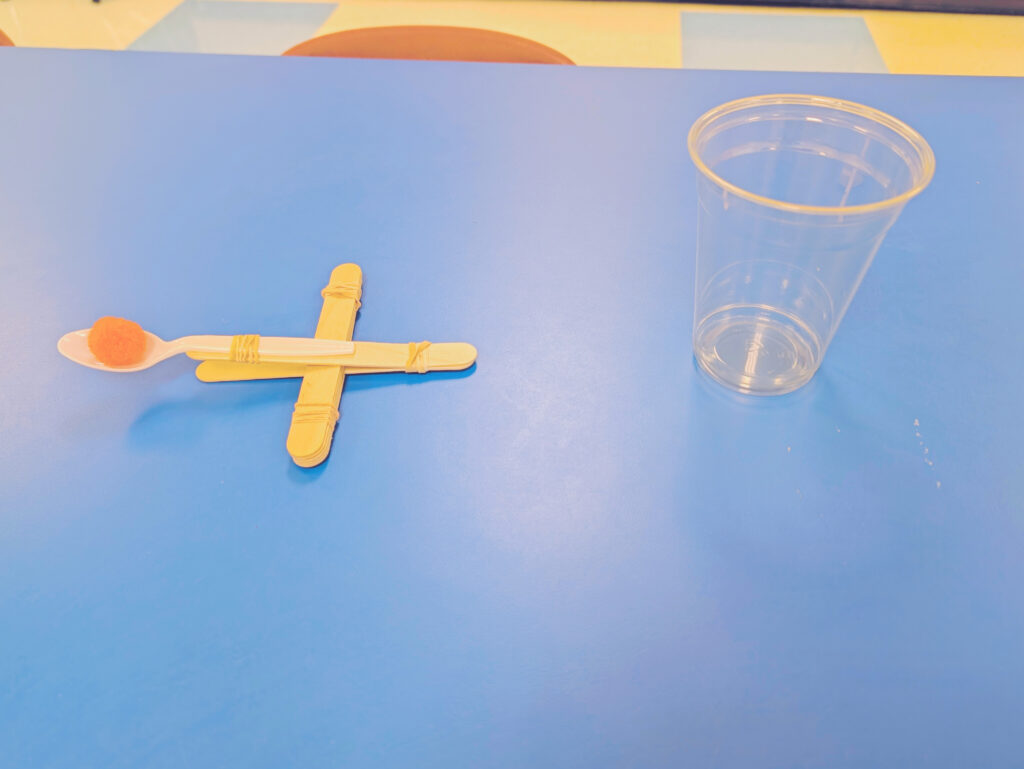
Last October, I planned to create catapults with my elementary STEM students involving little pumpkins (orange pom-poms) because I just love a good fall theme.
In the process of brainstorming, my husband told me about an annual competition that occurs in western North Carolina at the Punkin Chunkin Festival. They launch pumpkins using air cannons, catapults, trebuchets, and other machines. How awesome!
I knew this was something I could add to the lesson to make it just 1% better (more about that later). I showed video clips of the competition, and we covered SO much content, such as design thinking, forces, and North Carolina history.
It was a huge success. The students loved launching their catapults. It was amazing to see them redesign and adjust as needed to reach their goal, which was to launch their “punkin” into a cup.
I recently asked them what they remembered from this lesson. They recalled the task itself, scientific concepts like changing the force, and the history of the Punkin Chunkin contest.
Students remember the fun stuff like theme days, special events, cool technology, and experiments. When those moments are paired with strong instructional decision-making, learning sticks. As an educator, the goal isn’t just to create a fun moment, but one that helps students remember the content too.
 Sign up for the EdDaily to start each weekday with the top education news.
Why memorable moments matter
Take a second and remember something you learned in elementary school.
For me, one example takes me back to kindergarten. I remember eating “green eggs and ham” after we read the iconic Dr. Seuss book. I will never forget that moment, because I was so excited to actually eat “green” eggs. That one lesson more than likely cemented my love of reading.
Research shows people tend to remember moments that are connected to strong
feelings. In the academic literature, these are considered Key Memorable Events or
KMEs. They don’t have to be a huge theme day or an elaborate activity. They just have to be memorable, meaningful, and often connected to emotion, according to
researchers Ofer Marmur and Boris Koichu.
Incorporating teacher expertise
How can teachers create productive memories with their students? This feels so
important right now.
A 2025 report from the Center for Democracy and Technology found that 85% of teachers and 86% of students used artificial intelligence (AI) during the 2024-25 school year, and half of students said using AI in class made them feel less connected to their teachers. Think of all of the technology used at home as well, like iPads and video games, which can pull students’ attention in even more directions.
With more students using technology, it’s important for teachers to lean into hands-on learning and other engaging learning experiences that get students interacting with the physical world. One place to start is with a lesson that they have already planned, turning the ordinary into something students remember.
Most of us can probably think of a teacher who did something or said something that helped the content stick. I had a biology teacher in high school who knew that mitosis and meiosis were easy terms to mix up, so she came up with a silly saying: “Mitosis makes my body. Meiosis makes me.”
She purposely pronounced meiosis incorrectly so that it would flow. I can remember her saying it, and then we would say it. I can still hear it in my head now, and guess what? Those processes have stuck with me! I will never forget the difference between the two.
Academic research also tells us that content is just one piece of the puzzle. Teachers need to know how to explain it in ways their students can understand. Together, content and pedagogical knowledge (how to teach it) are known as Pedagogical Content Knowledge (PCK).
Strong teaching involves knowing the students, understanding which strategies fit best, mastering the content, and checking for student understanding. As teachers learn more, gain more experience, and reflect on their teaching, their PCK can become richer.
Related reads

Making lessons just 1% better
I like to think of the “1% better” concept by Ron Clark, a nationally known teacher and co-founder of the Ron Clark Academy in Atlanta.
Teachers don’t have to plan elaborate theme days to make moments matter. All that has to happen is just to take a lesson or idea and make it one percent better.
If a teacher needs inspiration, they can check out online resources like Pinterest,
Instagram, or Facebook. They can also collaborate with peers and get inspiration from books and podcasts. Even conversations with family or friends can spark a great idea.
If you are a teacher interested in making classroom moments that matter, you can watch the replay of my online session, “Moments that Matter,” from Thursday, Oct. 15. This was a free session presented by the Kenan Fellows Program for Teacher Leadership as part of the fall semester of Not Your Average PD.
In the session, we explored examples from my own experience and the experiences of others and looked at ways to create meaningful, memorable, and productive moments in any classroom. These ideas can be used for all teachers, across all grade levels and disciplines.
To register for upcoming sessions, visit the Kenan Fellows website.