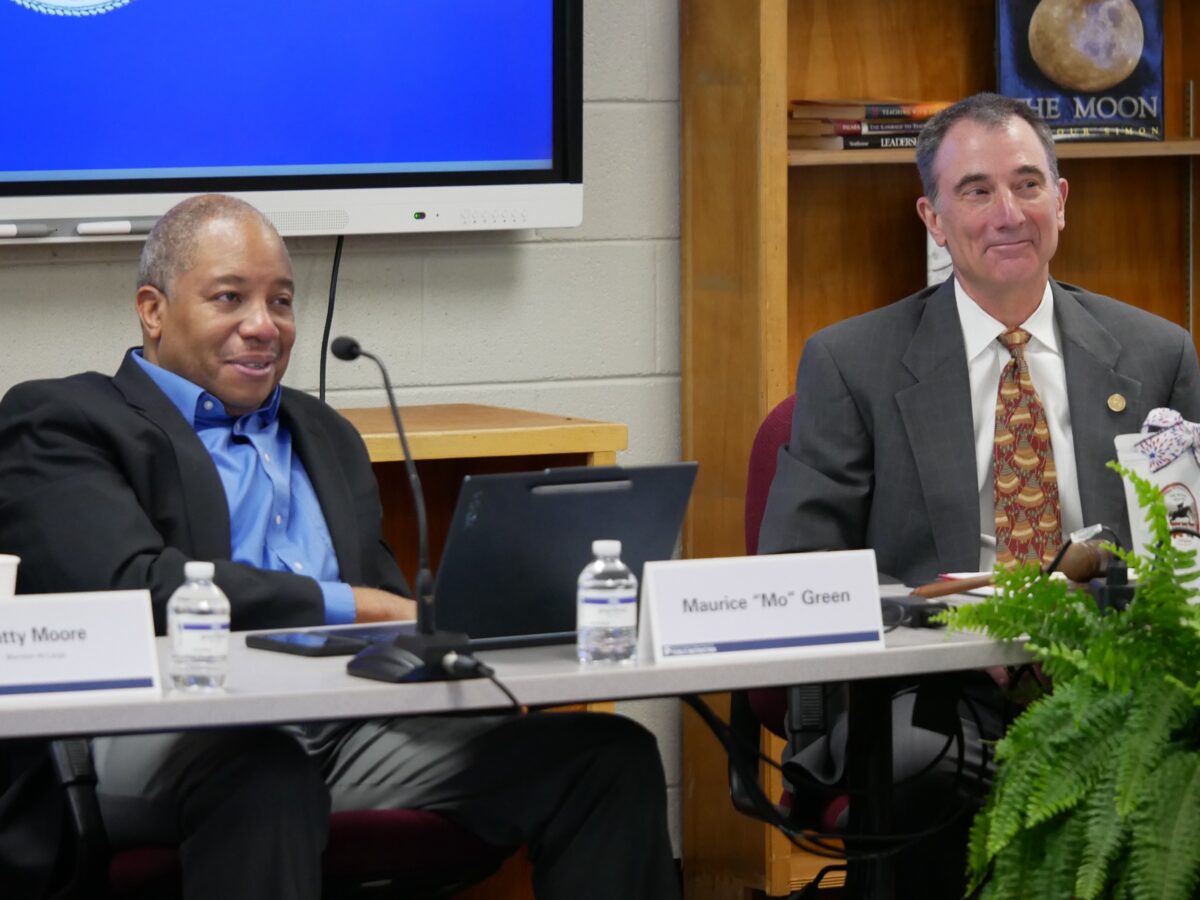
Editor’s note: These remarks are an excerpt of Chair Eric Davis’ opening remarks at the Feb. 4 State Board of Education meeting, later sent in a Board email. The remarks have been lightly edited.
I want to ground our work in the significance of this month: February, Black History Month. For those of us charged with stewarding public education in North Carolina, this is not an abstract observance.
Our system of public schools exists, in large measure, because during Reconstruction formerly enslaved people and the state’s first Black legislators demanded the right to education be written into our state’s constitution. And so it is. Public education in this state was not created as a convenience, it was created as a moral commitment — and a democratic necessity, born out of struggle and hope.
Black History Month is often misunderstood as a time to compress African-American history into four short weeks, and in truth, it’s an invitation to do the opposite.
 Sign up for the EdWeekly, a Friday roundup of the most important education news of the week.
The month is an invitation to recognize that Black history is foundational to our shared history, and should be reflected in what students learn in every month of the year. It’s also a moment to be honest, about where we have made progress, and where more progress is needed.
Research shows that while our student population has grown more diverse, North Carolina schools today are more racially segregated than they were in the late 1980s, with increasing concentrations of poverty and isolation that directly affect opportunity and outcomes for students.
That reality reminds us that access to education has always been contested, and that justice requires constant and deliberate progress. That history brings us directly to the moment we’re in today. The challenge before us is not whether education matters, we know it does. Rather, the challenge is whether we’re willing to dedicate the resources at the level our students, educators, and school leaders need, for the benefit of every North Carolinian and in a rapidly changing landscape.
Our public schools are educating students with more complex academic, social, and mental health needs, while our economy and society are placing increasing demands and expectations upon all of our students. At the same time, our schools are operating in a state that continues to underinvest relative to the scale of these demands.
Against that backdrop, the legislative priorities that our state’s superintendent will present today are not simply requests for funding or policy changes. They’re opportunities for the General Assembly to partner with this Board and the superintendent to fulfill our shared constitutional responsibilities to all North Carolinians.
Our partnership opportunities are grounded in research and successfully proven student-centered strategies. Research shows that investments in educator pay and advanced teaching roles directly increase student access to experienced and effective teachers, especially in high-poverty and hard-to-staff schools. Expanding literacy supports and math screeners strengthens early and sustained academic foundations. Funding for school health personnel, mental health supports, and nutrition ensures that students are ready to learn as they come through our doors.
Addressing school construction and technology needs recognizes that safe, modern learning environments are not luxuries. They are prerequisites for student success.
Each priority reflects a simple truth: When we support our educators and school leaders, students benefit. In fact, we all benefit from these investments.
Black History Month reminds us that public education in North Carolina has always been about more than systems and budgets — it’s about dignity, opportunity, and the belief that each and every child’s future matters to every one of us.
— Board Chair Eric Davis
The leaders who fought to establish public education did so with limited resources, but with a limitless vision. They probably even dared to be the best in the United States by 2030.
Today, our responsibility is to match that vision with action. I trust that we will do so in the spirit of partnership and purpose, committed to strengthening the terrific public schools that remain one of the most powerful engines of opportunity in the state that we all love.

Recommended reading