
Perspective | Being present at school matters

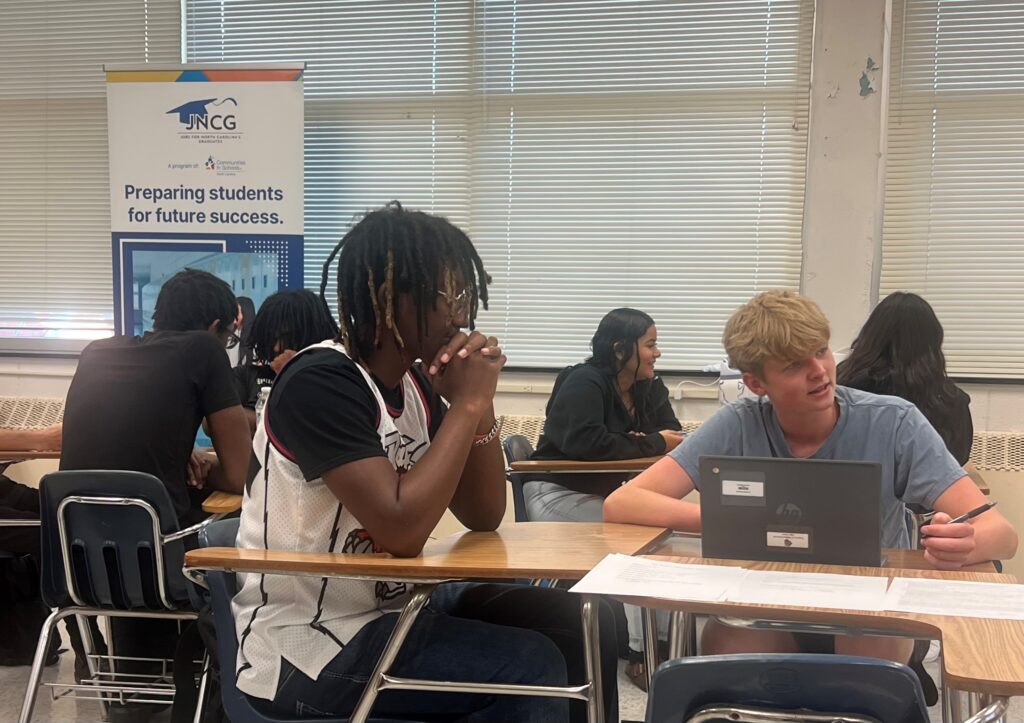
Editor’s note: Gov. Josh Stein issued a proclamation that September 2025 is “Attendance Awareness Month.” You can read the proclamation here.
The future of our communities is in our schools, yet for many students attending school regularly is a difficulty. In North Carolina, this difficulty is front and center with one-in-four, or 375,000 of the state’s roughly 1.5 million public school children, missing 18 days or more of school during the year, making them chronically absent. But the story is improving, and it can turn around if we all pledge to be present for our students and our schools.
This means that in a typical classroom of 20 students, four students regularly miss two days of school per month, leaving the teacher working to repeat lessons and catch students up — impacting the entire classroom. And do you remember when a teacher repeated a lesson you already learned? Were you tuned in and engaged? Unlikely. And the chronic absenteeism story only gets worse in rural areas of the state where six to seven students would be missing from that same classroom, according to a report by myFutureNC.
 Sign up for the EdDaily to start each weekday with the top education news.
Every day a student is absent, they are missing out on learning, engagement, and opportunities to grow. The effects of students missing class are not linear, but cumulative. A study reported by Attendance Works found that only 17% of students that were chronically absent in both kindergarten and first grade were reading proficiently in the third grade. While it is possible to still make up for this lost ground, students living in poverty are much more likely to be chronically absent because there is a lack of available resources to be able to catch up. On the flip side of this, lower income students who do regularly attend class benefit from it more than their high-income peers.
Why are the children missing? The answer lies in a complex set of factors including health problems, lack of resources and support systems, parental employment that may require older children to provide child care for younger children, family crisis, and student disengagement. This is not a problem we can police or punish our way out of — it requires a compassionate community-focused approach to get students into the classroom.
Response systems are in place in our schools, but they are often overwhelmed. During a visit with a principal, he shared that he told students he would show up at their homes to look for them if they were absent. He was sharing the depth of his care for them, but when you consider how many chronically absent students a school might have, it is also an unobtainable goal for a principal to show up on the doorstep regularly for each one. But each of us can help. And we must help if we want to ensure the best possible outcomes for our children and our state.
Each of us has a role in ensuring students are present in school.
For parents, create routines for bedtime, get to school on time, and talk about the importance of being present — if you’re not present, you’re missing out. It’s also important to understand your school’s attendance policy.
For schools, ensure systems and partners exist that can remove barriers to attending school, engage families so that they have good information to support their students, and that school is place students want to be.
For the community, support your schools — even if you don’t have students in schools — because students are our future. They will be our caretakers as we get older, they become our bankers, our technology experts and so much more. Consider volunteering because the research is clear, if a student has one caring relationship at school, their outcomes improve dramatically.
The stakes are high, and as a state it is critical that each of us stand in the gap and remove barriers to school attendance for our students. Start by signing the Pledge to Be Present to show that you are committed to our students and their success.
As this new school year begins, your continued support can make sure more students not only return to school, but stay there, grow there, and succeed there. And when they succeed, we all succeed.