
Perspective | A creative and adaptive approach to remote and hybrid instruction at Cape Fear Community College

As faculty across the nation adjust to and create new learning formats to educate students during the COVID-19 pandemic, many have had to return to school themselves — learning new technologies and changing the way they’ve taught and communicated with students for as long as they’ve been teaching. I am so proud of the many ways Cape Fear Community College’s faculty members have adapted to these challenges. The regulations set in place as a result of the pandemic have required outside-the-box thinking, cultivating innovative instruction and enhanced communication. CFCC faculty have dedicated countless hours to providing high-quality instruction for our students, and I want to take this opportunity to recognize and applaud them for their outstanding contributions and their unwavering resolve to help our Sea Devils succeed. I am honored to work with such a talented and committed group of professionals.
Adapting to new learning models
The pandemic and its restrictions have required faculty and staff to rethink their approach to the classroom. Classes once offered 100% in person were moved completely online or made hybrid, a combination of virtual and face-to-face instruction.
“I teach a combination of online and hybrid classes,” said Robin Hardin, CFCC English instructor. “My hybrid classes are split into two separate groups. The rest of the coursework is asynchronous online work. This plan for hybrid classes keeps the number of students in a class meeting down, which makes students feel more comfortable coming to class.”
“Lectures are online through a series of pre-recorded videos. It is just like sitting in a lecture, but students can view the content on their own time,” said Tracy Holbrook, chemical technology program director. “It allows schedule flexibility and more freedom on their end. Laboratories are held in person.”
 Sign up for Awake58, our newsletter on all things community college.
Maximizing new technologies
With the transition to a mostly-virtual learning model, faculty have incorporated new tools and technologies into their instruction.
Cyber Crime Technology Program Director Greg Vandergriff built virtual computers so his students could log in to a safe environment while learning remotely. Students are able to practice investigating cyber-crimes and recovering computer-based evidence, among other skills.
Our construction management program partnered with a virtual reality company to develop a 3D game that allows students to walk through a virtual building and complete construction inspections. Moreover, the program utilizes a 3D drafting training platform for students to learn from and practice virtually.
These instructors plan to continue to employ new technologies going forward. For example, American Sign Language Program Director Joy Schultz plans to continue the use of Zoom sessions so students can refer back to the recordings as study guides, and the chemical technology program now has a full video-database of labs and lab techniques for future use. Holbrook noted, “Overall, this potentially has led to a higher-quality, more detailed instruction model.”
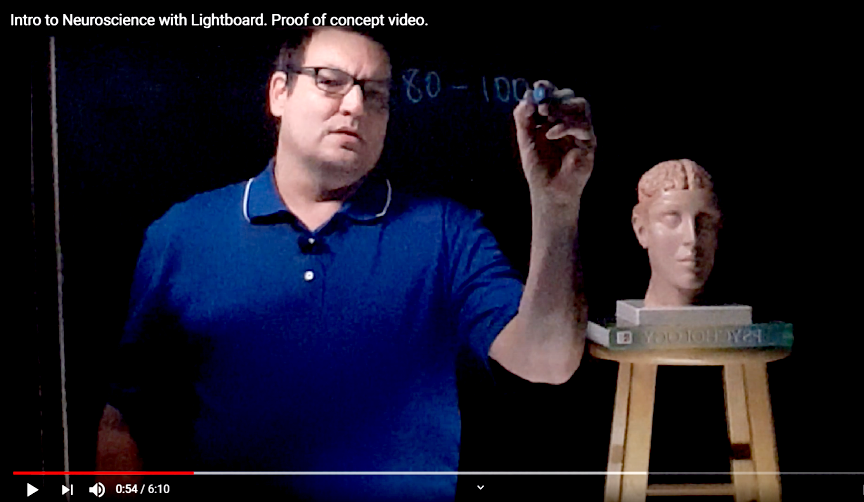
Psychology instructor Jason McCoy has begun using high-tech tools in his lectures. “I have incorporated technology throughout my courses, creating a welcome video to introduce myself to students and expanding the use of technology into every aspect of my instruction,” said McCoy. “Because of COVID-19, I have been rethinking class engagement. Not only am I now thinking about maintaining the interest of my online students, but I am also changing the way I think about in-person instruction. Teaching myself how to use a variety of tools has helped me discover new ways to engage my students in the digital realm, where many students spend the majority of their time. I will continue to use technology to build connections with my students no matter how I am teaching.”
Overcoming challenges of technical learning
The chemical technology program, faced with the challenge of converting fully hands-on classes to a virtual format, had instructors this summer “in the laboratory, taking pictures, videos, doing experiments and then going home to upload this media to a computer and assembling into a more formal and verbal presentation.”
Schultz noted the challenge of portraying three-dimensional signing by way of a virtual classroom meeting for her American Sign Language students. She added, “I try to show the signs at different angles because one change in movement or one change in palm orientation can change the entire meaning.”
Students are experiencing a new way of learning, which will have a lasting impact. “The amazing thing I have witnessed as students adjust to less hands-on training and more online courses is the understanding these men and women are demonstrating,” said Jon Begue, construction management technology program director. “They understand we have to change our course delivery methods. They understand we as instructors are facing challenges moving courses online. They understand in order to reach their goal, they have to change as well. It’s incredible and inspirational to witness.”
Regardless of these uncertain times, CFCC has remained steadfast in our priority to keep our campus community safe and healthy, while still providing outstanding instruction and training. Perhaps Begue put it best when he said, “We owe it to our students and our community to continue to prepare our students to be job-ready and globally competitive. We must continue to effectively teach in a manner that protects the safety and health of everyone involved.”
As we continue to move through this pandemic, I am encouraged and inspired by CFCC’s faculty and staff. Working together, we will continue to provide instruction that is vital to the lives of our students and to the economic recovery of our region.