
North Carolina’s inaugural MSI Leaders Lab

Talk to Dr. Catherine Edmonds about North Carolina A&T State University (N.C. A&T), and she starts with people. A first-generation graduate who walks into a first job ready from day one, or an alum who circles back years later to learn something new. That’s the work she wishes more people could see — the lawmakers who write the budgets, for one, but also the employers who hire her graduates and the towns those graduates come home to.
Edmonds recently led academic affairs as interim provost at the country’s largest Historically Black College and University (HBCU). She’s the founding director of Forever Learning, a chancellor’s initiative meant to keep N.C. A&T in the lives of adult learners, alumni, working professionals, and families well after they graduate. It began with courses in artificial intelligence, financial literacy, and physical wellness. The idea, she said, is that “learning should be a lifestyle appropriate for every age.” It shouldn’t end the day someone crosses the graduation stage.
Edmonds created the First-Generation Professionals™ framework for a problem she’d watched play out: the first-generation graduate who lands the job but then walks in unprepared to handle complicated or stressful office dynamics and cultures. She wants graduates who are “Day 1 ready.” Her framework, according to Edmonds, “focuses on mentoring, professional fluency, workplace navigation, communication, relationship building, leadership development and the networks needed to enter, advance and lead in the workplace.”
 Sign up for the EdWeekly, a Friday roundup of the most important education news of the week.
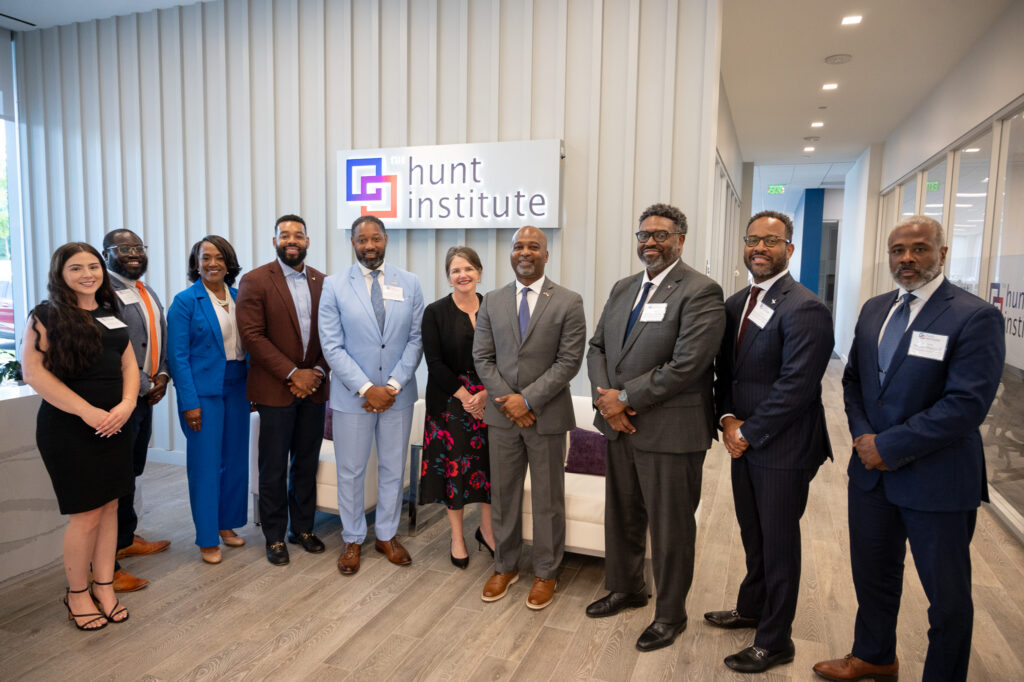
Getting that work in front of state policymakers is much of what The Hunt Institute’s first Minority-Serving Institutions (MSI) Leaders Lab was after. Eight senior leaders from North Carolina Central University, Winston-Salem State University, and N.C. A&T made up the inaugural cohort. Funded by the John M. Belk Endowment, they met three times through spring and summer.
The leaders worked beside bipartisan lawmakers at the Hunt Institute’s Holshouser Legislators Retreat and heard from the governor’s office on Gov. Josh Stein’s agenda. And they compared notes with two sitting leaders, Winston-Salem State Chancellor Bonita J. Brown and Paul Quinn College President Dr. Michael J. Sorrell, who spoke frankly about what the job demands.
Across those conversations, one theme kept surfacing: the people who fund their institutions, and partner with them, don’t always see the full picture of what happens on campus.
“Many Minority-Serving Institutions, including HBCUs, lack dedicated government relations staff due to tight budgets and competing priorities,” said Jarvis Lundy, The Hunt Institute’s director of policy. That leaves the work to presidents and chancellors who are already running whole universities, without the dedicated staff or the hours that steady, year-round advocacy takes. The MSI Leaders Lab is meant to close that distance, and in a bipartisan way, so that relationships hold no matter who’s in charge.
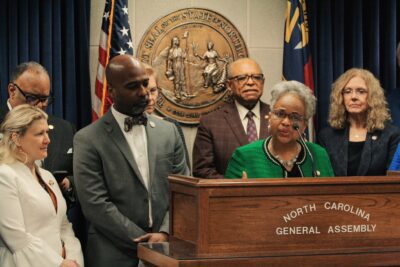
North Carolina isn’t starting from scratch. Back in 2023, North Carolina lawmakers stood up what they called the country’s first bipartisan, bicameral HBCU caucus, a group The Hunt Institute helped pull together. One of its co-chairs, Rep. Zack Hawkins, D-Durham, sat in on the MSI Leaders Lab’s final session. And the model is catching on — South Carolina has since started an HBCU caucus of its own.
Related reading

The stakes reach well past campus. North Carolina’s 10 HBCUs generate an estimated $1.8 billion a year into the state’s economy and support more than 16,000 jobs, according to United Negro College Fund’s (UNCF) 2024 economic impact report. In some of the smaller or historically underserved places where they sit, an HBCU is one of the largest employers around.
The case isn’t only economic, though. North Carolina has set a goal, through myFutureNC, of getting 2 million residents a degree or credential by 2030. And the UNC System’s first Workforce Alignment Report already warns of gaps in fields the state can’t afford to leave open.
N.C. A&T is chasing R1 status, the top tier of research universities, in the middle of all that. Grow one of these schools, Edmonds argues, and “the investment produces benefits that extend far beyond the campus.”
For Edmonds, much of the value of the MSI Leaders Lab was the space it gave her to “step back from the daily demands,” she said, and think next to other senior leaders under the same weight and facing the same pressures. It reinforced “the importance of leading with urgency while remaining grounded in mission, relationships, and long-term institutional strategy,” she said.
The Hunt Institute is treating this first group as a beginning. Lundy hopes the leaders stay on as alumni, helping lawmakers understand what HBCUs actually do, while a second cohort forms. The Hunt Institute is also weighing taking the model to other states.
For now the network is small and North Carolina-grown — eight leaders, three campuses. It runs on a simple bet: these schools do better when more people see the work. Not that the leaders were ever asking for themselves. They were asking for students and for the towns their campuses support. What they got out of the MSI Leaders Lab was a sharper way to say so, a few more people inclined to listen, and each other.
Editor’s note: The John M. Belk Endowment supports the work of EdNC.