
Perspective | North Carolina A&T’s impact: $2.4 billion — and counting

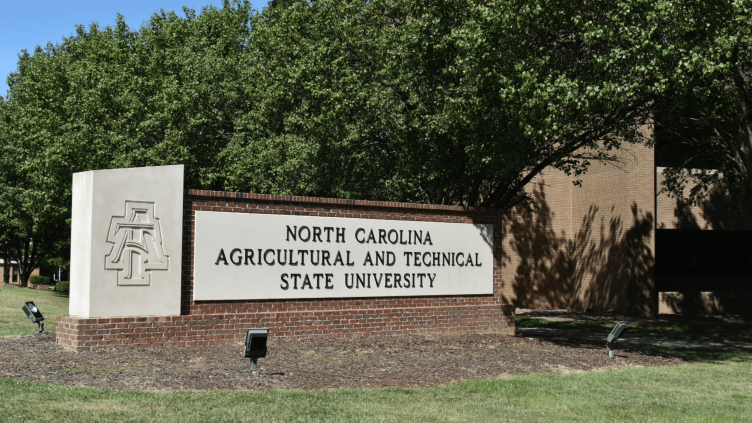
As North Carolina Agricultural and Technical State University has grown and developed in recent years, I increasingly find that my conversations with community leaders throughout the Piedmont Triad are connected by a common thread: the idea that North Carolina A&T is one of the most powerful drivers of economic prosperity in the region.
With a new school year upon us, there is important new information on exactly how significant a driver our university has become. A new 36-page study shows that A&T’s economic impact across the state of North Carolina has now grown to an astonishing $2.4 billion.
When such an analysis was last undertaken, based on 2017-18 data, A&T’s impact was calculated at just under $1.5 billion. Enrollment growth, increased university expenditures, the growing presence of A&T alumni in the N.C. workforce, visitor and student spending and additional variables add up to a significant strategic advantage for a state that continues to be ranked America’s best for business.
Our university’s activity in the North Carolina economy has the impact of supporting the equivalent of 17,337 jobs and $1.42 billion in added income. For a university of just under 13,500 students, those are frankly astounding numbers. A&T delivers incredible return on investment for its students and for the taxpayers of North Carolina.
Two renowned economists from North Carolina A&T’s Willie A. Deese College of Business & Economics, produced the study: Cephas Naanwaab, Ph.D., and Alfredo Romero, Ph.D., both associate professors of Economics.
One of their most important conclusions acknowledges that A&T’s greatest economic impact comes from its alumni and the knowledge, creativity, imagination and entrepreneurship they bring to positions around the state.
U.S. News & World Report agrees. In its last three issues of Best Colleges – its well-known annual ranking of America’s higher education campuses – the magazine has ranked new A&T alumni the second-best compensated in the UNC System, earning a median starting salary of nearly $55,000 and trailing only North Carolina State graduates.
Romero and Naanwaab posit that A&T alumni not only earn substantial compensation but have a reflexive impact on the places where they work.
“Talented professionals make capital more productive, too (e.g., buildings, production facilities, equipment),” they write. “The employers of [A&T] alumni enjoy the fruits of this increased productivity in the form of additional non-labor income (i.e., higher profits).”
The Naanwaab/Romero study also took into account that one of the goals of North Carolina A&T’s newly adopted strategic plan is for the university to be recognized as an R1-Very High Research Activity institution in the Carnegie Classifications of Higher Education Institutions – the most significant designation for doctoral research universities.
Under three different scenarios, each of which would result in A&T earning that rating, the university’s economic impact would increase to somewhere between $2.43 billion and $3.02 billion, the authors write.
Already America’s largest historically Black college or university for going on 10 consecutive years, North Carolina A&T is pursuing a growth and development strategy that envisions our institution adding 2,000 students over the next seven years and continuing to expand our research programs. As we do so, the numbers above will only grow.
With a documented economic footprint across our state now of more than $2.4 billion and thousands of our graduates contributing to the North Carolina job market each year, our university is fulfilling its land-grant mission in profound, diverse ways. The outcomes measured in this significant new study provide compelling evidence that investments in North Carolina A&T provide outstanding returns for the people of this state.